As long as someone is "within the jurisdiction" of the U.S.—which includes its borders—they are entitled to these basic protections. 3/3
17.04.2025 14:36 — 👍 1 🔁 0 💬 0 📌 0
This includes:
The right to a fair trial (Sixth Amendment)
Protection from unreasonable searches and seizures (Fourth Amendment)
The right to remain silent and not self-incriminate (Fifth Amendment)
Access to habeas corpus if unlawfully detained
2/3
17.04.2025 14:36 — 👍 0 🔁 0 💬 1 📌 0
Once a person is physically present in the United States—even if unlawfully—they are subject to and protected by U.S. law. 1/3
17.04.2025 14:35 — 👍 0 🔁 0 💬 1 📌 0
You don’t get to suspend the Constitution based on someone’s immigration status. 2/2
17.04.2025 14:34 — 👍 1 🔁 0 💬 0 📌 0
The Constitution protects persons—not just citizens. That’s why due process and equal protection under the 14th Amendment apply to everyone on U.S. soil. Courts, including the Supreme Court, have consistently affirmed this. 1/2
17.04.2025 14:33 — 👍 1 🔁 0 💬 1 📌 0
Scott Jennings belongs on Fox News, not @cnn.com. If you’re gonna spew anti-immigrant trash and pretend due process is optional, at least do it on a network where the Constitution is just a prop.
17.04.2025 14:11 — 👍 0 🔁 0 💬 0 📌 0
Frederick Douglass was born into slavery and rose to become one of the fiercest voices for abolition, civil rights, and truth in American history. He believed deeply in the power of history — accurately told — and fiercely rejected efforts to whitewash slavery, oppression, or the legacy of racism.
13.04.2025 19:32 — 👍 1 🔁 0 💬 0 📌 0
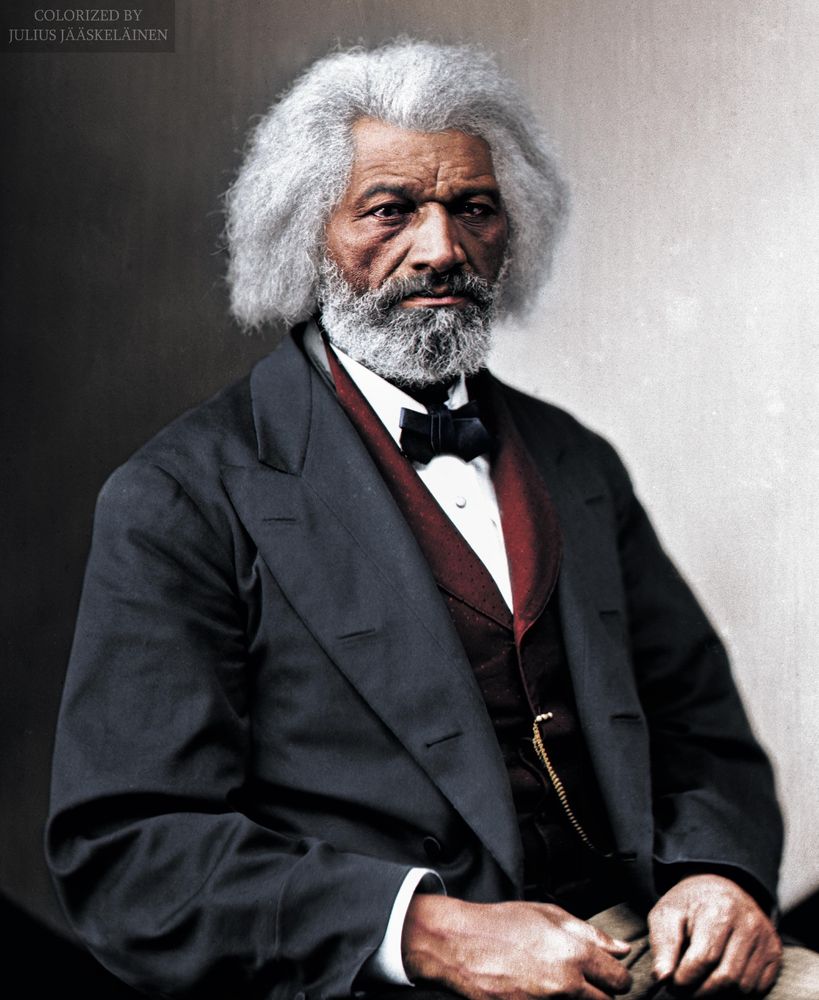
A colorized historical portrait of Frederick Douglass, a 19th-century African American abolitionist, writer, and orator. He is seated, wearing a dark formal suit, white shirt, and bow tie. His hair is white and full, and he has a serious, dignified expression. The image is striking for its clarity and realism, bringing a vivid sense of presence to one of America’s most iconic freedom fighters.
We need leadership that honors history, not erases it.
13.04.2025 19:32 — 👍 0 🔁 0 💬 0 📌 1
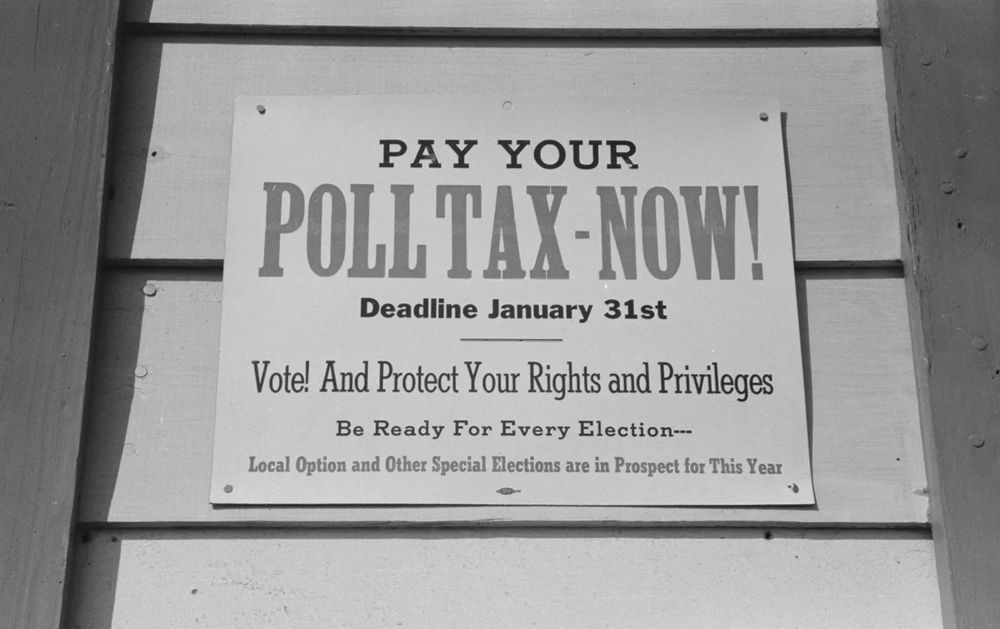
A black-and-white photo of a sign posted on a wooden wall. The sign reads: “PAY YOUR POLL TAX - NOW! Deadline January 31st. Vote! And Protect Your Rights and Privileges. Be Ready For Every Election — Local Option and Other Special Elections are in Prospect for This Year.” The image was taken in Mineola, Texas, in 1939, during the Jim Crow era when poll taxes were used to suppress Black and poor voters.
The SAVE Act functions like a poll tax in disguise—a barrier targeting communities of color under the pretense of “election security.” When Black leaders enable this, it’s hard not to see it as a modern echo of the house slave mentality—serving systems of oppression rather than challenging them.
13.04.2025 19:23 — 👍 0 🔁 0 💬 1 📌 0
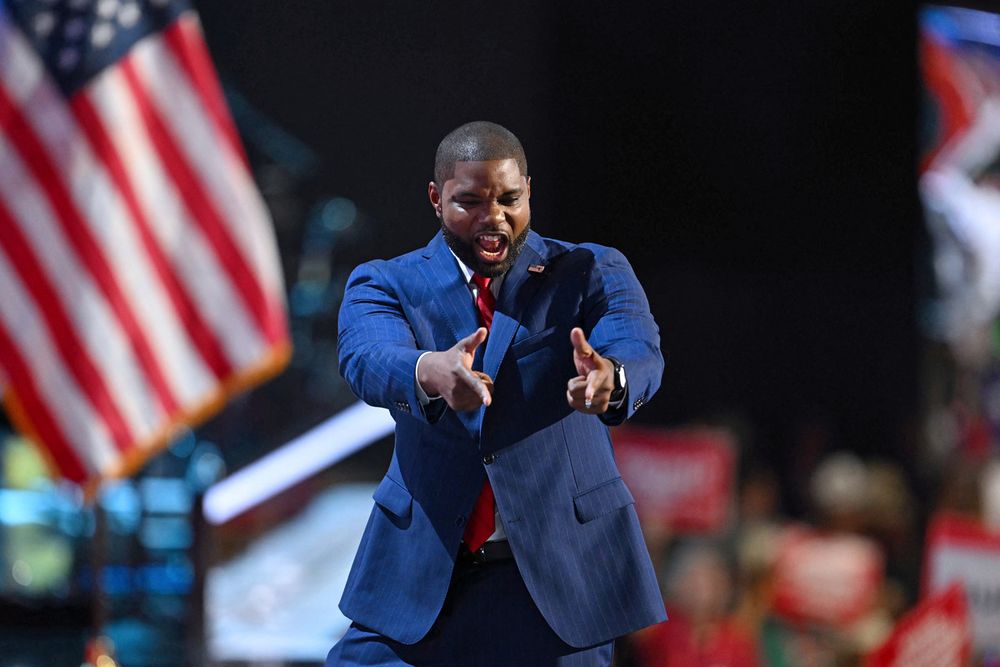
Byron Donalds stands in front of a crowd, gesturing with both hands raised outward as he addresses the audience. He appears to be mid-speech, wearing a suit and speaking passionately. The crowd is not fully visible but appears to be engaged with his remarks.
Congressman Byron Donalds and other Black conservatives supporting measures like the SAVE Act aren’t just on the wrong side of policy—they’re standing in the way of truth. Denying or downplaying Black history, and backing modern voter suppression laws, mirrors the tactics of Jim Crow.
13.04.2025 19:18 — 👍 0 🔁 0 💬 1 📌 0

A construction site in a desert area shows workers and machinery erecting tall metal fencing, part of the U.S.–Mexico border wall. A large crane is helping to secure vertical steel beams as construction workers in high-visibility vests assist on the ground. The terrain is dry and barren, with hills in the background.
@sanders.senate.gov Back then, Riker and Wall Street protected the slave economy. Today, private detention centers and border contractors profit from immigrant labor and suffering. This isn’t just history—it’s policy on repeat.
13.04.2025 19:07 — 👍 1 🔁 0 💬 0 📌 0

A side-by-side comparison of two six-pointed star-shaped law enforcement badges. On the left is an old, weathered metal badge labeled “RUNAWAY SLAVE PATROL” with a textured surface. On the right is a modern gold and blue badge that reads “DEPUTY SHERIFF, LOS ANGELES COUNTY” with a bear emblem in the center. The visual juxtaposition suggests a historical continuity between slave patrols and modern policing.
@sanders.senate.gov In both eras, the state labeled people as “fugitives” or “illegals” to justify extrajudicial violence. The language changes. The uniforms change. But the logic of dehumanization stays the same.
13.04.2025 19:05 — 👍 0 🔁 0 💬 1 📌 0

A woman in tactical gear, flanked by two heavily armed law enforcement officers, stands in front of a black armored police vehicle. All three are wearing bulletproof vests and holding or carrying rifles. The woman is wearing a “Police” badge patch on her vest and hat. The officers are dressed in military-style gear, with sunglasses and tactical equipment.
@sanders.senate.gov Kristi Noem isn’t an outlier—she’s part of a long American tradition. In the 1800s, Richard Riker used courts to send free Black people into slavery.
Today, Noem deploys law enforcement to help DHS target migrants.
Different century. Same playbook. #TheKidnappingClub
13.04.2025 18:59 — 👍 0 🔁 0 💬 1 📌 0

A watercolor portrait of David Ruggles, a free Black man and prominent 19th-century abolitionist. He wears a tall white top hat, round spectacles, a dark suit with a high collar, and a bow tie. His expression is composed and determined, reflecting his courageous role in the Underground Railroad and the early Black press.
Read this book. Teach it. Talk about it. Because understanding the past is the first step toward dismantling the systems that continue to harm today. #TheKidnappingClub #BlackHistory #SystemicRacism
12.04.2025 21:12 — 👍 0 🔁 0 💬 1 📌 0

A bronze plaque mounted on a red brick wall commemorates 36 Lispenard Street in New York City as an Underground Railroad Station. The inscription explains that on September 3, 1838, Frederick Douglass arrived at this address after escaping slavery. It was the home and abolitionist headquarters of David Ruggles, a free Black activist, writer, and key figure in the Underground Railroad. Ruggles operated a reading room and printing press here, publishing anti-slavery materials like Mirror of Liberty. The site also served as the headquarters of the New York Vigilance Committee, which helped more than 1,000 enslaved people escape to freedom. The plaque was installed by the New York Landmarks Preservation Foundation in 2006.
We need to tell these stories. They challenge the sanitized version of history taught in schools and remind us how deep the roots of racism run in our institutions.
12.04.2025 21:12 — 👍 1 🔁 0 💬 1 📌 0

Sepia-toned portrait of Frederick Douglass, a Black man with a full beard, sharp features, and natural white hair. He wears a formal jacket and cravat, looking intensely into the camera. Douglass was one of the most influential abolitionists, writers, and orators in American history. After escaping slavery in 1838, he was helped by David Ruggles in New York City, who sheltered him at 36 Lispenard Street. Ruggles provided him safety, guidance, and connections that would launch Douglass’s life as a free man and activist. This early encounter deeply shaped Douglass’s path, and he credited Ruggles for aiding his freedom journey and introducing him to the broader abolitionist movement.
The Kidnapping Club is more than a history book. It’s a mirror. Because if you look closely, you’ll see today’s America reflected in 1830s New York—economic power protecting racial injustice, and courts failing the most vulnerable.
12.04.2025 21:12 — 👍 0 🔁 0 💬 1 📌 0

1840 political cartoon titled “The Disappointed Abolitionists.” On the left, three men—including a Black man in a top hat—are being forcibly ejected from a room by a white man on the right, who angrily raises a chair and clutches a money bag labeled “$6908.” One abolitionist clutches his cane, and another appears surprised. Speech bubbles contain mocking language. The scene caricatures abolitionists as opportunists, reflecting the hostile pro-slavery sentiment of the era and how attempts to secure freedom or compensation for Black individuals were met with scorn and violence.
David Ruggles and the NY Committee of Vigilance fought back, risking their lives to protect Black New Yorkers. Their resistance reminds us that abolition was more than moral outrage—it was organizing, strategy, and relentless courage.
12.04.2025 21:12 — 👍 2 🔁 0 💬 1 📌 0

Black-and-white photograph of the massive stone structure known as “The Tombs,” New York City’s main jail, taken in 1912. The fortress-like building features Romanesque Revival architecture, with tall towers, narrow windows, and a connected walkway bridging to another structure. Located in Lower Manhattan, this was the later version of the original Tombs where, in the 1830s and 1840s, free Black people were wrongfully imprisoned under false claims of fugitive status. This site was central to the operations of the Kidnapping Club—a network of judges, police, and slave catchers who trafficked Black New Yorkers into slavery for profit.
What struck me most was how this all happened under the veil of “law and order.” Abductions were legalized violence. And the system wasn’t broken—it was built this way.
12.04.2025 21:12 — 👍 0 🔁 0 💬 1 📌 0

Black-and-white photograph of Wall Street in New York City, circa 1920s. The scene captures a busy street filled with pedestrians in period attire and vintage cars. On the right is Federal Hall, with its tall columns and the statue of George Washington on the steps. In the distance, the spire of Trinity Church towers over the scene. This iconic stretch of Wall Street—now symbolic of global finance—was once central to the American slave economy. In the 19th century, financial institutions here profited from slavery by insuring slave ships, investing in Southern plantations, and trading cotton—the commodity of slavery. Despite benefiting from enslaved labor, New York courts, including judges like Richard Riker, sent kidnapped free Black people back to the South for a fee, further profiting from human trafficking under the guise of law and commerce.
NYC’s elite, including Wall Street, profited from slavery. Cotton was king, and the city’s banks, merchants, and insurers had financial ties to the Southern slave economy. Moral concerns? Ignored in favor of profit.
12.04.2025 20:37 — 👍 0 🔁 0 💬 1 📌 0

6 Lispenard Street in New York City holds significant historical importance as the residence and operational base of David Ruggles, a prominent African American abolitionist, during the 1830s. Ruggles was instrumental in the abolitionist movement, notably for his efforts in assisting enslaved individuals seeking freedom through the Underground Railroad. His home at this address functioned as a crucial stop on this clandestine network, providing shelter and aid to approximately 600 fugitive slaves.
3️⃣ Riker’s network of cops and bounty hunters became known as “The Kidnapping Club”—a term coined by Black journalist and abolitionist David Ruggles. These were men who enriched themselves off Black suffering.
12.04.2025 20:37 — 👍 0 🔁 0 💬 1 📌 0

Black-and-white photograph of New York City Hall, taken in the late 1800s. The neoclassical building features a symmetrical design with columns, arched windows, and a central cupola. Built in 1812, City Hall housed the city’s courts and government offices. In the 1830s–1840s, Judge Richard Riker conducted hearings here that led to the kidnapping and forced return of free Black New Yorkers to slavery in the South. These actions, backed by corrupt police and judges, formed what became known as “The Kidnapping Club.”
2️⃣ At the center was Richard Riker, the city’s Recorder (judge). His courtroom became a revolving door for slave catchers, who needed only to claim someone was a runaway. No proof. No justice. Just rubber-stamped rulings.
12.04.2025 20:37 — 👍 0 🔁 0 💬 1 📌 0

Black-and-white portrait of Richard Riker, a balding white man in 19th-century attire, seated in a formal pose. He wears a dark coat and white cravat, holding a folded document in his right hand. A table beside him holds papers and books. Riker served as the Recorder of New York City (early 1800s), a powerful judicial figure. From his courtroom in City Hall, he played a key role in the “Kidnapping Club,” a network of judges, police, and bounty hunters who abducted free Black New Yorkers and sent them to the South as enslaved people—often without due process.
This is the hidden history of America’s “free” states—and it’s disturbingly relevant today. 🧵👇🏽
1️⃣ Set in 1830s NYC, The Kidnapping Club exposes how judges, police, and politicians legally abducted free and fugitive Black people and sold them into slavery. Yes, this happened in New York.
12.04.2025 20:37 — 👍 0 🔁 0 💬 1 📌 0

The Kidnapping Club book cover features a Black-and-white illustration of 19th-century New York City, with prominent buildings and a gathering of people in period clothing. The title is bold and centered at the top in serif font, and the subtitle reads: Wall Street, Slavery, and Resistance on the Eve of the Civil War by Jonathan Daniel Wells.
Before the Civil War, slavery wasn’t just a Southern institution—it thrived in the heart of New York City. The Kidnapping Club reveals how corrupt judges, police, and politicians abducted free Black people and sent them South to slavery, all while Wall Street profited.
12.04.2025 20:37 — 👍 1 🔁 0 💬 1 📌 0

House passes bill requiring proof of citizenship to vote in federal elections
Four Democrats joined Republicans in supporting the measure, which the Senate will need to pass before it heads to Trump's desk for his signature.
If the Senate passes the SAVE Act, it won’t be about protecting elections—it’ll be about reviving the poll tax in disguise.
Requiring citizenship documents to vote targets the poor, the elderly, and communities of color.
@aclu.org , we need you to challenge this. Loudly.
10.04.2025 22:29 — 👍 1 🔁 0 💬 0 📌 0

A black circular stamp-style graphic with the bold words “STAY WOKE” in the center. The phrase is repeated around the border in white text on a black background. The distressed texture gives it a vintage, activist aesthetic, symbolizing awareness, resistance, and critical consciousness.
Labeling challenging topics—like systemic racism, gender theory, or climate change—as “woke” doesn’t invalidate their academic relevance. It just avoids engaging with the scholarship behind them.
Students should be taught how to think, not what to think.
10.04.2025 21:17 — 👍 2 🔁 0 💬 0 📌 0

A group of diverse high school or college students sit together in a library, engaged in animated discussion. One student holds an open book while others listen attentively and contribute ideas. The atmosphere is lively and collaborative, representing open dialogue, learning, and the exchange of perspectives in an academic setting.
Whether it’s reading a conservative economist or a progressive sociologist, education should never be about ideological grooming. It’s about academic rigor, open debate, and the freedom to test ideas in a structured and evidence-based way.
10.04.2025 21:16 — 👍 1 🔁 0 💬 1 📌 0

An open book sits on a dark surface with a glowing light bulb hovering above its pages. The background features abstract digital connections and particles, symbolizing the power of knowledge, learning, and the spark of ideas through education.
Their purpose is to provide students with access to facts, theories, and frameworks from across history and around the world—so they can analyze issues from multiple perspectives and draw informed conclusions.
That’s not indoctrination. That’s intellectual development.
10.04.2025 21:15 — 👍 0 🔁 0 💬 1 📌 0

A man in a navy blue suit and red tie stands against a pink background. He is wearing a red blindfold labeled “CONFORMITY” across his eyes, symbolizing a lack of independent thought or critical awareness, often associated with societal or ideological pressure.
Colleges and universities exist to foster critical thinking, not blind acceptance.
10.04.2025 21:14 — 👍 0 🔁 0 💬 1 📌 0

A diagram labeled “Critical Thinking Skills” in the center, surrounded by five interconnected concepts in a circular layout: Reasoning, Problem Solving, Evaluating, Decision Making, and Analyzing. Each concept is enclosed in a blue circle, illustrating key components of critical thinking.
In Florida, the term has become central to debates about higher education. Now, bills like HB 1321 are being labeled by critics as efforts to “Make Universities Woke Again.”
But let’s pause and ask: what is higher education really for?
10.04.2025 21:13 — 👍 0 🔁 0 💬 1 📌 0

Florida Governor Ron DeSantis speaks at a podium labeled “Freedom From Indoctrination” during a press event. He is surrounded by a diverse group of supporters, some holding signs that read “STOP WOKE” and “No CRT.” The image reflects DeSantis’ campaign against perceived ideological influence in education, particularly targeting critical race theory and progressive teaching in schools.
Opinion: Education Isn’t “Woke.” It’s Critical Thinking.
In recent years, the word “woke” has gone from a term about social awareness to a political hammer used to criticize anything remotely progressive—especially in schools and universities.
10.04.2025 21:12 — 👍 0 🔁 0 💬 1 📌 0