We are super happy to announce the fifth edition of our Transatlantic Behavioural Neuroscience School, that will be held Aug 11-22nd in Poland! Join us to learn everything you need to build your behavioural setup with open source tools!
26.01.2026 13:41 — 👍 14 🔁 4 💬 2 📌 0

Theorizing the Mind: Creating a Functional Atlas of Scientific Theories
Marcin Miłkowski, Institute of Philosophy and Sociology, Polish Academy of Sciences
Have you ever wondered how scientists come up with theories about how our minds work or what’s happening in
our brains? From understanding how we learn and remember, to explaining emotions, to developing treatments for
mental health conditions, scientific theories are the essential roadmaps that guide discovery. But what makes a
scientific theory in these fields a good one? And how can we make sure scientists are building the best possible
theories to help us understand ourselves and improve our lives?
Our Goal: Our goal is to create the first systematic map of the different jobs that scientific theories do when
studying the brain and mind. Just like a builder needs different tools for different tasks (a hammer isn’t great for
sawing wood!), scientists use different kinds of theories for different purposes – some are for classifying things,
others for predicting what will happen, and some for explaining why things happen. Our project will provide a clear
guide to what makes each type of theory effective and trustworthy for the job it's designed to do.
What We'll Be Doing: Think of us as cartographers looking at how science itself works deep down. We will:
● Study Real Science in Action:
We'll look closely at how
theories are actually used and
developed in leading research
on the brain and mind. This
involves careful philosophical
thinking combined with
looking at examples from
scientific practice.
● Analyze Scientific Language:
Using modern computer
tools, we'll examine
thousands of scientific
articles and discussions. This
helps us see broad patterns in
how scientists talk about, use,
and judge theories. It’s like looking at the fingerprint of scientific theorizing to see what’s common and
what stands out.
● Build a Functional Atlas for Theories: Based on what we learn, we will …
My project Theorizing the Mind has been funded by the National Science Center.
28.11.2025 14:34 — 👍 13 🔁 2 💬 1 📌 0
Metabolic considerations for cognitive modeling | Behavioral and Brain Sciences | Cambridge Core
Metabolic considerations for cognitive modeling
#philsci #cogsky #CognitiveNeuroscience
@phaueis.bsky.social and I have had our paper, “Metabolic considerations for cognitive modeling,” accepted as a target article in Behavioral and Brain Sciences.
www.cambridge.org/core/journal...
18.11.2025 11:58 — 👍 32 🔁 12 💬 4 📌 1

Book cover of "The Riddle of Organismal Agency: New Historical and Philosophical Reflections" (Routledge, 2024). The book belongs to the "History and Philosophy of Biology" series. The editors are Alejandro Fábregas-Tejeda, Jan Baedke, Guido I. Prieto, and Gregory Radick. The design features a geometric pattern of interlocking, multicolored triangles and rectangular prisms in shades of red, yellow, teal, white, and pink. The Routledge logo appears in the lower right corner.
"The Riddle of Organismal Agency" is now available as a paperback version! Edited by @alejandrofabregastejeda.com, Jan Baedke, Guido Prieto and Gregory Radick, the volume puts together reflections from #HistSci and #PhilSci on the topic of organismal agency.
#HPBio
www.routledge.com/The-Riddle-o...
05.11.2025 14:37 — 👍 31 🔁 10 💬 0 📌 0
And to @birchlse.bsky.social @evaroseread.bsky.social @simonabbrown.bsky.social @dzakharova.bsky.social @merikatariina.bsky.social for the 2024 Animal Minds ECR workshop at LSE where I presented an initial version of the paper!
30.10.2025 13:26 — 👍 2 🔁 0 💬 0 📌 0
Lots of thanks to @alejandrofabregastejeda.com, @sabinaleonelli.bsky.social, @davdjacobharrison.bsky.social, @laukas.bsky.social, Roman Frigg, Guido I. Prieto, Julia Sánchez-Dorado, and Lorenzo Sartori for discussions and comments on the previous draft!
30.10.2025 13:26 — 👍 2 🔁 0 💬 1 📌 0
Looking for keys in model organisms: Interpreting and keying-up in basal cognition - PhilSci-Archive
What role heuristics play in model organism research? How can the DEKI capture the development of MOs? Is basal cognition introducing novel MOs for neuroscience? This is what I try to explore in the new preprint: philsci-archive.pitt.edu/27054/
30.10.2025 13:26 — 👍 16 🔁 2 💬 2 📌 0
Applications are still open!
21.07.2025 10:19 — 👍 2 🔁 0 💬 0 📌 0
We’re waiting for the applications to the School of Ideas in Neuroscience only until Monday!! Come hang out, it’s always fun
18.07.2025 08:53 — 👍 2 🔁 0 💬 0 📌 0
Applications are open for another week, do not miss out!!
14.07.2025 14:56 — 👍 3 🔁 1 💬 0 📌 0
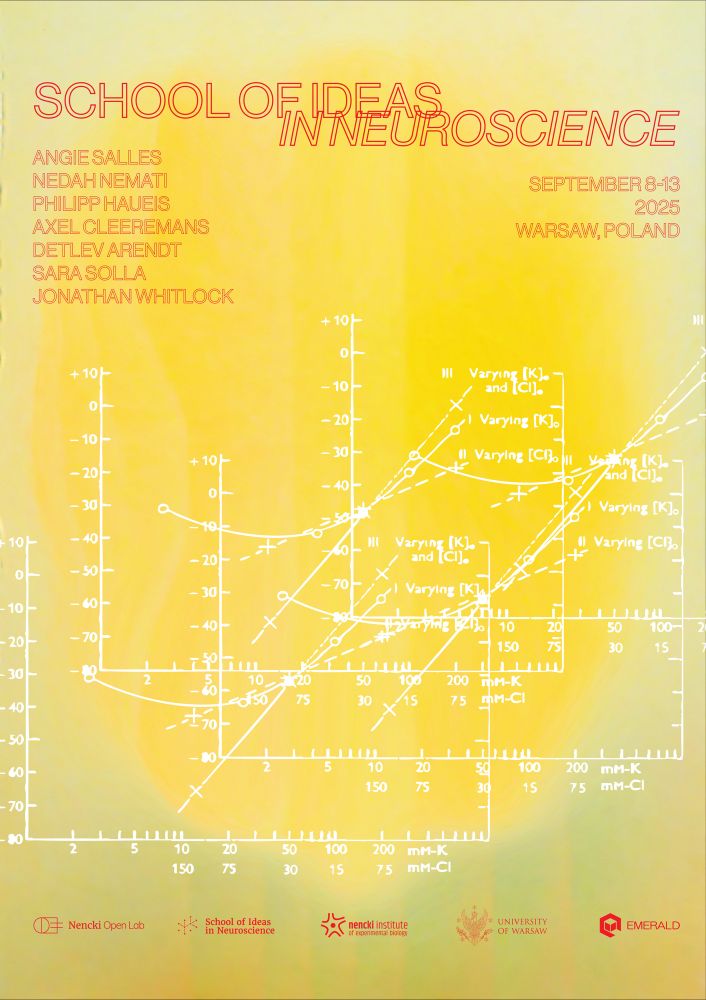
Poster for the School of Ideas in Neuroscience, it depicts a multiplied white vintage scientific diagram (voltage changes in different potassium and chloride concentrations) on a grainy yellow-green (with a tint of red) gradient. The text includes the name and dates of the school, as well as the list of confirmed guests: Angie Salles, Nedah Nemati, Philip Haueis, Axel Cleeremans, Detlev Arendt, Sara Solla, Jonathan Whitlock, and the list of sponsors.
We’ve just opened the applications for this year’s School of Ideas in Neuroscience which will happen September 8-13 in Warsaw, Poland! We have an exciting lineup of guests and all we need now is some participants, so consider joining us and sharing the invitation :)
nenckiopenlab.org/the-school-o...
07.07.2025 19:41 — 👍 2 🔁 0 💬 0 📌 0
So exciting!! I wish I could comeeee
24.04.2025 20:57 — 👍 3 🔁 0 💬 0 📌 0
Last year we met in the beautiful Dolomites to talk about “naturalistic” behaviour - now the brilliant organizers have put together a preprint which summarizes those discussions. Very much recommended! It definitely changed how I think about behaviour
05.03.2025 12:06 — 👍 1 🔁 0 💬 0 📌 0
The open access version of A Drive to Survive is now available to download for free!
direct.mit.edu/books/oa-mon...
(If you've already read the preprint, I'd really appreciate a download of the official version... for the *metrics*)
- also it has way less typos.
05.02.2025 19:40 — 👍 32 🔁 13 💬 1 📌 0
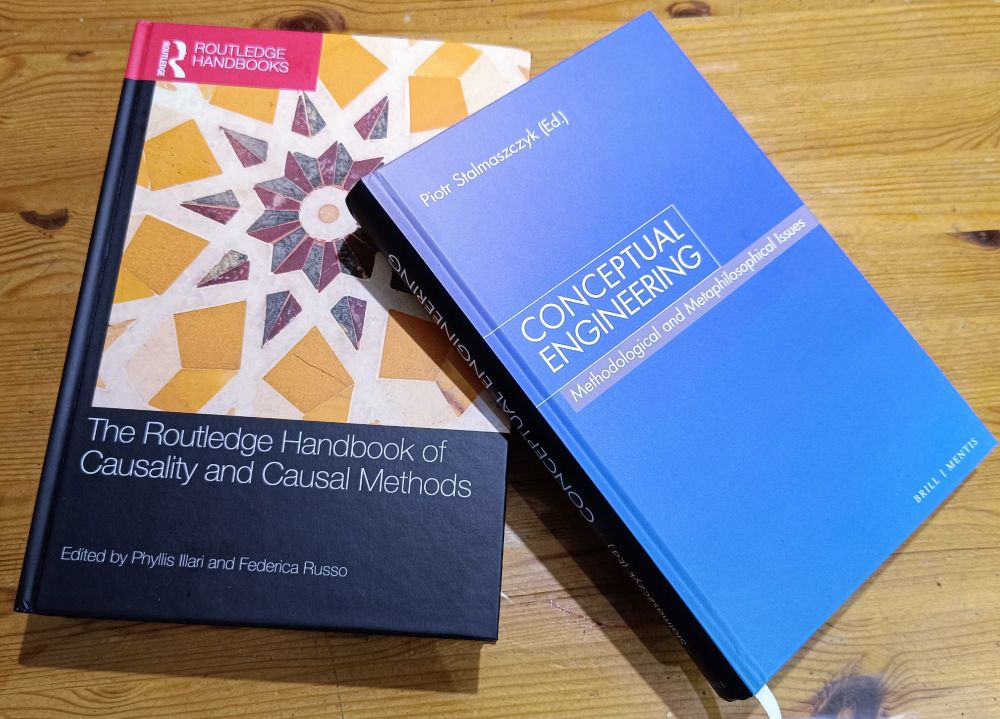
Exciting mail day! I received two new books with my contributions. In the volume on Conceptual Engineering, edited by Piotr Stalmaszczyk, I co-authored a chapter with my PhD student @wikror.bsky.social on predictive understanding, using empirical evidence from scientific writing and peer review. 1/2
08.01.2025 15:55 — 👍 8 🔁 1 💬 1 📌 0
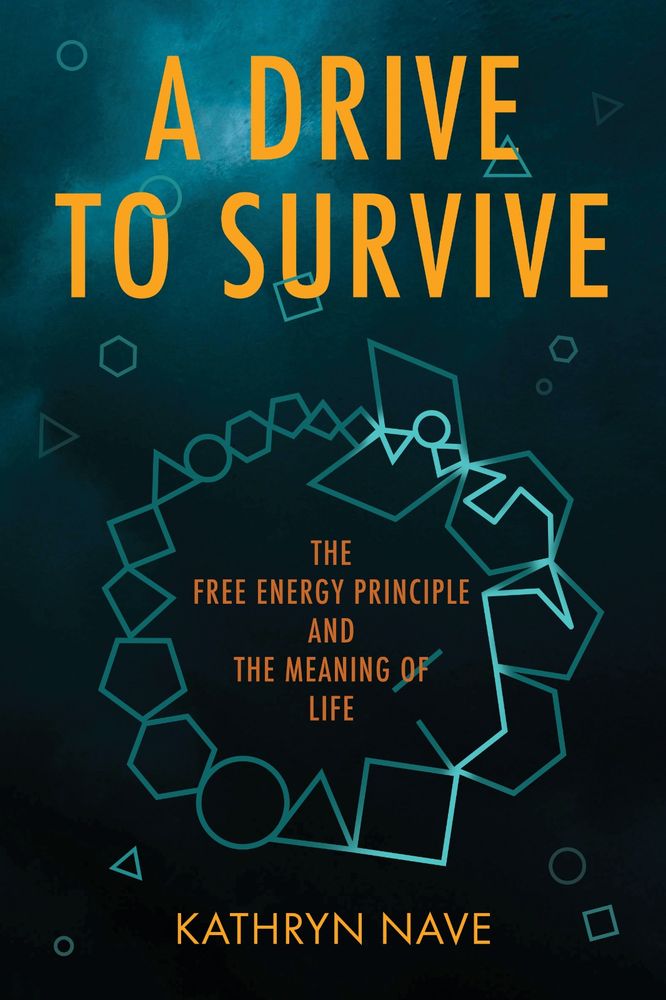
A Drive to Survive now has a cover! Thanks to my friend Toby Logan saving the day with his design skills.
Unfortunately the release has been delayed another two months, but the pre-print can be downloaded here osf.io/preprints/ps... or I’m happy to email a PDF to anyone interested!
27.11.2024 21:09 — 👍 98 🔁 19 💬 11 📌 3
OSF
Many thanks to @mmilkowski.bsky.social and Przemysław Nowakowski for presenting their work in progress in our Digital Methods reading group today!
👉Check out the paper by @wikror.bsky.social and @mmilkowski.bsky.social highlighting the research conducted by Marcin’s group:
doi.org/10.31234/osf...
21.11.2024 20:34 — 👍 7 🔁 2 💬 0 📌 0
This paper, along with several other fascinating contributions, has just been published in the book “Conceptual Engineering: Methodological and Metaphilosophical Issues” edited by Piotr Stalmaszczyk. Highly recommended! And you can still view freely the final version of our chapter on Psyarxiv :)
22.10.2024 10:24 — 👍 7 🔁 1 💬 0 📌 0
Coming out soon🤩: “The Riddle of Organismal Agency: New Historical and Philosophical Reflections”, edited by ROTO members Jan Baedke, Guido Prieto and @afabregastejeda.bsky.social together with Gregory Radick. www.routledge.com/The-Riddle-o...
#PhilSci #HistSci #HPBio
19.03.2024 09:06 — 👍 6 🔁 3 💬 1 📌 0
We’re doing it again, come to Warsaw in July for a week filled with ideas and amazing guests!!
21.02.2024 13:28 — 👍 1 🔁 1 💬 0 📌 0
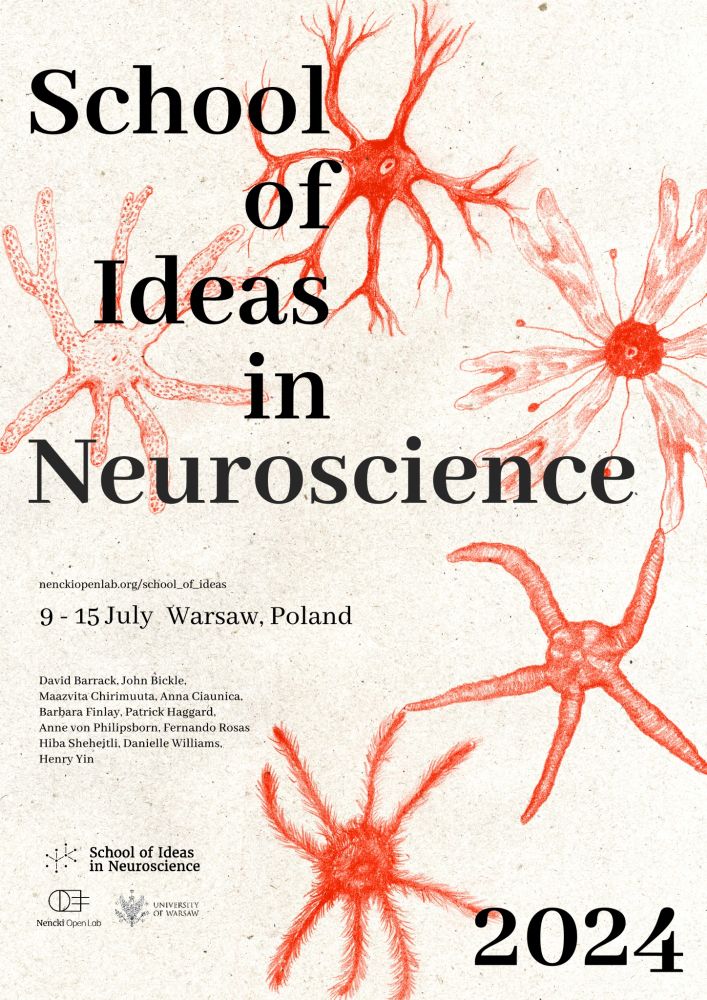
We are super happy to announce our School of Ideas in Neuroscience 2024! Come to Warsaw to discuss the most exciting theories and ideas with neuroscientists & philosophers! We provide beautiful surroundings, great atmosphere and a lot of time to think together! nenckiopenlab.org/school-of-id...
21.02.2024 11:10 — 👍 2 🔁 1 💬 0 📌 2

Sinai Postdoctoral Organizing Committee-UAW Strike
Support postdoctoral researchers at the Icahn School of Medicine at Mount Sinai on Unfair Labor Practice (ULP) strike
Our postdoc strike at Mount Sinai has now been going for a full week, which means a potential week of no wages. Please donate to our emergency fundraiser or share. Thank you for your support! t.co/Sxqyui9oXZ
13.12.2023 11:49 — 👍 2 🔁 1 💬 0 📌 0
And what’s more, such concepts may be useful for current debates - as we argue predictive understanding is for explainable AI!
13.12.2023 15:51 — 👍 0 🔁 0 💬 0 📌 0
We argue that when discussing “understanding” in phil sci and epistemology philosophers have overlooked its predictive aspect - one that practitioners of science refer to systematically. Text mining allows the discovery of concepts and enables a broad look on how they’re used.
13.12.2023 15:51 — 👍 0 🔁 0 💬 1 📌 0
We introduce methodological basics of digital philosophy and show how they tie (in our view seamlessly!) with broader practices of conceptual engineers, and then provide a proof-of-principle.
13.12.2023 15:51 — 👍 0 🔁 0 💬 1 📌 0
OSF
With @mmilkowski.bsky.social we have just preprinted our draft on text mining for conceptual engineering! You can find the paper here: osf.io/preprints/ps...
13.12.2023 15:50 — 👍 4 🔁 0 💬 1 📌 2
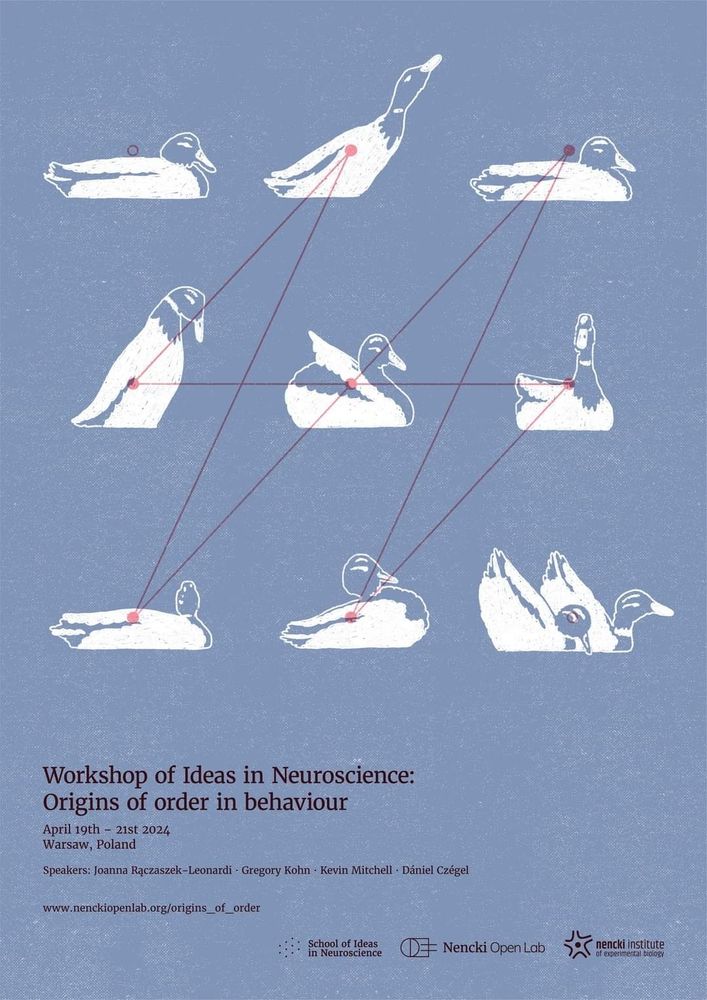
We are happy to announce the second Workshop of Ideas in 2024! On April 19-21th in Warsaw, we will discuss the origins of order in behaviour. Is instinct a useful term in modern neuroscience?
How do genes influence and constrain behavioural development?
nenckiopenlab.org/origins_of_order
11.12.2023 15:37 — 👍 12 🔁 11 💬 1 📌 0
Artist, naturalist and social scientist
East Anglia
Economic historian w broad interests including population health, First Nations, mobility, inequality & lives of the incarcerated. Directing https://thecanadianpeoples.com & editing Asia-Pacific EcHR https://onlinelibrary.wiley.com/journal/2832157x
🇨🇦🇦🇺🇳🇿🏴
Philosophy of neuroscience and memory. Engrams, synapses, mechanisms, and cognitive maps. Minerva postdoc at Bochum.
https://sites.google.com/view/jonathan-najenson/home
Philosopher of Science at Ulm University
Philosophy PhD student | Foundations of Animal Sentience -project at LSE, interested in orcas🐬, animal happiness, animal culture.
PhD candidate @LSE Philosophy.
Thinking about minds and ghosts.
Working on AI, cognition, consciousness, animal intelligences and sentience, sci epistemology, tech-related ethics.
https://www.dzakharova.com
Philosopher of mind/cog sci studying animal minds, memory,
consciousness, temporal representation, & implications for animal ethics/policy.
Asst. Prof. @ Ashoka University, India. Formerly postdoc @ London School of Economics & Johns Hopkins University
phd candidate at the lse, into sentience, ethics and animal welfare science
https://evareadphil.wixsite.com/evaread
PhD student in Philosophy of Mind at Ruhr University Bochum and part of the RTG Situated Cognition
Tiptoeing around the squishy penumbra of scientific practice.
PhD Student at Department of Evolutionary Biology, Theoretical Biology Unit, University of Vienna
The Centre for Logic and Philosophy of Science (CLPS) at the Institute of Philosophy (@kuleuvenuniversity.bsky.social) focuses on #logic and #philsci, with a concentration on the philosophies of the special sciences • https://hiw.kuleuven.be/clps #philsky
Research Assistant Professor, Philosophy Department at Lingnan University & Hong Kong Catastrophic Risk Centre. Formerly: HPS Cambridge. Philosophy of Mind & AI from a Biological Perspective. 🏳️🌈
https://scholar.google.com/citations?user=qlNi3AoAAAAJ&hl=en
Professor in the School of Liberal Arts, University of Wollongong, Australia.
Current research: The function and implication of using idealized methods to model the mind/brain in computational neurosience. Ongoing: FEP, 4E, metaphysical musings
Poet. Speaker. Educator. Performer. Adult, YA, and Children's poetry. Occasionally picture books. Lots of posts about churches. Unapologetically trans (he/him) jayhulme.com
philosopher of science based at uni vie. works on knowledge about testosterone. wrestles. 1100. board - Aids Hilfe Wien
Philosopher of Science at Universidad de Murcia 🇪🇸
Co-Director at PEiPL/Eurekamp Oz! 🇦🇺
More here: luciacneco.weebly.com 🇧🇷
NSF SBE Postdoctoral Fellow at Harvard and UMich • Incoming Professor at TCNJ • Interdisciplinary researcher studying what kids think about AI • Science Communicator • R Stats nerd • Passionate about Pedagogy • FirstGen 🏳️🌈
Thinker about old stuff at Duke University. I have a website and this is a link to it: https://www.jenniferlwhyte.com/