WARN-D machine learning competition is live » Eiko Fried
If you share one single thing of our team in 2026—on social media or per email with your colleagues—please let it be this machine learning competition. It was half a decade of work to get here, especi...
After 5 years of data collection, our WARN-D machine learning competition to forecast depression onset is now LIVE! We hope many of you will participate—we have incredibly rich data.
If you share a single thing of my lab this year, please make it this competition.
eiko-fried.com/warn-d-machi...
07.01.2026 19:39 — 👍 186 🔁 159 💬 5 📌 4

Inspiring talk at our research colloquium yesterday! 🧠
Using very cool games (🦀🎰🐷🃏),
@sebraem.bsky.social showed when and how individuals flexibly adapt their learning across different environments.
We enjoyed a day packed of valuable discussions and delicious food!
07.01.2026 09:02 — 👍 13 🔁 5 💬 0 📌 0

A three by four grid of example stimuli found in the experimental buffet. The first column shows edible insects: meal worms, crickets, and buffalo worms. The second column shows novel savoury snacks for participants in the UK and Austria: Haldiram's Mullu Murukku, roasted broad beans, and Wah-Yuen fried dough. The third column shows common savoury snacks for the same participants: tortilla chips, crisps, and peanuts. The last column shows visually matched non-foods: Lego, wooden buttons, and wooden clothes pegs.

Figure with four panels. In each panel, the x-axis depicts the four types of stimuli: insect snacks, novel snacks, familiar snacks, and non-food. The top two panels show total dwell time across the experiment and average fixation duration. Overall, participants looked at the insects and novel snacks more than at the familiar snacks and non-food. The bottom panels show disgust and desire-to-eat ratings. Insects are scored as much higher on disgust and much lower on desire to eat compared to novel and familiar foods (both of which are rated low on disgust and relatively high on desire to eat).
Quick post on @jonaspotthoff.bsky.social new paper! We found people looked more at novel foods at an experimental buffet, including insects that they find gross! People suppress disgust avoidance when making foraging decisions.
Blog: www.dalmaijer.org/2025/12/fora...
Paper: doi.org/10.1016/j.fo...
12.12.2025 11:17 — 👍 21 🔁 9 💬 2 📌 0
For all who use Bayesian hierarchical models, have a look at our new preprint, out now together with @linushof.bsky.social @nunobusch.bsky.social and @thorstenpachur.bsky.social
osf.io/preprints/ps...
10.09.2025 14:40 — 👍 18 🔁 12 💬 1 📌 0
How can we increase eco-friendly choices? 🌱 Our new preprint with @barbaraoberbauer.bsky.social , Ulf Hahnel & @sgluth.bsky.social reveals the mechanisms through which consumer-friendly attribute displays boost ecological decisions
08.09.2025 08:36 — 👍 4 🔁 1 💬 0 📌 0
Our article is now fully open-access!
www.pnas.org/doi/10.1073/...
05.08.2025 16:32 — 👍 48 🔁 26 💬 1 📌 2
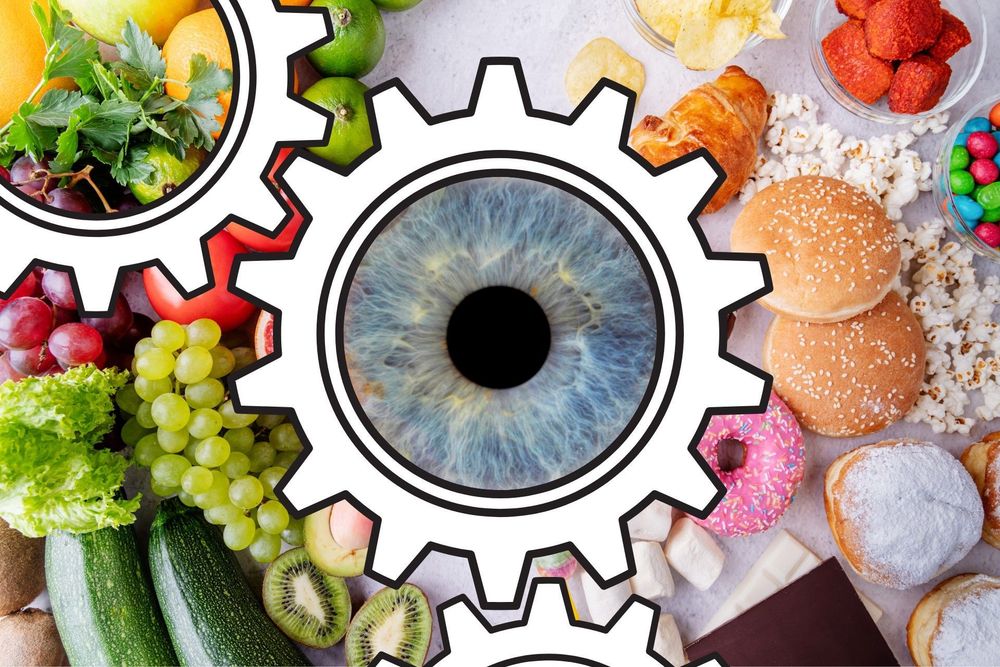
Hungry eyes
Humans focus less on nutritional information and more on how appetizing a food looks when deciding what to eat while hungry.
🥐 When we’re hungry, we pay more attention to taste than health, literally.
Eye-tracking and modelling show hunger shifts our focus toward calorie-rich foods and away from nutrition info.
05.07.2025 10:01 — 👍 8 🔁 4 💬 0 📌 1
Full Professorship in #PublicHealth Nutrition (joint position at University of Vienna & Medical University). Be part of our great department in one of the most liveable cities in the world!
Appl. Deadline: Sept 17
berufungsservice.univie.ac.at/fileadmin/us...
04.07.2025 07:36 — 👍 4 🔁 7 💬 0 📌 2
Proud to see this one out as Version of Record in #eLife
doi.org/10.7554/eLif... 🥰
03.07.2025 06:20 — 👍 11 🔁 6 💬 1 📌 0

Lovely to have been part of this inspiring meeting #EGPROC2025
at this stunning venue @jadatascience.bsky.social
27.06.2025 15:30 — 👍 8 🔁 0 💬 0 📌 0
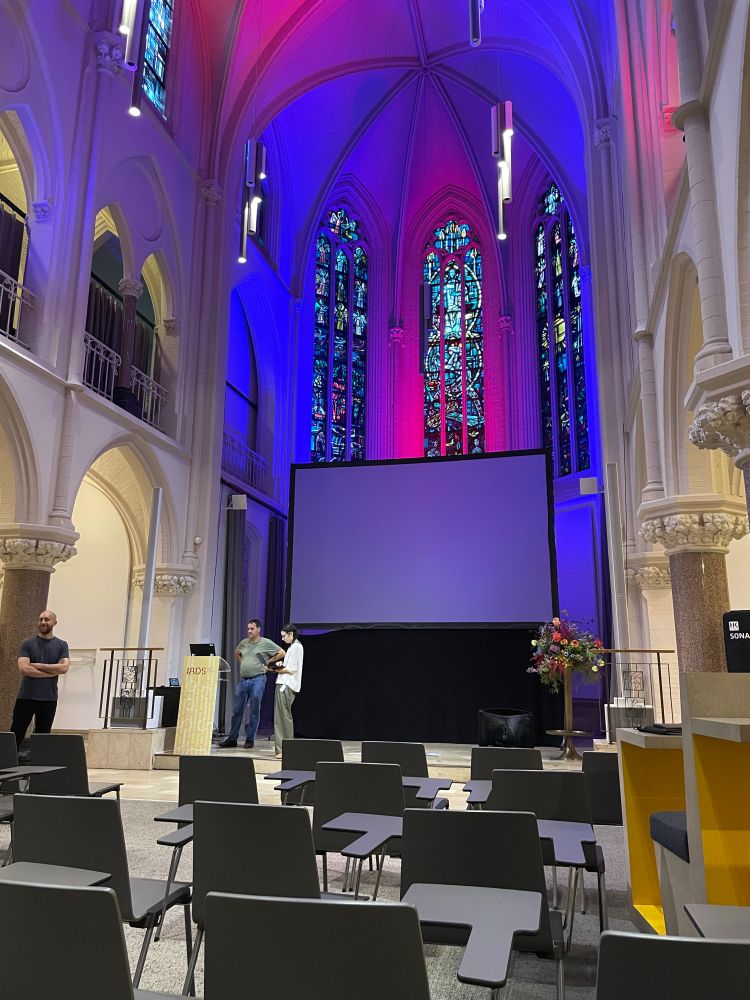
Excited to present our research at this epic location #EGPRO2025 with @sgluth.bsky.social, @maryamtohidi.bsky.social and @jennamarch.bsky.social 🚀
26.06.2025 07:03 — 👍 4 🔁 3 💬 1 📌 0
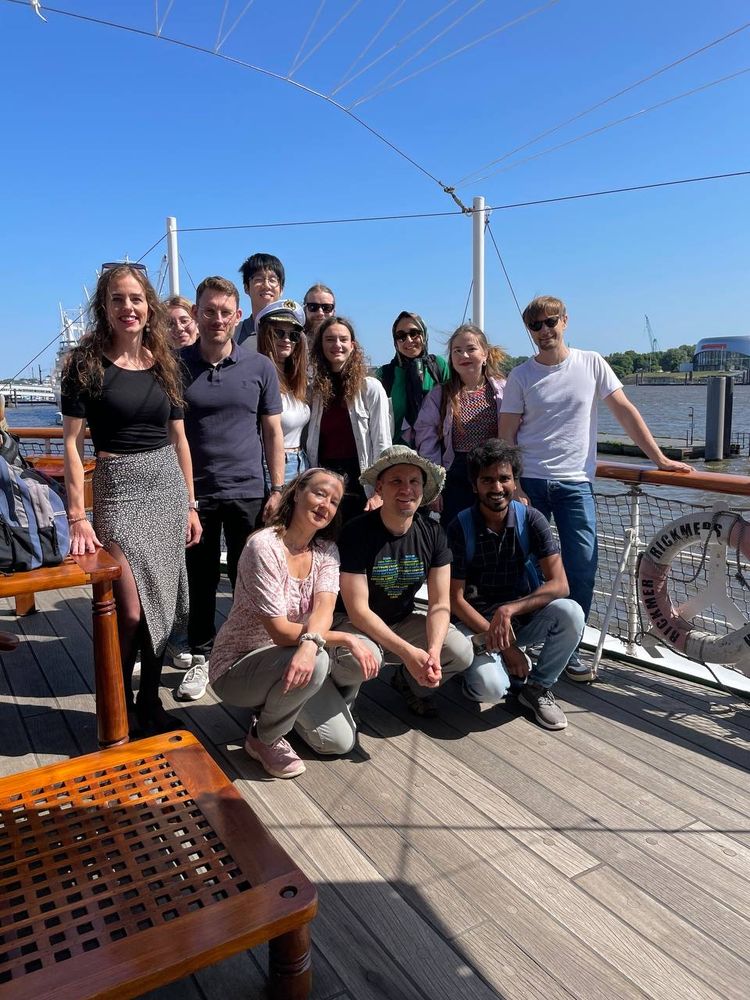
Amazing sunny team event with our lab today! ☀️ We tackled an escape room aboard the historic ship Rickmer Rickmers - nothing like solving puzzles surrounded by maritime history ⚓🧩 So lovely bonding outside the lab and putting our problem-solving skills to work in completely new settings! 🤓
13.06.2025 05:29 — 👍 13 🔁 4 💬 0 📌 0
🧠 Job Alert: Postdoc Position Available!
We're hiring a postdoc as part of the exciting DFG Research Unit on Belief Updating 🔬
🔍 What we're looking for:
Strong quantitative skills & passion for belief updating research
📍 Location: University of Hamburg
⏰ Duration: 2 years, full-time
🔗 Link below
04.06.2025 09:30 — 👍 2 🔁 4 💬 1 📌 0
Excited to see our study on the Tagesschau 🎉
Note: We conducted a laboratory experiment, meaning that the application to real life grocery shopping is limited. Our findings shed light on the cognitive mechanisms that underly food choice under hunger. Also, we do not appeal to politics or industry.
08.05.2025 11:49 — 👍 9 🔁 3 💬 0 📌 0
🎉 Thrilled to share the press releases of our study 🎉
English from @elife.bsky.social: elifesciences.org/for-the-pres...
German from @uni-hamburg.de: www.uni-hamburg.de/newsroom/pre...
24.04.2025 11:35 — 👍 22 🔁 11 💬 0 📌 0
Thrilled to share my first post here with something I’m truly proud of; My PhD paper is finally out in @commspsychol.bsky.social. Thanks to amazing @ktsetsos.bsky.social for his wise insights and our reviewers for their constructive comments.
You can read the full paper here: rdcu.be/eguDX
1/10
14.04.2025 11:53 — 👍 15 🔁 4 💬 1 📌 2
Do you find yourself more tempted by unhealthy foods the hungrier you get?
According to scientists, you’re not the only one.
buff.ly/cQp9idM
29.03.2025 04:21 — 👍 8 🔁 4 💬 0 📌 0
Huge thanks to the editor of eLife and the reviewers helpful comments, which further improved our manuscript, to my supervisor Sebastian Gluth, the amazing people from the Cognitive Modelling and Decision Neuroscience Lab @uni-hamburg.de
25.03.2025 12:56 — 👍 0 🔁 0 💬 0 📌 0
Make sure to check out our supplementary materials in which we analyse other attributes underlying food choice (wanting, caloric content and nutritional score) and show the results of alternative decision models. Overall, these analyses provide further evidence for our conclusions.
25.03.2025 12:56 — 👍 0 🔁 0 💬 1 📌 0
Together, our findings suggest that the effect of hunger state on the cognitive processes underlying dietary decision are characterised by a nuanced interplay of attention and the importance assigned to the options' underlying attributes. Finally, we discuss important implications of our findings.
25.03.2025 12:56 — 👍 0 🔁 0 💬 1 📌 0

Extensive model comparison revealed that this model demonstrated the best quantitative and qualitative fit suggesting that hunger alters the valuation process by a) increasing the relative importance of tastiness and b) shifting how attention modulates the consideration of nutritional information.
25.03.2025 12:56 — 👍 0 🔁 0 💬 1 📌 0

To better understand the mechanisms behind these effects, we extended the recently proposed multi-attribute attentional drift diffusion model by differentiating between the parameter discounting the non-looked-upon attribute (taste and health).
25.03.2025 12:56 — 👍 0 🔁 0 💬 1 📌 0

Our eye-tracking analyses revealed that participants spent more time on the chosen option and overall more time on food images compared to nutritional score, which was even more pronounced under hunger. A mediation analysis established that attention mediated the effect of hunger on choice.
25.03.2025 12:56 — 👍 0 🔁 0 💬 1 📌 0

We manipulated hunger successfully and show that participants prefer tasty over health food items in general and particularly when hungry. Moreover, tasty choices were faster than healthy ones.
25.03.2025 12:56 — 👍 0 🔁 0 💬 1 📌 0

We conducted a within-subject eye-tracking experiment, in which 70 participants completed a multi-attribute food choice task in hungry and sated states. In both conditions, participants fasted overnight. In the sated condition, they received a protein shake matched to their daily caloric needs .
25.03.2025 12:56 — 👍 0 🔁 0 💬 1 📌 0
Hunger can promote unhealthy dietary decisions which increase energy intake and weight. In the paper, we set out to shed light on the cognitive mechanisms underlying food choice, by investigating the effect of hunger on attention and valuation processes in multi-attribute dietary choice.
25.03.2025 12:56 — 👍 0 🔁 0 💬 1 📌 0
The Hungry Lens: Hunger Shifts Attention and Attribute Weighting in Dietary Choice
🚀 Revised Reviewed Preprint out in eLife 🚀
Excited to announce that my paper on the cognitive mechanisms underlying hunger-driven dietary choice is now available on @elife.bsky.social
elifesciences.org/reviewed-pre...
25.03.2025 12:56 — 👍 8 🔁 4 💬 1 📌 2
APA PsycNet
🚀 New paper out in Psychological Review!
How does learning change across the lifespan? We propose that resource rationality—adapting belief updating to cognitive limitations—can explain age-related differences in learning.
📖 doi.org/10.1037/rev0...
👇 A short thread:
28.02.2025 05:37 — 👍 31 🔁 11 💬 3 📌 1
🌍 Paris Brain Institute is an international scientific and medical research centre.
🇫🇷 L’Institut du Cerveau est un centre de recherche scientifique et médical.
👉 https://parisbraininstitute.org/
Cognitive Neuroscientist in Amsterdam
proactivebrainlab.com
Cognitive, brain & mind scientist @mpicbs.bsky.social & Max Planck Dahlem Campus of Cognition (Berlin) | head of @mbe-lab.bsky.social (he/him)
brain-body coupling | emotion & stress | 3D & XR for naturalistic psychology, neuroscience, & medicine
Postdoctoral researcher at UGent ~ metacognition & decision-making, interoception, brain-body interaction, health and sports 🧠🫀🏃♀️
Associate Professor, Dept of Psychology, UC Berkeley.
PI of @shenhavlab.bsky.social
https://www.shenhavlab.org/
The „Tagung experimentell arbeitender Psycholog*innen“ (TeaP) will take place at University of Tübingen in 2026 🧠💡✏️ Join us for pre-conference workshops on March 15 and for the main conference from March 16 through 18 🧑🎓👩🎓👨🎓 Website: https://coms.app/teap26/
Feed der Deutsches Primatenzentrum GmbH (DPZ)- Leibniz-Institut für Primatenforschung. Posts über unsere Forschung über und mit Primaten: Gesundheitsforschung und Primatenkognition. Impressum: https://www.dpz.eu/impressum
Philosopher/cognitive scientist. PhD Fellow at Uni. Lisbon/Bochum. Resident Fellow at the Konrad Lorenz Inst. for Evolution and Cognition. Learning, decision-making, agency, and control.
Co-founder @nonneuralcognition.bsky.social, VP @ispsm.bsky.social.
A career network featuring science jobs in academia and industry.
Visit our platform at www.science.hr
Pain scientist. Asst Clinical prof @ UCSF, lecture @ Stanford. Psychologist. Disruptor. Author📚 Tell Me Where It Hurts. Neuroscience nerd 🧠 #medsky #medtwitter #SciComm #neuroskyence
www.zoffness.com
PostDoc @universityofgraz.bsky.social
Research on visual attention to food, disgusting stuff, and oneself. Runner @runninGraz and coach @USI-Graz. Mastodon: @jonaspotthoff@mstdn.jp
he/him
neuroscientist University Medical Center
@UniLeipzig @UKL @MPI_CBS
studying how lifestyle affects brain structure & function. https://t.co/BPhdY6rLuS
feminist 🏳️🌈🏳️⚧️ she/her.
photo by Martin Jähnichen
passionate about gut-brain axis, neuroimaging, healthy aging
@ MPI CBS Leipzig
Neuroscientist studying tastes, smells, and the body-brain axis • New York-based researcher with faculty appointments at Nathan Kline Institute | NYU School of Medicine | City College of New York
nki.rfmh.org/people/renee-hartig-ph-d/
Research on computational cognitive models, the role of contexts, decision-making, Bayesian brain theories, and neuroimaging. Chair of Cognitive Computational Neuroscience @TU Dresden. More info on: https://tu-dresden.de/mn/psychologie/ifap/ccns
Biologist @ The Sainsbury Lab; passionate about plant pathogens & evolution; open science advocate; loves travel, food and sports; nomad and hunter-gatherer. Web http://kamounlab.net | Medium https://medium.com/@kamounlab | GetGenome http://getgenome.net
PhD Student at University of Hamburg (@uni-hamburg.de)
| DHPRL (@dhprlab.bsky.social)
https://www.researchgate.net/profile/Katja-Rewitz
Psychiatrist | Neuroscientist | Founding Member of the Psychosis Collective @TheCrick @UCLPsychiatry
🧠👨🔬 Postdoc UKE Hamburg - attention, decision-making & large-scale dynamics
Twitter: @itSiemsThatWay