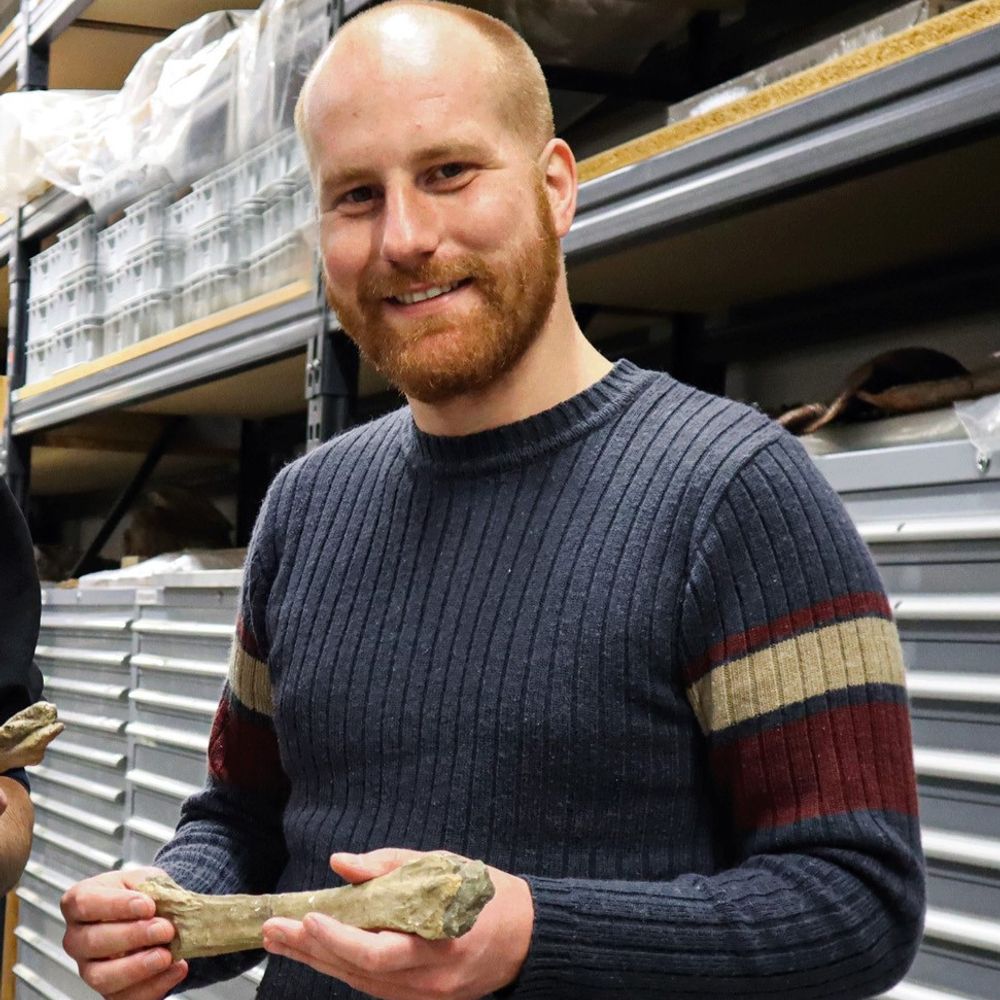
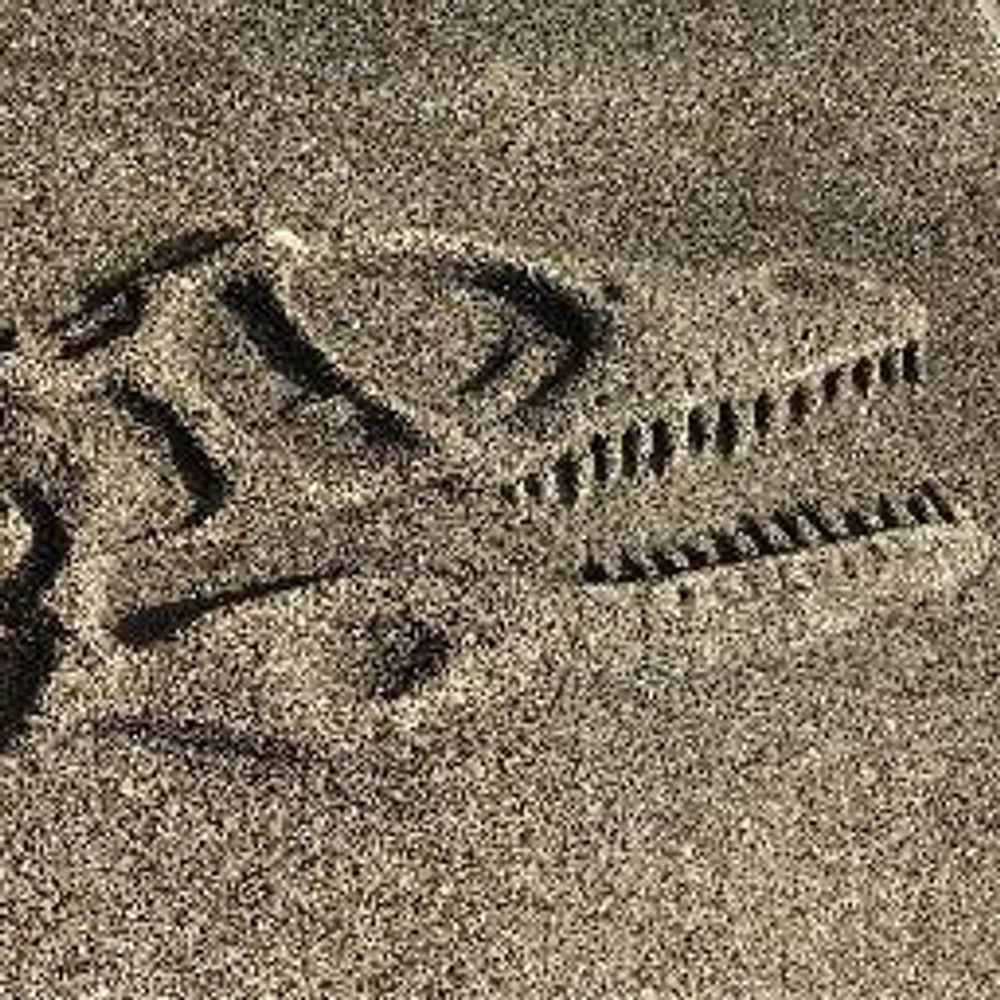
For #FossilFriday I’m pleased to announce our new paper on investigating the cranial performance and evolution of feeding behavior in tyrannosauroids and other theropods. Here’s a thread on some of our major findings. #Dinosaurs #Paleontology #Tyrannosaurus #Theropods
30.01.2026 07:29 — 👍 24 🔁 14 💬 1 📌 0

CT Data and Micro CT Specialist :South Kensington
JOB KLAXON! The @nhm-london.bsky.social is recruiting a micro-CT specialist! jobs.nhm.ac.uk/Job/JobDetai...
23.12.2025 06:39 — 👍 28 🔁 35 💬 1 📌 2

📣 Welcome to DPCB!
We’re SICB’s Division of Phylogenetics & Comparative Biology — the home for tree-thinking, evolutionary relationships, and comparative approaches across organisms.
#DPCB #SICB2026 #Phylogenetics
18.12.2025 21:38 — 👍 25 🔁 9 💬 0 📌 0
Check out our new paper on the evolution of morphological variation in the avian head, led by @knapprew.bsky.social and out now in @royalsocietypublishing.org Proc B
17.12.2025 14:24 — 👍 11 🔁 3 💬 0 📌 0

Centre for Integrative Anatomy Symposium - Anatomy: Past, Present & Future
Dive, in-person, into the fascinating world of anatomy and explore its journey from past discoveries to present and future innovations!
Save the date: 19Feb2026. Our all-day #symposium, celebrating #UCL200, is now bookable, FREE: tinyurl.com/UCL200Anatom...
Topic: #Anatomy: Past, Present & Future - 14+ speakers, plenty of discussion/networking opportunities; refreshments & lunch included @ucl.ac.uk @uclnews.bsky.social
10.12.2025 13:36 — 👍 3 🔁 5 💬 0 📌 0

Abstract: Under the banner of progress, products have been uncritically adopted or
even imposed on users — in past centuries with tobacco and combustion engines, and in
the 21st with social media. For these collective blunders, we now regret our involvement or
apathy as scientists, and society struggles to put the genie back in the bottle. Currently, we
are similarly entangled with artificial intelligence (AI) technology. For example, software updates are rolled out seamlessly and non-consensually, Microsoft Office is bundled with chatbots, and we, our students, and our employers have had no say, as it is not
considered a valid position to reject AI technologies in our teaching and research. This
is why in June 2025, we co-authored an Open Letter calling on our employers to reverse
and rethink their stance on uncritically adopting AI technologies. In this position piece,
we expound on why universities must take their role seriously toa) counter the technology
industry’s marketing, hype, and harm; and to b) safeguard higher education, critical
thinking, expertise, academic freedom, and scientific integrity. We include pointers to
relevant work to further inform our colleagues.

Figure 1. A cartoon set theoretic view on various terms (see Table 1) used when discussing the superset AI
(black outline, hatched background): LLMs are in orange; ANNs are in magenta; generative models are
in blue; and finally, chatbots are in green. Where these intersect, the colours reflect that, e.g. generative adversarial network (GAN) and Boltzmann machine (BM) models are in the purple subset because they are
both generative and ANNs. In the case of proprietary closed source models, e.g. OpenAI’s ChatGPT and
Apple’s Siri, we cannot verify their implementation and so academics can only make educated guesses (cf.
Dingemanse 2025). Undefined terms used above: BERT (Devlin et al. 2019); AlexNet (Krizhevsky et al.
2017); A.L.I.C.E. (Wallace 2009); ELIZA (Weizenbaum 1966); Jabberwacky (Twist 2003); linear discriminant analysis (LDA); quadratic discriminant analysis (QDA).

Table 1. Below some of the typical terminological disarray is untangled. Importantly, none of these terms
are orthogonal nor do they exclusively pick out the types of products we may wish to critique or proscribe.

Protecting the Ecosystem of Human Knowledge: Five Principles
Finally! 🤩 Our position piece: Against the Uncritical Adoption of 'AI' Technologies in Academia:
doi.org/10.5281/zeno...
We unpick the tech industry’s marketing, hype, & harm; and we argue for safeguarding higher education, critical
thinking, expertise, academic freedom, & scientific integrity.
1/n
06.09.2025 08:13 — 👍 3676 🔁 1856 💬 109 📌 373


It's #caturday so here's Emile, the star of my talk today at #svp2025.
15.11.2025 10:45 — 👍 13 🔁 1 💬 1 📌 0

If you're at #SVP2025 please stop by my poster and say hi! I'd love to talk to you about bird head evolution!
15.11.2025 10:34 — 👍 11 🔁 4 💬 0 📌 0
Good morning #SVP2025! Big day for the Felice Lab- three talks this morning from postdocs @jwoyston.bsky.social,
Ryan Marek, and @knapprew.bsky.social, on bird diversity, theropod necks, and mammal brains, and the PhD student Kat Gregory presenting a poster on tradeoffs in the head of birds!
15.11.2025 07:45 — 👍 5 🔁 1 💬 0 📌 0
Moazen Lab – to advance understanding & repair of bones & joints
POST-DOC #JOB ADVERT – DEADLINE 20th Aug 2025
@ucl.ac.uk @ucl-c4ia.bsky.social @moazenlab.bsky.social
To work on a #HFSP funded project that aims to understand the musculoskeletal system of head-first burrowers; leading computer simulation aspects of the project see moazenlab.com/vacancies/
22.07.2025 16:37 — 👍 6 🔁 5 💬 0 📌 1
Do you like 3d imaging and invertebrate development? apply for this postdoc with @echinerd.bsky.social and me!
14.05.2025 09:46 — 👍 4 🔁 0 💬 0 📌 0
check out @m-j-mitchell.bsky.social 's research on extinct in the wild birds ⬇️
04.04.2025 10:08 — 👍 3 🔁 0 💬 0 📌 0
check out this new paper from @devinhoffman.bsky.social using bone histology to uncover growth rates in a fossil gator 🐊
10.02.2025 09:44 — 👍 3 🔁 1 💬 0 📌 0
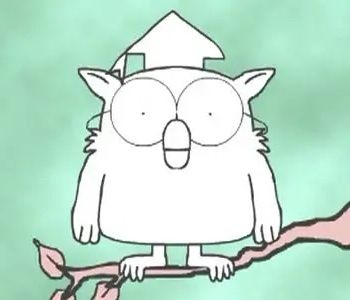
A cartoon owl with a graduation cap on- clearly a big-brained bird
What good is a big brain? In our new preprint, @jwoyston.bsky.social, Mike May, and I show that birds with bigger brains have lower extinction rates www.biorxiv.org/content/10.1...
06.02.2025 17:09 — 👍 4 🔁 0 💬 0 📌 0
there is no "defensible use case" for chatgpt. do your own work and use your own brain or fuck off
28.01.2025 23:14 — 👍 8534 🔁 1967 💬 159 📌 68
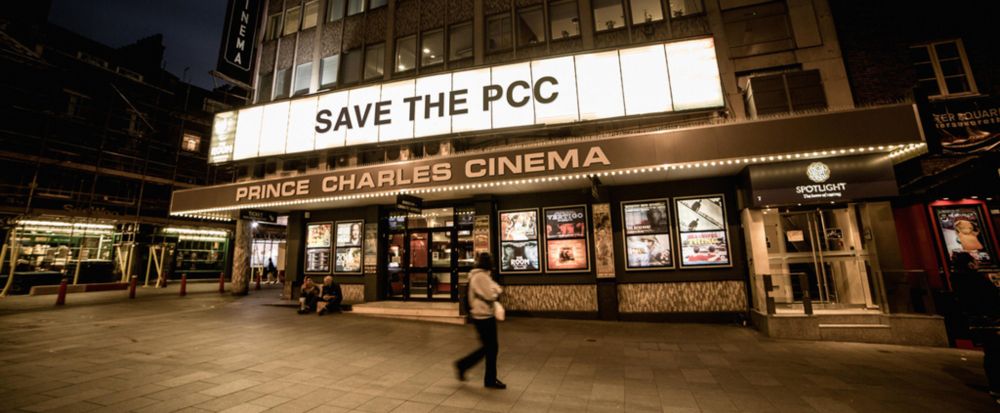
Save The Prince Charles Cinema
The iconic Prince Charles Cinema in London’s West End future is under serious threat!
We are beyond disappointed that our landlords Zedwell LSQ Ltd and their ultimate parent company Criterion Capital...
#SaveThePCC
Some of you may have read about the situation regarding our new landlord wishing to add a new redevelopment break clause, with only 6 months notice to our lease.
For now, we're simply asking you all to share & sign the petition below;
you.38degrees.org.uk/p/princechar...
28.01.2025 10:14 — 👍 2161 🔁 2099 💬 81 📌 541
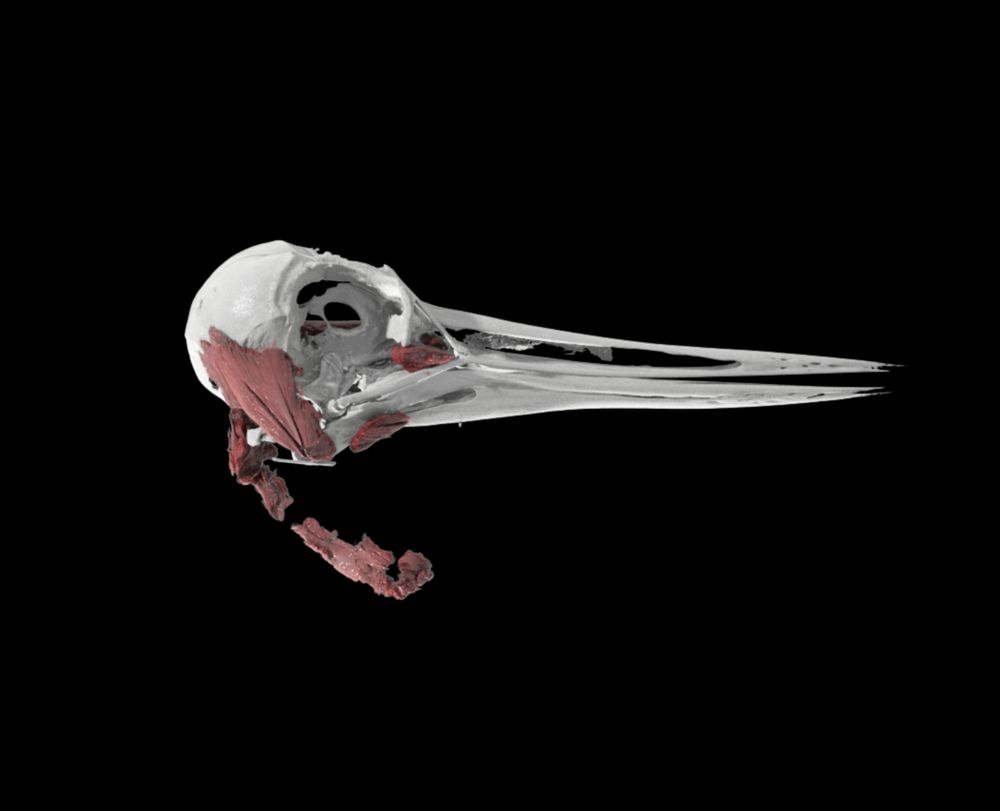
a 3d rendering of the skull and cranial muscles of the Eurasian oystercatcher (Haematopus ostralegus)
turns out you can do some pretty cool stuff with the power of diceCT, SPROUT (www.biorxiv.org/content/10.1...), and the SmARTR pipeline (www.sciencedirect.com/science/arti...)
21.12.2024 15:28 — 👍 40 🔁 10 💬 0 📌 0

Three students in lab coats dissecting bird specimens
More anatomical research happening in the UCL Centre for Integrative Anatomy
14.11.2024 16:52 — 👍 3 🔁 0 💬 0 📌 0

The skinned head of a Eurasian Oystercatcher
Took some time away from R today to do some dissecting. I feel like a real biologist.
13.11.2024 16:22 — 👍 3 🔁 0 💬 0 📌 0
Elihu Professor of Biostatistics @yalesph.bsky.social--Cancer, Infectious disease, Evolutionary biology, Fungi, sometimes running
biologist | postdoc | evo devo | morphology | genomes | geckos | loud music & hot sauce enthusiast | he/him
https://aarongriffing.weebly.com/
#GeckoEvoDevo
Paleontologist specializing in functional morphology and near-bird dinosaurs. Current Marie Skłodowska-Curie Fellow at Universitat Rovira i Virgili.
Postdoctoral Researcher @ University of Copenhagen. Macroevolution. Phylogenetic Comparative Methods. Paleobiology.
PhD Student at Washington University in the Landis Lab!!
Polyploids Rock!!!
He/Him
Professor of Evolutionary Biology at Louisiana State University.
Phylogenomics, Molecular Evolution, Evolutionary History, Statistics, Computational Biology
Indiana and Texas Alum
Paleontologist | Postdoctoral Researcher at UA | PhD @Penn, @BristolPalaeo masters | Cranial biomechanics, methods development 🐊🐐🐍🏳️🌈👨🏾💻
Schmidt AI in Science Postdoctoral Fellow | evolution | systematic biology | natural history | barbeque enthusiast
🇭🇺🇺🇸 Anthropologist/Public Health Prof breastfeeding, lactation, MNCH, reproduction, public health, health policy, equity, justice 🤱🏾🤱🏽🤱 posts - my own. https://nursing.jhu.edu/faculty-research/faculty/directory/cecilia-tomori/
Palaeontologist specialising in the behaviour of dinosaurs and biology of pterosaurs. Reader in Zoology @QMUL. Author of several books, podcaster, general sci-commer. Thoughts my own. He / him. davehone.co.uk
Scottish MSci Palaeontology and Geology student @Palaeo_Bham 🏴🦕 | Studying biomechanics and taphonomy using FEA and CFD 🏞️🦷 | Volleyball Enthusiast 🏐
art & architectural historian / visual, material & religious culture
🪸 Search and download biodiversity data.
🌍 Discover co-inhabitants of planet Earth.
Scientist. Physiologist, Zoologist, Ornithologist - Assoc Prof at The University of Oxford. Associate Ed at RSocPublishing 🏳️🌈🇪🇺🐦🎾
Postdoctoral Researcher @smnstuttgart.bsky.social. Vertebrate palaeontologist studying Triassic reptile evolution.
Nature. Science. Rocks, Fossils, Geology and Paleontology. Gardening, Plants, and Flowers. Pottery, Photography, Painting, Drawing, and Art. History and Politics. Astronomy. Exploration. Cats. Birds. Wildlife.
PhD student studying shape evolution in birds and mammals - Felice lab, UCL
https://linktr.ee/morpho_kat
PhD student at Liverpool researching mammal skulls🦣🫎