Human microglia differentially respond to β-amyloid, tau, and combined Alzheimer's disease pathologies in vivo
alz-journals.onlinelibrary.wiley.com/doi/10.1002/... @alzdemjournals.bsky.social
@ycchu.bsky.social
Explore how ultrasound can be used to influence cellular activities.
Human microglia differentially respond to β-amyloid, tau, and combined Alzheimer's disease pathologies in vivo
alz-journals.onlinelibrary.wiley.com/doi/10.1002/... @alzdemjournals.bsky.social

How does messenger RNA (mRNA) get out of the nucleus to become a protein? Eukaryotic mRNA is packaged, exported, and then translated in the cytoplasm. But how do these steps work? And what are open questions? Check out our new review for our take: www.annualreviews.org/content/jour... (1/3)
21.11.2025 17:36 — 👍 119 🔁 52 💬 1 📌 3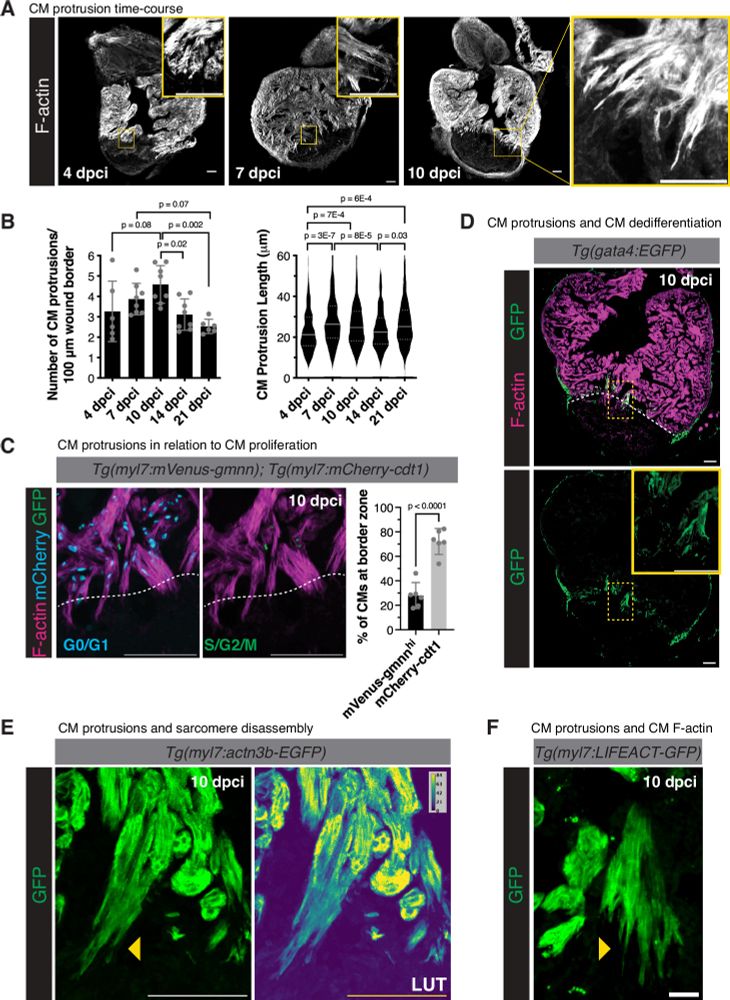
Very excited to see the first Beisaw lab publication out in its final form 🥳🥳 rdcu.be/ei1I7 if you’re interested in zebrafish heart regeneration and how cardiomyocytes replace the fibrotic injured tissue (spoiler alert: macrophages play an important role), then read it here 👇
23.04.2025 17:53 — 👍 68 🔁 24 💬 11 📌 4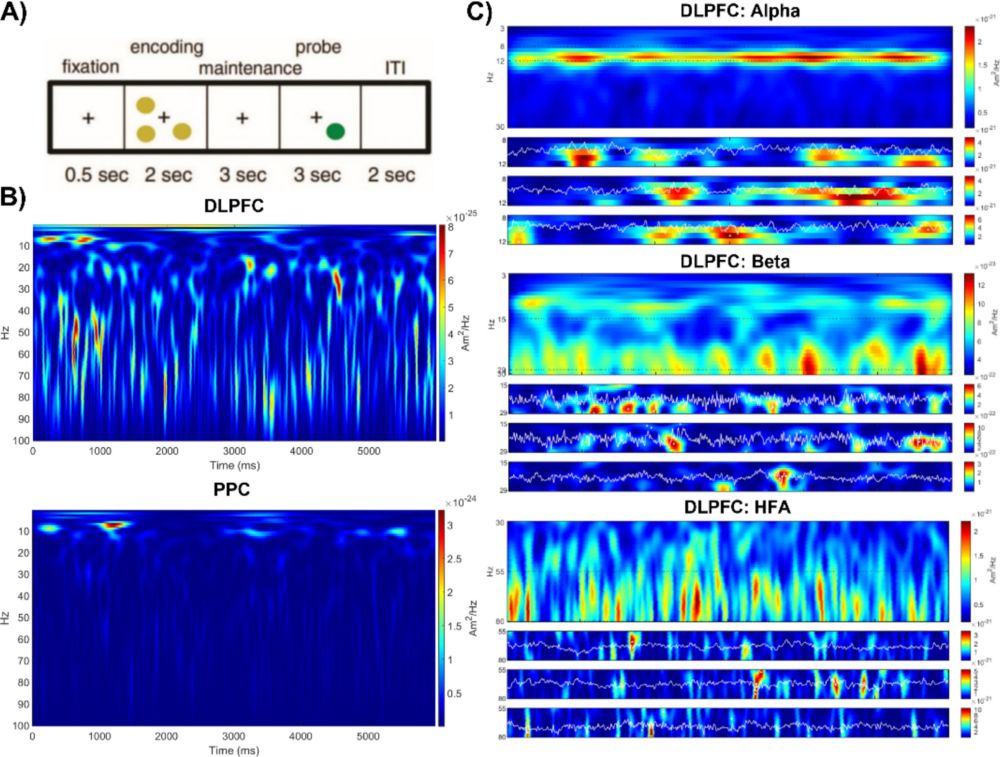
Dysfunctional oscillatory bursting patterns linked to working memory in adolescents with attention deficit hyperactivity disorder
link.springer.com/article/10.3...
#neuroscience

Fig. 1: Rapid degradation of postsynaptic scaffold proteins fused to mTurquoise2 and a mAID degron.
Revealing acute consequences of rapid degradation of synaptic fusion proteins at individual synapses using Auxin-Inducible Degron 2 technology
www.nature.com/articles/s42...

Figure showing that uncoupling E-cadherin–EGFR complexes disrupts tension-dependent proliferation in dense epithelial cultures.
Yubo Zou, Deborah Leckband and colleagues find that EGFR is an essential component in E-cadherin force transduction complexes.
Highlight: journals.biologists.com/jcs/article/...
Article: journals.biologists.com/jcs/article/...
#OpenAccess #ReadandPublish
We just took a deep dive into this tour-de-force chemoproteomics paper from @stephanhacker2.bsky.social and colleagues in our journal club today — really interesting findings about selectivity and coverage of 56 different electrophilic warheads, and great experimental and analysis workflows. Bravo!
20.11.2025 01:24 — 👍 16 🔁 8 💬 2 📌 0
Rendering of a full cochlea (left) with three stains (PV, VGlut3, CTBP2) shown in three different colors (red, blue, cyan). The whole cochlea is a spiral shaped structure, with spiral ganglion neurons (SGNs) in the inner helix, labeled by PV and inner hair cells (IHCs) in the outer helix, labeled by Vglur3. The figure also shows zoom ins. The right hand side shows segmentation results for SGNs, IHCs (represented by colored masks) and synapse detections (represented by colored dots).
Preprint alert! CochleaNet, our framework for analyzing light-sheet data of the cochlea. It consists of three networks to segment spiral ganglion neurons, inner hair cells, and to detect synapses. See rendering of a full cochlea in the image, find the preprint at doi.org/10.1101/2025....
18.11.2025 07:58 — 👍 24 🔁 4 💬 1 📌 1🚀 New from the lab! How do sensory cortices "know" whether they’ll become visual or somatosensory? 🧠 We uncover early modality-identity genes in cortex, some set before thalamic innervation via cell-adhesion codes, others refined by thalamic activity. @glb-lab.bsky.social @neuroalc.bsky.social
18.11.2025 09:48 — 👍 17 🔁 6 💬 2 📌 0
Our paper on the role of neurons in Nematostella head regeneration is now out at @currentbiology.bsky.social Big thank you to all collaborators, it was a pleasure!
Ectopic head regeneration after nervous system ablation in a sea anemone: Current Biology www.cell.com/current-biol...

☕The authors identify a chemical cocktail to generate #totipotent - like cells, which they then use to build an #embryo model. This model captures a developmental spectrum from early #embryogenesis to post-implantation events.
bit.ly/4oHxUZp

Skeletal muscle-derived IL-33 mediates muscle-to-bone crosstalk and regulates bone metabolism via CD8+ T cell-secreted CCL5
www.thelancet.com/journals/ebi...

Get Primed on Appendicitis with our NEW PrimeView! FREE to download this week! https://www.nature.c...
13.11.2025 21:48 — 👍 1 🔁 2 💬 0 📌 0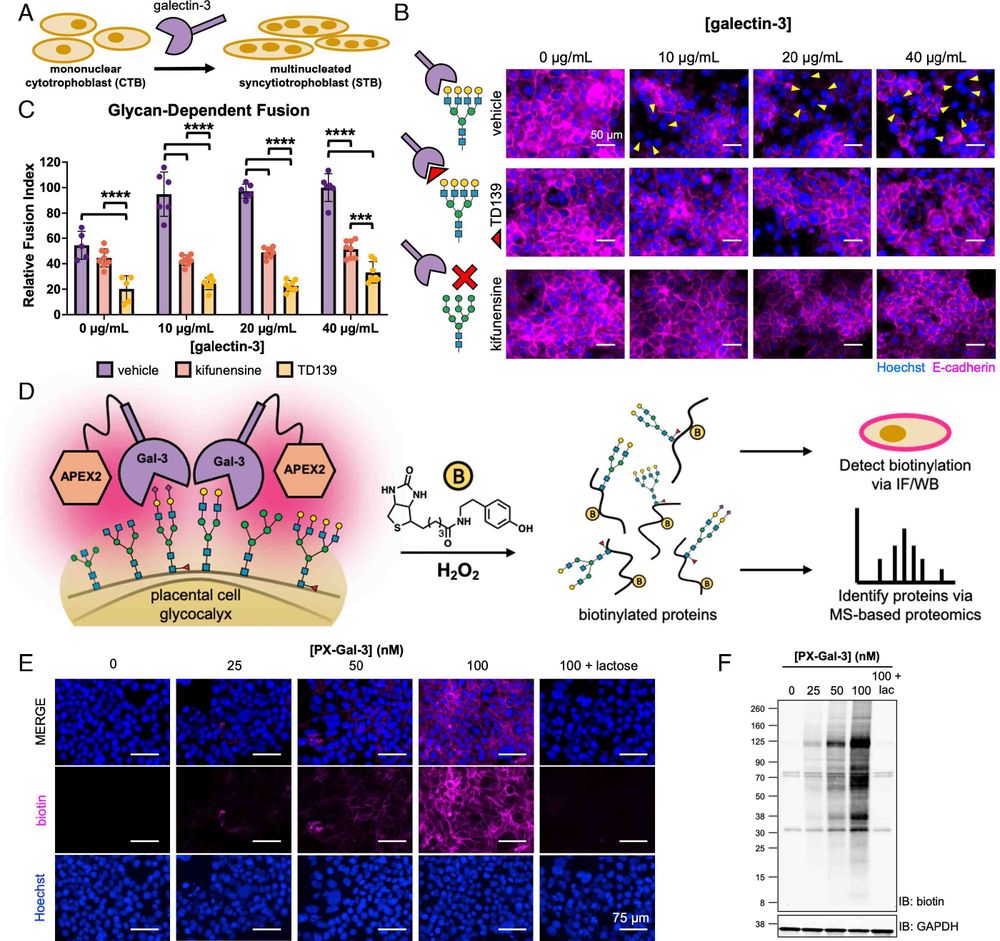
A trending PNAS article in the last week is “Mapping the placental galectin-3 interactome identifies CD9 and ITGB1 as functional glycoprotein counterreceptors during syncytialization.” Read now: https://ow.ly/kmHW50Xr3h7
For more trending articles, visit https://ow.ly/cbLB50Xr3f0.

This is figure 2 from “Physiology and immunology of pig-to-human decedent kidney xenotransplant.” It shows donor-specific antibody testing, xenograft histopathology, and rapid bulk 699 transcriptomic analyses
Two papers in Nature present an analysis of the immune response to a pig-to-human kidney transplant in a brain-dead patient over a period of two months.
go.nature.com/4qWZ687
go.nature.com/4p6PmGD
#immunosky #medsky 🧪

Structure in noise: Recurrent connectivity shapes neural variability to balance perceptual and cognitive demands in the human brain www.cell.com/neuron/fullt... (noise is a tunable feature, not a bug)
13.11.2025 13:44 — 👍 28 🔁 8 💬 0 📌 1
How genetically encoded sensors have lit up neuroscience
www.nature.com/articles/d41...
And here is the story after peer review. This work highlights our current approach, which is to use Piezo channels to uncover new areas of biology that are shaped by mechanical forces: www.science.org/doi/10.1126/...
13.11.2025 22:05 — 👍 77 🔁 29 💬 2 📌 4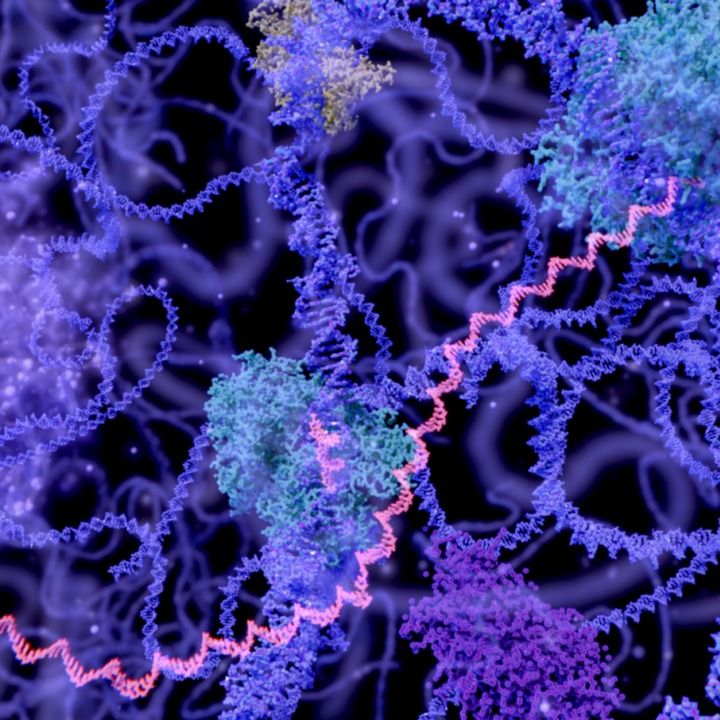
🧬 AI is helping decode the genome's "switchboard." A Berkeley Lab and Stanford study in Nature shows how combining experiments with machine learning reveals where AI succeeds and falls short in predicting how DNA enhancers control gene activity.
13.11.2025 17:15 — 👍 2 🔁 2 💬 0 📌 0
Honoured to have participated in this amazing story uncovering novel #florigen roles in #Arabidopsis Congrats to @HeGao @NaDing and collaborators!!
Check it out @nature.com
🌱 🌸 🧬 🔬
#bZIP #proteinphosphorylation @mpipz.bsky.social
rdcu.be/ePPjS
Maria Tettamanti shows that inhibition of TORC2 by the small amphipath PalmC induces the TORC2-dependent internalization of sterols. Congrats to Maria and all coworkers involved, and to EMBOj for the efficient review process: use review commons! @biology-unige.bsky.social @sciencesunige.bsky.social
14.11.2025 10:35 — 👍 24 🔁 17 💬 0 📌 1
New paper: Nanoscale domains govern local diffusion and ageing within fused-in-sarcoma condensates
Single-molecule tracking reveals nanoscale domains within #FUS #condensates that migrate to the condensate surface during ageing, seeding #ALS fibrils.
www.nature.com/articles/s41...

Tools that track specific molecules in neurons have enabled researchers to probe previously unexplored aspects of neurobiology
go.nature.com/4p2hyua

In a handful of academic laboratories and companies, researchers are growing human neurons and trying to turn them into functional systems equivalent to biological transistors
go.nature.com/4p28R39

The evolutionary origins of synaptic proteins and their changing roles in different organisms across evolution — a Review by Jeffrey J. Colgren & Pawel Burkhardt
@jeffcolgren.bsky.social @pawelburkhardt.bsky.social
#neuroscience #neuroskyence
www.nature.com/articles/s41...

#Tubulin regulates stability and localization of STMN2 by binding preferentially to its soluble form, say Xiang Deng, Timothy Mitchison and colleagues @harvardmed.bsky.social: rupress.org/jcb/article/...
#ProteinHomeostasis #Neuroscience #Biochemistry #Cytoskeleton #Neurodegeneration #ALS

From an accidental discovery of hidden biology to a new framework to understanding and diagnosing rare disease. Thrilled to share the most recent work from our lab and the amazing Jimmy Ly.
wi.mit.edu/news/alterna...

www.nature.com/articles/s42...
Latest from the lab. The conclusion is in the title!
Basically, we found that the KMN complex (outer kinetochore) is fully conserved between plants and fungi/animals, showing deep origin. (reminder, you are closer to a mushroom than a mushroom is to a plant.)