I'm chairing the brand new "Excellence in Mentoring in Political Communication" award, with @lpargyle.bsky.social, Michael Chan and Dan Myers--please nominate scholars who you believe have supported the next generation of scholars through advising and other forms of mentorship!
10.02.2026 16:32 — 👍 2 🔁 2 💬 0 📌 0
Looking for a tl;dr for these two excellent papers? I've got you covered: www.science.org/doi/10.1126/...
04.12.2025 22:21 — 👍 7 🔁 2 💬 1 📌 0
Thanks!!
06.08.2025 01:42 — 👍 1 🔁 0 💬 0 📌 0
Tagging @lauraknelson.bsky.social for her recs
05.08.2025 12:49 — 👍 2 🔁 0 💬 1 📌 0
Our paper! @ethanbusby.bsky.social Alex Lyman, Bryce Hepner, Josh Gubler, David Wingate
01.08.2025 17:11 — 👍 4 🔁 0 💬 0 📌 0
Excited to see this excellent collection of papers come out! Many thanks to @thomasdavidson.bsky.social and Daniel Karell
01.08.2025 17:08 — 👍 3 🔁 0 💬 0 📌 0

NLP 4 Democracy - COLM 2025
📣 Super excited to organize the first workshop on ✨NLP for Democracy✨ at COLM @colmweb.org!!
Check out our website: sites.google.com/andrew.cmu.e...
Call for submissions (extended abstracts) due June 19, 11:59pm AoE
#COLM2025 #LLMs #NLP #NLProc #ComputationalSocialScience
21.05.2025 16:39 — 👍 47 🔁 18 💬 1 📌 6
Sorry it's rough, hang in there! 💕
22.03.2025 10:47 — 👍 0 🔁 0 💬 0 📌 0
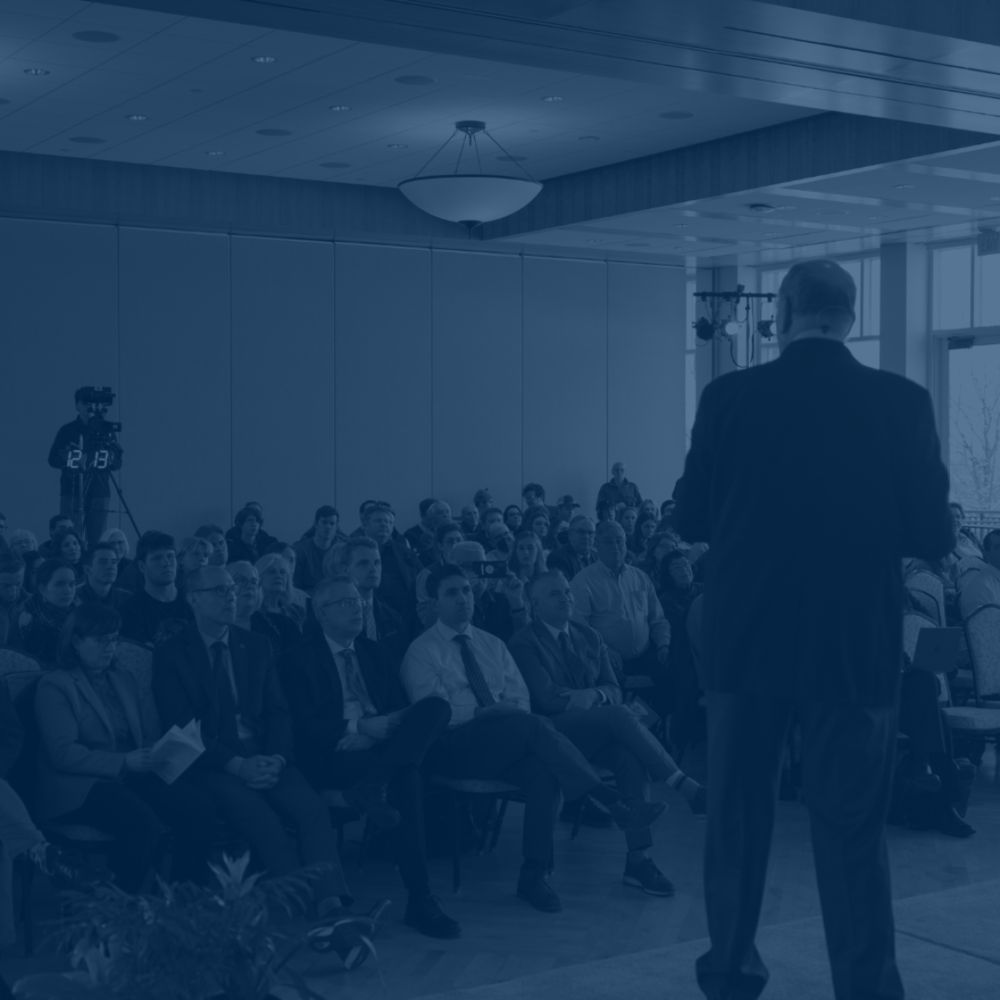
Wheatley Seminar on Religion and Politics
Are you a PhD student in Political Science or Sociology interested in religion & public life? Apply for a *fully funded* opportunity to join us this summer (June 16-21) as part of the inaugural Wheatley Seminar in Religion & Politics. Apply by March 31. Details here:
wheatley.byu.edu/religionsemi...
05.03.2025 20:20 — 👍 53 🔁 38 💬 4 📌 4
Ok, thread time.
Closed-ended survey responses are efficient and easy to analyze, but limit what respondents can say. Open-ended responses are useful for letting respondents answer with more depth in their own words (as opposed to yours).
31.01.2025 13:56 — 👍 46 🔁 19 💬 2 📌 1

Gloria in excel sheets deo
20.12.2024 23:53 — 👍 142 🔁 31 💬 3 📌 0
Love working with the brilliant @shugars.bsky.social!
08.09.2024 03:51 — 👍 3 🔁 0 💬 0 📌 0
Join us in Puerto Rico to talk AI and Political science! Deadline Friday
14.08.2024 13:32 — 👍 2 🔁 0 💬 0 📌 0
This is such a a cool service to provide, and a spectacular team to work with!
24.04.2024 17:58 — 👍 1 🔁 0 💬 0 📌 0
Your execution of your resolution deviated from the pre-registration.
02.01.2024 00:58 — 👍 2 🔁 0 💬 0 📌 0
This is such a cool and exciting project!
14.11.2023 14:54 — 👍 1 🔁 0 💬 0 📌 0
I got it in 1! 2 days in a row!! Pretty sure my life has peaked and it is all downhill...
06.11.2023 16:29 — 👍 1 🔁 0 💬 0 📌 0
Recent study by Lisa Argyle, Chris Bail et al. showing that using an LLM to suggest rephrasings in conversations about divisive topics can improve perceived conversation quality and feelings of democratic reciprocity — without any apparent manipulation of political views.
doi.org/10.1073/pnas...
12.10.2023 11:54 — 👍 4 🔁 2 💬 0 📌 0

Treated conversation flow: Respondents write messages unimpeded until one partner receives a rephrasing prompt for the first message longer than four words, and every other conversational turn thereafter. The chat assistant intercepts the treated user’s message, using GPT-3 to propose evidence-based alternative phrasings, while retaining the semantic content. It suggests three randomly ordered alternatives to the author of the message and presents the opportunity to accept or edit any of these rephrasing suggestions or send their original message. Their choice is sent to their partner and the conversation continues.

Analysis of semantic content of messages. Panel (A) presents a visualization of the topical distribution of messages sent on the platform. Each point is the semantic embedding of a message; points that are close to each other represent messages that are semantically similar. Messages are clustered with k-means, and clusters are automatically labeled by GPT-4

Conversational quality Panel (A) and democratic reciprocity Panel (B) subgroup means and confidence intervals. Higher values signify greater quality/support.
🤖 AI can improve the quality of political conversations online without manipulating policy positions 🤖
Great AI-Mediated Communication (AIMC) study from @lpargyle.bsky.social @chrisbail.bsky.social Busby, Gubler, Howe, Rytting, @taylor-sorensen.bsky.social & Wingate
doi.org/10.1073/pnas.2311627120
21.10.2023 17:23 — 👍 17 🔁 4 💬 0 📌 2
Repost if you’ve participated in a Summer Institute in Computational Social Science. Let’s get #SICSS Bluesky going!
08.10.2023 19:49 — 👍 51 🔁 63 💬 0 📌 3

Political discourse is the soul of democracy, but misunderstanding and conflict can fester in divisive conversations. The widespread shift to online discourse exacerbates many of these problems and corrodes the capacity of diverse societies to cooperate in solving social problems. Scholars and civil society groups promote interventions that make conversations less divisive or more productive, but scaling these efforts to online discourse is challenging. We conduct a large-scale experiment that demonstrates how online conversations about divisive topics can be improved with AI tools. Specifically, we employ a large language model to make real-time, evidence-based recommendations intended to improve participants’ perception of feeling understood. These interventions improve reported conversation quality, promote democratic reciprocity, and improve the tone, without systematically changing the content of the conversation or moving people’s policy attitudes
No better first 🟦 than a new paper! Hot off the press at PNAS: "Leveraging AI for democratic discourse: Chat interventions can improve online political conversations at scale."
Real-time recommendations from an LLM improve divisive conversations.
Open access at: www.pnas.org/doi/10.1073/...
03.10.2023 18:14 — 👍 9 🔁 1 💬 0 📌 0
Assistant Professor of Political Science at the University of Toronto
www.semrasevi.com
Assistant Professor of Social Psychology (They/Them). Views expressed are strictly my own and not those of my employer.
Prof at Cornell studying how human-AI dialogues can correct inaccurate beliefs, why people share falsehoods, and ways to reduce political polarization and promote cooperation. Computational social science + cognitive psychology.
https://www.DaveRand.org/
Associate professor of social computing at UW CSE, leading @socialfutureslab.bsky.social
social.cs.washington.edu
Professor of Communication and Political Science at Ohio State University and Fellow of the International Communication Association.
Sociologist at Rutgers. Studies far-right politics, populism, and hate speech. Computational social science.
https://www.thomasrdavidson.com/
Associate Professor @ UBC
computational sociology
machine learning is feminist
You only have to look at the Medusa straight on to see her. And she’s not deadly. She’s beautiful and she’s laughing.
www.lauraknelson.com
The 12th International Conference on Computational Social Science (IC2S2) will be held in Burlington, Vermont July 28-31 2026
Website: https://ic2s2-2026.org/
I teach policy and data analysis @Syracuse Maxwell. formerly: Prof @ New College of Florida, PhD @ UCDavis
Associate Professor in Political Science, Trinity College Dublin. Research on climate change contrarianism, political communication, political extremism.
Stanford Political Science PhD Candidate | Identity and political behavior
Co-director British Election Study. Political Scientist and Data Scientist. Political science methods/political behavior/causal inference. Posts do not represent employer.
I’m not in James Thurber’s attic any more! right now I’m home yay ! I’m the one who writes this column https://www.theatlantic.com/author/alexandra-petri/ and loves puns