De primaire reactie is invoelbaar @schimmelpenninck.bsky.social, maar hopelijk helpt onze beleidsbrief om inzichtelijk te maken waarom het misschien niet zo'n gek idee is: www.trimbos.nl/wp-content/u...
26.01.2026 13:02 — 👍 6 🔁 2 💬 0 📌 0

A Tornado diagram showing incremental costs for different parameters. Parameters listed include exchange transfusion treatment rate, intensive phototherapy rate, unit prices for hospital day, phototherapy at home, and blood pricks.
Universal transcutaneous bilirubin (#TCB) screening identified more neonates requiring treatment for hyperbilirubinemia and was cost-effective compared with visual inspection alone in midwifery-led home care. ja.ma/3LNnvgC
15.01.2026 12:00 — 👍 2 🔁 2 💬 0 📌 0

Universal Transcutaneous Bilirubin Screening in a Midwifery-Led Home Care Setting
This decision analytical model compares the outcomes and costs associated with universal transcutaneous bilirubin screening vs visual inspection for identifying neonates being cared for at home in the...
How to screen for jaundice in newborns cared for @home? Our prospective study among >2300 babies now out in @jamanetworkopen.com shows that transcutaneous bilirubin screening picks up ~30% more babies requiring treatment than visual inspection. And saves costs.
#neonatology
doi.org/10.1001/jama...
15.01.2026 12:25 — 👍 0 🔁 0 💬 0 📌 0

Screenshot of the title and abstract:
Parental socioeconomic composition of birth cohorts changed during the COVID-19 pandemic.
The COVID-19 pandemic offers opportunities to study effects of in-utero and early life exposure to environmental changes. However, inferences from such studies may be flawed if the pandemic has changed the socioeconomic composition of parents. Analysing over 77.9 million live births from 15 countries, we estimate changes in the socioeconomic composition of the cohort born between December 2020 and December 2021 using interrupted time series analysis. We find that, compared with their counterfactual compositions, the December 2020-December 2021 birth cohort has a higher proportion of babies born to socioeconomically advantaged parents in Austria, England, Finland, the Netherlands, Scotland, Spain, Wales, and the United States while we observe the opposite change for Brazil, Colombia, Ecuador, and Mexico. These changes in cohort composition may cause between-cohort differences in life course outcomes that are influenced by parental socioeconomic circumstances even if early life exposure to the pandemic had no direct effect on this birth cohort.

Figure 4 in the article. Figure caption:
The black dots are percentage-point differences derived from the estimated mean counterfactual number of live births using interrupted time series Poisson regressions on the number of live births. 95% confidence intervals presented as horizontal lines around the point estimates are estimated using a three-step approach (see method section). Estimates are based on 596,276 live births for Austria; 19,995,228 for Brazil; 4,329,577 for Colombia; 413,903 for Denmark; 1,965,574 for Ecuador; 4,391,999 for England; 330,063 for Finland; 12,876,945 for Mexico; 1,167,024 for the Netherlands; 343,379 for Scotland; 134,874 for South Australia; 2,229,935 for Spain; 758,034 for Sweden; 22,306,054 for the United States; 216,797 for Wales. For Spain, only births with maternal age over 25 are included (see methods and suppl. material). Quintiles of equivalised household income and area deprivation are abbreviated by the letter Q. Q5 (highest income, lowest deprivation) denotes the fifth quintile, Q4 the fourth quintile, and so forth. For countries, where only parental educational attainment was available, “Post-Second./ Tert.” denotes post-secondary or tertiary educational attainment, “Upper Second.” denotes upper secondary educational attainment, “Lower Second.” denotes lower secondary educational attainment, and “Prim.” denotes primary educational attainment.
New paper finally published! Using data on 78 million births from 15 countries, we found that babies conceived during the COVID-19 pandemic have a different parental socioeconomic composition than expected had the pandemic not occurred. doi.org/10.1038/s414...
@natcomms.nature.com @helsinki.fi
05.01.2026 12:28 — 👍 20 🔁 6 💬 1 📌 2

Teenager vaping
Children are now using e-cigarettes at higher rates than adults.
Tom Gatehouse and colleagues argue for an approach to regulation that prioritises children’s rights and protects them
www.bmj.com/content/391/...
13.11.2025 10:09 — 👍 23 🔁 15 💬 3 📌 5
Tijdens de 1e corona #lockdown waren er plots veel minder vroeggeboortes. Kan ons dit meer leren over hoe we #vroeggeboorte kunnen voorkomen?
@liesbethsmit.bsky.social maakte een video over ons onderzoek hiernaar 👇
@erasmusmc.bsky.social @amsterdamumc.bsky.social
03.11.2025 19:26 — 👍 0 🔁 0 💬 0 📌 0

Forest plot showing hazard ratios(HR) and confidence intervals(CI) for first infections by gestational age.Respiratory infections' HR increases with gestational age.Nonrespiratory infections show a similar trend.
Exposure to antenatal corticosteroids was associated with increased risks of respiratory and nonrespiratory infections in full-term and late preterm children up to age 21, but no association was found in children born before 34 weeks’ gestation.
ja.ma/3JcCWO9
14.10.2025 11:00 — 👍 2 🔁 1 💬 0 📌 0
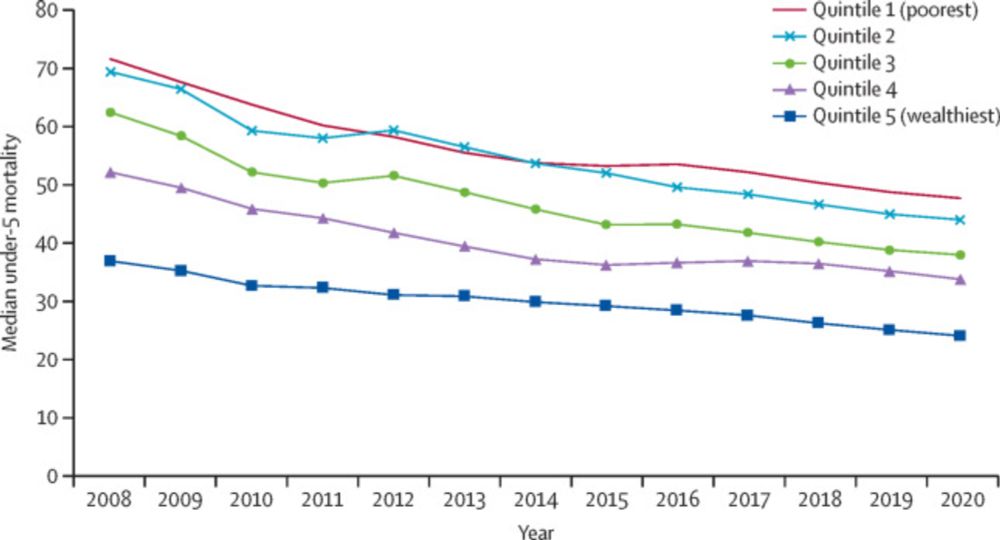
More evidence showing that investment in early child health and development pays off
22.05.2025 06:43 — 👍 1 🔁 0 💬 0 📌 0

🆕📰 @maxikniffka.bsky.social @jschoeley.bsky.social & @dsusielee.bsky.social et al. investigated how increasing maternal age & multiple births may influence stillbirth rates differences across Europe. ... 1/2 www.demogr.mpg.de/go/StillbirthEurope
03.02.2025 08:04 — 👍 16 🔁 5 💬 1 📌 0

Stillbirth rates across Europe are generally declining or stable, except for Germany and Belgium where rates are increasing. @maxikniffka.bsky.social tests if maternal age and the prevalence of multiple births explain these divergent trends across Europe. doi.org/10.1093/eurp...
03.02.2025 09:23 — 👍 8 🔁 2 💬 1 📌 1

Save the date: Op vrijdag 23 mei is het volgende congres van het Nederlands Netwerk voor Tabaksonderzoek!
21.01.2025 19:04 — 👍 3 🔁 2 💬 0 📌 0

Time to celebrate: this week we finished inclusions for the first in-human pilot study of wearable #phototherapy for neonatal #jaundice. Look out for the findings in 2025!
Thanks to Yanera Walle, Jessie Spaan, Berthe v/d Geest, Daisy Adelmund, and Sinno Simons for their efforts!
#neonatology
05.12.2024 09:50 — 👍 5 🔁 0 💬 2 📌 0