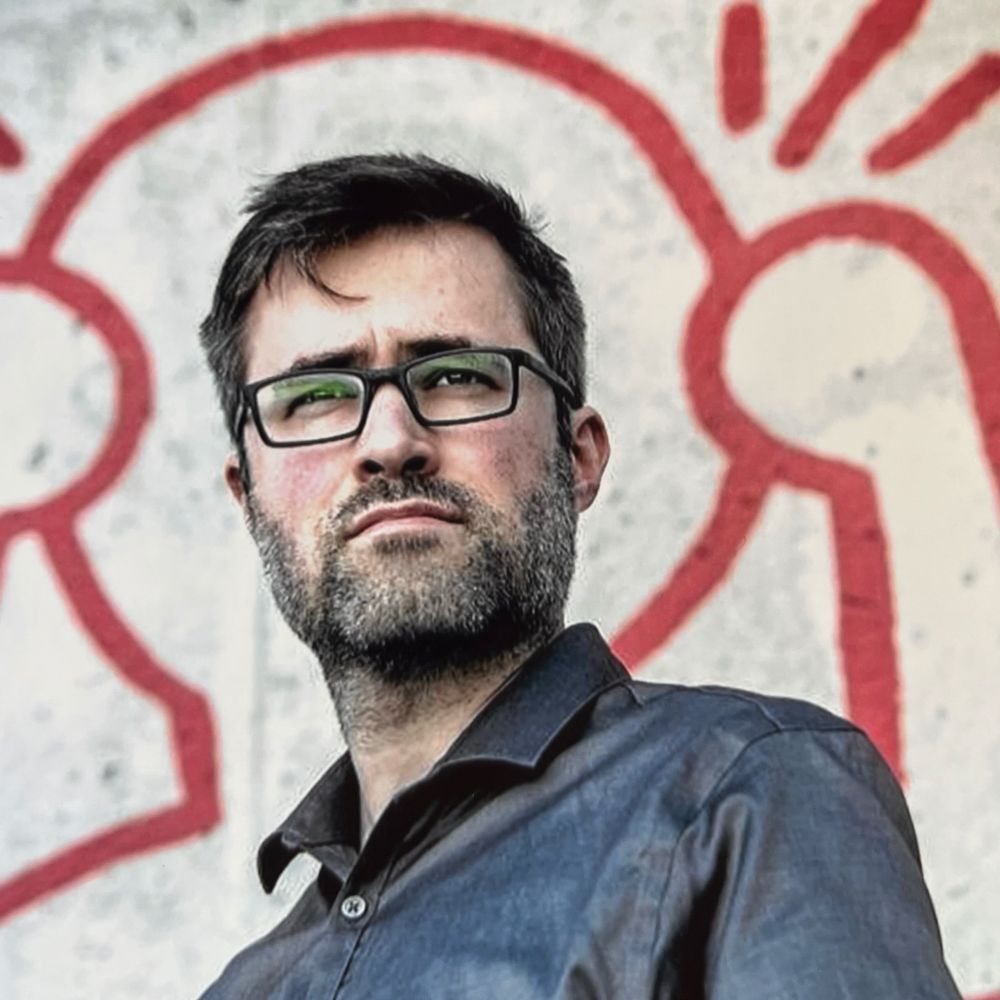
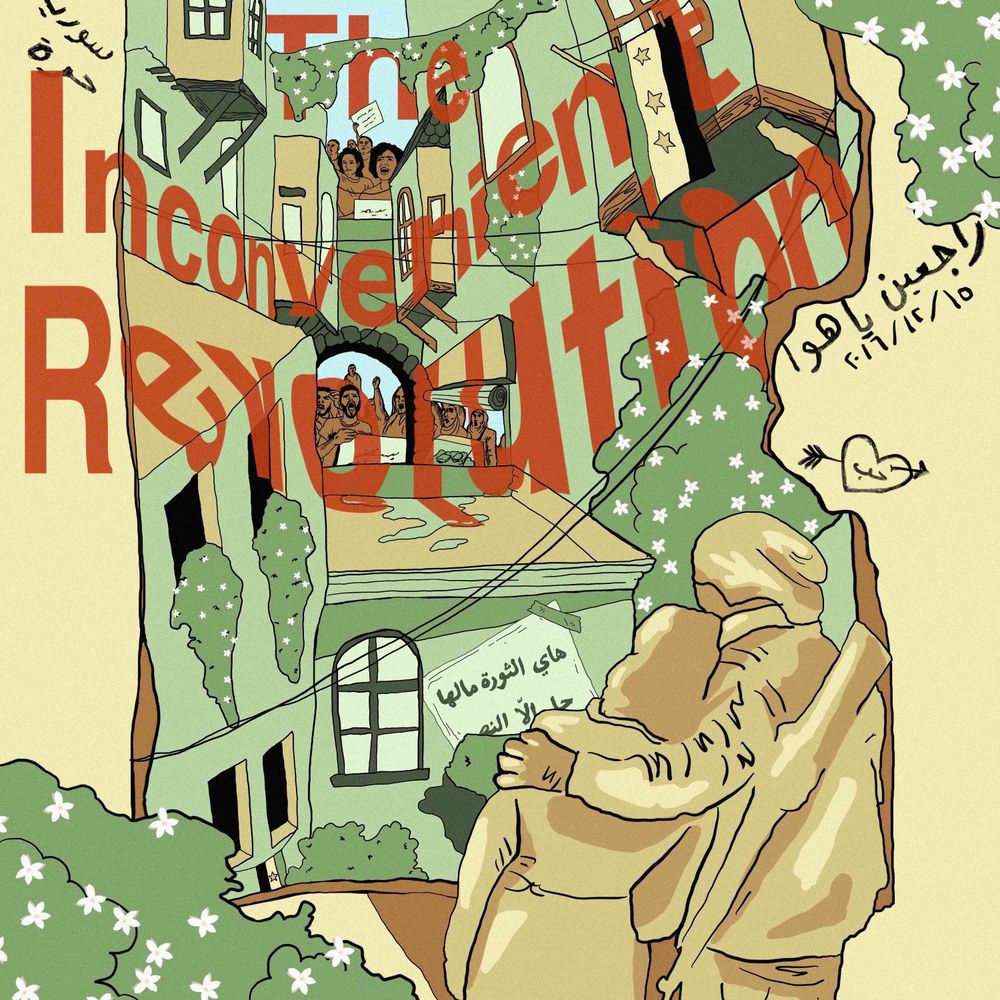
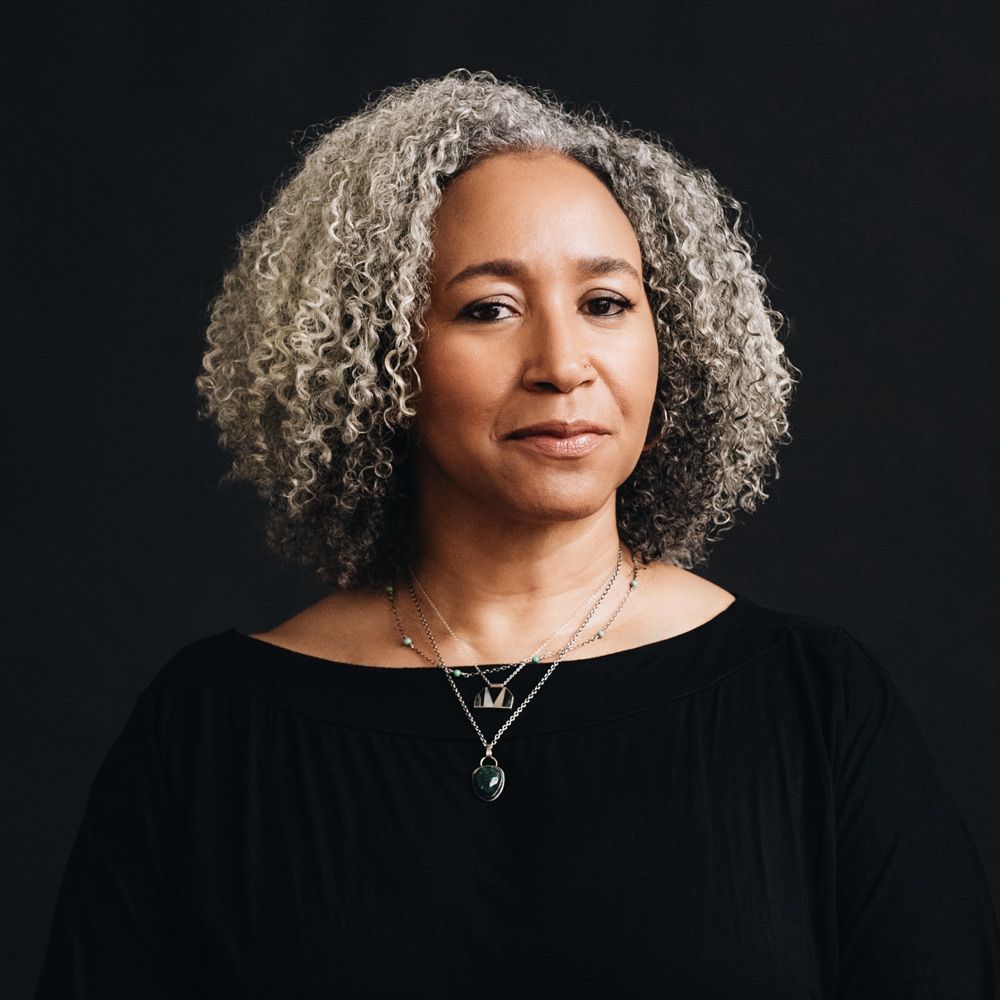
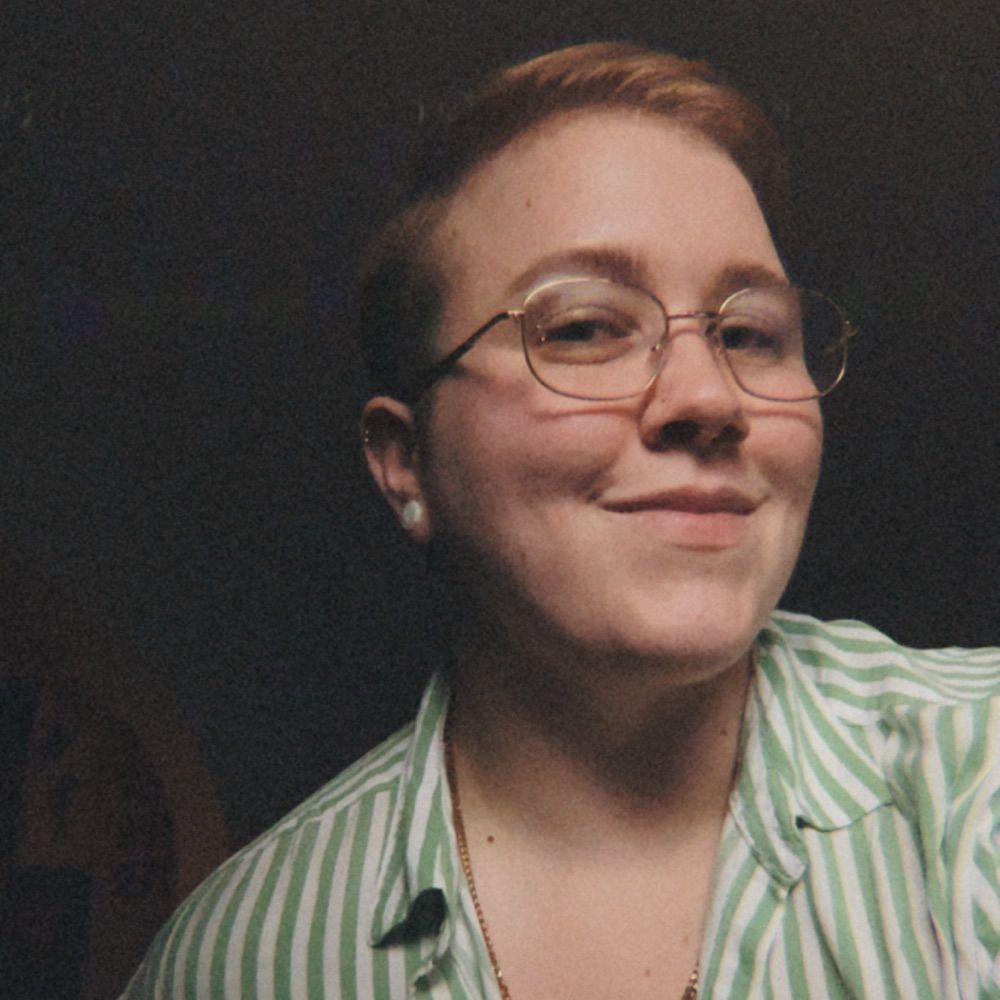
What a treat to have my book Mutual Aid read by @margaret.bsky.social on her podcast Cool Zone Media Book Club. Check out both episodes anywhere you get your podcasts!
An updated version of Mutual Aid is coming out March 31st from Verso Books.
@deanspade.bsky.social
linktr.ee/deanspade
What a treat to have my book Mutual Aid read by @margaret.bsky.social on her podcast Cool Zone Media Book Club. Check out both episodes anywhere you get your podcasts!
An updated version of Mutual Aid is coming out March 31st from Verso Books.

Waterstones is offering a 25% off pre-orders of the new edition of Mutual Aid from February 17th to February 20th.
To buy the book for 25% off, you can go to the Waterstones website and use the code FEB26.

Natalie and I have been working together to oppose Israeli pinkwashing for over a decade. In this live conversation, we will be talking about conflict in movement groups and tools for addressing it. Join us on my Patreon on Feb 16 at 2:30pm EST!
www.patreon.com/posts/upcomi...

6th annual Valentine's Day webinar with Fireweed Collective, Feb 15 at 1pm ET! The theme this year is "too much, or not enough?" You can watch the videos of the prior 5 at the link in my bio. Registration: givebutter.com/deanspade6
11.02.2026 21:35 — 👍 6 🔁 1 💬 1 📌 0
It was so much fun to sit down with @chaninicholas.bsky.social and talk about how she got politicized, how we hold fear and choose purposeful action in these difficult times, what it takes to stand up for what we believe in when were are under pressure, what it means to worship time, and more.
05.02.2026 14:43 — 👍 15 🔁 2 💬 0 📌 0From my conversation on the Green Dreamer Podcast. Listen to the whole conversation wherever you get your podcasts.
Solidarity not charity!
You can find much more about this in my book Mutual Aid which is free on the Anarchist Library. I just wrote an updated edition that is coming out March 31.
This is an excerpt from a conversation about how I’ve never had a cell phone and how that has impacted my boundaries with work and collaborations. In this clip, I discuss how the idea that everyone should be reachable at all times is unrealistic and sometimes less efficient.
03.02.2026 14:58 — 👍 15 🔁 2 💬 0 📌 0
Picture of Holiday, a Black person in a pink shirt, glasses, and beige cowboy hat with a goatee and pink braids, against a dynamic blue background. Text reads, livestream conversation with Holiday Simmons Monday 2/2 - 1pm EST www.patreon.com/deanspade
My friend Holiday Simmons and I will be doing a livestream conversation on my Patreon this Monday (Feb 2) at 1PM EST.
Holiday is a Black Cherokee, genderqueer, two-spirit social worker and the host of the Trans Cookout Podcast. Please join us live or catch the video after.
patreon.com/deanspade
In this clip, I discuss the idea that cell phones are important because it helps people reach you in an emergency, and because cell phones make us safer. I’ve heard this a lot, but I don’t buy it.
You can watch our whole conversation at patreon.com/deanspade for free!
I sat down with Peter Gelderloos to talk about his decades of work exposing the damaging impact that pacifist discourse has in resistance movements, stigmatizing people who fight back boldly. You can hear the whole interview wherever you listen to podcasts or watch the video on YouTube.
26.01.2026 17:39 — 👍 37 🔁 12 💬 0 📌 0For Episode 17 I got to sit down with Peter Gelderloos, someone whose writing has been central to my political development since I first encountered his book, How Nonviolence Protects the State, in the early 2000’s.
22.01.2026 20:42 — 👍 17 🔁 2 💬 0 📌 0Excited to share my interview with Holly Whitaker, author of Quit Like a Woman and host of the Co-Regulation podcast. I have been very inspired by Holly’s critical feminist analysis of how the alcohol industry and the ubiquity of 12-step impact how we perceive drinking and sobriety.
08.01.2026 23:09 — 👍 20 🔁 1 💬 4 📌 2Washington's governor likes to pretend to care about immigrants, meanwhile his agencies keep lying about handing over info to the feds that helps them round people up. This new report exposes the details.
08.01.2026 21:26 — 👍 28 🔁 9 💬 1 📌 0
Disappointment, Conflict, and Burnout in Care and Resistance Work People often experience a special kind of disappointment in resistance work. We join groups to do something that we really care about. Often, we are relieved to finally find people who see things the way we do, excited to be understood and have accompaniment and solidarity. We have high expectations for each other. And then we find out that we're all very human and imperfect. I have found that burnout is not usually just a result of being tired. Most people I've talked to who feel burned out and leave movement work, during the laset 28 years that I have been in these movements, are actually in pain because of unresolved conflict. They joined work they really cared about, something went wrong that made them feel betrayed or left out or disappointed, and that is the pain of the burnout. It wasn't just the hard work; it was the loss of trust, the feeling of being blamed or stigmatized, or not being listened to.

Abolitionism and Transformative Justice I've spent the last decades in the movement for police, prison, and border abolition. I believe we shouldn't have of those structures. Abolitionists use a concept called "transformative justice" to describe the work we do to address conflict without using police. There is a lot of conflict, harm, and violence in our communities, we know the police don't help and only make it worse. Transformative justice practices do three things: 1. Work to figure out and provide what the person or people who have been harmed need to heal and participate in community, to not be isolated by what happened to them, and to be listened to, even though we can't undo what happened. 2. Work to figure out and provide what the person or people who did the harm need to stop doing it. 3. Work to figure out what the community surrounding the harm could do to make it less likely--how did we all set up a situation that made this more likely?

When Big Reactions Happen One thing that is surprising and challenging about the emotional dynamics of conflict is that we do the most harm to others when we are feeling aggrieved, victimized, left out, and/or resentful. It's counterintuitive because these are the moments when we are focused on what others did wrong and how we are hurting. But those are the times we are most likely to do something harmful, like go and write the really messed up email to somebody, treat somebody with the cold shoulder, gossip negatively about people in our group or about another group in town, post a bunch of stuff on Instagram that's really inflammatory, or violate someone's privacy. As strange as it might seem, it's when I'm feeling like the victim that I should ask for help from a friend to figure out what the right-sized response is, or to figure out if I'm still too upset to decide how to respond and need more time. It's not that we aren't legitimately sometimes victimized, but the victim narrative in our heads can cause us to skip our value assessment and then do stuff that later we wish we hadn't done. It's not bad to feel this way, but we should consider what to do with these feelings since they are inevitably going to come up in our groups and in ourselves.

Centering Belonging I was recently talking to somebody who's doing a conflict support process with a group that's had a major difficult conflict. And one of the things the person is doing is individually reaching out to the 40 or 50 people who all were involved in the group over these many years where these hard things were happening. The people from the group have been telling the conflict support person, who's not even in the group, "It just means so much to me that you're listening to me." We live in societies that minimize our experiences of pain and harm. And so, we join movement groups and we hope we're finally going to be part of something where we're heard and seen. And then we have a bad experience where people don't hear us or see us at some point. And then we wreak havoc. We're like, I have to tear down everybody in this group, and this group itself, because I'm feeling all of my historical cumulative pain of being dismissed. If we could catch each other in the moment of pain and listen, I think it could be a huge change in the likelihood of those conflicts escalating to the most disorganizing behaviors between us.
Wrote about what happens when conflict appears in our movement spaces and how to move through it instead of abandoning our work in @npquarterly.bsky.social !
nonprofitquarterly.org/navigating-c...

In this episode, Morgan Bassichis and I talk about giving and receiving feedback directly as a way to build relationships, and prevent conflict from escalating to destructive and disorganizing levels.
24.12.2025 17:33 — 👍 22 🔁 3 💬 2 📌 0Grateful to Ciro for animating this clip from the recent episode where Morgan Bassichis and I talk about how to deescalate a crush. You can watch the episode on YouTube or listen wherever you get your podcasts.
23.12.2025 15:57 — 👍 14 🔁 1 💬 0 📌 0The second edition of Mutual Aid is coming out on March 31 from @versobooks.bsky.social
19.12.2025 23:21 — 👍 31 🔁 3 💬 4 📌 1
Thrilled to share this conversation with Shira Hassan, a brilliant writer, organizer, facilitator, and friend who has influenced harm reduction and transformative justice work, and my own thinking and practice, for decades.
11.12.2025 21:19 — 👍 41 🔁 7 💬 0 📌 2Preorder the second edition of Mutual Aid, out March 31st. I wrote a new section about what I learned about mutual aid since 2020 and updated various sections of the book.
Preorder here: store.deanspade.net
We also have shirts, hoodies, mugs, and totes! All proceeds go to support the podcast.

"Prisons are designed to keep us isolated. When we connect with our dear ones, every second is precious and the stakes are high. This added pressure means we have to strive to be as intentional as possible to make each moment count." - Endjah S. (SCI Cambridge Springs)

"As a longtime prison abolitionist, Dean Spade is offering all of us insight on how to live, f*ck, be present, and survive with contextualized compassion for ourselves and others." - Endjah S. (SCI Cambridge Springs)

Daughters cover image: beautiful illustration of two Black women on the top and bottom of the page with interconnecting braid hair and daffodils over their chests. They are over top a bright red border which as the words "Daughters" and "#13" and "Fall 2024" and "Let's Get Free's Magazine" over top with a bright yellow border.

"Daughters is a faith-based, political publication founded by Sarita Miller (SCI Muncy) that aims to illuminate issues and perspectives, specifically those of women, pertaining to the crisis of mass incarceration."
A new review of LIAFUW is coming out in Daughters!
Daughters is a magazine featuring over 35 incarcerated voices speaking to conditions of confinement with interviews, essays, poetry, legal news, legislative updates, and art! To support their work, subscribe here:
docs.google.com/forms/d/e/1F...

Crushes can be fun and enlivening, but sometimes they are ill-timed or ill-suited, and it can be hard to shake them off. In this episode, Morgan Bassichis and I discuss one of the most popular tools from Love in a F*cked Up World the book: 7 Steps for De-escalating a Crush.
26.11.2025 22:57 — 👍 12 🔁 1 💬 2 📌 0Here are a few thoughts about confidentiality and conflict, and in other news, I'm teaching a class about romcoms, consent, and the romance myth with Mia Schacter (@consent.wizardry) Wednesdays and Sundays, December 3-14, 11am-1pm PT / 2–4pm ET. Sign up at consentwizardry.com/guiltypleasure
23.11.2025 23:17 — 👍 21 🔁 5 💬 0 📌 0How do you know if you should leave an organizing group or collaboration you are part of? Morgan Bassichis and I talk this through in this video, and you can watch the whole episode on youtube or listen wherever you get podcasts.
19.11.2025 17:57 — 👍 50 🔁 14 💬 1 📌 2Kelly Hayes’ writing and her Movement Memos Podcast episodes about AI have been immensely useful to me and I recommend them. In this clip from our recent conversation, Kelly talks about how AI is emerging in a context of alienation and dehumanization.
18.11.2025 15:21 — 👍 108 🔁 51 💬 2 📌 1In this excerpt from my interview with Mariame Kaba, I talk about how avoidance is a reasonable response to a coercive society, but also can get in our way when it becomes a habit.
Watch the whole episode on Youtube or listen wherever you get your podcasts.
@jessicalanyadoo.bsky.social is back answering more listener questions on Part 2 of this AMA episode!
Listen wherever you get your podcasts or watch the full episode on YouTube.
In this clip from my recent conversation with David Palumbo-Liu, we talk about the difference between identifying behavior in others and identifying it in ourselves.
Listen to the whole episode of Speaking Out of Place wherever you get your podcasts.

Thank you to @zahrastardust.bsky.social for this beautiful review of Love in a F*cked-Up World in @overlandjournal.bsky.social.
"Soft and fierce, utopian and practical, inscribed with beauty and strength, Love in a F*cked Up World is both an intervention and a guidebook."
Episode 10 is out! In this episode, I talk to Kelly Hayes, the brilliant journalist and organizer whose writing and podcast so many of us rely on to make sense of the world.
Watch on YouTube or listen wherever you get your podcasts.
Join me in Linz, Austria for a mutual aid workshop tomorrow 12-6pm with maiz! Attendance is free and you can register at their website: www.maiz.at/de/bereiche/...
21.10.2025 13:45 — 👍 7 🔁 1 💬 0 📌 0