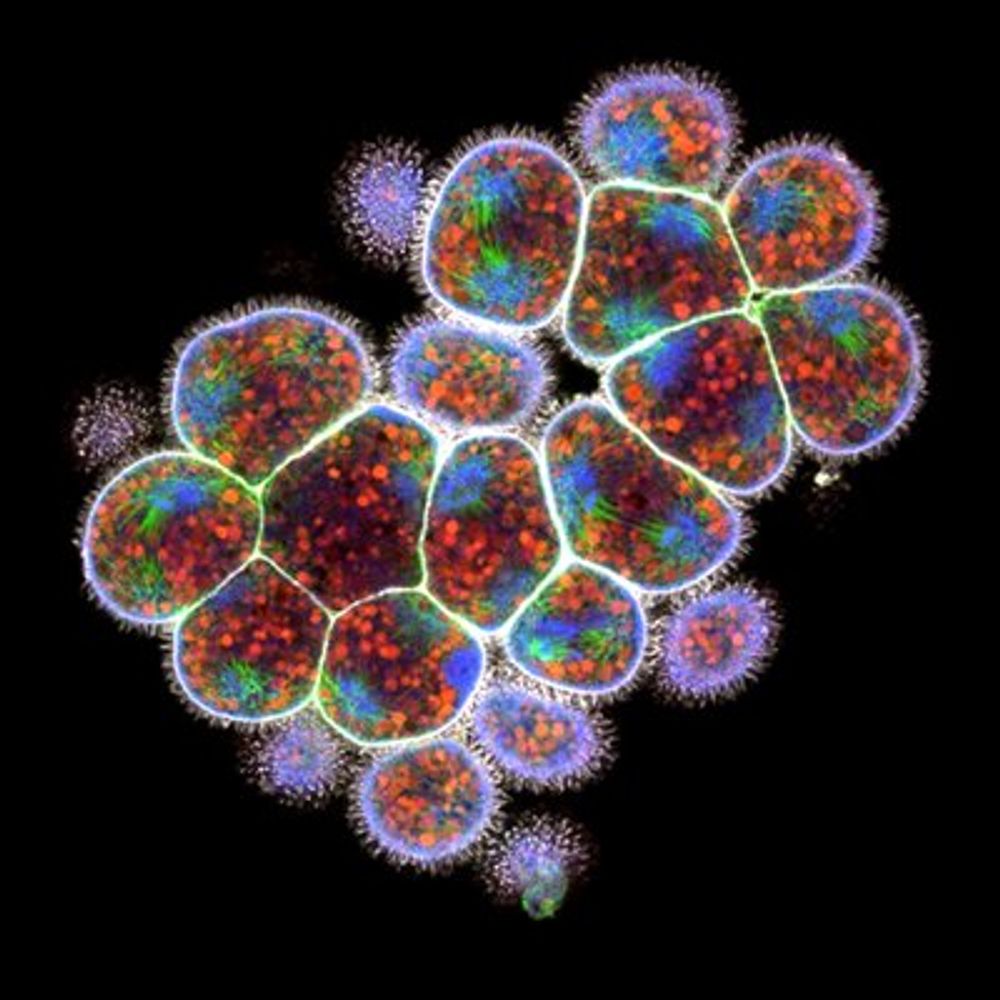
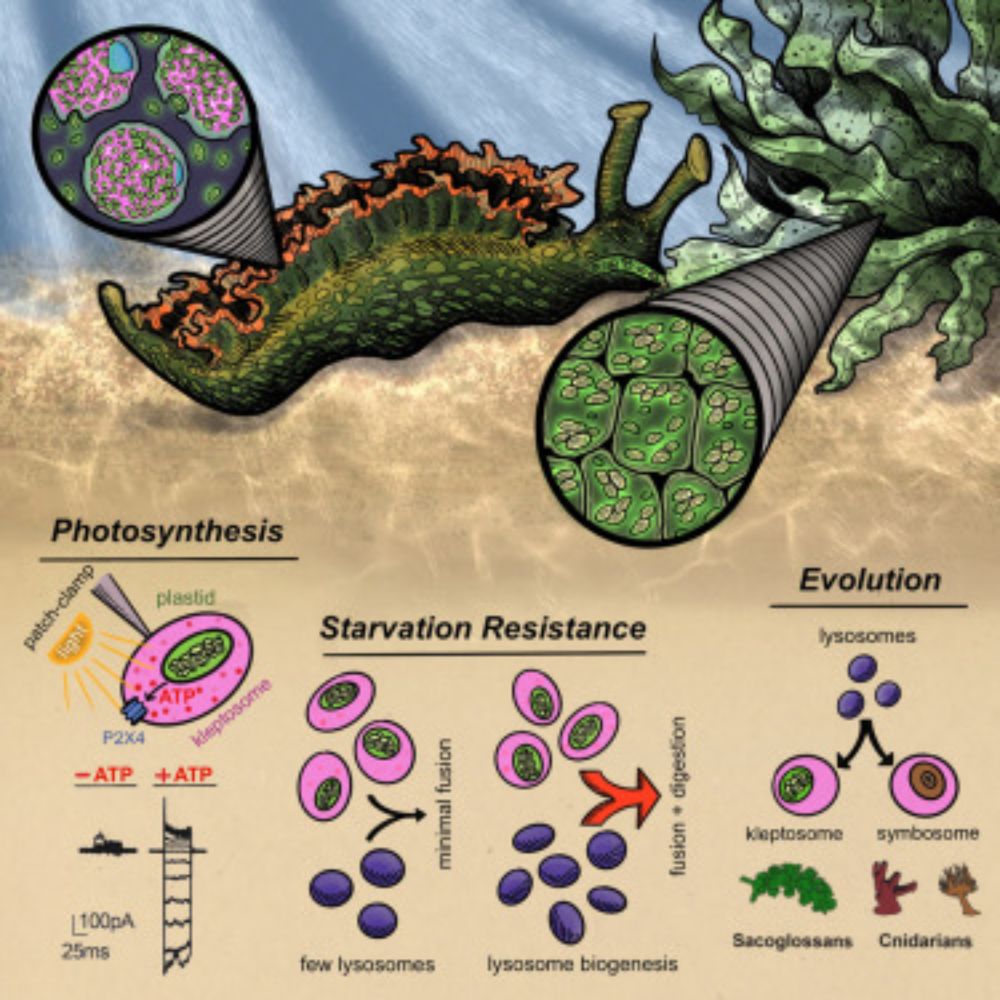
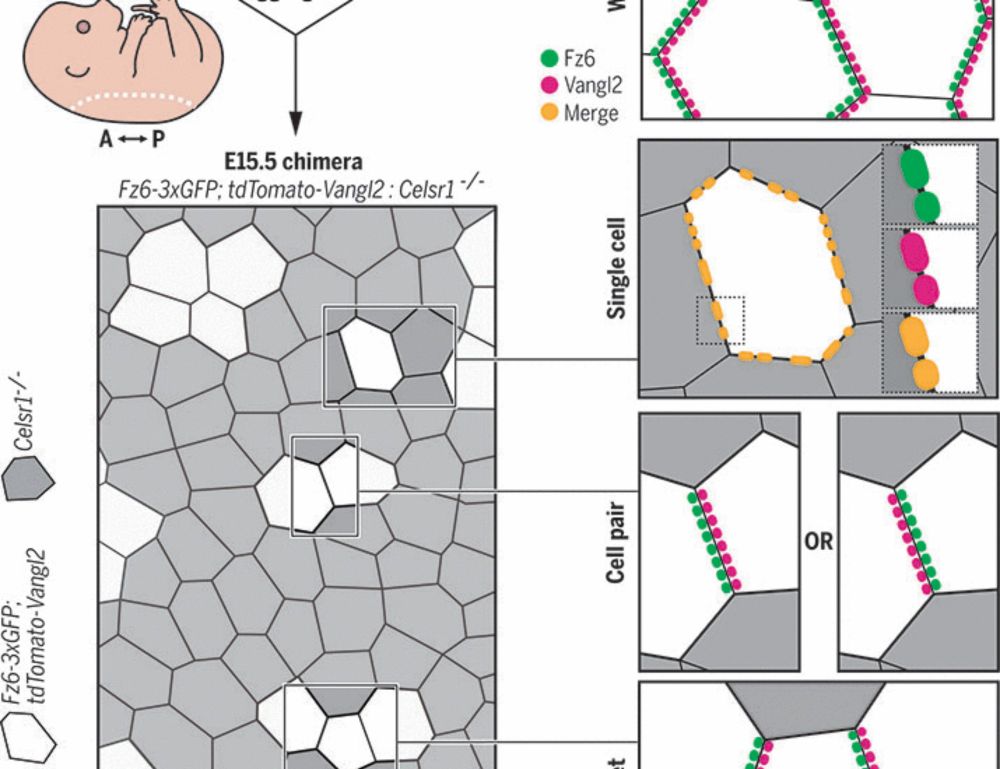
We can now properly credit to @swinburnelab.bsky.social 🤩 Welcome to Bluesky! 🧪
05.12.2025 07:54 — 👍 21 🔁 6 💬 1 📌 0

"10/10 would morph-a-gen"
the motto for this year's Dev Bio class at Amherst College.
for the love of #development and #embryology
@socdevbio.bsky.social
04.12.2025 22:22 — 👍 4 🔁 0 💬 0 📌 0
Had the pleasure of working with @mohannad-dardiry.bsky.social to rethink what it means to develop for life. Many thanks to @dev-journal.bsky.social! @embl.org #LifelongDevSI
31.10.2025 11:24 — 👍 17 🔁 8 💬 0 📌 1

The evolutionary origins of synaptic proteins and their changing roles in different organisms across evolution
Nature Reviews Neuroscience - Recent studies have shed further light on the evolutionary origins of chemical synapses, In this Review, Colgren and Burkhardt explore how ancient proteins were...
First neurons didn’t appear overnight. We trace their roots to ancient secretory cells - showing how lifestyle & behavior shaped the evolution of first synapses.🧠🌊 #Evolution #Neuroscience
Our latest in @natrevneuro.nature.com
Link: rdcu.be/eMX3E
@jeffcolgren.bsky.social @msarscentre.bsky.social
27.10.2025 18:48 — 👍 327 🔁 130 💬 4 📌 7

Our most recent study shows that stem cells in Schmidtea mediterranea do not rely on physical contacts or fixed structures to maintain their identity and regenerative potential.
@stowersinstitute.bsky.social @cp-cellreports.bsky.social @vilcekfoundation.bsky.social
www.cell.com/cell-reports...
19.10.2025 19:56 — 👍 58 🔁 17 💬 4 📌 0

A toolkit for testing membrane-localising tags across species
Transgenic markers and tools have revolutionised how we study cells and developing organisms. Some of the elements needed to construct those tools are universally applicable (e.g. fluorescent proteins...
How can we see the cells that make up a living organism? Membrane-localising tags can drive fluorescent proteins to the cell's outer membrane, making their outlines visible. But the tags don't work well in all organisms. How do you find one for your species of interest? 🧵
Check our latest preprint
23.10.2025 08:16 — 👍 85 🔁 41 💬 5 📌 5

🚨 Late preprint alert!
Why do biological process rates scale nonlinearly with temperature, deviating from the straight line on an Arrhenius plot? The key may lie in their inherent complexity!
More in thread and here: doi.org/10.1101/2025...
22.10.2025 10:29 — 👍 23 🔁 9 💬 1 📌 0

Figure 7 - Model for the gradual loss of cellular health in the absence of SMEDWI-1. (A) In wild-type stem cells, transcripts that are not coding or are mis-assembled with protein co-factors are routinely recognized and degraded. In the absence of SMEDWI-1, this selection process is defective, and aberrant RNAs can accumulate in the cells. Over time, this leads to a reduction in correctly assembled ribonuclear protein complexes (RNPs) such as the signal recognition particle (SRP). (B) The SRP functions to guide ribosomes that translate secreted proteins to the endoplasmic reticulum to continue protein translation and allow for appropriate folding and transport of the protein product. If such a ribosome is not correctly relocated, the protein product is released in the cytoplasm and marked for degradation together with the mRNA that produced it. Alternatively, the protein product may escape degradation and accumulate in the cytoplasm as a protein that is prone to misfolding and aggregation.
Enhanced RNA quality control maintains long-term regenerative ability in planarians.
Read this #LifelongDevSI #OA Research Article by Michael Zelko, Josien C. van Wolfswinkel and colleagues:
journals.biologists.com/dev/article/...
21.10.2025 12:34 — 👍 6 🔁 4 💬 0 📌 0

Latest from ours: www.cell.com/cell-reports...
This is two stories in one: a case study/cautionary tale on developing genetic tools in new organisms, and the first hint at a gene regulatory network for choanoflagellate multicellular development (which turn out to involve a Hippo/YAP/ECM loop!) A 🧵
05.10.2025 10:35 — 👍 242 🔁 100 💬 10 📌 10
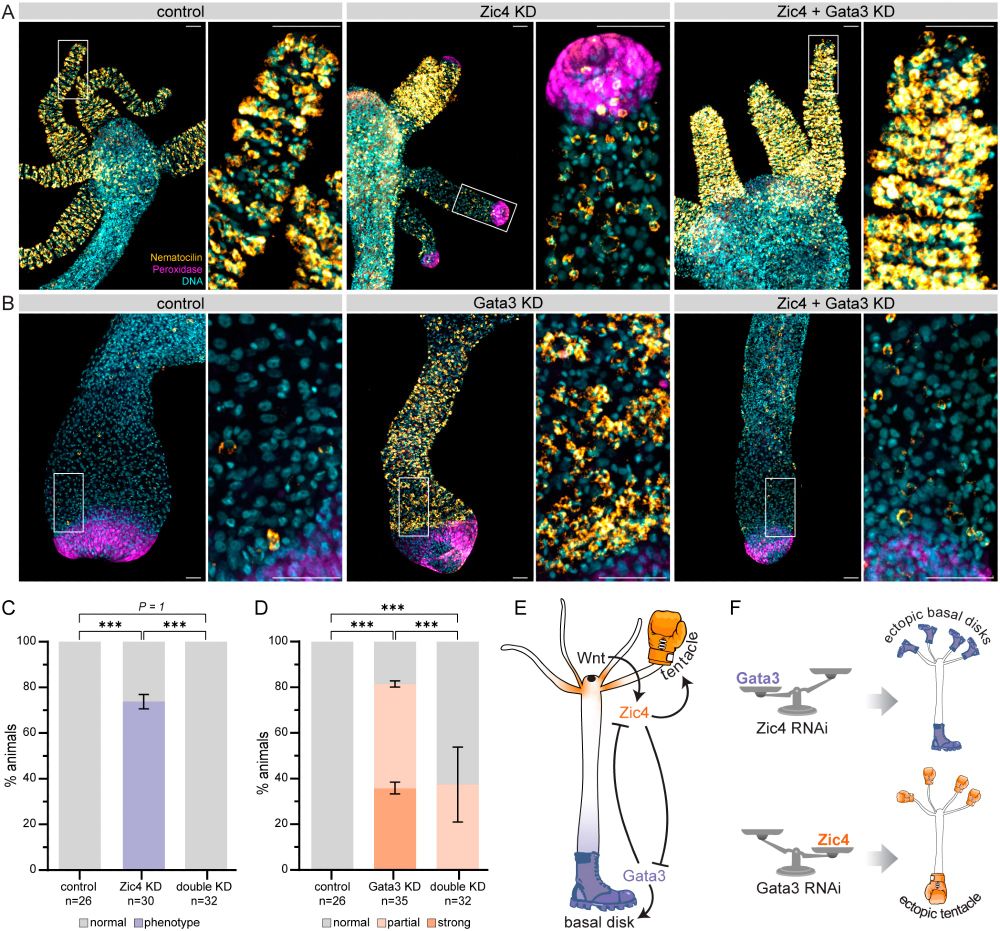
Phenotype rescue upon Zic4 and Gata3 double knockdown. (A,B) Maximum projection confocal images of oral (A) and aboral (B) ends of animals after GFP RNAi (control), Zic4 or Gata3 RNAi, and Zic4+Gata3 RNAi. DNA in cyan, peroxidase activity in magenta and Nematocilin in orange. Panels on the right show magnifications of boxed areas on the left. Scale bars: 100μm. Note the ectopic peroxidase staining in tentacle tips upon Zic4 RNAi, and ectopic Nematocilin staining adjacent to the foot upon Gata3 RNAi, as well as rescue of both phenotypes in the double knockdown. (C) Percentage of animals with ectopic peroxidase staining in tentacles upon Zic4 KD and double KD. (D) Percentage of animals with ectopic Nematocilin staining adjacent to the foot in Gata3 KD and double KD. For examples of strong and partial phenotypes refer to Fig. S6. Data in G and H shown for n animals pooled from at least two independent replicates. ***P<0.001 (Fisher's exact test). (E,F) Schematic of proposed model for controlling the choice between basal disk and battery cell fate in Hydra. At the oral pole, Wnt signaling (black dot) activates Zic4 (orange) expression and thus basal disk identity. Without it, Gata3 dominates at the opposite end, leading to basal disk fate establishment (E). Experimentally depleting one of the factors results in ectopic cell fate acquisition at the opposite body end (F).
Hydra body axis balance: a fight between two transcription factors
This Research Highlight showcases the work from Jaroslav Ferenc, Marylène Bonvin, Panagiotis Papasaikas, Jacqueline Ferralli, Clara Nuninger and Charisios D. Tsiairis:
journals.biologists.com/dev/article/...
16.09.2025 10:27 — 👍 34 🔁 9 💬 1 📌 1

We knew that cnidarians have stunning regenerative capacities. But the molecular and cellular mechanisms underlying the self-organization of gastruloids of Nematostella surprised us. A story of cell sorting and Notch signaling. Please check out the work of Sanjay's PhD work: doi.org/10.1101/2025...
11.09.2025 16:16 — 👍 35 🔁 11 💬 0 📌 2

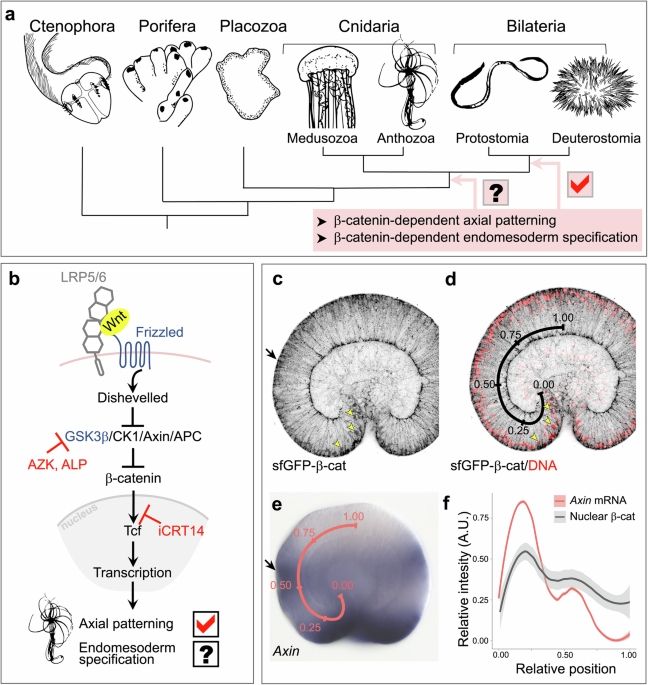
Finally, the excellent postdoc work of Emmanuel Haillot is out, where he dissected the integration of Wnt, MAPK and Notch signaling in defining mesoderm and endoderm identities in the diploblast Nematostella. Strikingly similar to sea urchins. www.nature.com/articles/s41...
29.08.2025 21:04 — 👍 56 🔁 22 💬 4 📌 1

Inés Fournon Berodia presents in front of an audience. She is wearing a black blazer and a white shirt. The slide on the screen has a black background, and reads "Hallmarks of epithelial cell extrusion". Below the title, a schematic of an epithelium, and the following text in bullet points: "Mitogen Activated Protein Kinase (MAPK)", "Facilitate extrusion" and "Protect surrounding cells"

Ines Fournon Berodia smiles widely, holding in place on her head a customized graduation hat.
Congratulations Dr. Fournon Berodia @inesfournon.bsky.social 🎉🤩 We are very proud of Inés for successfully defending her PhD thesis conducted in the @prhsteinmetz.bsky.social lab. Thank you to opponents @ragkousik.bsky.social & @levayerr.bsky.social for insightful discussions 👏
26.08.2025 14:09 — 👍 22 🔁 3 💬 1 📌 1
Thank you!
06.08.2025 05:47 — 👍 1 🔁 0 💬 0 📌 0
Mark your calendars for May 18-22, 2026- in Roscoff, Brittany, for the next iteration of the Developmental Biology Conference Jacques Monod!
13.06.2025 07:19 — 👍 34 🔁 19 💬 2 📌 2
We thought we were just studying mesoglea biogenesis…Turns out Nematostella has been hiding a sophisticated backup pressure valve! Work driven by the talented PhD student Soham Basu! @embl.org www.biorxiv.org/content/10.1...
28.05.2025 10:45 — 👍 61 🔁 19 💬 1 📌 6
It's #MicroscopyMonday, so let's take a peek into the 🔬
This movie was taken by Shinya Inuoe, who built the polarizing microscope that allowed scientists to see mitotic spindle fibers live for the first time.
Dr. Inuoe premiered his research at MBL.
05.05.2025 20:53 — 👍 59 🔁 15 💬 4 📌 0
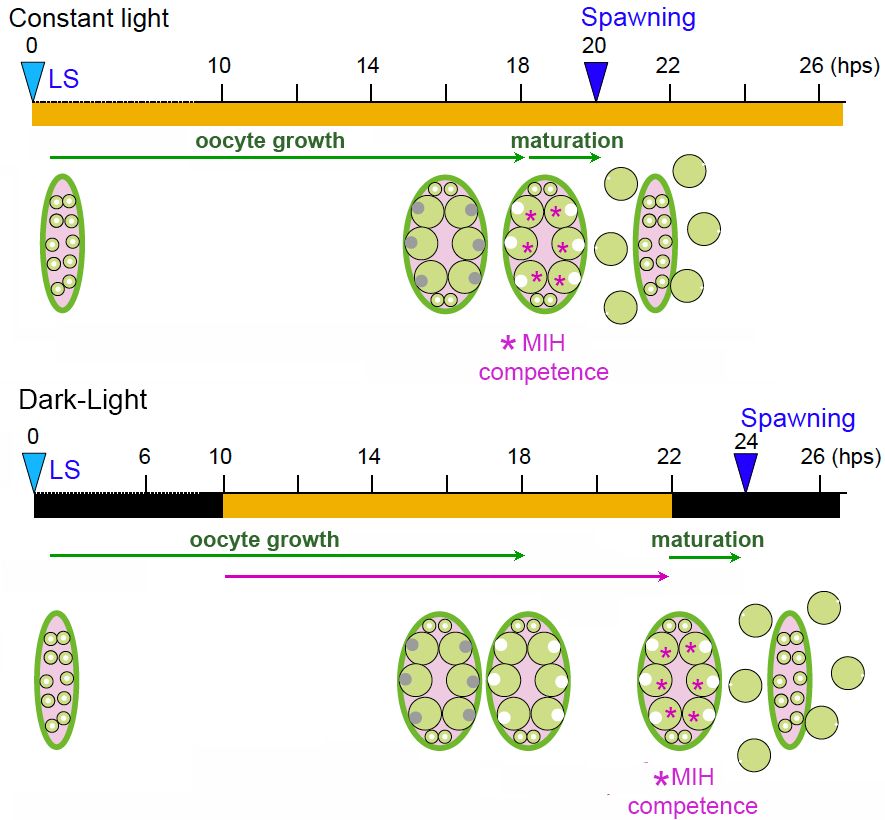
Cartoon of autonomous and light-modulated spwning cycles in Clytia IZ-D
Intriguing findings from our Sendai collaborators Ruka Kitsui and Ryusaku Deguchi. While C. hemispherica spawns at dawn, Clytia IZ-D species spawns at dusk. This is not triggered by dark but, unexpectedly, by light-mediated extension of an autonomously-running 20h cycle. doi.org/10.1101/2025...
05.05.2025 14:09 — 👍 14 🔁 7 💬 0 📌 0
PNAS
Proceedings of the National Academy of Sciences (PNAS), a peer reviewed journal of the National Academy of Sciences (NAS) - an authoritative source of high-impact, original research that broadly spans...
Happy to announce our latest paper! A fresh look at the sponge Aggregation Factor, a glycoprotein complex involved in self-recognition and adhesion. Previously thought to be sponge-specific, we report compelling structural links with proteins found in all animals! www.pnas.org/doi/10.1073/...
18.12.2024 19:15 — 👍 31 🔁 10 💬 2 📌 1
Congratulations to you and everyone involved!
16.03.2025 21:05 — 👍 0 🔁 0 💬 1 📌 0
🧬 February's most-read Genetics paper looks at how #RNA travels between cells to control genes across generations #epigenetics: buff.ly/ulMGsBH
Have a paper people should see? See what our Editors look for: buff.ly/HmuOWDp
14.03.2025 21:01 — 👍 23 🔁 6 💬 0 📌 1
One week left to apply!
26.02.2025 12:39 — 👍 10 🔁 11 💬 0 📌 0
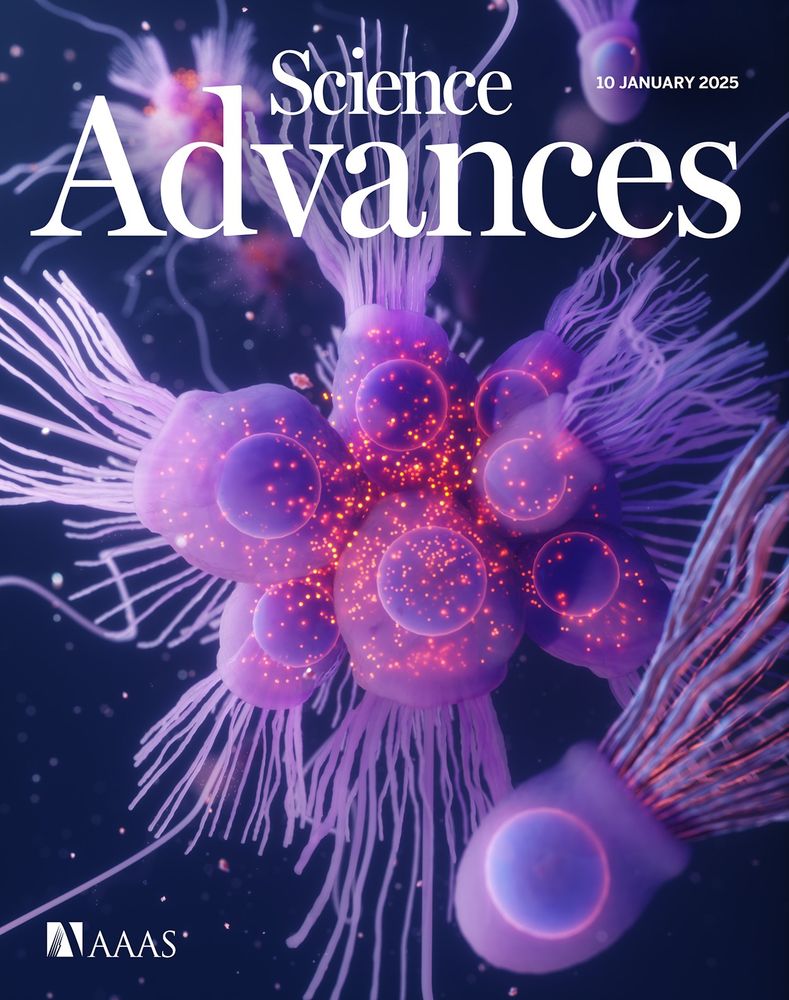
Thrilled to see #choanoflagellates on the cover of Science Advances🤩. Our latest work "Electrical signaling and coordinated behavior in the closest relative of animals" out now. Link: www.science.org/doi/10.1126/... 👏 @jeffcolgren.bsky.social @msarscentre.bsky.social
08.01.2025 19:49 — 👍 153 🔁 54 💬 10 📌 3
Our laboratory in the MCB department at UC Berkeley studies how tissues, cells, and subcellular dynamics coordinate to generate organs and initiate physiologies.
PhD candidate @pawelburkhardt lab @MSarsCentre @Uib
former lab manager at COS Heidelberg
ctenophore & cnidarian lover
Part-time physicist-turned-biologist studying early embryos and the cell cycle @KU Leuven, full-time dad to two active boys. Visualizing academic data trends in Flanders.
www.gelenslab.org | https://academic-compass.be/en/
Postdoc at @embl.org, curious about how to build bodies from cells, and where metabolism fits into the picture.
Came for science. Staying for the memes. PhD student at @ulrichtechnau.bsky.social Lab, Uni Wien
(Re)searcher of non equilibrium steady states living at the interface of physics and biology. Leading the Living Patterns lab @EPFL
https://www.epfl.ch/labs/lpl/
PhD on cnidarian stem cells 🪸. Interested in how genetics and evolution shape all life forms.
Postdoctoral researcher at UC Berkeley | Microalgae, environmental stress, molecular and synthetic biology | Formerly @ Université Paris Sud, Sorbonne Université, AgroParisTech, and ISA Lille.
https://scholar.google.com/citations?user=f5eOF_YAAAAJ
Developemtal biologist | EvoDevo | Cnidaria
Previously PhD student @genikhovich.bsky.social group @univie.ac.at;
ELBE Postdoctoral Fellow, CSBD/MPI-PKS/MPI-CBG.
Former PhD, EMBL.
Seeking minimal rules governing early embryonic development through several interdisciplinary lenses.
Evolutionary Biologist at UCSC | Assistant professor | Interested in genes, genomes, and #evolution of complex traits 🧬 | EvoDevo Regeneration
https://macias.sites.ucsc.edu/
📸 IG: @cnidolab_ucsc
www.bellonolab.com | Harvard MCB
Allison Bardin's lab at the Institut Curie, Paris, France.
We study stem cells and tissue homeostasis in the gut of #Drosophila melanogaster.
Posts are from Allison.
tinyurl.com/zg6y2pv
VP/CSO @HHMI.bsky.social & Head of #VosshallLab @rockefelleruniv Toward Excellent, Inclusive, & Open Science
Science and fun from the lab of Tony Hyman at the MPI-CBG @mpicbg.bsky.social. Tweets by Hymanlab members.
https://hymanlab.org/
Basic science-driven developmental biologist studying the embryonic origin and regulation of regenerative abilities in flatworms. Group leader since 2020. Opinions my own.
Research Cluster in the School of Biosciences, University of Sheffield, UK
https://www.sheffield.ac.uk/biosciences/research/areas/development-regeneration-and-neurophysiology
Postdoc in Daniel St Johnston lab, fruitfly gastroenterologist.
Developmental biologist. Assistant Professor at University of Toronto
Asa. Prof. Of Neural MorphoGenomics @DMLS, Uni Zurich. •4D tissue morphogenesis •Human organoids •Developmental biology •Evolution of tissue mechanics. Previous @ETH @mpicbg @DBS-TIFR
https://akankshajain2022.github.io/AkankshaJain.github.io/