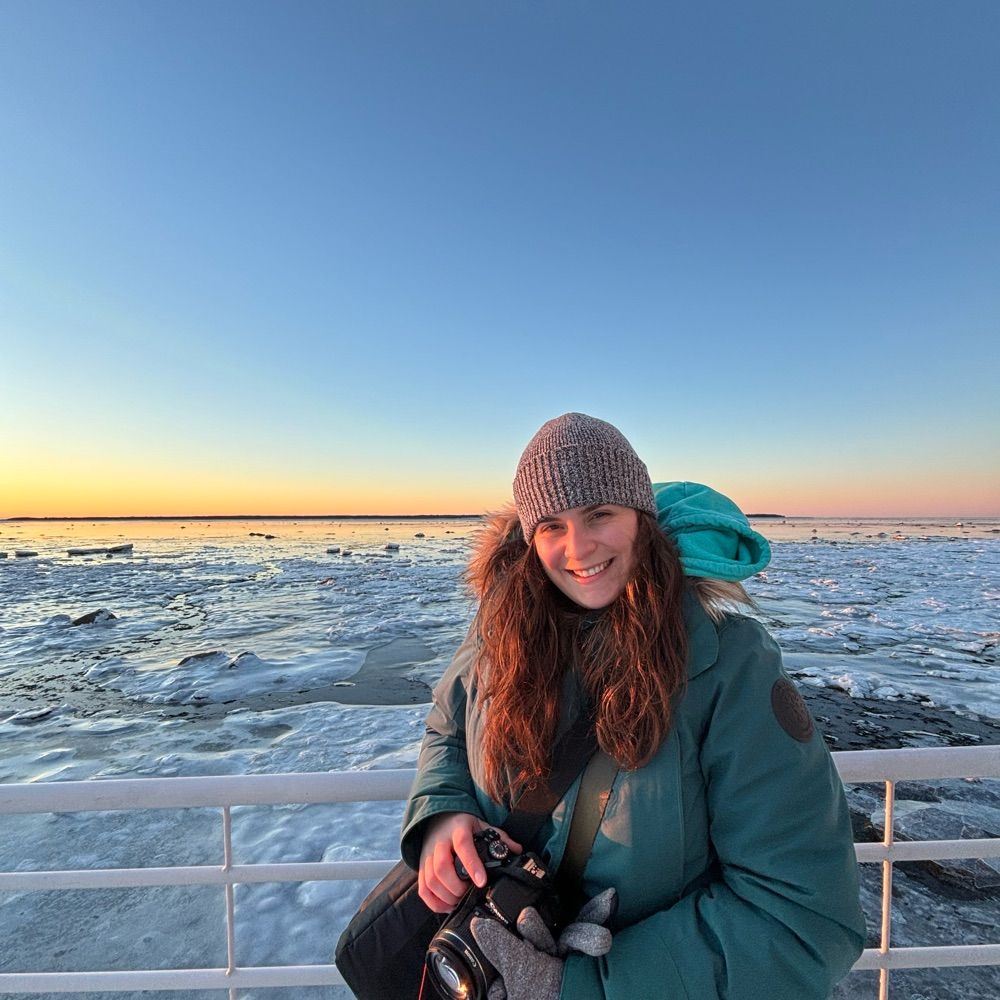
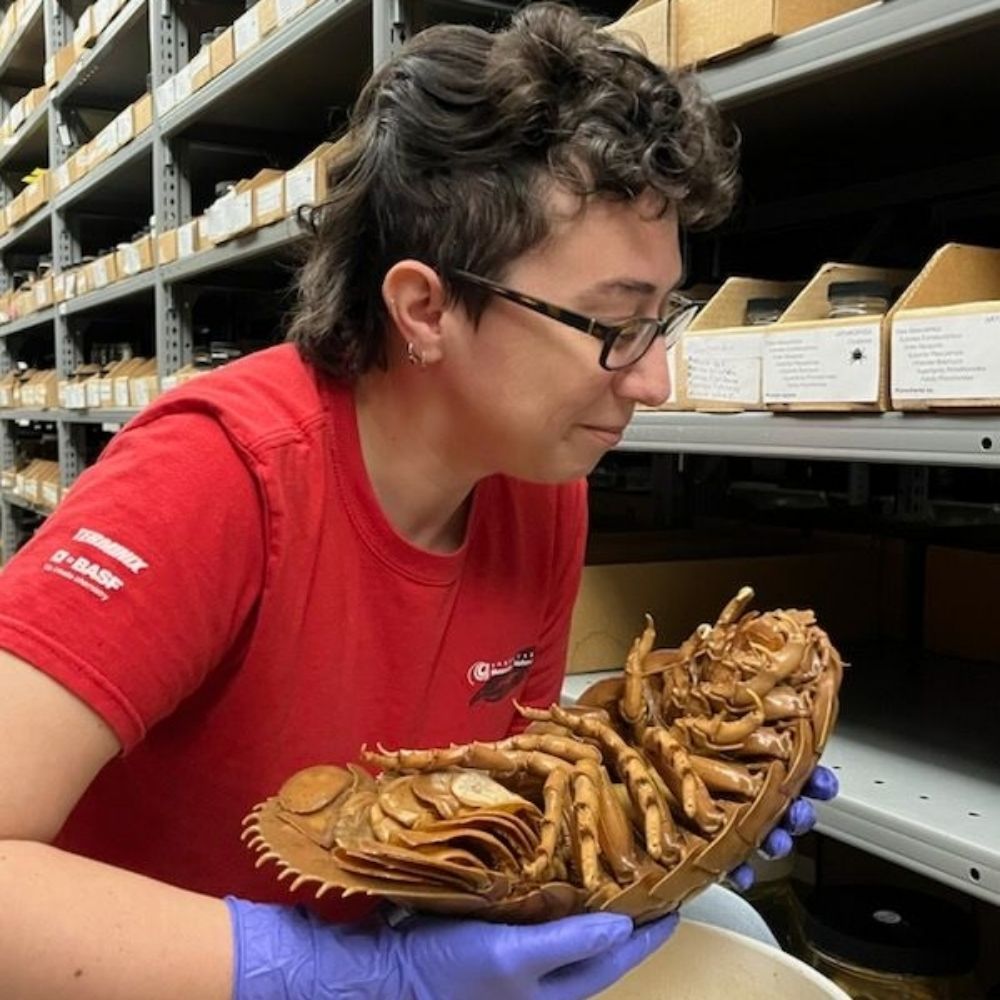
So exciting to see this work from @mad-abbott.bsky.social! Not captured in this publication are the countless midnight low tides and gruelling Vancouver weather that they endured to sample 4,221 hermit crabs 🦀 Well done!
20.11.2025 21:30 — 👍 0 🔁 0 💬 0 📌 0
After a four-year investigation, a breakthrough study reveals the cause of sea star wasting disease (SSWD). A strain of the bacterium Vibrio pectenicida is the culprit behind the marine epidemic that has killed billions of sea stars since 2013. Read the study: 🔗https://tinyurl.com/4rcb3xpf
04.08.2025 16:03 — 👍 111 🔁 53 💬 2 📌 5
After finding Diadumene lineata in high-shore tidepools with native mosquito larvae, we wondered: are they eating them? Turns out, yes—among many other native prey. Watch these anemones in action at 10× speed.
09.07.2025 18:01 — 👍 0 🔁 0 💬 0 📌 0
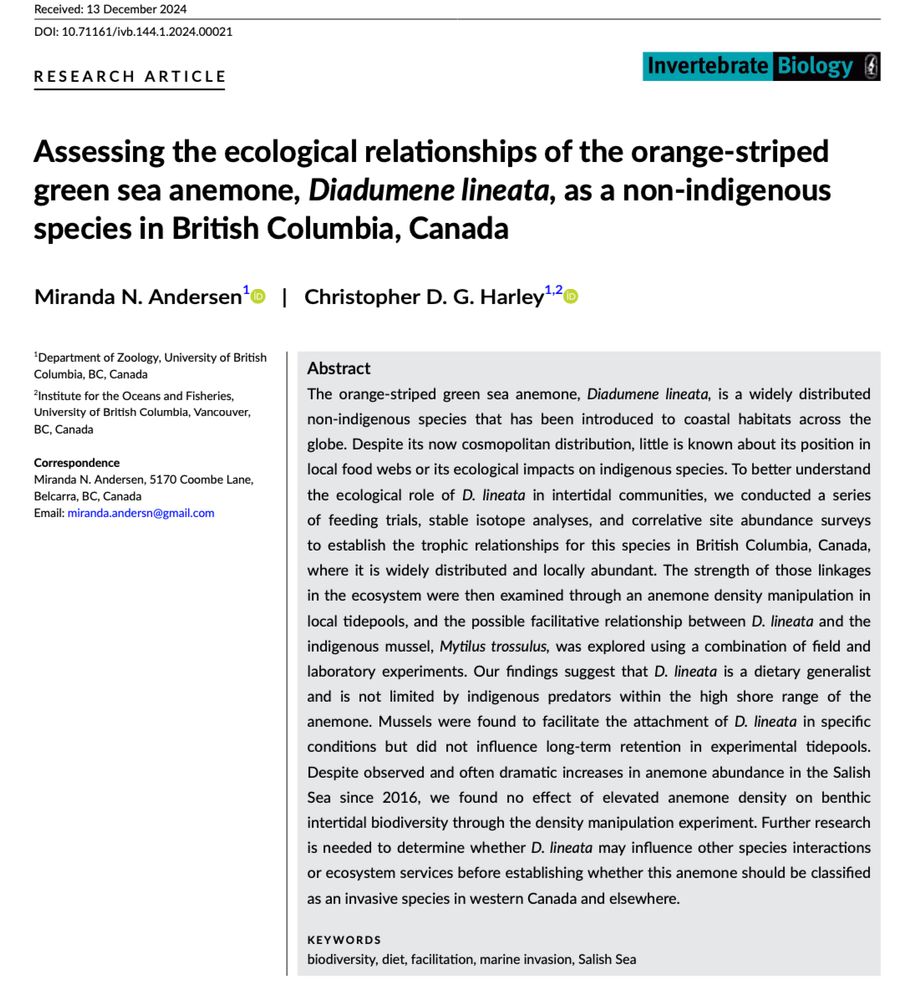
Research paper entitled "Assessing the ecological relationships of the orange-striped green sea anemone, Diadumene lineata, as a non-indigenous species in British Columbia, Canada
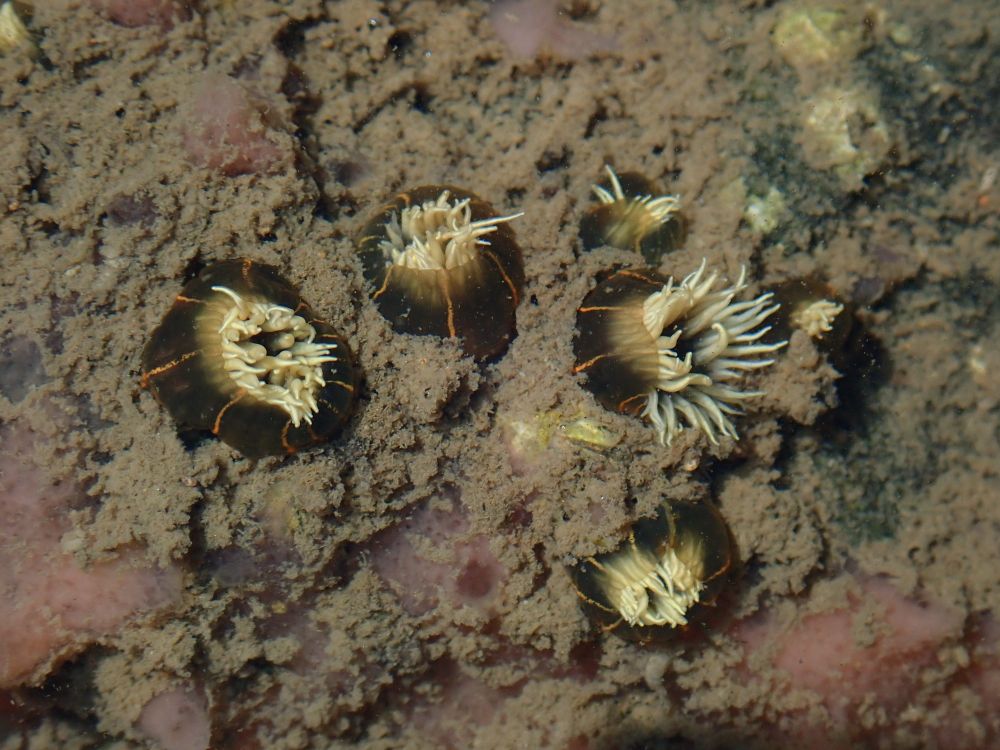
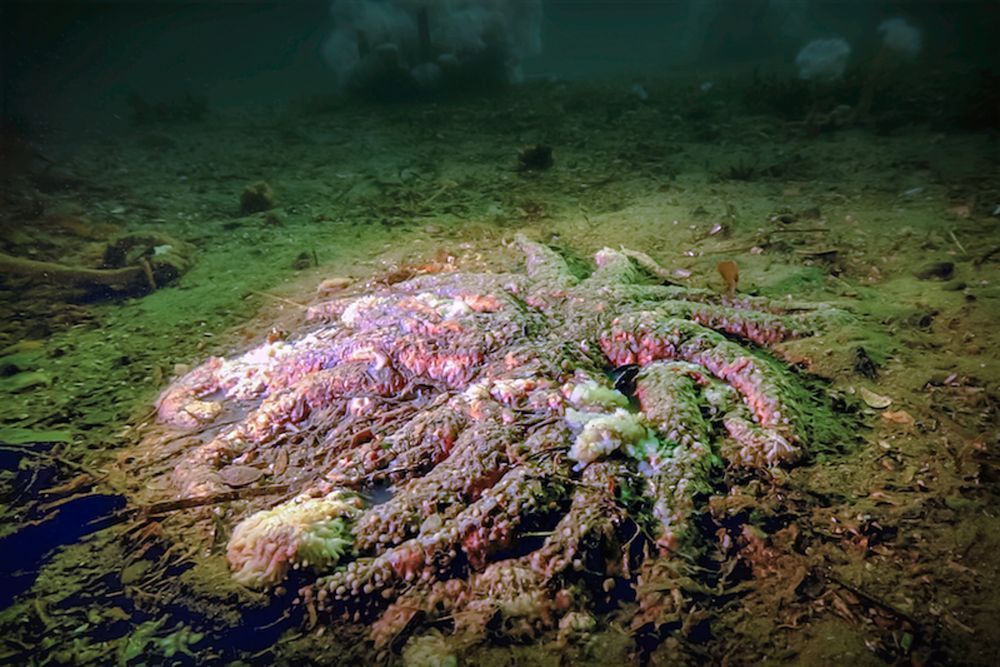
Several orange-striped green sea anemones surrounded by a pink sponge and detritus
Delighted to finally see the work from my honours thesis out in the world! Thanks, Chris Harley @zoology.ubc.ca, for supporting the ambitious amount of fieldwork that went into studying this tiny non-native anemone.
Read it here: doi.org/10.71161/ivb...
09.07.2025 17:50 — 👍 6 🔁 1 💬 1 📌 0

Researchers walking to the shore at sunrise

An octopus in the shallows
Just finished another round of fieldwork in the stunning Langebaan Lagoon MPA—always a privilege to work in such a unique ecosystem. Bonus: my first South African #octopus, spotted in the shallows!
27.05.2025 20:57 — 👍 3 🔁 0 💬 0 📌 0

Global Impacts Dataset of Invasive Alien Species (GIDIAS) - Scientific Data
Scientific Data - Global Impacts Dataset of Invasive Alien Species (GIDIAS)
The Global Impacts Dataset of Invasive Alien Species (GIDIAS) moves us one step closer to understanding global patterns in alien species impacts. With its roots in the latest IPBES report, this is an important resource
#bioinvasions
www.nature.com/articles/s41...
21.05.2025 14:47 — 👍 4 🔁 2 💬 0 📌 0


Sponges: nature’s biodiversity monitors 🌊🧽 In partnership with DFO & @ljmuofficial.bsky.social, we're using biofouling on moorings off NS to develop a cutting-edge biodiversity tool. Glass sponges capture environmental DNA (eDNA), revealing species like basking sharks & pilot whales.
17.04.2025 13:56 — 👍 5 🔁 3 💬 0 📌 0

Reciprocity towards nature in the biodiversity science–policy interface
Read the free Plain Language Summary for this article on the Journal blog.
The idea of reciprocity between humans and the rest of the living world is receiving increasing attention. Sandra Díaz and myself have long discussed about it in the context of the conceptual framing underpinning IPBES assessments.
besjournals.onlinelibrary.wiley.com/doi/10.1002/...
07.04.2025 15:22 — 👍 21 🔁 9 💬 0 📌 0


Excited to share this collaborative work with SANParks—though less thrilled to report another marine bioinvasion in a South African MPA.
Huge thanks to lead author @sjackland.bsky.social. Read our paper here: doi.org/10.3391/bir....
02.04.2025 07:25 — 👍 3 🔁 0 💬 0 📌 1
We connect people with science!
Get matched with a scientist at SkypeAScientist.com
Use any video chat platform you'd like!
Check out our science street art!
Home of the squid facts hotline.
DM @SarahMackAttack.bsky.social for all urgent questions!
Senior Scientist of Coastal and Marine Ecology Division at GUIDE. Oceanography and Marine biologist.
Biologist, offshore, patcher, birder,. Unst, IOS
www.AMCEcological.com
former documentary producer and writer. aspiring science communicator, interested in marine plastic pollution and harmful algal blooms.
full-time daughter. professional daydreamer.
Promoting the study & conservation of seabirds via conferences, grant provision, newsletters & our open access, free-to-publish journal 🐧🕊️🌊
Science reporter, The New York Times
Official Bluesky Account of PICES: North Pacific Marine Science Organization. Intergovernmental science to promote & coordinate marine research. Learn more at https://meetings.pices.int/
Lecturer at Queen’s University Belfast | invasion science, disease vectors, global change, ecology
Evolutonary Marine Venom Biologist
Currently at Ohio State University -> postdoc @ Harvard OEB.
More than a million species could be lost to the Extinction Crisis in the coming decades. Learn about our work to save Earth's wildlife & wild places. www.biologicaldiversity.org
UC President’s Postdoc | Kroeker Lab | UC Santa Cruz | #climatechange #sustainable oceans #ecophysiology in 🐟+🐚 | She/Hers | NE Raised | #LatinainSTEM
Website: https://racinerangel.wixsite.com/racinerangel
Marine scientist and teacher Field School & University of Miami. Director of sharktagging. NatGeo Explorer. Shark & ray ecology, biology, conservation. She/her.
🪼 Cnerdarian studying evolution and development in all things squishy and stingy | Cartwright Lab PhD Candidate & Self Graduate Fellow @ KU | Scientific SCUBA Diver | UCSB CCS Alum | she/her
Assistant Professor @ The Ohio State University.
Phylogenetics, biogeography, ichthyology, anglerfish toucher.
https://elizabethcmiller.weebly.com/
marine ecologist, online bon vivant, dad, ❤️ teaching #datasci & #rstats, byrneslab.net | floatingforests.org #BlackLivesMatter @jebyrnes in other places https://linktr.ee/jebyrnes
I LOVE fish! Fish biologist, angler, artist, science policy adviser, #SciComm. Amphibious fish, invasive species, biomechanics, functional morphology, behavior, ecology, fisheries. Assistant Professor of Physiology @ Salisbury University. He/him. AuDHD 🐡🎣🐟
PhD student Biology and Ecology of Global Changes 🇵🇹🇨🇦🌡 🌊 at @uaveiro.bsky.social and @uqar.bsky.social 🦐🐟 | @em-oyster.bsky.social 🇪🇺
not a butt doctor for ghosts | taxonomist specializing in phylum Bryozoa (moss animals), which used to be phylum Ectoprocta | general lover of marine invertebrates