Come work with us!! 2.5 year postdoc on HGT in plants.
Please share and get in touch if interested
www.jobs.ac.uk/job/DPQ418/r...

@rorycraig.bsky.social
Interested in mobile DNA and genome evolution, mostly working with eukaryotic algae. Lecturer in Genomics at the University of Melbourne.
Come work with us!! 2.5 year postdoc on HGT in plants.
Please share and get in touch if interested
www.jobs.ac.uk/job/DPQ418/r...

How do new centromeres evolve while staying compatible with the division machinery?
Discover it in our new Nature paper! We show centromeres transition gradually via a mix of drift, selection, and sex, reaching new states that still work with the kinetochore.
👉 doi.org/10.1038/s41586-025-09779-1

Out today, our take on 6-methyladenine #6mA evolution in Eukaryotes @natgenet.nature.com. We asked a simple question, is really DNA 6mA common across the eukaryotes? The answer is "yes" if you're a unicellular eukaryote 🦠, not so if you're multicellular 🐝🌱🍄. www.nature.com/articles/s41... 1/9
18.11.2025 12:00 — 👍 163 🔁 85 💬 7 📌 6
Excited to share our new preprint on BioRxiv!
A collaborative effort spanning many years and several labs to uncover what the germline chromosomes of Paramecium really look like. 🔗 www.biorxiv.org/content/10.1...
1/5
Good question! Auxenochlorella have been sampled from seawater (especially A. symbiontica), but to my knowledge they are only known as symbionts of freshwater hydra and sponges. But they could be useful to investigate the molecular basis of these symbioses
01.11.2025 09:47 — 👍 1 🔁 3 💬 0 📌 0
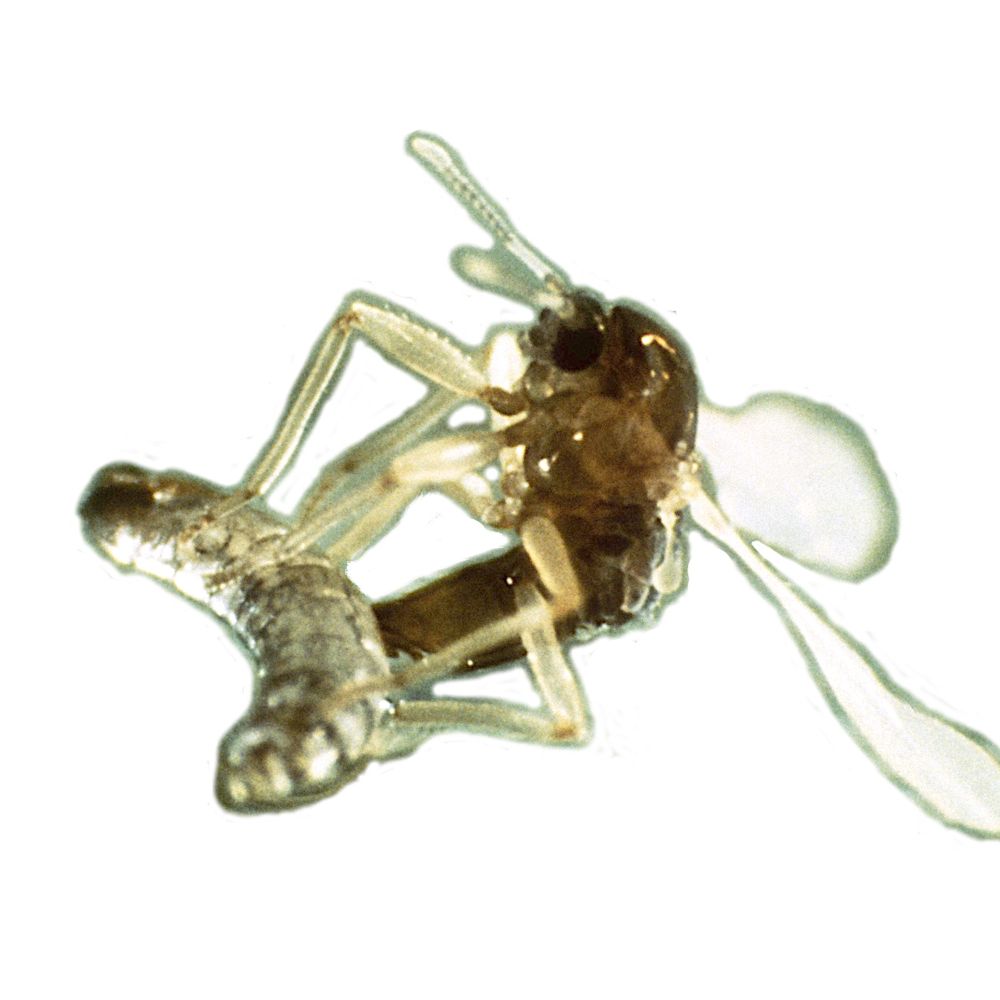
This Halloween, we have a spooky evolutionary story for you.
The brainchild of @delaconcepcionjc.bsky.social, Nick Irwin and our fantastic collaborators is now out in @natplants.nature.com www.nature.com/articles/s41...
Here’s why I love this work — and why I think you’ll enjoy it too. 👇

1/ Ever needed to annotate TEs in a fungal genome, but didn't know where to start?
We have released #MycoMobilome, a community-focused non-redundant database of transposable element consensus sequences for the fungal kingdom, constructed from >4,000 fungal genomes!
www.biorxiv.org/content/10.1...
(6/6) Overall, we found that the “yeast-like” processes of allodiploid hybridisation, mitotic recombination, loss-of-heterozygosity and aneuploidy all occur in an alga, showing the generality of these forces to vegetatively diploid eukaryotes
29.10.2025 06:59 — 👍 5 🔁 2 💬 0 📌 0(5/6) We also saw aneuploidies in two strains and we successfully transformed a trisomic chromosome using an allele-specific construct. We’re hopeful that we can utilise these redundant chromosomes for synthetic biology by sequential introduction of transgenes
29.10.2025 06:59 — 👍 5 🔁 1 💬 1 📌 0(4/6) Most remarkably, our reference strain UTEX 250 is an allodiploid hybrid of two close relatives, A. protothecoides and A. symbiontica, that are distinguished by highly rearranged karyotypes. The UTEX 250 sub-genomes have been further shuffled by rearrangements and recombination
29.10.2025 06:59 — 👍 4 🔁 1 💬 1 📌 0(3/6) Unlike most green algae, Auxenochlorella are vegetatively diploid and their genomes are shaped by evolutionary phenomena that reflect this. While these processes are well-understood in yeast, we were surprised to see extensive mitotic recombination and loss-of-heterozygosity in several strains
29.10.2025 06:59 — 👍 4 🔁 1 💬 1 📌 0(2/6) We introduce selectable markers, inducible promoters and fluorescent reporters for protein localisation, and @marcoaduenas.bsky.social has written a protocol for HR-based transformation: dx.doi.org/10.17504/protocols.io.x54v922mql3e/v1. All credit to a team led by Jeff Moseley here
29.10.2025 06:59 — 👍 5 🔁 1 💬 1 📌 0(1/6) First and foremost, Auxenochlorella spp. are oily green algae that can be readily transformed by homologous recombination, enabling efficient site-specific transformation of the nuclear genome. This is a first for chlorophytes, and we hope that it will facilitate lots of interesting research
29.10.2025 06:59 — 👍 5 🔁 2 💬 1 📌 0
Excited to introduce Auxenochlorella as a new algal reference organism for fundamental plant science and bioengineering. A paper in two parts: a genetic toolkit for site-specific genomic manipulation, paired with the most unusual genome I’ve ever worked on
academic.oup.com/plcell/artic...
Programmed DNA elimination was present in the last common ancestor of Caenorhabditis nematodes https://www.biorxiv.org/content/10.1101/2025.10.23.681605v1
24.10.2025 21:32 — 👍 8 🔁 6 💬 0 📌 0So happy to see my first first-author paper published! 🎈
A short thread on how Ectocarpus and its TE secrets have kept me busy lately:
rdcu.be/eITQH
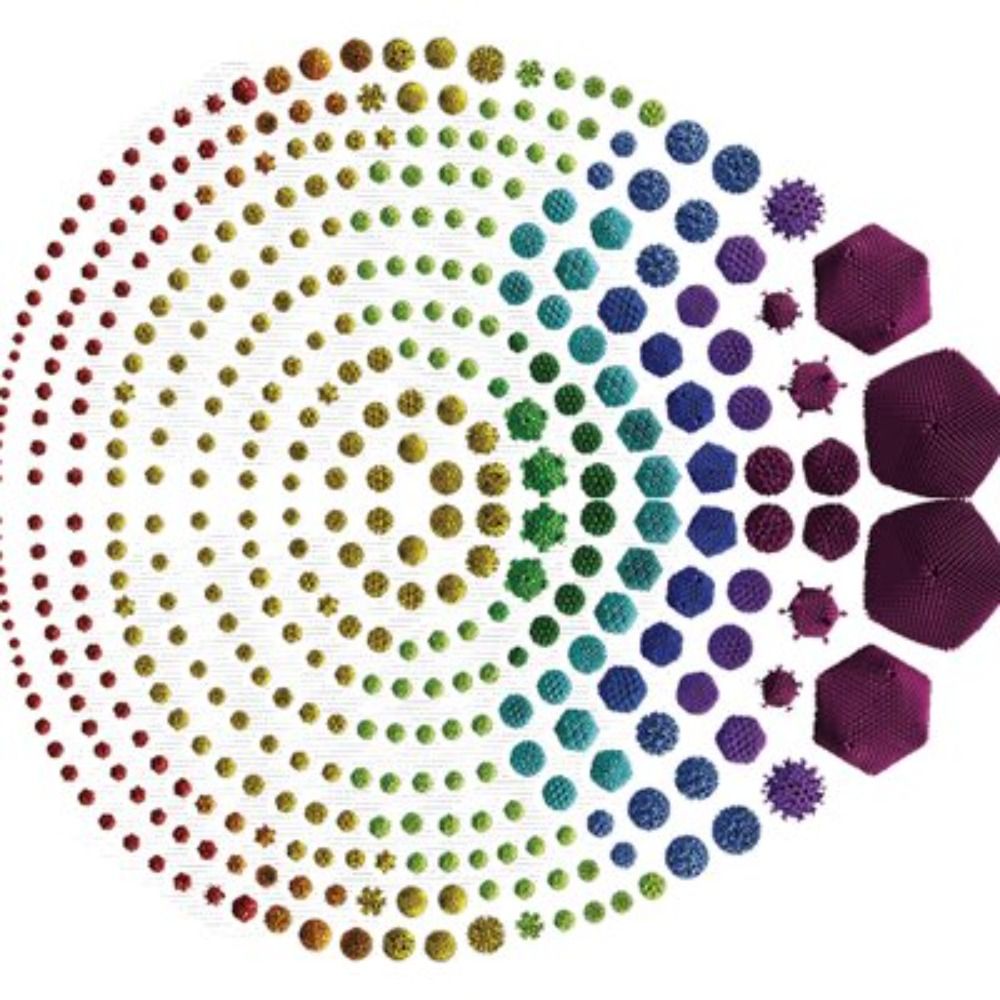
Fortunate to have played a small role in this project led by @caroleduchene.bsky.social. Phaeoviruses likely integrate into their host genomes using a promiscuous tyrosine recombinase, before reactivating in reproductive cells. Exciting to see diverse latency mechanisms emerging for giant viruses
24.09.2025 23:35 — 👍 5 🔁 1 💬 0 📌 0