🚨Publication Alert🚨
New work from our #CRC1678 members @bjornschumacher.bsky.social and @meyerdh.bsky.social reveals why some neurons age faster. Using neuron‑specific aging clocks, they identified vulnerable neurons and highlight syringic acid and vanoxerine as promising neuroprotective hits.🧬
03.02.2026 10:54 — 👍 3 🔁 3 💬 0 📌 0
Amazingly, these in silico predictions held up in vivo: protective hits delayed degeneration (syringic acid, vanoxerine), while predicted pro-aging/toxic compounds caused neurite deterioration and accelerated degeneration (resveratrol, Bay K8644). (8/n)
03.02.2026 10:31 — 👍 0 🔁 0 💬 1 📌 0
We used this discovery to adapt an in silico drug screen and mapped worm neuron-aging signatures onto human perturbation profiles (CMAP) to identify novel compounds affecting neurodegeneration. (7/n)
03.02.2026 10:31 — 👍 0 🔁 0 💬 1 📌 0
These trajectories aren't worm specific. Despite millions of years of evolution, the same transcriptomic signature we see in C. elegans aligns with human brain aging, and it flips sign under geroprotective interventions. That argues for conserved neuronal aging programs. (6/n)
03.02.2026 10:31 — 👍 1 🔁 0 💬 1 📌 0
Fast-aging neurons are enriched for neuropeptide and protein biosynthesis pathways. These neuron types show earlier structural decline and loss of neuron-specific function. And indeed, pharmacological inhibition of translation prevents degeneration of fast-aging neurons. (5/n)
03.02.2026 10:31 — 👍 1 🔁 0 💬 1 📌 0
Critically: fast-aging types show earlier structural degeneration and loss of function in vivo. Remarkably, we can already predict which neurons will degenerate earlier at a late developmental stage. Vulnerability is detectable as an early transcriptomic aging state. (4/n)
03.02.2026 10:31 — 👍 0 🔁 0 💬 1 📌 0
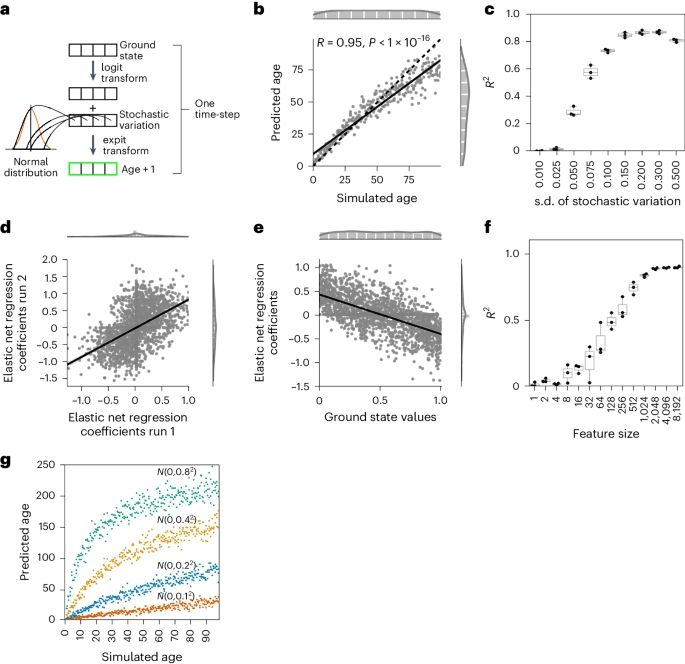
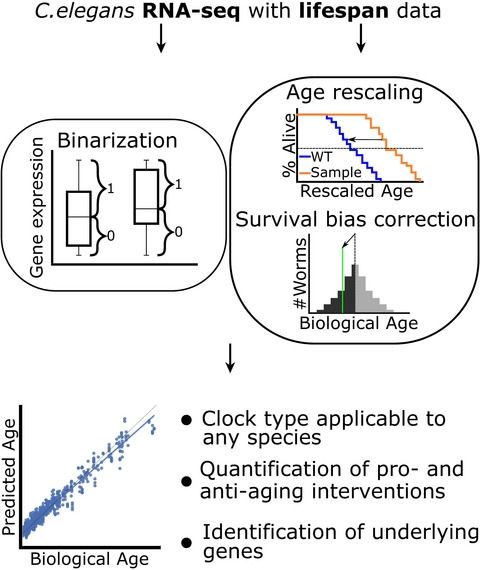
We applied two independent clocks (links below): our BitAge (binarized transcriptomic aging clock), and our Stochastic clock (noise-based and data-type agnostic). Both independently rank neuron types as fast- vs slow-aging from their transcriptomes. (3/n)
03.02.2026 10:31 — 👍 0 🔁 0 💬 1 📌 0
Selective vulnerability is central to #Alzheimer’s and #Parkinson’s disease, but which neurons age faster is rarely quantified. Transcriptomic clocks let us estimate biological age directly from neuron-type gene-expression states. (2/n)
03.02.2026 10:31 — 👍 0 🔁 0 💬 1 📌 0
Happy to share that this is now out in Microbial Ecology 🥳 Huge thanks to the whole team, especially @sultanova.bsky.social 🙌
link.springer.com/article/10.1...
@leibnizfli.bsky.social @uniofeastanglia.bsky.social
27.12.2025 10:25 — 👍 7 🔁 1 💬 0 📌 0
Sex-specific mutation accumulation: A parsimonious explanation for sex differences in lifespan and ageing
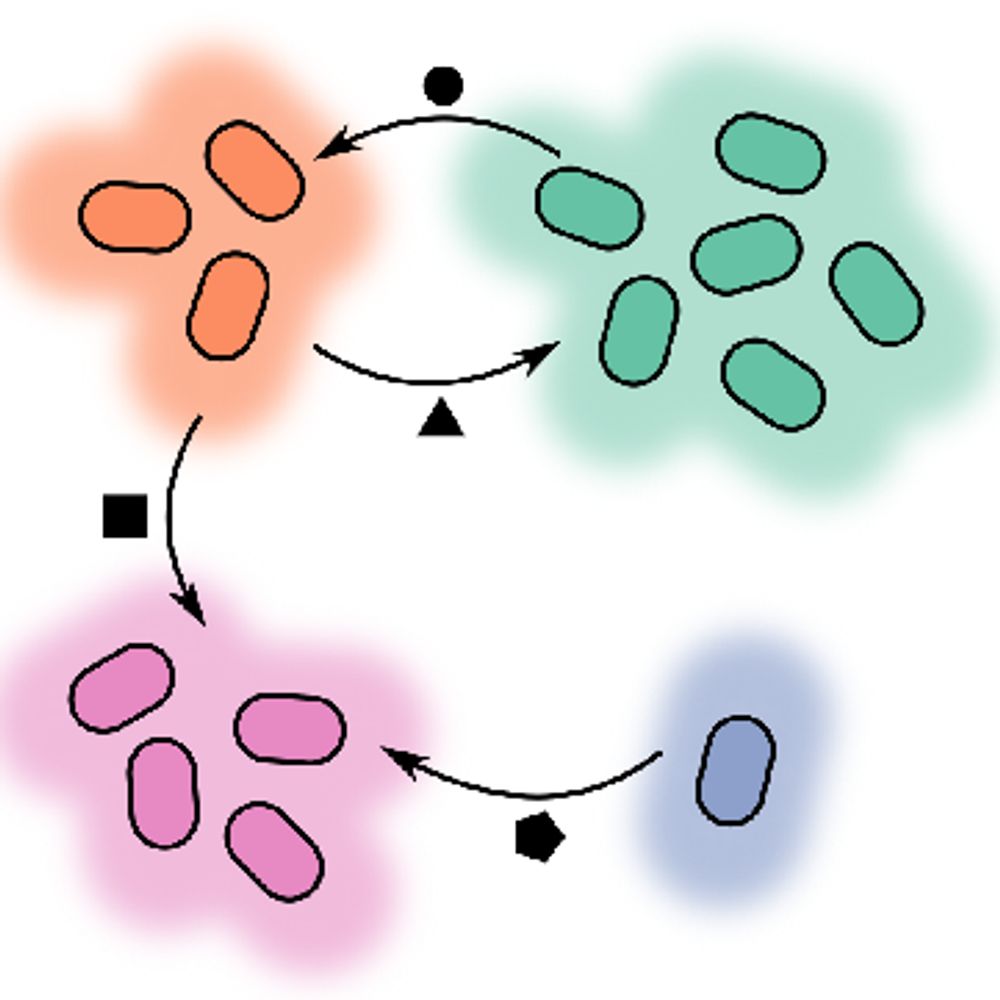
1/6 In a new preprint we ask a question:
Why do males and females so often age and die at different rates?
We argue that sex-specific mutation accumulation may be the most parsimonious evolutionary explanation for sex-biased ageing:
ecoevorxiv.org/repository/v...
19.11.2025 12:08 — 👍 25 🔁 13 💬 2 📌 0
Thanks to the whole team (not on Bluesky)!
19.12.2025 18:26 — 👍 0 🔁 0 💬 0 📌 0
The clock predicts an accelerated age up to 5 years before a chronic disease is diagnosed.
And it stays robust during acute infections, but correlates with CRP.
19.12.2025 18:26 — 👍 0 🔁 0 💬 1 📌 0
We built a clinical #aging clock using only 6 routine blood biomarkers + sex on a Southeast Asian dataset that validates well in NHANES and UK Biobank.
19.12.2025 18:26 — 👍 0 🔁 0 💬 1 📌 0
Happy to share our recent publication, which grew out of a consulting job I did last year:
www.nature.com/articles/s41...
🧵
19.12.2025 18:26 — 👍 4 🔁 2 💬 1 📌 0
New study by our #CRC1678 members @bjornschumacher.bsky.social, @meyerdh.bsky.social and Walter Sandt showing that C. elegans dauer stage decelerates aging and even reverses biological age upon exit, revealing natural gene patterns of rejuvenation. Congratulations! 🎉
#AgingResearch #Longevity
10.12.2025 12:36 — 👍 5 🔁 1 💬 0 📌 0

Celebrating excellence: meet the 2025 SIB Bioinformatics Awards laureates
Two early career bioinformaticians have been recognized for their mathematical and AI models, along with a collaborative resource for single-cell data analyses. The three 2025 SIB Bioinformatics Award...
🎥 Meet the 2025 SIB Bioinformatics Awards laureates:
⭐ David Meyer @meyerdh.bsky.social, PhD Paper Award
⭐ Michael Skinnider @skinnider.bsky.social Early Career Award
⭐ scverse @scverse.bsky.social, Innovative Resource Award, accepted by Ilan Gold
Watch their award ceremony talks👇& congrats to all!
28.10.2025 08:29 — 👍 4 🔁 1 💬 0 📌 0
🚨🚨Job! 🚨🚨Permanent (75% time) job! We are a pretty awesome research group & seek a manager who deals with everything: personnel tasks, organizing retreats, preparing code for teaching / data structures for research... Fluency in German & English essential. stellenboerse.uni-mainz.de#/jgu/job/51527
17.10.2025 07:38 — 👍 37 🔁 42 💬 0 📌 0
Super grateful that our scETM work (from my summer internship with Dr. Yue Li, in collab. with Huiyu Cai and @tangjian.bsky.social) was recognized with an honourable mention at SIB PhD Paper Award competition. Many thanks to the jury and congrats to @meyerdh.bsky.social and Can Chen! #bc2basel
05.10.2025 10:14 — 👍 4 🔁 2 💬 0 📌 0
This review of our @crc1678.bsky.social member @bjornschumacher.bsky.social and @meyerdh.bsky.social is greatly summarizing fundamentals of the molecular biology of aging. What causes aging? Read the answer!
22.09.2025 11:22 — 👍 11 🔁 5 💬 1 📌 0

Aging by the clock and yet without a program - Nature Aging
Meyer and colleagues refute the idea that, as aging can be tracked precisely by clocks, it must be driven by a biological program. They propose that imperfect maintenance and repair processes resultin...
🔥🔥🔥Out now: our Perspectives article in @nataging.nature.com outlining how aging is driven by molecular damage leading to increasing molecular noise whose quantification could track aging with the precision of a clock @meyerdh.bsky.social @alexeimaklakov.bsky.social
www.nature.com/articles/s43...
20.09.2025 04:31 — 👍 40 🔁 17 💬 1 📌 1
We argue that selection shadow - gradual decline in the force of selection after the onset of reproduction - is sufficient/parsimonious to explain why damage accumulates with age. 'Aging clocks' measure damage accumulation, they neither require nor support any kind of 'program'-based explanation.
18.09.2025 14:44 — 👍 10 🔁 4 💬 0 📌 0
Greek Evolutionary Biologist, Postdoctoral Researcher at the University of Groningen @rug.nl studying epigenetics and other stuff 🐦🧬
Latest news in the biology and genetics of aging, covering longevity science, rejuvenation technologies and life-extension research.
Independent think tank and educational organisation dedicated to advancing longevity science in the UK, EU and around the world. Founded by @statto.bsky.social and @kshoylev.bsky.social
#aging #bioinformatics #microbiome #rstats
Junior Group Leader at the Leibniz Institute on Aging (FLI)
@iscb & @ekoevoder member
https://donertas-group.github.io/
PhD candidate @ Iowa State University | Heath Lab | phylogenetics | bioinformatics and computational biology | 1 9 0 8
Bleats about all things Soay Sheep: field, research, puns 🐑
Home of the long term study of the Soay Sheep of St Kilda, Scotland 🏝️
Also check out our instagram: www.instagram.com/soaysheep/
and website: https://soaysheep.bio.ed.ac.uk/
🔭🐏
Scientist decoding the aging genome, professor, geek, entrepreneur, speaker, writer, keen footballer.
Parent, scientist, musician
https://lab.research.sickkids.ca/derry/
ORCID: 0000-0002-1977-8475
The Katz Lab at Emory University School of Medicine studies transgenerational epigenetics and the role of epigenetics in Alzheimer’s Disease using C. elegans and mouse
Senior Postdoctoral Research Associate
Evolution and genetics of ageing, host-pathogen coevolution.
Associate professor at the University of Debrecen, interested in birds, hormones & behaviour, and mechanisms of life history evolution.
Excitable PhD student interested in how an evolutionary perspective can inform our understanding of human health and disease | University of Groningen | he/him
Entomologist and Evolutionary biologist at JGU | Postdoc | Life-history evolution in ants
Theoretical evolutionary ecologist. Fond of math, coffee, natural history, and metal music. Kokkonut and PhD student at Uni Mainz, Germany.
Past: BS-MS at IISER Pune, India. MS thesis at CES, IISc, India.
Webpage: https://thepandalorian.github.io
he/him
Medical Systems Biology research group - Constraint-based modelling - Modelling of host-microbiome-interactions - Systems Biology of Aging
He/Him. Evolution and Bioinformatics. Posts mine alone, in English (mostly) & French. Chair of @dee-unil.bsky.social, Prof at @fbm-unil.bsky.social, group leader at @sib.swiss. PI of @bgee.org
🦣 Main account: https://ecoevo.social/@marcrr
The SIB Swiss Institute of Bioinformatics is an internationally recognized non-profit organization dedicated to biological and biomedical #DataScience.
We provide essential resources, expertise and services and represent Swiss bioinformatics.
Posts mine alone, in English (mostly) & French. #Evolution #Bioinformatics #openaccess #EDI. Director of @dee_unil and group leader at @SIB. He/Him. PI of @bgeedb, of […]
🌉 bridged from ⁂ https://ecoevo.social/@marcrr, follow @ap.brid.gy to interact