In which the shifting foci of private foundations, while noted, do not obscure what the fundamental, underlying problem is: "in contrast to mathematics and the natural sciences, humanists have never built a sustainable public funding model for their research."
13.02.2026 02:36 — 👍 32 🔁 1 💬 1 📌 0
(4) This leaves humanists in a bind because there is no political support for the idea of publicly funded curiosity driven humanities research. So how do we create that? How should a future Democratic administration rebuild the NEH?
13.02.2026 14:57 — 👍 229 🔁 17 💬 6 📌 2
(3) But the Democrat view is also bad: while it's fine for people at Princeton and Harvard to study Latin and Sanskrit, public higher education is about job training and $ ROI. There is no room for the idea that curiosity-driven inquiry is a good that should be supported by the public.
13.02.2026 14:57 — 👍 449 🔁 54 💬 9 📌 11
(2) the Republican view of the humanities is that they should be turned into an ideological apparatus of political conservatism (see Trump's NEH). This is obviously bad.
13.02.2026 14:57 — 👍 198 🔁 16 💬 1 📌 0
The former can be true without the latter being true, in part because humanities academia itself is pretty culturally marginal at this point.
13.02.2026 14:12 — 👍 5 🔁 0 💬 0 📌 0
I think a lot of academics seem to have trouble distinguishing between certain groups/people and their cultural production being marginalized in society and the study of those groups/people being marginalized within humanities academia.
13.02.2026 14:12 — 👍 5 🔁 1 💬 2 📌 0
Let's go through Chinese civilization from the earliest written sources to confirm Arnaud's point. So first up, oracle bones, what are those? Records of divinations performed by rulers with special connections to the supernatural? Oops, well, so much for that theory.
13.02.2026 03:05 — 👍 13 🔁 1 💬 1 📌 0
I (and many others in the field) are really grateful for the investment @columbiaup.bsky.social, and you in particular, have made in supporting the publication of Chinese/Inner Asian history in recent years.
11.02.2026 21:25 — 👍 1 🔁 0 💬 1 📌 0
Also a good day for @columbiaup.bsky.social's ever-more important role as the place to publish in Chinese Studies, with the winner and runner-up of the pre-1900 Levenson prize and the runner-up of the post-1900 prize
11.02.2026 18:30 — 👍 5 🔁 0 💬 0 📌 0
Congratulations to all the winners, especially my 師弟 @jlfreeman.bsky.social for his fantastic Hanan-Prize winning translation of Tahir Hamut Izgil's Waiting to Be Arrested at Night, a really essential read for anyone who wants to understand what Uyghurs have experienced in recent years
11.02.2026 18:30 — 👍 4 🔁 1 💬 1 📌 0
Sadly, that's better than pre-modern Chinese history, for which there were exactly 0 North American jobs. I guess there was one job at Middle Tennessee State that was open to pre-modernists (China/Japan any period) and one at TCNJ for East Asia OR Middle East, any period. Anyway, super depressing
03.02.2026 02:33 — 👍 2 🔁 0 💬 0 📌 0
When I first met substantial numbers of Minnesotans as a university student, I was struck and annoyed by their obsessive (and loud) devotion to their state and total confidence in the superiority of Minnesota and its people. So it pains me to now have to admit that it seems they may have been right.
27.01.2026 01:27 — 👍 7 🔁 0 💬 0 📌 0
what I didn't have space for here was 'Trump-supporting China hawks have brought an entirely predictable disaster on themselves, the absolute fucking fools'
21.01.2026 01:40 — 👍 193 🔁 22 💬 5 📌 0
One choice I think I don't agree with is the framing of China as a post-colonial state, but I don't think it ultimately matters much to the argument.
20.01.2026 16:43 — 👍 2 🔁 0 💬 0 📌 0
Think I'll be adding it to my "Borderlands of Modern China" syllabus for the fall. Unfortunately, no English subtitles for the films he discusses, so can't assign them in class, but I think the article will help students understand the analogous PRC-Tibetan film Nongnu
20.01.2026 16:43 — 👍 1 🔁 0 💬 1 📌 0

Re-marking Xinjiang: From Liberation to Westward Expedition
Abstract. This article examines three films made by the Urumqi-based Tianshan Film Studio spanning four decades, from the 1960s to the 1990s. These films encapsulate the discursive shifts surrounding ...
Really enjoyed Peng Hai's article "Re-marking Xinjiang" in November's JAS. He looks at changing representations in film of the PRC incorporation of Xinjiang, showing how narratives of Uyghur participation in their own liberation turned to glorification of a national project
20.01.2026 16:43 — 👍 8 🔁 2 💬 1 📌 0

Stephen Miller Asserts U.S. Has Right to Take Greenland
After reading this article, had a conversation with my wife about the point at which we should renounce US citizenship. www.nytimes.com/2026/01/05/u...
06.01.2026 13:51 — 👍 0 🔁 0 💬 0 📌 0
Not sure about Canada as a whole, but it's definitely true in Quebec in relation to Montreal
01.01.2026 19:40 — 👍 0 🔁 0 💬 1 📌 0
Who deserves what is a narrative applied to justify (some aspects of) certain (maybe most) meritocratic systems, but it isn't, I think, what defines meritocracy.
27.12.2025 05:09 — 👍 2 🔁 0 💬 0 📌 0
Anyway, I guess this is all to say that, from the perspective of a historian interested in how systems of governance and social hierarchy develop and function, I don't find it useful to talk about meritocracy as "a constellation of claims about who deserves certain things" as the article does
27.12.2025 05:09 — 👍 2 🔁 0 💬 1 📌 0
So though you can reasonably assert that obvious unfairness in selection processes can undermine a meritocratic system, it doesn't make sense to suggest that the existence of unfair (dis-)advantages for certain individuals/groups means that a given system is not meritocratic or less meritocratic.
27.12.2025 05:09 — 👍 3 🔁 1 💬 1 📌 0
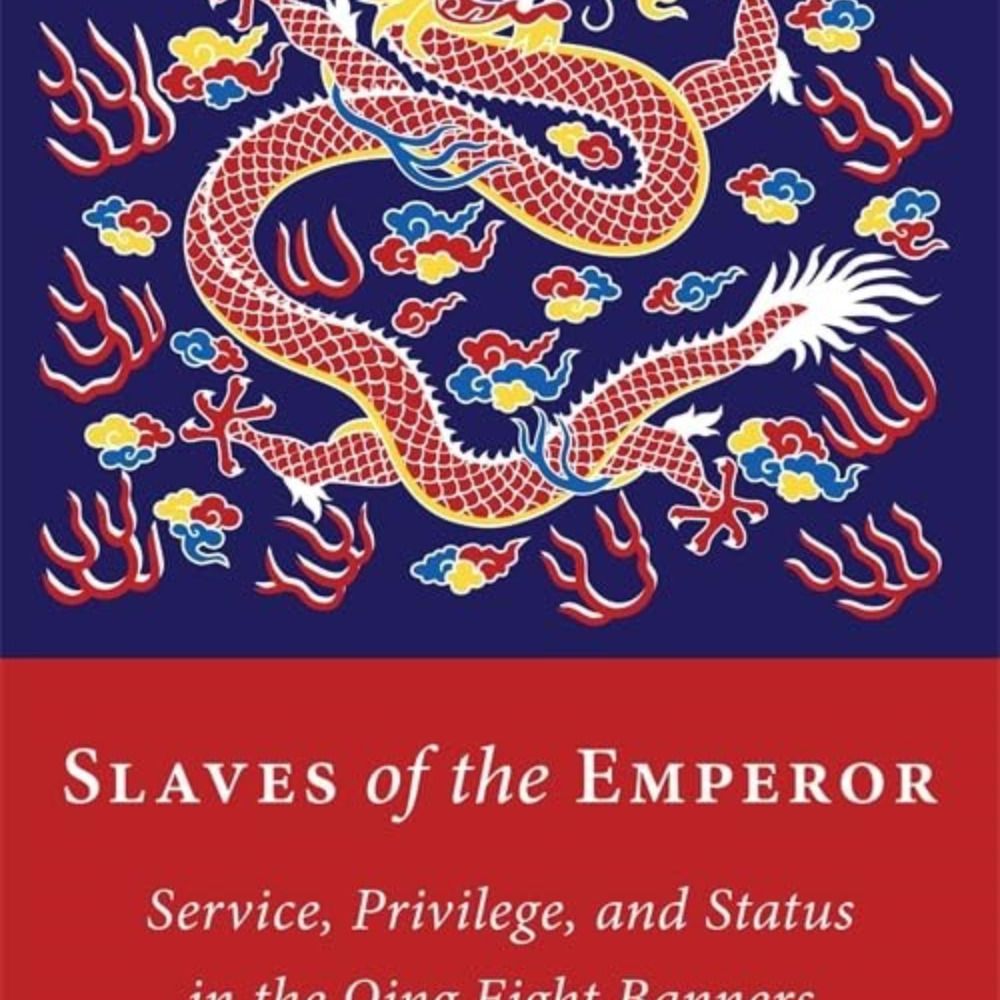
That it advantaged bannermen was essential to creating the service elite relationship between the banners and the court that I described in my book, helping the Qing avoid having to worry about the military turning against the ruling house.
27.12.2025 05:09 — 👍 2 🔁 0 💬 1 📌 0
That the system advantaged the wealthiest members of society was essential for maintaining the loyalty of those families (which probably helped save the Qing on a number of occasions, from the Three Feudatories to the Taiping).
27.12.2025 05:09 — 👍 2 🔁 1 💬 1 📌 0
The Qing system was absolutely not fair - the wealthy, bannermen, etc. had massive advantages over ordinary people. But at a basic level it was indeed meritocratic (outside the emperorship, of course). And many of the things that made it unfair in fact served the interests of the ruling house.
27.12.2025 05:09 — 👍 2 🔁 1 💬 1 📌 0
It's only an internal critique to the extent that a perception of fairness is key to making a given meritocratic system work (which it usually is to some degree, but it's never the only thing at stake).
27.12.2025 05:09 — 👍 2 🔁 0 💬 1 📌 0
Fairness for participants is certainly a worthwhile moral critique of meritocracy, but it is often an external critique (i.e. a claim about why meritocracy is a bad system) not an internal one (i.e. a claim about how a meritocratic system is failing to live up to the meritocratic ideal).
27.12.2025 05:09 — 👍 2 🔁 0 💬 1 📌 0
Internal critiques of meritocracy often revolve too much around fairness for the aspiring meritocrats.
Meritocratic systems aren't about rewarding people for their achievements, but about ensuring that the people chosen to hold power best meet the needs of the existing political structures.
27.12.2025 05:09 — 👍 2 🔁 0 💬 1 📌 0
But as a sociological phenomenon, meritocracy is really just the idea that powerholders receive their positions on the basis of evaluation+selection from above, as opposed to birth (aristocracy) or election from below (democracy).
27.12.2025 05:09 — 👍 3 🔁 1 💬 1 📌 0
Art Historian, Art Educator, Museum Professional, Lover of 川菜
Cartographer, historical GIS consultant, ancient historian, teacher. mossmaps.net
Minnesota guy.
"This particular activist will not stop." Sen. Chris Murphy
Your Jeopardy! pal. Author of THE COMPLETE KENNECTIONS (http://bit.ly/4qUcbhK) and a bunch of other stuff.
civilian drone mapping technology and GIS/spatial data consultant, sometimes journalist and writer, monitors small drones in the Ukraine war, humanitarian-aid adjacent, always annoying online. they/them pronouns. minors DNI
Assistant Professor at the University of Arizona
Senior Editor at @AjamMC.bsky.social (ajammc.com)
Reposts, likes, etc do *not* indicate endorsement
Postdoc @UVA 明清文学
intersections of page and stage
The long and unruly Chinese 17th century
‘21 National Book Award Finalist
scholar poet translator farm boy
Historian of early China @ umontreal
A publication that covers the nuts and bolts of political change: Boltsmag.org
I like to post and see posts and I cover state politics. Subscribe to Radio Free America, the political newsletter that's the opposite of Axios https://radio-free-america.beehiiv.com/
History of language politics in China & Sinophone Asia -- literary feminism and translation history -- Research Fellow, French National Centre for Scientific Research (CNRS) (& 🏊🏻♀️🚴🏼♀️🏃🏼♀️) -- She/her
https://www.hannah-shepherd.com/
Associate Professor of History,
College of the Holy Cross
Researcher at CNRS (early modern Chinese social history; bondage and labour)
historian | japanese empire, environment, borderlands | wabanaki territory
Writing about platforms capitalisms, super apps, convenience stores in Japan and Asia. Director of The Platform Lab.Books: In/Convenience (http://bit.ly/3Vcs4m4); The Platform Economy; Anime's Media Mix.
Medieval Chinese Buddhology. Textiness of texts: scriptures, canons, citations, anthologies. He/him/his.
The Greatest Trivia League in All the Land
Living the life in #Beijing
"I've been blastin' and laughin' so long, that even my mama thinks that my mind is gone"