#Archaea #ArchaeaSky #MicroSky
exceptional work, hiro & team 👏👏👏
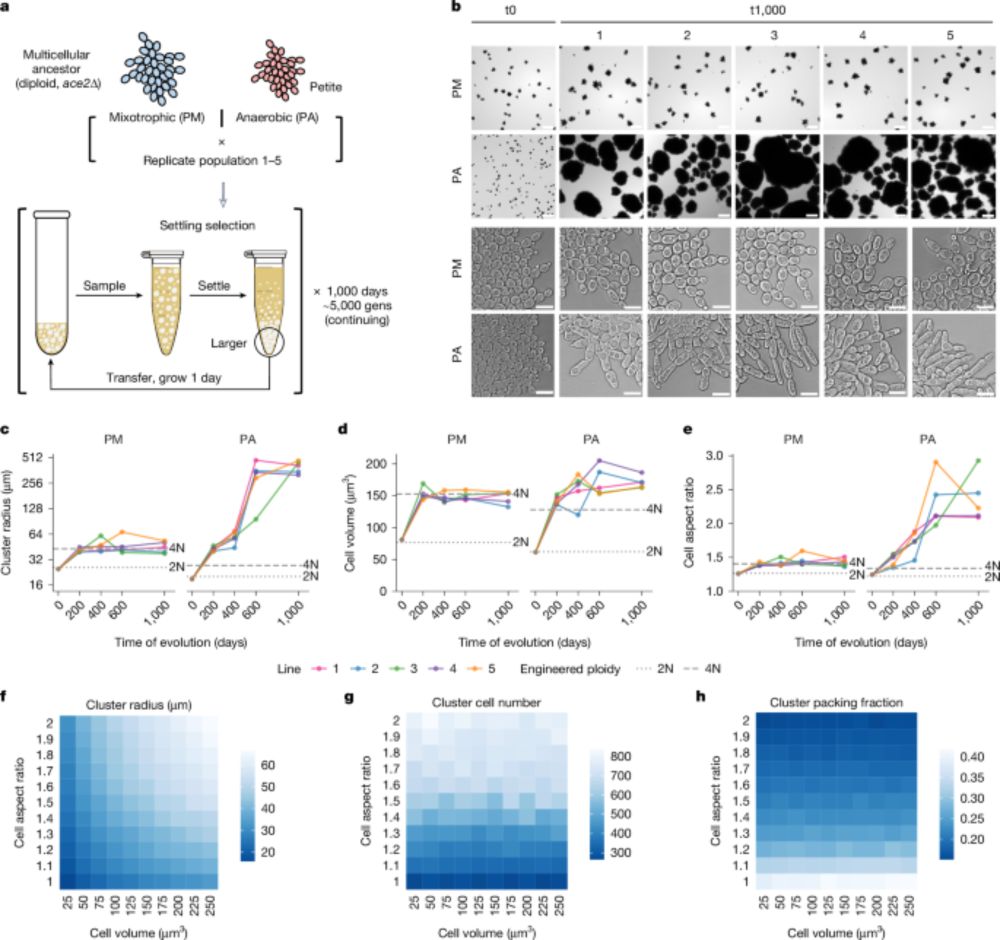
it's wonderful to see 𝘓. 𝘰𝘴𝘴𝘪𝘧𝘦𝘳𝘶𝘮 dancing. live videos reveal so much more than stills!
ALT source: www.biorxiv.org/content/10.1...
03.12.2025 19:54 — 👍 21 🔁 10 💬 2 📌 0

Kurzgesagt – In a Nutshell
Animation videos explaining things with optimistic nihilism since 12,013.
We’re a team of illustrators, animators, number crunchers and one dog who aim to spark curiosity about science and the world ...
Big news, friends! I just joined the team at Kurzgesagt – In a Nutshell @kurzgesagt.org as a Researcher & Fact-Checker 🐦💻🔍
Basically I get to nerd out over science with wildly creative people every day. Dream job 💚
Go watch their stuff if you haven’t already!
www.youtube.com/@kurzgesagt
04.06.2025 10:20 — 👍 136 🔁 9 💬 13 📌 3
Come join our fun community @ox.ac.uk! Two postdoc positions available in the fabulous Slack and Foster labs www.fosterlab.uk/vacancies
26.02.2025 11:25 — 👍 3 🔁 2 💬 0 📌 0
'
We are recruiting @ox.ac.uk @dunnschool.bsky.social for a joint project between Kevin Foster's group and mine! Cluster hire of two postdocs interested in:
1) Mucosal immunology and oral vaccine development
my.corehr.com/pls/uoxrecru...
2) Microbiology
my.corehr.com/pls/uoxrecru...
Please share!
22.02.2025 20:07 — 👍 81 🔁 86 💬 0 📌 5
very awesome paper, btw!
08.01.2025 21:56 — 👍 0 🔁 0 💬 0 📌 0

@contamclub.bsky.social
17.12.2024 17:10 — 👍 6 🔁 1 💬 1 📌 0
 17.12.2024 15:15 — 👍 3 🔁 1 💬 1 📌 0

A winter’s contamination - tragedy in three acts
17.12.2024 15:15 — 👍 11 🔁 3 💬 1 📌 0
Order of amino acid recruitment into the genetic code resolved by last universal common ancestor’s protein domains | PNAS
The current “consensus” order in which amino acids were added to the genetic code
is based on potentially biased criteria, such as the absence of s...
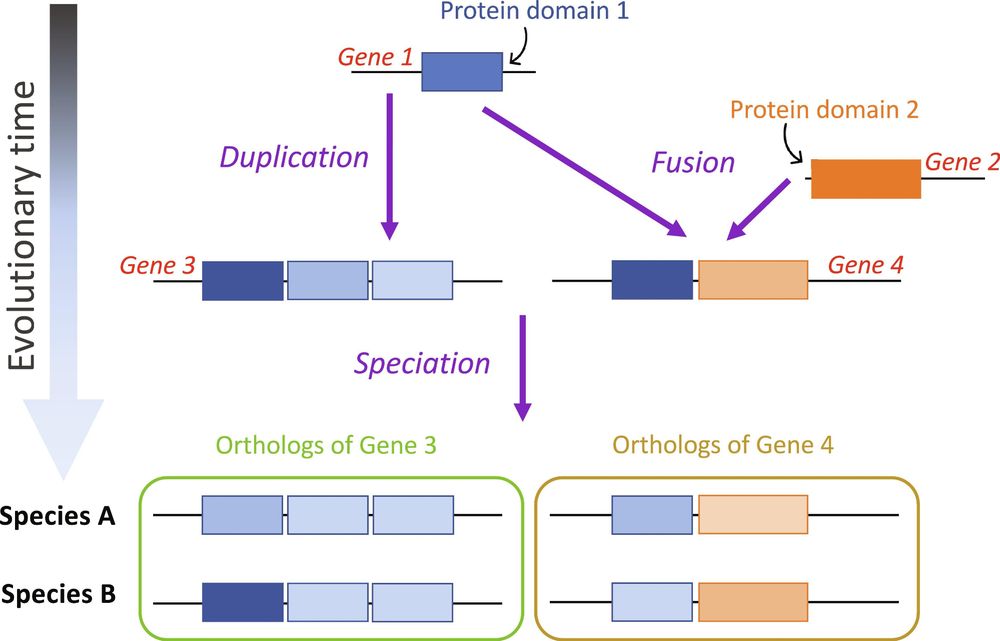
We identified protein domains in LUCA (Last Universal Common Ancestor). Their distinctive amino acid usage reveals the order amino acids were added to the genetic code, based mostly on size. Older proteins hint at earlier alternative codes. 1/15 @seekingluca.bsky.social www.pnas.org/doi/10.1073/...
12.12.2024 15:43 — 👍 254 🔁 112 💬 12 📌 11
Funny! this brings back memories of when Nüsslein-Vollhard told a fellow female graduate student that she wouldn’t hire a postdoc who wastes time putting on makeup everyday.
The one piece of advice by a Nobel laureate that didn’t improve my science, but my morning routine.
11.12.2024 09:12 — 👍 1 🔁 0 💬 0 📌 0
This is exactly right. Population genetics has a reification of simple models problem. And we are weirdly non-Bayesian in that we do not check our simple - clearly too simple! - models against the priors generated through direct observation in ecology and other fields.
25.11.2024 20:25 — 👍 5 🔁 1 💬 1 📌 0
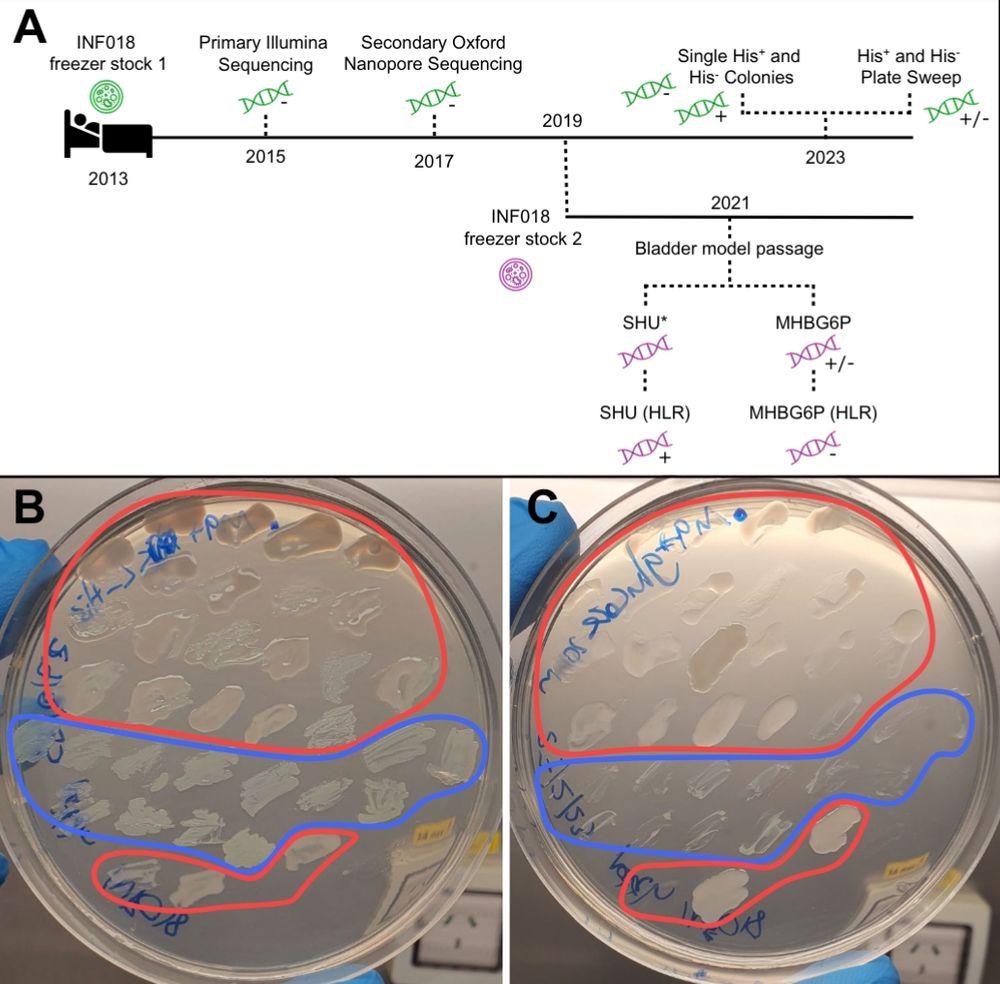
(1/6) Our new short paper on incidental bacterial domestication between patient isolation and creation of frozen stock. Geno/phenotype changes are obscured by rich media and more prevalent than we previously thought.
#MicroSky
21.11.2024 06:26 — 👍 64 🔁 34 💬 3 📌 4

Here it’s the brain affecting the gut microbiota- via the Brunner’s gland, which nerves stimulate to produce mucus, home for the Lactobacilli. Links physiological state to immunity. Amazing work by Ivan de Araujo and Hao Chang. doi.org/10.1016/j.ce...
🦠🧫@maxplanckcampus.bsky.social
21.11.2024 06:37 — 👍 44 🔁 15 💬 1 📌 2
IS jumping?
16.11.2024 13:49 — 👍 0 🔁 0 💬 0 📌 0

Evolutionary biologists teaching intro courses: "Hardy-Weinberg is the null model of evolution."
Evolutionary biologists studying bacteria/archaea/asexual eukaryotes:
#evolution
13.11.2024 19:31 — 👍 225 🔁 61 💬 13 📌 3
Dispersal stabilizes coupled ecological and evolutionary dynamics in a host-parasitoid system
Experiments and simulations show that dispersal maintains host genetic diversity and promotes host-parasitoid coexistence.
Excited to share our new paper out in Science! We combined simulations, experiments, and field data to show how dispersal simultaneously stabilizes species and genetic diversity, which results in persistent eco-evo dynamics. doi.org/10.1126/scie...
15.03.2024 02:26 — 👍 9 🔁 9 💬 0 📌 0
Putting my stake in the ground as an enjoyer (and user) of the term 'prokaryote'. It's an efficient way to talk about two groups of organisms which are very often talked about in the same breath! Nobody gets mad about 'fish' because it's paraphyletic! 🧪
29.02.2024 02:44 — 👍 16 🔁 4 💬 3 📌 0

Obsession with methods in microbial ecology
Striving towards bare minimum technique awesomeness
In my latest newsletter I write about the obsession with methods in microbial ecology, and I share my admiration of simple, but elegant experimental approaches.
🧪🦠
What do you think?
open.substack.com/pub/matthias...
22.02.2024 14:54 — 👍 16 🔁 7 💬 2 📌 3

Bacterial ecology and evolution converge on seasonal and decadal scales
Ecology and evolution are distinct theories, but the short lifespans and large population sizes of microbes allow evolution to unfold along contemporary ecological time scales. To document this in a natural system, we collected a two-decade, 471-metagenome time series from a single site in a freshwater lake, which we refer to as the TYMEFLIES dataset. This massive sampling and sequencing effort resulted in the reconstruction of 30,389 metagenomic-assembled genomes (MAGs) over 50% complete, which dereplicated into 2,855 distinct genomes (>96% nucleotide sequence identity). We found both ecological and evolutionary processes occurred at seasonal time scales. There were recurring annual patterns at the species level in abundances, nucleotide diversities (π), and single nucleotide variant (SNV) profiles for the majority of all taxa. During annual blooms, we observed both higher and lower nucleotide diversity, indicating that both ecological differentiation and competition drove evolutionary dynamics. Overlayed upon seasonal patterns, we observed long-term change in 20% of the species' SNV profiles including gradual changes, step changes, and disturbances followed by resilience. Most abrupt changes occurred in a single species, suggesting evolutionary drivers are highly specific. Nevertheless, seven members of the abundant Nanopelagicaceae family experienced abrupt change in 2012, an unusually hot and dry year. This shift coincided with increased numbers of genes under selection involved in amino acid and nucleic acid metabolism, suggesting fundamental organic nitrogen compounds drive strain differentiation in the most globally abundant freshwater family. Overall, we observed seasonal and decadal trends in both interspecific ecological and intraspecific evolutionary processes. The convergence of microbial ecology and evolution on the same time scales demonstrates that understanding microbiomes requires a new unified approach that views ecology and evolution as a single continuum. ### Competing Interest Statement The authors have declared no competing interest.
Been dreaming of this paper for a decade. 1 PhD and 1 postdoc later, here it is!
What do ecology and evolution look like in a 20-year microbiome time series? They blur together
@quendi.bsky.social @archaeal.bsky.social @uslter.bsky.social @sarilog.bsky.social 🧪🖥️🧬
www.biorxiv.org/content/10.1...
08.02.2024 23:47 — 👍 43 🔁 24 💬 5 📌 1
Interesting! Their theory seems to hinge on constant recombination (which in the face of niche overlaps forces low-diversity populations to increase their niche breadths instead of e.g. diversifying into more narrow but multimodal distributions). No such homogenizing recombination in Bacteria (?)
17.01.2024 12:12 — 👍 1 🔁 0 💬 0 📌 0
Ahhh to be a microbiologist in these exciting times when evolution and ecology talk to each other… absolutely brilliant talks at @meehubs.bsky.social
11.01.2024 17:32 — 👍 11 🔁 3 💬 1 📌 0
Invading a New Host: Importance of the bacterial accessory genetic material in host colonization –...
This is it, people - join my lab at the University of Southampton!
* PhD position in interdisciplinary microbiology starting October 2024 *
southcoastbiosciencesdtp.ac.uk/project/inva...
Contact n.nikolic@exeter.ac.uk for more info
Apply southcoastbiosciencesdtp.ac.uk/apply/
Deadline: 8 Jan 2024
20.12.2023 17:05 — 👍 3 🔁 1 💬 0 📌 0
Finally - hit me up if you see a job opening that you think could be a good fit for a (micro)biologist with a knack for science communication, data visualization, open science, and writing! Targeting Germany/Switzerland especially 🙌 8/8
14.12.2023 17:19 — 👍 14 🔁 8 💬 4 📌 0

OK this is the mind-blowing image of the week for me: the total global biomass of mammals.
Wild animals are a tiny proportion.
From a paper by Ron Milo Lab at Weizmann Institute, via a great Oxford lecture by @marionkoopmans.bsky.social
www.pnas.org/doi/10.1073/...
10.11.2023 17:30 — 👍 503 🔁 312 💬 19 📌 21

What makes a temperate phage an effective bacterial weapon?
bioRxiv - the preprint server for biology, operated by Cold Spring Harbor Laboratory, a research and educational institution
Proud supervisor as PhD student Matt Thomas submits his first first-author publication, collab with Mike Brockhurst exploring what makes a temperate phage an effective bacterial weapon www.biorxiv.org/content/10.1...
12.10.2023 11:43 — 👍 20 🔁 12 💬 0 📌 0
Sciency videos made with love, a lot of time and after effects.
Links to our videos, shop, website & more: linktr.ee/kurzgesagt
PhD candidate at UW Seattle. I study how interactions between viruses shapes their evolution. Also 📷, 🎹, 📽️, 🐦
Assistant Professor
Environmental Systems Microbiology.
Genetics, Genomics, Evolution, Ecology
w: https://www.envsysmicro.at
@dome-vienna.bsky.social
@cemess.bsky.social
@univie.ac.at.
Ecology and evolution of microbes.
Views my own, but you can borrow them if you feel so inclined. Anti-disease. Negentropy hunter. Kosmotropophile. Big Nerd Energy. “A homework person.” Fun at parties. Antibody hoarder. “Problematically literate.” he/him
Offizieller Account der Uni Wien / Official account of University of Vienna.
Es postet http://communications.univie.ac.at 💬
Impressum: http://go.univie.ac.at/impressum Netiquette: http://go.univie.ac.at/netiquette
Centre for Microbiology and Environmental Systems Science at @univie.ac.at, pioneering microbiome and environmental research for the benefit of the planet.
PhD student @MPIIB Berlin | Exploring the captivating realm of microbial evolution within microbiomes #Microbiology #Evolution
Experimental ecology and evolution | multicellularity | evolution of cooperation | medical microbiology | microscopy
Dad of two, Professor, Lister Research Fellow and Wellcome Investigator at the John Innes Centre. Interested in bacterial chromosome organization & segregation, plasmids, and phages.
www.tunglelab.org
PostDoc @Friedrich lab (Uni of Oxford).
PhD @Stecher lab (LMU Munich).
Interested in inflammatory diseases, gut microniches, and all things microbiome.
Microbiologist 🦠🔬
Shigella and host-pathogen interaction ⚔️
Postdoc at Sapienza University of Rome 🇮🇹🇪🇺
Studying metabolic evolution, microbial macroevolution, biospheric self-organization, and the feedbacks between Earth and life. Dad, Husband, Scientist.
https://rogierbraakman.com/
Microbiologist / post doc @University of Namur; previously at Dunn_School
@University of Oxford / views my own
Microbes & mucus 🤩 | Gut Microbial Ecology | Wageningen University, NL
Microbiome | Computational metagenomics | Bioinformatics | Gut Microbiome and Human Health interplay enthusiast