Latest work! 🧬
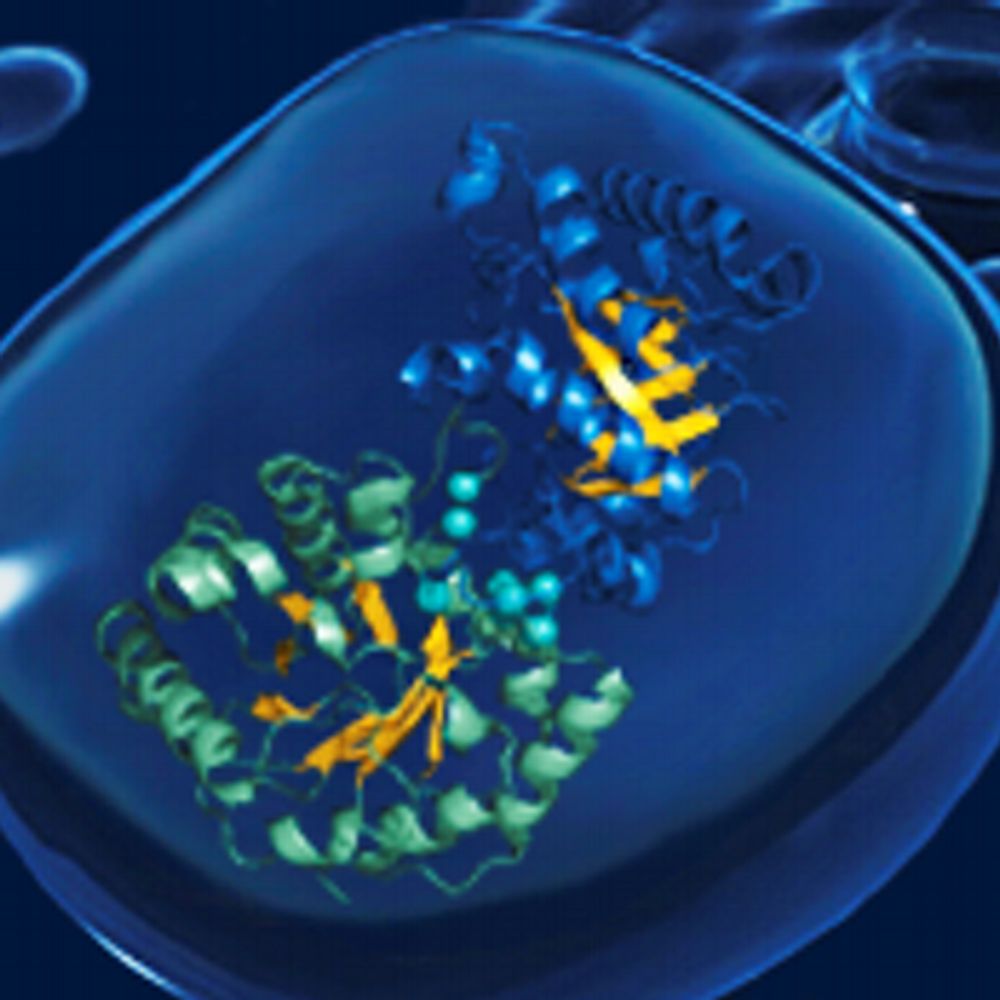
We uncover how evolution of translation initiation factor 2 (IF2) extensions links translation to bacterial stress response. We map 7 structural architectures & show how terminal extensions are enriched in intrinsic disorder & phase-separation features.
Link: doi.org/10.64898/202...
11.02.2026 18:18 — 👍 24 🔁 11 💬 2 📌 0

A diagram of the evolution of whales, from land dwelling mammals to the ocean giants we know today.
Whale evolution makes me uncomfortable
09.02.2026 19:48 — 👍 9232 🔁 1310 💬 468 📌 252

I can't believe this seminar's been running for a year now!
Our YouTube channel is now live—you can watch the recordings of genuinely some of the best molecular evolution talks on the internet.
tinyurl.com/ProSE-videos
(Maybe we should do a tier list soon...)
08.02.2026 18:29 — 👍 4 🔁 1 💬 0 📌 0
Thank you!
05.02.2026 07:10 — 👍 1 🔁 0 💬 0 📌 0
Reposting w/alt text.
Iranians are experiencing collective trauma. Thousands have been killed/injured, the economy is crippled & the threat of a wider conflict is real. It’s especially difficult for those living in Iran, as many have lost (or fear losing) loved ones. www.nature.com/articles/d41...
03.02.2026 14:36 — 👍 24 🔁 12 💬 0 📌 0
Slava is next! Also, check out the past seminars on Youtube. Link in the post below.
03.02.2026 16:09 — 👍 1 🔁 0 💬 0 📌 0

Come one, come all to the first Protein Structure Evolution talk of the year (Feb 10)!
Click here to register if you like cool science: tinyurl.com/prose-seminar2
Jointly organized by
@lacholt.bsky.social, @caro-rocha.bsky.social, @claudiaalcar.bsky.social, @zachary-ardern.bsky.social and myself.
03.02.2026 14:40 — 👍 4 🔁 2 💬 0 📌 0

Graphical abstract of pre-print
Does targeting enzymes and substrates in a condensate lead to rate enhancement? No. Here, we investigate how the condensate environment can inhibit an enzyme reaction.
Spoiler: Mass-transport limitations. We find a strong correlation between diffusion and reaction rates.
doi.org/10.64898/202...
02.02.2026 14:25 — 👍 47 🔁 20 💬 4 📌 2

Degradation Determinants Are Abundant in Human Noncanonical Proteins and Minor Annotated Isoforms
Abstract. The comprehensive characterization of human proteins, a key objective in contemporary biology, has been revolutionized by the identification of t
@ccasola.bsky.social, A. Owoyemi and @vakirlis.bsky.social test the hypothesis that many noncanonical proteins possess low stability in the cellular environment, finding that noncanonical proteins were enriched for degradation-related features.
🔗 doi.org/10.1093/gbe/evag009
#genome #evolution
03.02.2026 09:26 — 👍 4 🔁 2 💬 0 📌 0
I will never be able to unsee it again!
03.02.2026 09:07 — 👍 1 🔁 0 💬 0 📌 0
Calling all OrthoFinder users!
We’ve just released GLADE, a tool to infer gene gains, losses, duplications, and ancestral genomes across a phylogeny.
GLADE runs directly on OrthoFinder results.
www.biorxiv.org/content/10.6...
github.com/lauriebelch/...
(1/10)
29.01.2026 12:07 — 👍 102 🔁 48 💬 1 📌 2

Ancient amino acid sets enable stable protein folds
Early proteins likely arose from a chemically limited set of amino acids available through prebiotic chemistry, raising a central question in molecular evolution: could such primitive compositions yie...
Can proteins fold and function with half of the amino acid alphabet?
Using only 10 residues, we designed stable, mutation-resilient structures—no aromatics or basics involved.
A minimalist foundation for ancient biology and synthetic design. tinyurl.com/37t8br4v
#ProteinDesign #OriginsOfLife
03.11.2025 16:48 — 👍 25 🔁 11 💬 1 📌 0
De novo genes arise from previously non-coding sequences. This evolutionary path — when randomly expressed sequences become folded and active proteins — challenges our understanding of genetic innovation. New Review by @bornberglab.bsky.social and @lacholt.bsky.social out now!
29.01.2026 10:54 — 👍 15 🔁 6 💬 0 📌 0
Pervasive translation of short open reading frames and de novo gene emergence in Arabidopsis
Ancestrally non-genic sequences are now widely recognized as potential reservoirs for the de novo emergence of new genes. Across clades, some de novo genes were proven to have substantial phenotypic effects, and to contribute to the emergence of novel biological functions. Yet, still very little is known about the starting material from which de novo genes emerge, especially in plants. To fill this gap, we generated Ribosome Profiling data from the closely related species Arabidopsis halleri, A. lyrata and A. thaliana and characterized genome-wide patterns of translation across them. Synteny analysis revealed 211 Open Reading Frames (ORFs) that have emerged de novo within the Arabidopsis genus and already exhibit signs of active translation. Most of these de novo translated ORFs were species- and even accession-specific, indicating their transient nature, with patterns of polymorphism consistent with neutral evolution in natural populations. They were also significantly shorter and less expressed than conserved Coding DNA Sequences (CDS), and their GC content increased with phylogenetic conservation. While most of them were located in intergenic regions and are thus newly discovered, 34 were previously annotated as CDS in at least one genome, and are promising putative genes. Our results demonstrate the abundance of translation events outside of conserved CDS, and their role as starting material for the emergence of novel genes in plants. ### Competing Interest Statement The authors have declared no competing interest. Université de Lille, https://ror.org/0546v5182
🧬 What does the starting material from which genes could emerge #denovo look like?
🌱 We used #RiboSeq to investigate the landscape of translated de novo ORFs in 3 #Arabidopsis species, and how they might be linked to gene birth!
📝 Check out our preprint here:
doi.org/10.1101/2025...
20.01.2026 10:58 — 👍 9 🔁 6 💬 1 📌 0
Read-only link here: rdcu.be/e09SM
28.01.2026 20:30 — 👍 1 🔁 0 💬 0 📌 0
Check out our new review in Nature Reviews Genetics on de novo emerged genes and proteins. How they emerge, are lost and persist - and how de novo emerged proteins relate to randomized proteins! @bornberglab.bsky.social www.nature.com/articles/s41...
28.01.2026 18:23 — 👍 53 🔁 25 💬 3 📌 2

Directors
The Max Planck Institute for Evolutionary Biology in Plön, Germany, seeks expressions of interest for open Max Planck Director positions. For details: http://www.evolbio.mpg.de/3856225/Directors. #job
18.01.2026 09:27 — 👍 11 🔁 26 💬 0 📌 0
Fullfabric :: AITHYRA-CeMM PhD
I'm recruiting 1-2 grad students through the AITHYRA-CeMM PhD program! Applications are due January 30th. This is a fully-funded PhD program, combining AI and biology to advance biological discovery. Please forward to anyone who may be interested! You can apply here: apply.cemm.at
08.01.2026 10:48 — 👍 6 🔁 10 💬 1 📌 0

Erich traveled to Berlin for the Schering Prize award ceremony, where he delivered the laudatio for Agnes Toth-Petroczy, this year’s recipient of the Schering Young Investigator Award. Warm congratulations to her!
Photo credits: Schering Stiftung/Michael Setzpfandt
12.12.2025 10:43 — 👍 4 🔁 1 💬 0 📌 0

Happy to share that our work on HLp, a bacterial histone from Leptospira perolatii, is now published in Nature Communications 🎉
In this study, we show that HLp forms stable tetramers that wrap ~60 bp of DNA, revealing a distinct histone–DNA organization in bacteria.
www.nature.com/articles/s41...
13.12.2025 08:09 — 👍 55 🔁 16 💬 2 📌 1
Open Positions – GEvol – DFG SPP 2349
Open Positions – GEvol – DFG SPP 2349
Postdoctoral Research Associates are sought for the GEvol project on evolutionary genomics. Candidates should have programming and data analysis skills. More info: https://g-evol.uni-muenster.de/open-positions/ #postdoc
03.12.2025 15:32 — 👍 1 🔁 9 💬 0 📌 0

Ending my PhD with a bang:
Face-to-face histones are important organizers of archaeal chromatin alongside classical histones.
www.biorxiv.org/content/10.6...
08.12.2025 08:01 — 👍 20 🔁 4 💬 1 📌 1

GBE | De Novo Gene Emergence: Summary, Classification, and Challenges of Current Methods
Grandchamp, @drdomain.bsky.social et al. publish a new Review on commonly used methods for de novo gene detection, address the limitations of nomenclature and detection methods, and establish a de novo gene annotation format to standardize reporting
🔗 doi.org/10.1093/gbe/evaf197
#genome #evolution
19.11.2025 11:52 — 👍 14 🔁 6 💬 1 📌 1

🚀We’re excited to share our new paper in Bioinformatics!
We introduce a user-friendly toolkit that implements our novel DeNoFo file-format for standardised annotation of de novo gene detection workflows — enabling reproducible methodology descriptions and easier dataset comparison across studies.
12.11.2025 12:41 — 👍 19 🔁 8 💬 2 📌 0
Join us tomorrow! Joana Pereira is talking about AI-powered classification and discovery across the protein universe. @joanampereira.bsky.social
5PM CET, link in the post and in our bio.
10.11.2025 14:00 — 👍 4 🔁 2 💬 0 📌 0

Modulation of archaeal hypernucleosome structure and stability by Mg2+
DNA-wrapping histone proteins play a central role in chromatin organization, gene expression and regulation in most eukaryotes and archaea. While the …
New article online: Modulation of archaeal hypernucleosome structure and stability by Mg2+
In this work, we dissect the effects of Mg2+ on hypernucleosomes formed by the canonical histones from M. fervidus (HMfA and HMfB) and T. kodakarensis (HTkA and HTkB).
www.sciencedirect.com/science/arti...
06.11.2025 07:53 — 👍 15 🔁 9 💬 1 📌 0
Soon available in my group: 1 PhD position to investigate prokaryotic histones. See our recent work that highlights the existence and diversity of prokaryotic histones (e.g. Schwab et al., TIBS, 2025; Schwab et al., Nat Comm, 2024; Hu et al., Nucl Acids Res, 2024). Please DM for informal enquiries.
05.11.2025 12:57 — 👍 7 🔁 8 💬 0 📌 0
Immunologist
https://linktr.ee/Immunologynotebook
Researcher in CNRS (France, Marseille)🇫🇷🏳️🌈
Bioinfo 💻
Phylogeny 🌳
Genomics 🧬
Bacteria and Archaea 🦠
Metabolism ⌬
Elihu Professor of Biostatistics @yalesph.bsky.social--Cancer, Infectious disease, Evolutionary biology, Fungi, sometimes running
Associate professor in genomics and developmental biology at the University of New Orleans. Dad×3. I post about science, parenting, culture and world events.
Recombination, Meiosis, Chromosomes, DNA Break Repair
https://twitter.com/LabNeale
Protein Computational Biology Lab @ UFMG
We use and develop computational and biophysical methods to study protein structure, function and evolution.
P.I.: Lucas Bleicher
PhD student @vanHeeschLab | bioinformatics, novel ORFs, ribosome profiling, immunotherapy target discovery in pediatric cancer | views mine
Bacterial Mobile Evolution. Staff Scientist at Sanger Institute. I study how pathogens emerge and evolve by sharing genes. Interested in AMR, Plasmids, Phages, ICEs, and everything that moves within and between genomes.
PhD, He/Him
- Rust 🦀 R
- Bioinformatician, Machine Deep Learning
- I don’t use and like LLM for anything.
- Don’t infer any meaning from useless typos.
- Read replies on fake information I suffered a lot, don't support that👇, those posts will be removed
Bioinformatics, protein modeling, cryoEM, drug screening, function prediction. Daisuke Kihara, professor of Biol/CS, Purdue U. https://kiharalab.org/ YouTube: http://alturl.com/gxvah
Computational biologist. Professor. Co-Director of Disease Mechanisms and Therapeutics Training Area
https://www.schlessingerlab.org/
@IcahnMountSinai. Opinions are mine. #DrugDesign #AI
Research scientist 🍇🖥️🌱🦠🔬
Plant Pathology | 3D+t imaging | MRI | Xrays tomography | IA | Image Analysis
Trunk diseases | Fungal Pathogens | Genetics | Molecular Biology | Grapevine | Breeding & Selection
Working at French Wine and Vine Institute
France
We support #MaxPlanck researchers in founding science-based #startups by transforming cutting-edge #research into real-world solutions and incubating #innovation together.
➔ 𝗔𝗣𝗣𝗟𝗬 𝗡𝗢𝗪: http://www.maximize-incubator.com
PhD Student MSCMSCA-Horizon2020 AI4theSciences.
IBE - PSL
🍂 PopGen with a sprinkle of AI 🍂
RNA & Metabolism. Ancient companions for Life. RNA as spatial organizer of the Cell. IDPs, biomolecular condensates and RNA fun @HymanLab. MBL Physiology '25. And birds.
ebird.org/profile/MjcyMDU0Nw
inaturalist.org/people/9261834
I've worked on all of science, from T cells to B cells.
https://fellowsherpa.com
Structural biologist and biochemist. CNRS researcher at CBM Orléans @cbm-upr4301.bsky.social. Interested in protein modifications & interactions. Also husband, dad of 2, friend, ☧. Personal website: msuskiewicz.github.io
scientist at UC Berkeley inventing advanced genomic technologies
lover of molecules, user of computers
https://scholar.google.com/citations?user=63ZRebIAAAAJ&hl=en
Host pathogen interactions, high-throughput genetics, and yeast! Here to learn about and share cool science.
Evolution & genomics
Adam Mickiewicz University 🇵🇱🧬