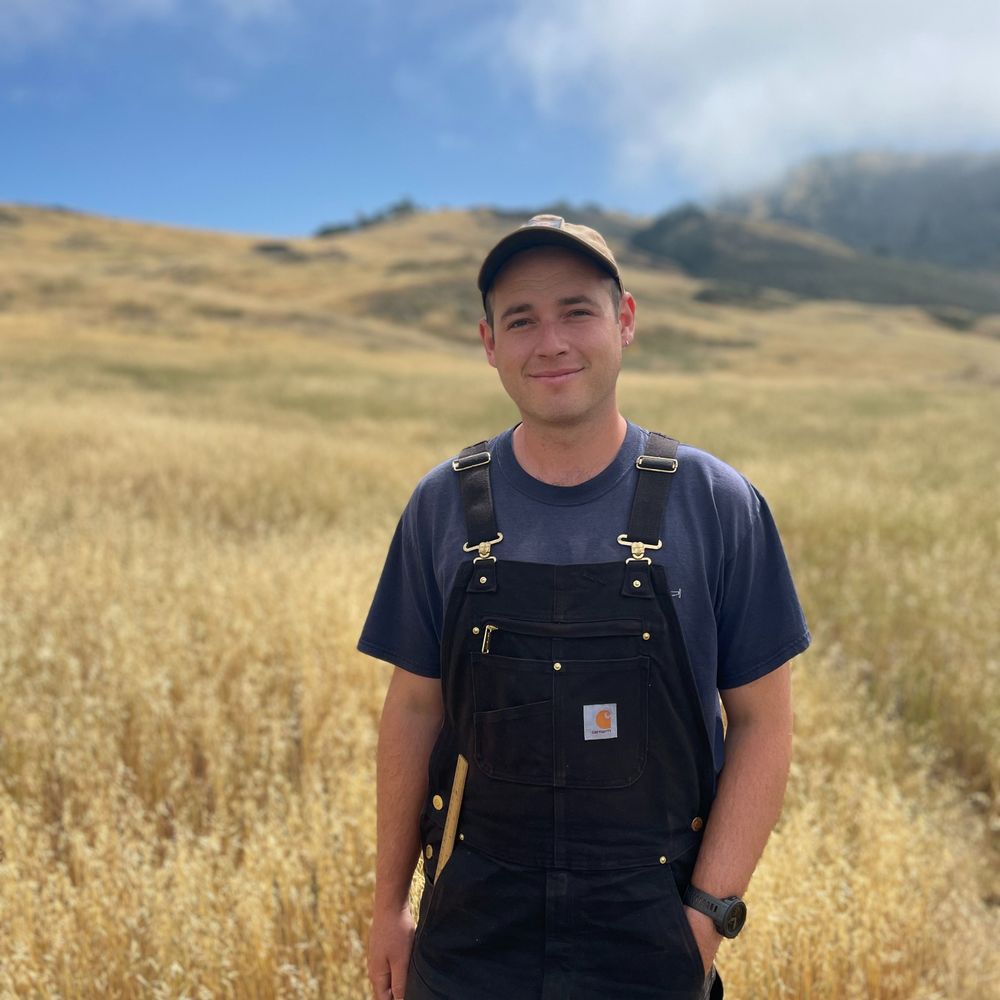
!!! omg I love it
06.02.2026 21:44 — 👍 2 🔁 0 💬 0 📌 0

I'm sitting in front of my imaging workstation with the X-ray microscope scan of a young soybean flower on the screen, the same data that was used to generate the high resolution image that my wonderful tattoo artist Adriana used to tattoo this same image onto my arm. I'm posing in front of the screen, showing the tattoo in a similar orientation to the image on the workstation.
Final phase of #TattooYourResearch, working with the original XRM scan data of the young soybean flower used by the brilliant and talented Adriana from Self Inflicted Studios (St. Louis).
06.02.2026 21:32 — 👍 12 🔁 1 💬 1 📌 0
This week in @science.org, a celebration of plant pangenomes. A pangenome analysis for massively polyploid sugarcane species, and one for Brassica rapa giving insight into subspeciation.
What's all the fuss about pangenomes? Pamela and Douglas Soltis explore this in an insightful Perspective(1/4)
06.02.2026 09:57 — 👍 29 🔁 17 💬 1 📌 0
I thought NSF PRFB is back but it turned out it's NSF AI PRFB is here. Regardless, if you're interested in evo-devo in flowers, definitely reach out - we will put some AI in to get real work done! #PRFB #postdoc
06.02.2026 16:08 — 👍 5 🔁 1 💬 0 📌 0
ahem sorry the throne is now mine per written document and photograph evidence 👑💅
05.02.2026 20:00 — 👍 2 🔁 0 💬 0 📌 0

A little round, quarter size sticker with a butterfly and someone hand written “Best PI” on it
This semester so far has been INSANELY busy so I haven't been on the bench for a very long time. Finally found some time to squeeze in some PCR today, while grabbing my pipette, I noticed this little sticker hidden behind it and instantly I'm like 🥹🥹🥹🥹🥹🥹 #newPI
05.02.2026 16:25 — 👍 28 🔁 0 💬 1 📌 0
NSF GRFP applicants (and mentors): Was your application Returned Without Review and deemed ineligible despite fitting in the allowed topics?
1) Write NSF
2) Write your Congressperson
3) CC us at grfp@grant-witness.us so we can compile + follow up
Details and template at grant-witness.us/grfp-letter
02.02.2026 17:58 — 👍 153 🔁 197 💬 6 📌 17

image of a maize inflorescence meristem that is labeled by the plasma membrane marker PIP2-CFP and BAM1D-YFP.
nph.onlinelibrary.wiley.com/share/JAIVZX...
Excited to share my latest work in @newphyt.bsky.social. Here, we used TurboID proximity labeling with CLAVATA receptors FEA3 and BAM1D in maize meristems to better understand the signaling pathways important for meristem regulation. #PlantScience
26.01.2026 17:33 — 👍 72 🔁 32 💬 6 📌 0
8 meters and not a tree?!?!? 🤯🤯🤯🤯🤯
21.01.2026 23:08 — 👍 13 🔁 1 💬 2 📌 2
They explained that it’s scary how big it can get 😂😂😂😂
21.01.2026 03:37 — 👍 3 🔁 0 💬 1 📌 0
I know!!! 😂 also corn is as popular as cannabis I was shocked
21.01.2026 01:11 — 👍 2 🔁 0 💬 0 📌 0

a question of whats the strangest plant you know and the highest counts are: pumpkin, venus fly trap, corn

Question of what's your fav plant, the highest is corn cannabis

question of what do you think is the most boring plant, the highest one is grass, corn, elephant
First day of class! Ran word cloud with my students and I'm more than entertained lol 🌽🌽🌽🌽🌽
21.01.2026 00:37 — 👍 30 🔁 2 💬 4 📌 0

Sphagnum moss 'leaf' tip
HFW (horizontal field width) 97µm (the distance from edge to edge horizontally)

Sphagnum moss leaf emphasizing the two cell types
HFW (horizontal field width) 97µm (the distance from edge to edge horizontally)

Sphagnum moss leaf bundle
HFW (horizontal field width) 1241µm (the distance from edge to edge horizontally)

Sphagnum moss group of 'leaf' tips
HFW (horizontal field width) 1241µm (the distance from edge to edge horizontally)
Sphagnum moss
Imaged live on the FV4000, a new, paradigm shifting, laser scanning confocal microscope from Evident LifeScience (aka Olympus).
Green is from the Hyaline Cells and the red from the [chloroplasts in the] Chlorophyllose cells
#sciart #microscopes #moss (scale noted in the Alt-text)
13.09.2024 20:30 — 👍 67 🔁 13 💬 4 📌 1

Photo of a fruited slime mold. It consists of several dozen tiny blue-grey, grape-like sporangia (spore bearing structures) held together by gold-coloured threads. The slime mold is on a piece of dead tree bark.
Slime mold, Badhamia utricularis - about 1.5cm wide. NWT, Canada.
#slimemould #fungifriends
08.01.2026 19:54 — 👍 482 🔁 42 💬 8 📌 3
SO EXCITED!!!
08.01.2026 19:57 — 👍 10 🔁 0 💬 0 📌 0
Join us! We are going to have a ton of fun this summer with 2 week projects on plant and animal morphogenesis! @maizel-lab.org is leading a module. For my section we are going to live image developing leaves.
18.12.2025 17:40 — 👍 13 🔁 8 💬 0 📌 0
Catrina amazing work 🤩!!!
12.12.2025 20:41 — 👍 2 🔁 0 💬 0 📌 0

Promotional graphic on a red background featuring two black-and-white raglan shirts from the Botanical Society of America’s “Stranger Plants” collection. One shirt shows a large illustrated plant scene; the other displays a grid of illustrated unusual plants. White text reads “We love the Stranger Plants BSA SWAG!” Below, descriptive text explains that the shirts highlight strange plants, with common and scientific names listed on the back in a concert-style format. A QR code labeled “Scan to Shop” appears at the lower right, along with BSA logos and text promoting additional BSA apparel.
We 💚 the Stranger Plants—and now they’re on #BSAswag!
The shirts feature bold illustrations by BSA’s own Catrina Adams, with a list of each species by common & scientific name on the back.
BSA members (exp. 2026+) get 10% off—email aneely@botany.org for code.
www.bonfire.com/store/bsa-wi...
12.12.2025 16:29 — 👍 20 🔁 12 💬 2 📌 6

Several colourful lichens on a twig. From left to right the colours are yellow, orange and grey.
Lichens on a stick. Left to right - Vulpicidia, Xanthoria (I think), Physcia, and Hypogymnia. Northwest Territories, Canada.
#lichen #fungi #fungifriends
10.12.2025 23:38 — 👍 187 🔁 31 💬 4 📌 1

Summer school:<br> Evolutionary Biology in Guarda
Information about the annual summer school Evolutionary Biology in Guarda
The 2026 Guarda Summer Course in Evolutionary Biology is now accepting applications. Amazing place, amazing course, amazing opportunity for early grad students.
tb.ethz.ch/education/gu...
10.12.2025 14:24 — 👍 64 🔁 72 💬 1 📌 4
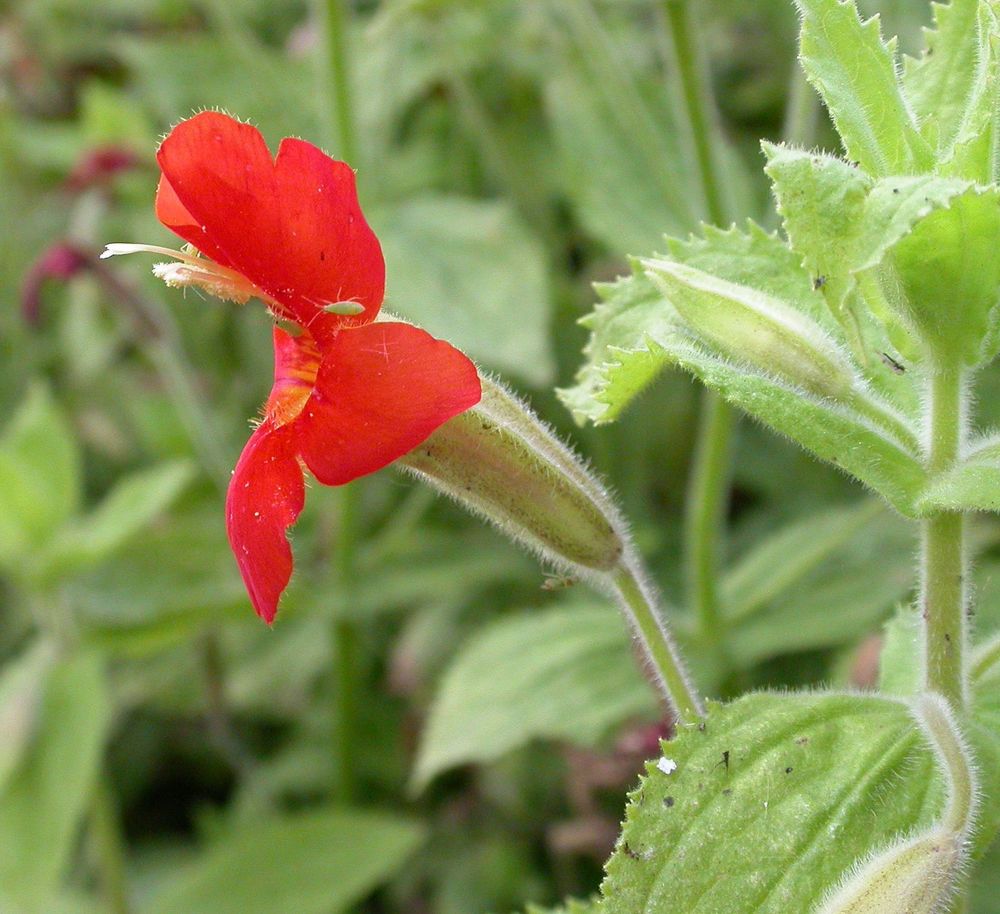
A bright red, tubular flower of Mimulus cardinalis, viewed in profile; photo by Curtis Clark via Wikimedia Commons
A resurrection study of scarlet monkeyflower populations across the species' range finds relatively little adaptive response to a seven-year drought event, showing that evolutionary rescue is not as predictable as we might hope 🌿
buff.ly/L8o4hhr
10.12.2025 14:15 — 👍 31 🔁 13 💬 0 📌 1
My pleasure it was such a pleasant surprise when I round this too! :) I can only imagine how fun it was for the author to notice this discovery and write it up for publication. Really a reminder to all of us of how science is so fun!
08.12.2025 01:02 — 👍 1 🔁 0 💬 0 📌 0

Link: bsapubs.onlinelibrary.wiley.com/doi/10.1002/...
Huang, L.-J. 2022. Bubbles help male flowers overcome obstacles during pollination in Hydrilla verticillata. American Journal of Botany 109(7): 1203–1209.
07.12.2025 22:55 — 👍 7 🔁 0 💬 1 📌 0

Fig 3: The obstacle-bypassing process of the male flower of Hydrilla verticillata during pollination. Superimposed images of a male flower surfacing with an attached bubble (A) and a male flower surfacing with bubbles removed (B). The white dotted lines show the surfacing trajectories of male flowers, and the red arrows indicate the position where the male flowers encounter obstacles. (C) Deformation process of a bubble attached to a male flower when it bypasses obstacles in the water. The left column is the picture sequence taken by a high-speed camera, and the right column is the state sequence of a bubble bypassing an obstacle in digital simulation. The colors indicate the volume fraction of gas in different areas. (D) The relationship between the bubble diameter and the maximum obstacle size it can bypass. The black data points are the simulation results and the curve is a trend line interpolated from data points.

Fig 1: Morphology of staminate branches of Hydrilla verticillata. (A) Bubble-producing male spathe on the submerged branch. (B) Cross-section and longitudinal section of the shoot indicated by colored arrows in (A). (C) Male flower under a stereomicroscope; the inset shows the contact angle of the outer surface of the calyx. (D) Leaf under a stereomicroscope; the upper and lower two insets show the contact angle of the upper and lower surfaces of the leaf, respectively. (E) Male flower with an attached bubble in the dark field under an optical microscope
Ran into a delightful paper on AJB @botsocamerica.bsky.social:"The gas bubbles produced by male flowers of H. verticillata came from the gas produced by branches under light. These bubbles can help ascending male flowers bypass the obstacles in water and reach the surface to complete pollination" 🧪🌸
07.12.2025 22:54 — 👍 23 🔁 3 💬 1 📌 0
It's amazing to see how the past series of studies led to the current one. Congratulations!!!!
07.12.2025 20:47 — 👍 0 🔁 0 💬 1 📌 0

Cell wall patterning regulates plant stem cell dynamics
The plant cell wall regulates development through spatiotemporal modulation of its chemical and mechanical properties. Pectin methylesterification is recognized as a rheological switch controlling wal...
Thrilled to have our paper out in @science.org. Cell division guides plant cell wall formation. Does the reverse hold? We show that bimodal pectin methylesterification, via PME5 mRNA nuclear sequestration, influences plant cell division and cell plate orientation. www.science.org/doi/10.1126/...
06.12.2025 10:11 — 👍 79 🔁 29 💬 7 📌 0
Writer, biologist
🌻How Flowers Made our World = new book in March 2026. Pre-orders now open!
Sounds Wild and Broken
13 Ways to Smell a Tree
The Songs of Trees
The Forest Unseen
Panamanian, biologist, nature, symbiosis, bryophytes, hornworts, cycads, lichens, Bacurú Drõa, https://villarreal-lab.ibis.ulaval.ca, https://www.mcgill.ca/potvin-lab/bacuru
Assistant Professor at the University of Rochester | phylogenomics, genome evolution | EIC at Frontiers in Posting
postdoc studying mammal tails @ucsdcooperlab • PhD Capel Lab 🐢• my name sounds like 'Keri'
Wilkes Postdoctoral Fellow at the Wilkes Center for Climate Science and Policy
@UniversityofUtah. Incoming assistant professor at @DukeBiology.
I use theory, experiments and stats to study biodiversity, fire, and forests.
Postdoc@slcuplants.bsky.social; Jones Group; Alumnus@Schaller Lab at Uni-Hohenheim; 🍅 Systemin🐛;Plant immunity; Phosphoproteomics; R coding; She/her; 🐶🐱lover adopt a 🦜
Study how marginalized groups are empowered by the internet.
Retired teacher - web development and thinking skills.
AAAS Section X, Science and Society
Nobody is safe until everybody is safe
My old Blogger: http://www.bobcalder.net/
Scientific journal publishing research, overview and commentary across all of biology. All of it!
https://www.cell.com/current-biology/home
Part of CellPress @cellpress.bsky.social
HFSP postdoctoral fellow in @borrell-lab.bsky.social. Love biology and people around. 🐣🐁🦡
Chief Executive of @bsbibotany.bsky.social. Views my own. Wildlife, conservation, plants, bats, forest school, learning.
🔬 Junior Group Leader in Münster, Germany.
🌐 Lab Website: https://www.bischofflab.com/
🌀 Morphogenesis, collective cell migration, and chiral organ development in #Drosophila.
🐍 Animal photos: 📷 instagram.com/maikscritters
Developmental geneticist working on stem cells and plant architecture at the University of Lausanne
I work @addgene.bsky.social curating DNA and web content.
#OpenScience supporter, previously at ASCB, science publishing/preprints.
Yale Biophysics PhD. Opinions my own. He/him
Plant Biologist 🌱 Junior Professor of Plant Environmental Signalling & Development 🧬🔬 Studying Flooding Tolerance & Epigenetic Memory 🌊 at @biologyunifreiburg.bsky.social @uni-freiburg.de @cibss.bsky.social
www.hartman-plantlab.com
Set of molecules and cells in some order🧬
Plant Biologist in progress🌱
Bsc. Biological Sciences UNMSM - Perú 🇵🇪 / First-gen 🌵
Free 🇵🇸
Postdoc in the Wessinger lab at USC! Previously at the University of Minnesota studying plant mating systems, reinforcement, and speciation. Views are my own. she/her.
Marie Skłodowska-Curie fellow at ISEM Montpellier. Physicist studying complex biological systems - ecosystems, cancer, immune networks and microbial communities.
computational biologist and data scientist
San Francisco Bay Area
biology, evolution, statistics, open source software
Fish biodiversity, genomics. Illinois Natural History Survey Asst Research Scientist. Also aquarium fish hobbyist and plant parent. Profile pic: With a tamandua knifefish. He/him