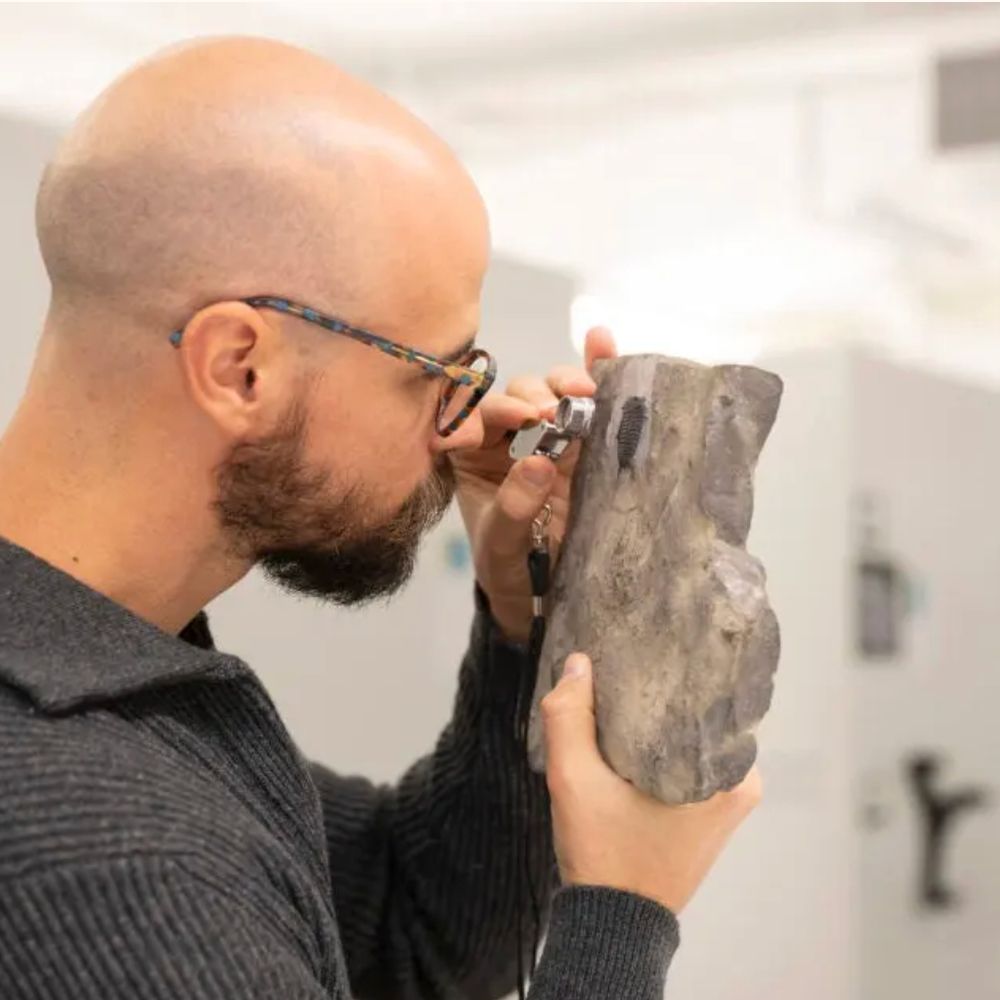
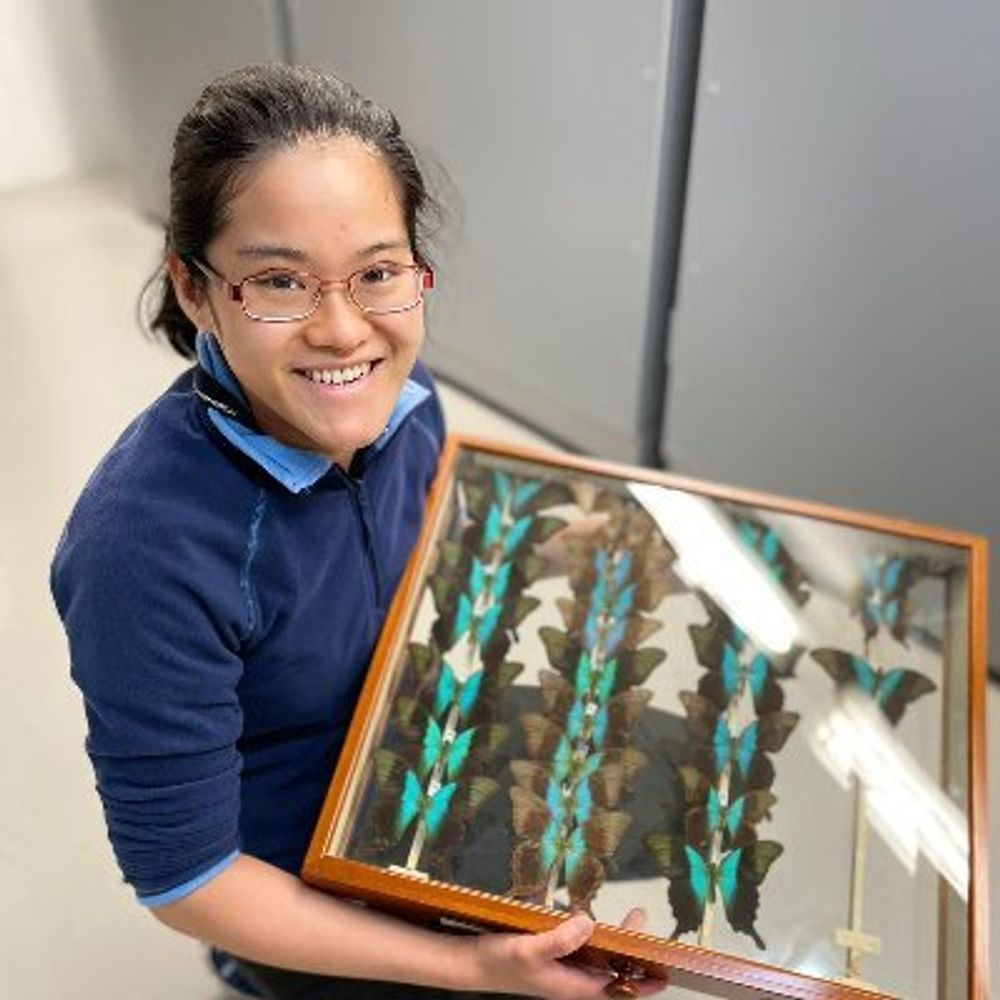
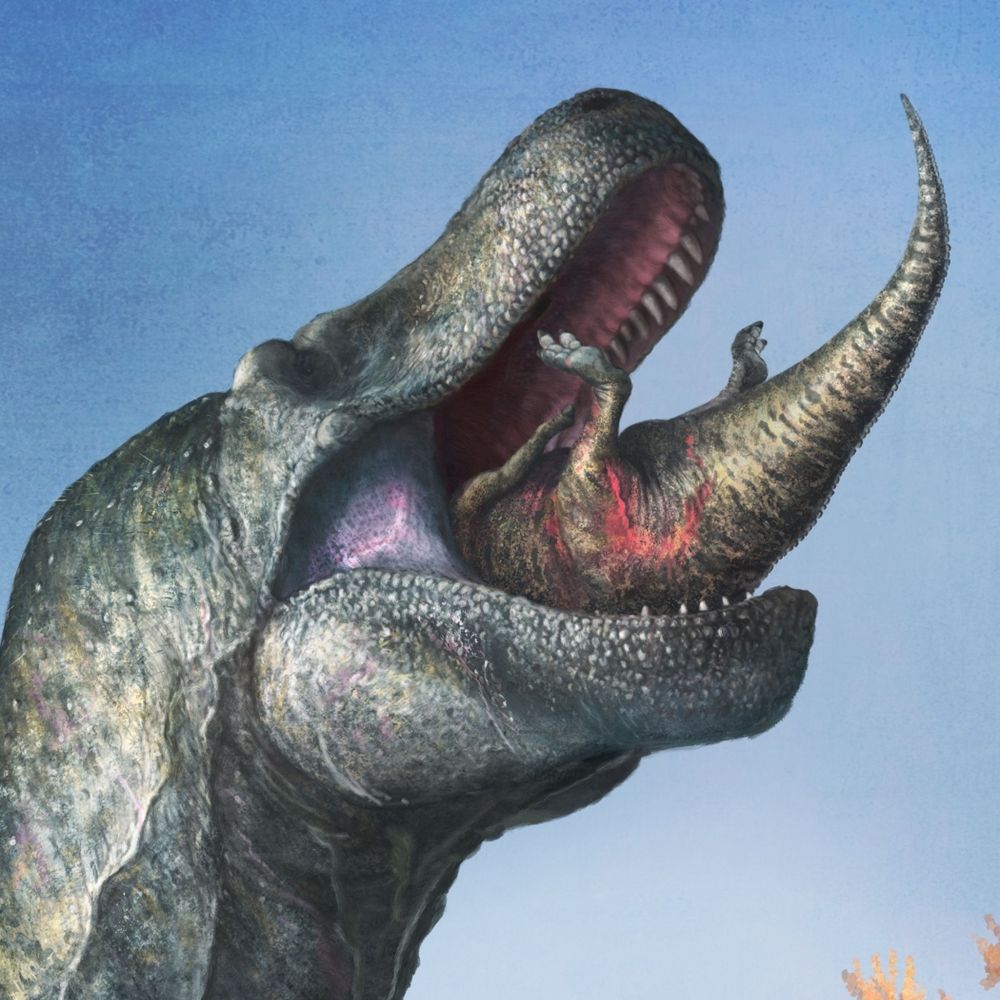
Fantastic time at #BES2025 @britishecologicalsociety.org talking community ecology past and present! From the early animals of the #Ediacaran time period with modern corals and rainforests
17.12.2025 12:12 — 👍 8 🔁 3 💬 0 📌 0
@shujie.bsky.social
MPhil student at the University of Cambridge
Fantastic time at #BES2025 @britishecologicalsociety.org talking community ecology past and present! From the early animals of the #Ediacaran time period with modern corals and rainforests
17.12.2025 12:12 — 👍 8 🔁 3 💬 0 📌 0


Really enjoyed the @thepalass.bsky.social annual meeting in Portsmouth—and giving my first conference talk. I shared some of my latest work on competition in Avalon communities. Thanks for the chats, and to the organisers and session chairs. Looking forward to next time. #PalAss
15.12.2025 10:37 — 👍 11 🔁 0 💬 0 📌 0
HEY! YOU! ggdibbler 0.6.1 is finally up on CRAN!
harriet-mason.github.io/ggdibbler/in...
You can now pass random variables to any aesthetic in any ggplot geom/stat. If you can express it as a distribution, ggdibbler can plot it. It also works with ggplot extensions, like gganimate. #rstats
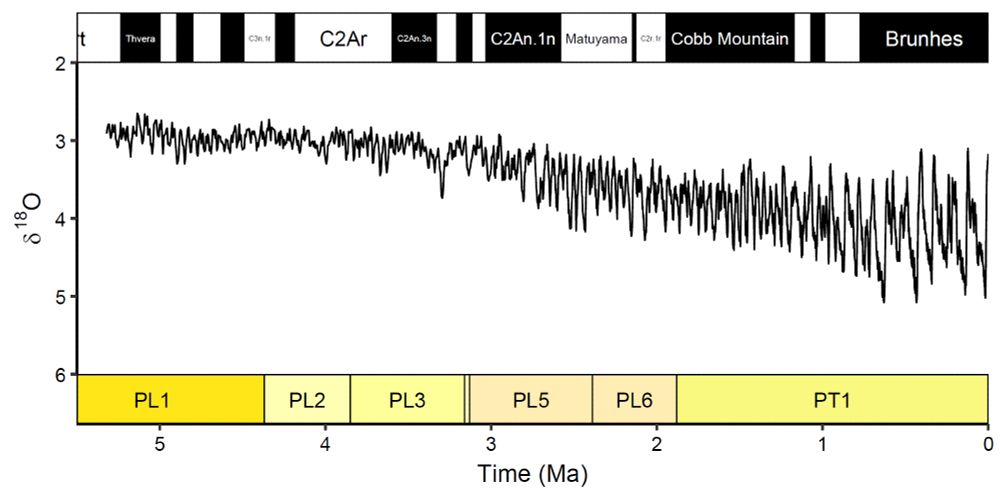
Plot of global benthic δ18O data for 0 – 5.3 Ma (Lisiecki & Raymo, 2005) with geomagnetic polarity subchrons displayed on the top x-axis and planktic foraminiferal primary biozones plotted on the bottom x-axis using the deeptime package.
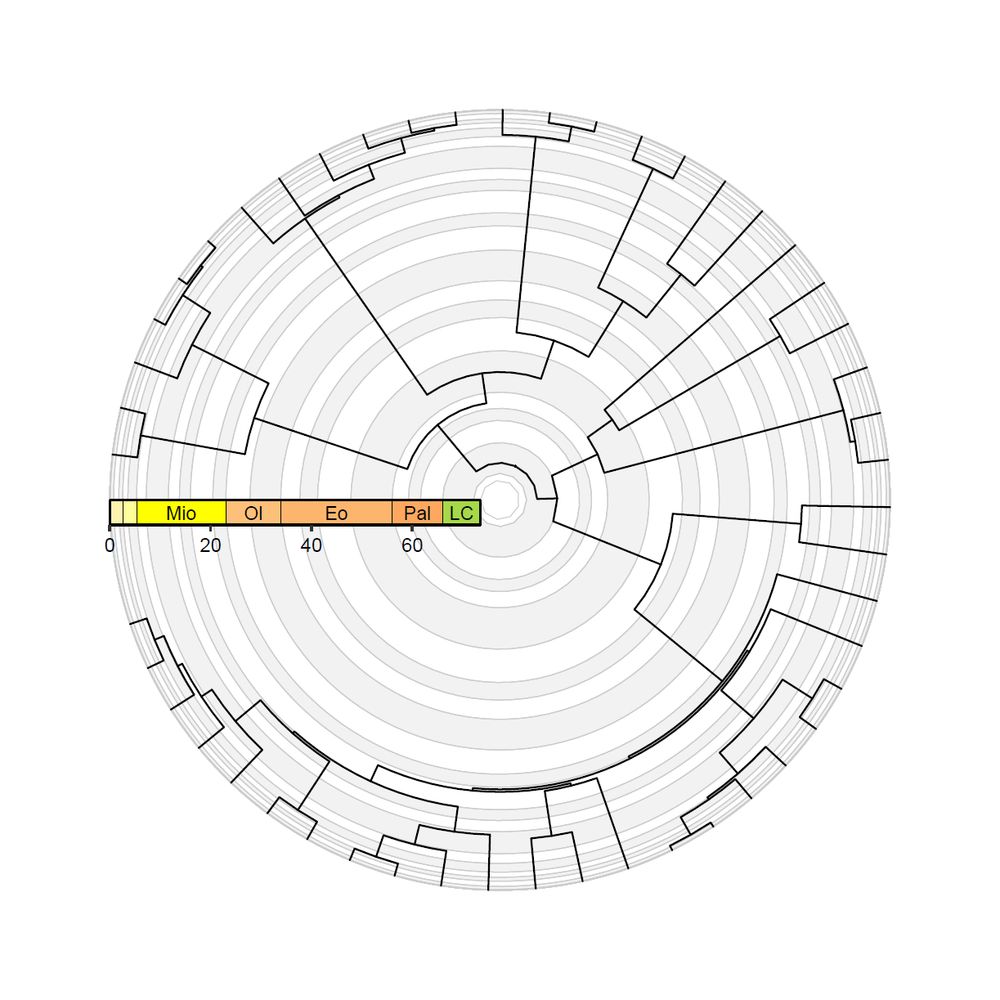
A mammal phylogeny (Garland et al., 1992) plotted in the fan layout using the ggtree and deeptime packages. The greyscale concentric circles in the background indicate geological stages, whereas the linear colored timescale indicates geological epochs.
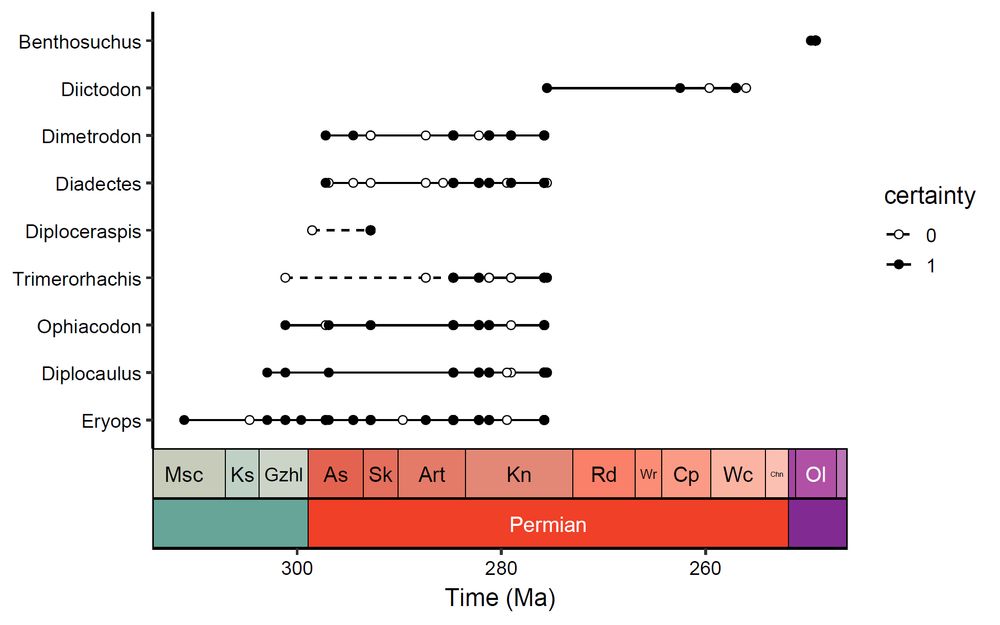
Early tetrapod occurrence data (Jones et al., 2023) plotted as a taxonomic/biostratigraphic range plot using the geom_points_range() function from the deeptime package.
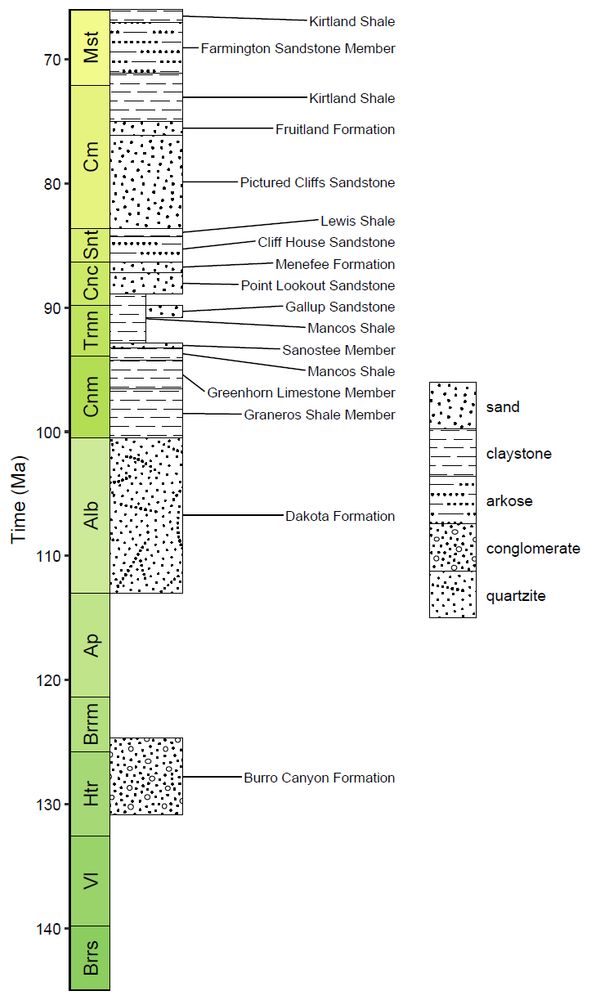
A stratigraphic column of Cretaceous lithostratigraphic units from the San Juan Basin, USA. The deeptime package has been used to add pattern fill which indicate the primary lithologies of the units as reported by the Macrostrat API (Peters et al., 2018) via the rmacrostrat R package (Jones et al., 2024).
📢 deeptime: an R package that facilitates highly customizable and reproducible visualizations of data over geological time intervals
🔗 doi.org/10.1080/2096...
Fully #openaccess in @bigearthdata1.bsky.social with insight about deeptime📦 development and code examples!
#rstats #geology #paleontology

Human-driven extinction event not yet the "sixth mass extinction", but is very likely the largest extinction event of the last 66 million yrs. 🌏 🧪
Read about it in our new paper led by @jackhhatfield.bsky.social
and Katie Davis @anthropocenebio.bsky.social
doi.org/10.1111/gcb....

New paper in which we evaluate how we can use information on past extinction events to better contextualise the ongoing anthropogenic extinction, led by @anthropocenebio.bsky.social (with @bethanyjallen.bsky.social, @inesismartins.bsky.social, & others): onlinelibrary.wiley.com/doi/10.1111/...
04.09.2025 10:27 — 👍 38 🔁 13 💬 1 📌 0Huge thanks to @palaeopercs.bsky.social for inviting and hosting me! If you missed my talk on Tuesday, you can now catch up via their YouTube channel 👇
www.youtube.com/watch?v=x19X...
My first poster! Big thanks to my amazing supervisors and labmates for all the support!
19.06.2025 16:28 — 👍 7 🔁 0 💬 0 📌 0If you are interested in biodiversity in deep time, check out my new preprint with @rachelwarnock.bsky.social and @dralexdunhill.bsky.social! We review methods of quantifying diversity and diversification, using the fossil record and phylogenies with extinct tips 🐚🦕📊
doi.org/10.32942/X2D...
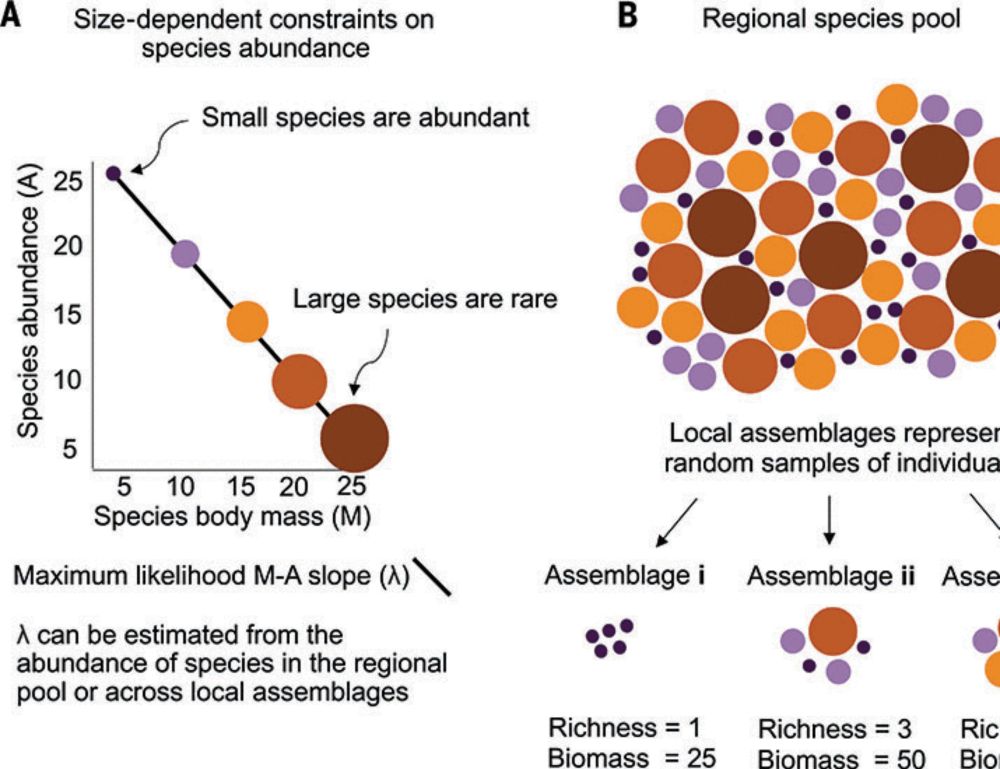
New 🗒️led by Alex Pigot - Macroecological rules predict how biomass scales with species richness in nature -Standing biomass increases with richness when large-bodied spp are numerically rare but independent when spp size & abundance are uncoupled. @ucl.ac.uk - Science www.science.org/doi/10.1126/...
21.03.2025 09:27 — 👍 70 🔁 34 💬 4 📌 2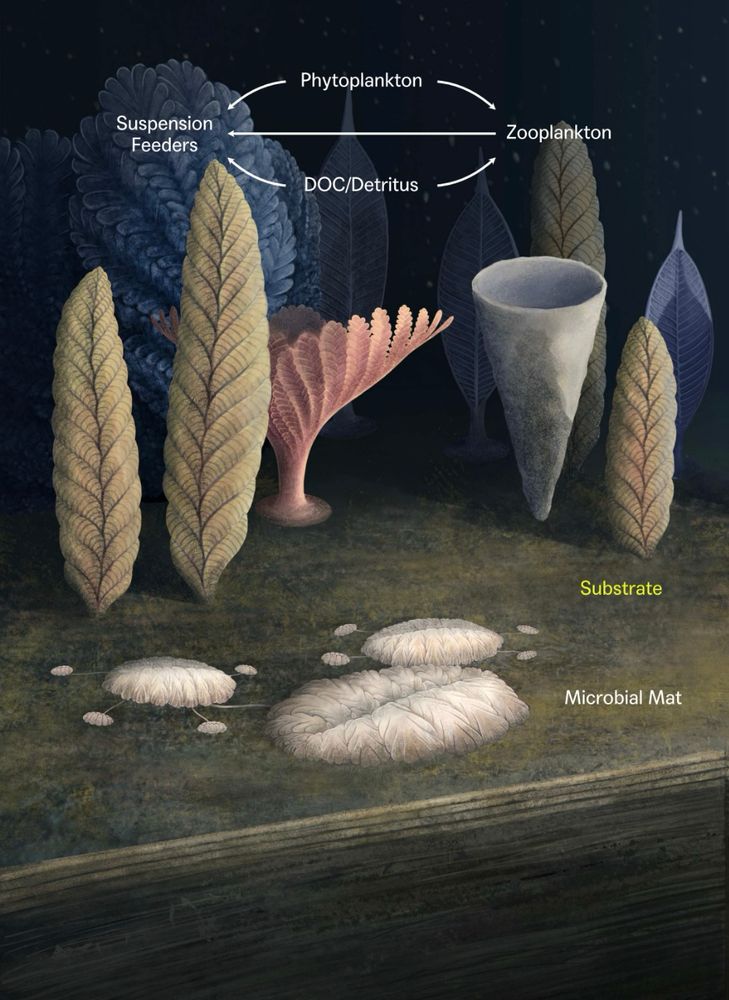
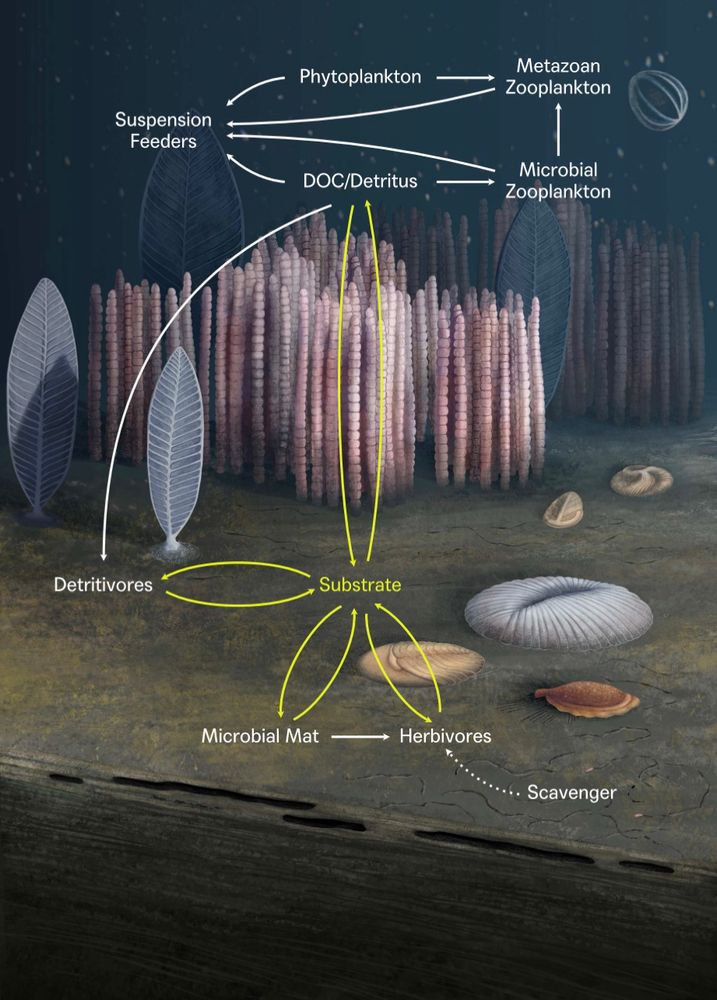
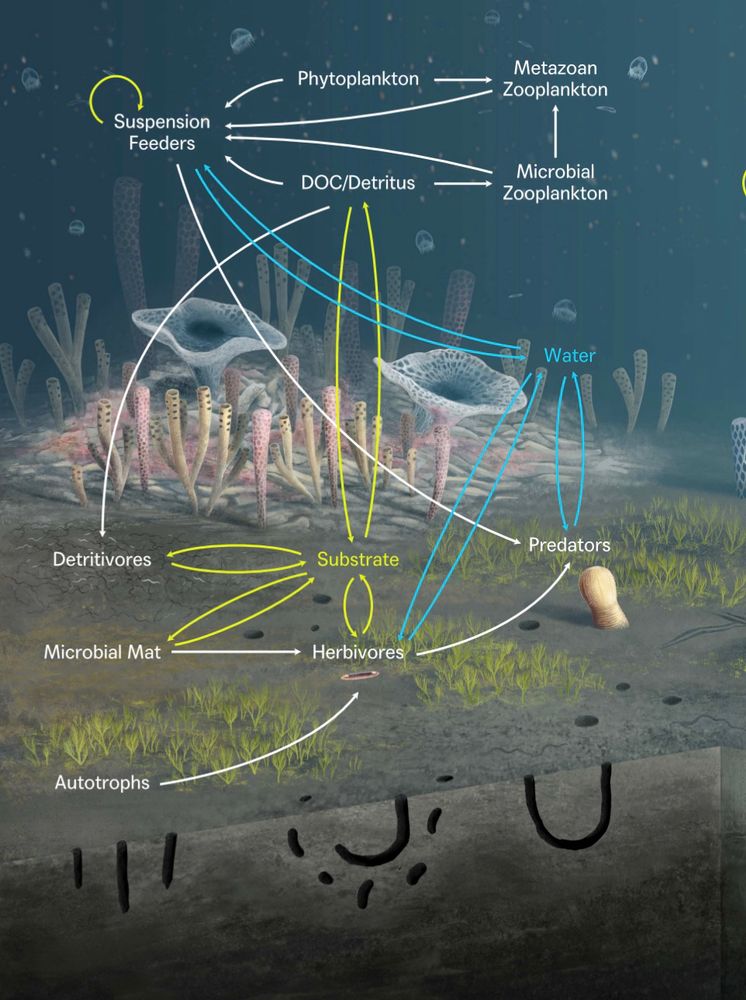
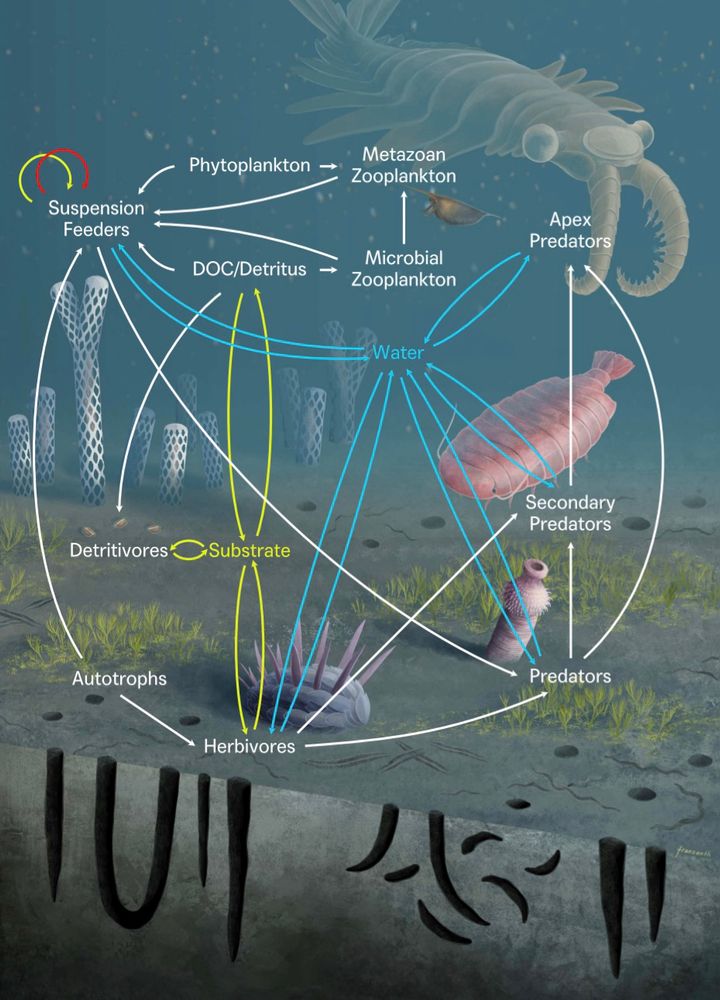
Super excited that our review on the ecology of the Ediacaran-Cambrian transition is now out on how ecology changes across scales from organisms to communities to the world through time. Fab art @franzanth.bsky.social showing the build up of ecological complexity
www.cambridge.org/core/journal...
📖Published📖
Check out our research article 👉 Game target-group: Implementing inhomogeneous Poisson point process to estimate animal abundance from harvest data