📗 Part II of our new open textbook: Conceptualizing Social-Spatial Determinants of Health
With contributions from @maryniakolak.bsky.social & @averyeverhart.bsky.social, these chapters address health inequities through place, space, and power.
👉 Read the full volume: go.illinois.edu/PlaceSSDOH
17.11.2025 19:30 — 👍 7 🔁 3 💬 0 📌 0

Data from the Center on Budget and Policy Priorities: Over 2/3 of SNAP recipients are children (42%), or elderly/disabled (26%).
PSC experts @pamherd.bsky.social and Luke Shaefer @umfordschool.bsky.social help us understand the consequences of blocking SNAP benefits, which mostly go to children or disabled elderly adults.
donmoynihan.substack.com/p/the-big-be...
fordschool.umich.edu/news/2025/ef...
09.11.2025 17:11 — 👍 63 🔁 44 💬 3 📌 2
back to this thread 10 days later… this was an absolutely wild thing to say. What is happening 🙀
26.10.2025 18:46 — 👍 1 🔁 0 💬 1 📌 0
Thanks to the journal, reviewers, students on the paper, Luke Hyde, and @colterm.bsky.social. ALL raw data is publicly available @cos.io [link in paper] so go wild re-analyzing it! #science
21.10.2025 17:35 — 👍 2 🔁 1 💬 0 📌 0
Reviewers improved implications … we should lean in to practices promoted by @ohbmofficial.bsky.social incl COBIDAS guidelines. Journal-level intervention also an avenue. @bidsstandard.bsky.social is another piece. “Community-driven neuroscience” out of my lab will also be part of changing the field
21.10.2025 17:35 — 👍 2 🔁 0 💬 1 📌 0
We also had an inkling that larger studies would not necessarily be more transparent in reporting practices… data supported this hypothesis. Looking at research visibility, study sample size but not transparency was strongly linked to 2-year citation counts … so study N is rewarded
21.10.2025 17:35 — 👍 1 🔁 0 💬 1 📌 0

Nice figure put together by grad student Deena Shariq: in all 134 papers that reported education continuously, only 3 reported study sample education levels lower than the country of recruitment average; most samples are “over educated”
21.10.2025 17:35 — 👍 3 🔁 0 💬 1 📌 0

We found that most standard methodological details were not reported. Particularly bad IMO were recruitment procedures (29%), inclusion/exclusion criteria (46%), and reasons for missing imaging data (31%). Only 15% and 28% of paper reported race-ethnicity and SES, respectively
21.10.2025 17:35 — 👍 2 🔁 0 💬 1 📌 0

PRISMA diagram flow chart of included/excluded papers
We were interested in documenting reporting practices related to generalizability, replicability, and reliability of MRI/fMRI papers published in top journals journals.sagepub.com/doi/10.1177/...
21.10.2025 17:35 — 👍 3 🔁 2 💬 1 📌 0
🚨 New Paper Alert🚨 focused on #representation and #generaliability in #neuroscience. A real labor of love. Was rejected from [… checks list 🤔] SIX journals and originally presented in 2020 at FLUX to find a home at AMPPS #persistence
21.10.2025 17:35 — 👍 10 🔁 3 💬 1 📌 0
YES!!! IT IS A FEATURE OF BOTH SCIENCE AND DEMOCRACY!!!!
Particularly a representative democracy…where we ELECT EXPERTS TO REPRESENT OUR BEST INTERESTS!!!
This man has to go.
#impeachthequack
16.10.2025 11:06 — 👍 183 🔁 44 💬 23 📌 6
Gard Lab
We study how environments shape brain and behavioral development. We are dedicated to serving families in the DC Metro Area by advocating for environmental equity through research and championing community resilience.
I am reviewing applications for the Neuroscience (NACS), and Developmental programs this year at @umdscience.bsky.social . I will also review Clinical applications, but priority is to grow the Dev and NACS areas. Email me for info! arigard[at]umd[dot]edu & check out our website gardlab.umd.edu
14.10.2025 14:44 — 👍 4 🔁 0 💬 0 📌 0

Three GARD Lab members holding up some of the Art Tiles created by community members

The spread of Art Tiles and supplies
For now, check out the "Our Neighborhood, Our Stories" series that Joelle worked on with @dcpubliclibrary.bsky.social Commissioner Ra Amin, and the Brookland Intergenerational Village (brooklandvillage.org). findingyourgood.org/repurposed-p... (8/8)
14.10.2025 14:10 — 👍 2 🔁 0 💬 0 📌 0
We learned a lot ... community members' goals for researchers, concerns about the changing city, pride for DC. It ushered the entire CARE Project, which has many many many many parts (stay tuned!). (7/8)
14.10.2025 14:10 — 👍 0 🔁 0 💬 1 📌 0
Lastly, all residents advocated for more "third spaces" and community events - block parties, coffee shops, rec centers. Ultimately, we should endeavor for all folks to benefit from even "weak" neighborhood ties ... but social structures are needed to support this goal (6/8)
14.10.2025 14:10 — 👍 0 🔁 0 💬 1 📌 0
For caregivers & community leaders, "orientation towards the common good" & "social relationships" were strong facilitators of neighborhood social integration ... people with whom you share civic-minded goals and the people with whom you interact regularly (5/8)
14.10.2025 14:10 — 👍 0 🔁 0 💬 1 📌 0
One major findings was just how socially disconnected from neighborhoods youth were ... teens described friends going to school in different Wards or moving from DC. Some parents didn't know neighbors anymore. Turns out that over 70% kids in DC go to school outside their in-boundary school (4/8)
14.10.2025 14:10 — 👍 0 🔁 0 💬 1 📌 0

Conceptual figure showing the community-level factors of social cohesion, transience, and safety interact with individual-level factors of social role, housing tenure, and race-ethnicity to shape the process of neighborhood social integration
Neighborhood social integration was defined as resident engagement with the physical context - what (e.g., community events), where (e.g., parks), & how (e.g., bus) folks used their neighborhoods. Three themes captures barriers/facilitators to integration: social cohesion, safety, & transience (3/8)
14.10.2025 14:10 — 👍 2 🔁 0 💬 1 📌 0

DC flag
Joelle was interested in barriers & facilitators to neighborhood social integration, and whether those factors differed across social role, race-ethnicity, and housing tenure. We wanted to understand this process deeply for DC - the original "chocolate city", rich w/ culture, history, & change (2/8)
14.10.2025 14:10 — 👍 0 🔁 0 💬 1 📌 0

<em>American Journal of Community Psychology</em> | Wiley Online Library
Social isolation has reached concerning rates, particularly in the wake of the COVID-19 pandemic. Social integration is critical to combatting social isolation and loneliness by promoting a sense of ...
🚨New publication alert!🚨The first paper from primary data collection in my lab 😀, led by grad student Joelle Fuchs. "Facilitators and Barriers to Neighborhood Social Integration" leverages qual interviews with teens, caregivers, and comm leaders in DC ... (1/8) doi.org/10.1002/ajcp...
14.10.2025 14:10 — 👍 4 🔁 0 💬 1 📌 0
Coming back from maternity leave is i-n-t-e-n-s-e ... but no surprise, the lab killed it over the summer while I was gone, and we are back baby! 🚨Stay tuned for some threads on new publications🚨
07.10.2025 15:10 — 👍 3 🔁 0 💬 0 📌 0
Omg Dana - 7 rounds?!?!
07.10.2025 15:03 — 👍 1 🔁 0 💬 1 📌 0
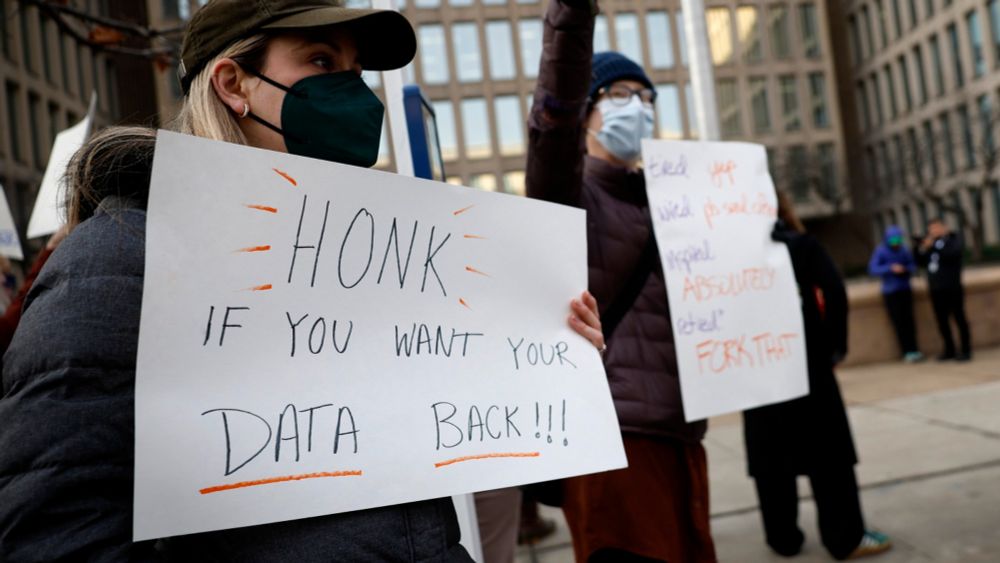
How DOGE's push to amass data could hurt the reliability of future U.S. statistics
DOGE's murky push to amass data at federal agencies could hurt the U.S. government's ability to produce reliable census results, economic indicators and other statistics in the future, experts warn.
U.S. Census Bureau's decades long with falling public participation in surveys and trust in government is now compounded by DOGE's handling of data. Distrust in how government uses data is higher among people of color, which can lead to selection bias and skewed data. myumi.ch/jJVMG
04.06.2025 18:40 — 👍 4 🔁 2 💬 1 📌 0
Didn't get into grad school, what now?
Stories of Women in Neuroscience · Episode
This academic cycle was really challenging for those students that applied for PhD programs. Please help me share this special episode discussing what to do if you didn't get accepted into a PhD program. open.spotify.com/episode/5tsj...
01.06.2025 23:24 — 👍 26 🔁 21 💬 0 📌 1
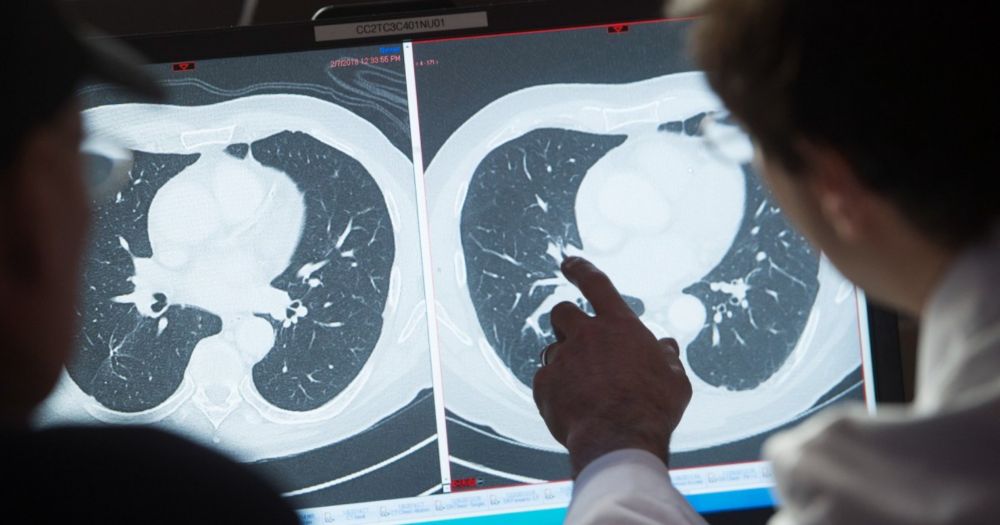
Donald Trump’s proposed budget would gut American science
It would slash cancer research, drug trials, space exploration, and so much more.
Cutting $20 billion to NIH over 25 years may save $500 billion on paper, but it’d end up costing $8.2 trillion in lost human health.
But NIH isn't the only thing being cut. The budget also slashes all NSF-funded science by 73 percent. NASA faces “the biggest single-year cut to NASA in history."
31.05.2025 20:19 — 👍 1374 🔁 759 💬 72 📌 39
Took me 5 min to draft and submit a comment. FLOOD THE ZONE 🧬🧫🧬🔬⚗️🔭🥼🧪
21.05.2025 23:11 — 👍 0 🔁 0 💬 0 📌 0
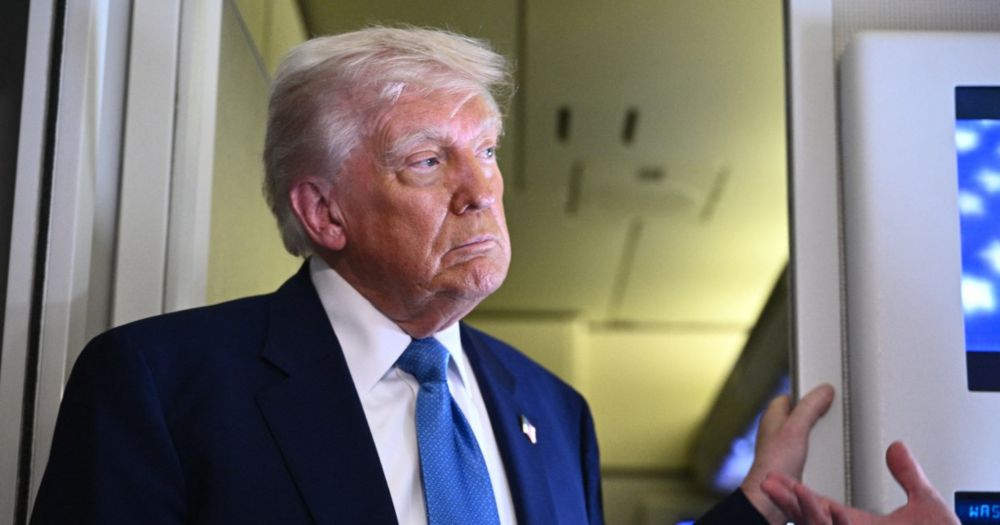
Opinion | Trump’s White House accidentally admitted the truth about its tax plan
Earlier this week the White House published evidence that the president’s “big, beautiful bill” hikes taxes on the poor to cut taxes for the rich.
"Americans who make less than $51,000 a year would see their after-tax income fall as a result of the Republican proposal beginning in 2026."
"Americans making less than $15,000 — the poorest of the poor — will pay 53% more in taxes than they do now
www.msnbc.com/opinion/msnb...
18.05.2025 12:33 — 👍 556 🔁 396 💬 16 📌 33
Science Magazine gets it wrong. 🧵
14.05.2025 16:21 — 👍 738 🔁 358 💬 7 📌 9
"Imagine the auto industry without 3D printing. NSF funded that. Artificial intelligence? NSF. MRI machines that help doctors diagnose you? NSF. Doppler radar technology that makes aviation safer by conquering wind shear? NSF. Duolingo‘s underlying programming? NSF. The internet itself? NSF."
14.05.2025 03:12 — 👍 645 🔁 340 💬 4 📌 8
Psych PhD candidate at Emory
Founder and CEO of @standupforscience.bsky.social
Standupforscience.net substack.com/@sciencefightclub
"Colette is brass knuckles...w/ spikes tipped in poison"
“Delusional broad”
"Lady Switchblade"
“Ditsy socialist liberal”
The Michigan Population Studies Center & Population Dynamics and Health Program are interdisciplinary communities of scholars in population research and training: Where demographers find their people!
Assistant Professor of Cognitive Neuroscience | UConn Psych Sci | attention, cognition, mental health, development, environment, personalized neuroscience
@acornlab.bsky.social
arielleskeller.wixsite.com/attention
appliedcognitionlab.psychology.uconn.edu
Michigan State political scientist & IPPSR Director; Hooked bookstore/cafe Co-owner; Science of Politics Podcast; New book: Polarized by Degrees
Developing a transdiagnostic, school-based intervention to prevent adolescent mental health challenges 🧠
Led by Prof Essi Viding & Prof Pasco Fearon
@UKRI.org funded
resetproject.co.uk
#MentalHealth #AdolescentWellbeing #ResetProject
GIS, public health, & data science to understand & promote healthy regions + policies. Home to @covid_atlas, Housed @UIUCGeogGIS, Formerly @GeoDaCenter.
Metascience, statistics, psychology, philosophy of science. Eindhoven University of Technology, The Netherlands. Omnia probate. 🇪🇺
PhD in developmental psychology | Postdoctoral Fellow at Stanford’s Center on Early Childhood | Studying how children adapt, learn, and self-regulate in the context of poverty
On the ‘25 academic job market! www.meriahdejoseph.com
Clinical Psychologist. Professor of Psychology. Editor of Advances in Methods and Practices in Psychological Science. All views are personal, expressed as a private citizen.
Assistant Professor - University of Georgia | Early life stress | Pediatric neuroimaging | Developmental psychopathology | prev. UMN_ICD and WashU Med
Opinions my own.
Lab director at Boys Town Institute for Human Neuroscience | Developmental neuroscientist studying puberty, adversity, & brain development 🧠| (she/her)
Assistant Professor of Psychological & Brain Sciences at Dartmouth. PI of the Functional Imaging & Naturalistic Neuroscience (FINN) Lab.
https://thefinnlab.github.io/
Professor, traveller, cyclist, skater, science policy junkie. Reluctant Phoenician. Interested in all things public sector
social psychologist @ university of maryland studying race, discrimination, and intergroup relations
https://www.lindaxzou.com
Interested in clinical affective science • 3rd year PhD Student @ University of Rochester • NSF GRFP • Previously CIRCLE Lab @ UNC, SDLab @ Harvard • she/her #FGLI
UZH Psychology Professor
Personality, Interpersonal Processes, Human-Animal Intergroup Relations
Editor https://phair.psychopen.eu/index.php/phair
Clinical Psychology PhD Student at Penn
Using developmental science and epidemiological methods to understand how adversity, trauma, and structural disadvantage shape mental health and how to best intervene
Also into comedy, pop culture, and all pets
Developmental Psychology Associate Professor (Teaching), UCalgary. Child & Youth Advocate. The Sims, PWHL, Children's Media.
Brain imaging, machine learning, neuroscience, mental disorders
https://sites.google.com/view/yeolab