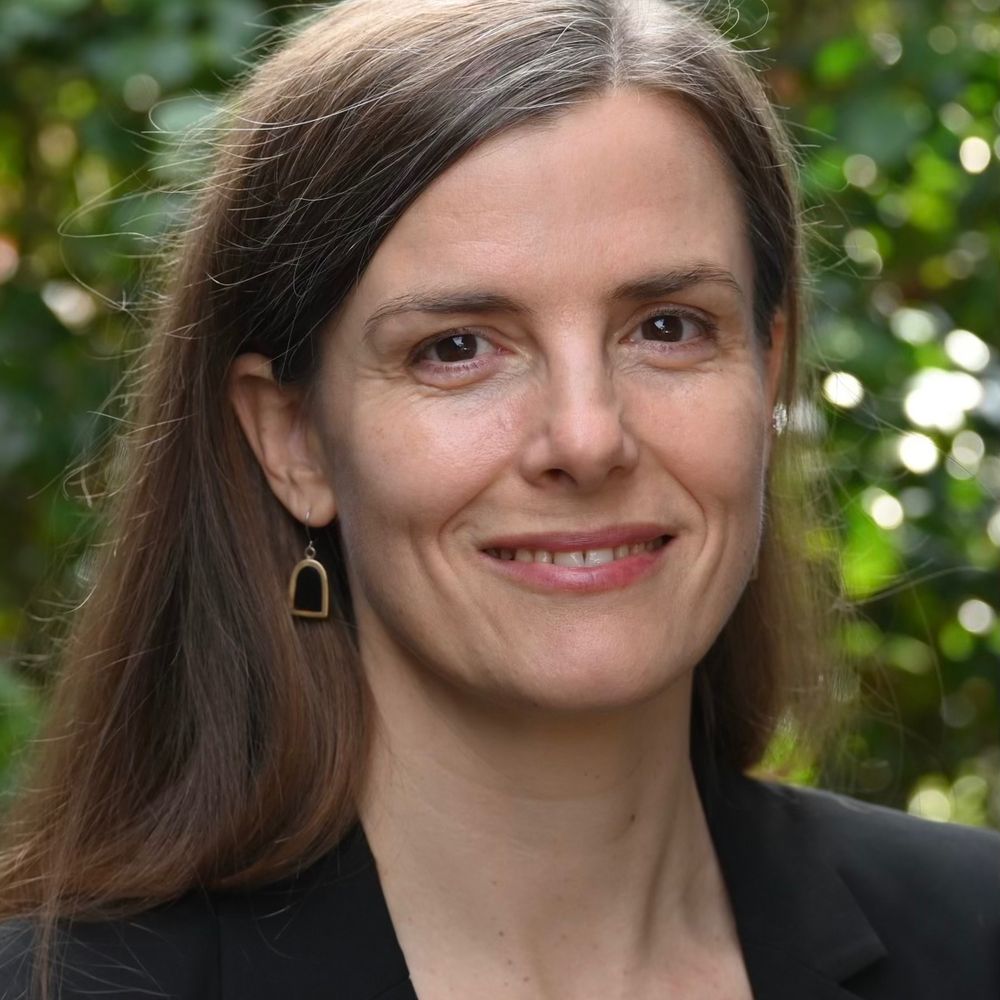
For March’s Speaker Series, we have Erin Hudson of @montereybayaquarium.org speaking on “Seafood in Flux: Science, Sustainability, and Your Power as a Consumer.” This will take place on Zoom on Thursday, March 5th at 2 pm ET / 1 pm CT / 12 pm MT.
Register here: osu.zoom.us/meeting/regi...
23.02.2026 19:04 — 👍 0 🔁 0 💬 0 📌 0
Read more at the links below:
www.weforum.org/stories/2026...
www.olympics.com/ioc/news/sno...
www.climatecentral.org/climate-matt...
20.02.2026 21:42 — 👍 0 🔁 0 💬 0 📌 0
Climate change is impacting the sports we know and love, and this isn’t limited to just the winter events. The Summer Olympics are also being impacted. Stick around for another two years to see our post about changing summer climates and how that will affect the games in Los Angeles!
20.02.2026 21:42 — 👍 0 🔁 0 💬 1 📌 0
Other solutions include moving the games to earlier in the year, capitalizing on colder December and January conditions, and hold the events over a large region rather than a few communities to ensure that conditions are suitable, similar to what Italy is doing now, but at a larger scale.
20.02.2026 21:42 — 👍 0 🔁 0 💬 1 📌 0
So what can be done? The first solution was listed above: limit the number of future host regions to locations that will remain cold enough to host these games.
20.02.2026 21:42 — 👍 0 🔁 0 💬 1 📌 0
For instance, It takes a large amount of power. Luckily, Beijing used 100% renewable energy to produce snow (which required over 58 million gallons of water). This requirement of resources puts further strain on not only choosing future locations but also the communities chosen to host them.
20.02.2026 21:42 — 👍 0 🔁 0 💬 1 📌 0
Why does this matter? Can’t they just make snow like our ski mountains do? After all, when Beijing hosted the games four years ago, 90% of their snow was artificial. But, this process takes a large amount of resources.
20.02.2026 21:42 — 👍 0 🔁 0 💬 1 📌 0
In fact, the list of potential sites will be almost halved by the time we get to the 2050s. Because of this, Olympic planners in 2023 paused their selection of host locations in 2030 so they could specifically take our changing climate into consideration.
20.02.2026 21:42 — 👍 0 🔁 0 💬 1 📌 0
Since their inception, there have been many cold-sounding nations that have held the Winter Olympics: Austria, Canada, the USA. However, many future potential locations will not be able to hold the games due to increasing temperatures.
20.02.2026 21:42 — 👍 0 🔁 0 💬 1 📌 0
 20.02.2026 21:42 — 👍 1 🔁 1 💬 1 📌 0
Read more at the links below:
www.ipcc.ch/report/sixth...
www.climatehubs.usda.gov/hubs/northwe...
www.climatecentral.org/climate-matt...
gmd.copernicus.org/articles/13/...
13.02.2026 21:33 — 👍 0 🔁 0 💬 0 📌 0
Continuing to have conversations about climate change, voting in local and national elections, and seeking out scientific information about climate change are all ways we can make a difference.
13.02.2026 21:33 — 👍 0 🔁 0 💬 1 📌 0
So having a swath of potential projections helps us not only prepare but also provide incentive for policy and decision makers to prioritize climate change mitigation and adaptation.
13.02.2026 21:33 — 👍 0 🔁 0 💬 1 📌 0
The rollback of this finding leads to the removal of many requirements put in place to reduce emissions from the automobile and powerplant industries.
13.02.2026 21:33 — 👍 0 🔁 0 💬 1 📌 0
As administrations and changes in government occur across the globe, there is uncertainty in what climate change mitigation goals will be set, met, or missed. A very current example of this is the EPA under the Trump Administration, which repealed the 2009 endangerment finding.
13.02.2026 21:33 — 👍 0 🔁 0 💬 1 📌 0
Notice, this leads to a greater change in radiative forcing of 8.5 watts per square meter. The impacts of the different scenarios on global mean temperature can be seen in the figures above.
13.02.2026 21:33 — 👍 0 🔁 0 💬 1 📌 0
As the SSP trend number increases (SSP1, SSP2, SSP3, etc.), the action taken to reduce emissions decreases. This means SSP5-8.5 is the upper edge of a world where fossil fuels are developed at a high rate and is a “worst-case” scenario.
13.02.2026 21:33 — 👍 0 🔁 0 💬 1 📌 0
It is the closest scenario to the goal of not exceeding 1.5 degrees C of warming outlined by the Paris Agreement. 1.9 refers to the change in radiative forcing in watts per square meter from the year 1750 to 2100 under the conditions of SSP1.
13.02.2026 21:33 — 👍 0 🔁 0 💬 1 📌 0
Each SSP uses the same naming structure. The most “mild” or “best-case” SSP often used is SSP1-1.9. SSP1 is the socio-economic family or the socio-economic trends included in the scenario. In this case, SSP1 is the most timely and aggressive shift toward more sustainable practices globally.
13.02.2026 21:33 — 👍 0 🔁 0 💬 1 📌 0

The Climate Consensus Fun Fact Friday. Figure1 shows 5 different shared socio-economic pathways and the degree of warming for each. From SSP1 to SSP5, the warming increases drastically. The figure on the right shows two SSPs and the degree of warming for each from 1950 to 2100. The more extreme SSP leads to over double the warming of the less extreme SSP.
Shared Socio-economic Pathways, or SSPs, are scenarios that represent the variety of challenges facing climate change adaptation and mitigation.
13.02.2026 21:33 — 👍 1 🔁 0 💬 1 📌 0
Climate models also sometimes have issues simulating precipitation, especially snow, indicating less certainty in projections compared to temperature trends.
#funfactfriday #snowfall #precipitation #snowcrete #globalwarming
06.02.2026 20:22 — 👍 0 🔁 0 💬 1 📌 0
One main source of uncertainty with snow is the sensitivity of
observed changes to how
observing stations are spaced out, and to historical changes in station
location, rain gauges, and observing practices (US Global Change Research Program).
06.02.2026 20:22 — 👍 0 🔁 0 💬 1 📌 0
Although climate projections are based on the laws of physics and are skillful at capturing large-scale trends, there is still uncertainty in specific regional details.
06.02.2026 20:22 — 👍 0 🔁 0 💬 1 📌 0
This can also result in an increase in lake effect snow, due to more evaporation occurring over the open water, although future projections indicate a shortened lake effect snow season with warming.
06.02.2026 20:22 — 👍 0 🔁 0 💬 1 📌 0
Our previous installment of Fun Fact Friday mentioned that the temperature of the Great Lakes has warmed, leading to a 25% decrease in basin-wide ice cover since 1973.
06.02.2026 20:22 — 👍 0 🔁 0 💬 1 📌 0
There is also high confidence in more precipitation falling as rain compared to snow across many parts of the central and eastern U.S. (US Global Change Research program), a trend reinforced by recent model projections.
06.02.2026 20:22 — 👍 0 🔁 0 💬 1 📌 0
Future emissions scenarios also suggest that winter recreation season in the Northeast U.S. is likely to become shorter and smaller, as winters continue to warm.
06.02.2026 20:22 — 👍 0 🔁 0 💬 1 📌 0
Declining snowpack and earlier spring snowmelt across the Southwestern U.S. also exacerbates the risk of drought in the region.
06.02.2026 20:22 — 👍 0 🔁 0 💬 1 📌 0
These trends are not only projected, but have been observed since the mid 20th century across the western U.S., reducing freshwater across the West by 15-30% since 1955.
06.02.2026 20:22 — 👍 0 🔁 0 💬 1 📌 0
Researching and reporting the science and impacts of climate change 🌎
climatecentral.org
Chesapeake Climate Action Network (CCAN) is the first nonprofit fighting climate change in MD, DC, & VA. Sister org of @ccanactionfund.bsky.social
🔗https://chesapeakeclimate.org
📍DC, Maryland, Virginia, & WV
Climate scientist & Assistant Prof @UDelaware Dept Geog & Spatial Sciences 🌍⛈️ | Ph.D. UMiami Rosenstiel 🌀| B.S. UMD 🐢 | often post about weather & climate | she/her
Climate impacts and adaptation for nature and people. U of Washington. Surfer/paddler. Settler on Coast Salish land. She/her.
Personal account - views mine.
American Meteorological Society (AMS) Committee on Hydrology. Focused on all things hydrology, hydrometeorology, and science!
https://www.ametsoc.org/stac/committees/committee-on-hydrology/mission-and-vision/
Welcome to the official Bluesky account of Vermont State University!
(They/Them)
Atmospheric Science
VTSU Lyndon '25
Atmospheric Scientist | Northwestern University Dept of Earth, Environmental, and Planetary Sciences Ph.D. Candidate⛅
Toward a Climate-Smart Nation. The official NOAA account for Climate.gov hosted by the Climate Program Office. Follow for #climate news, #science, #data, resources, and more!
Climate Scientist (clouds, aerosols, ocean) || Assistant Professor @ University of Southern Mississippi || She/her
VTSU-Lyndon 26’
Tunxis CC 23’
We're a news service that helps you understand climate change and what you can do about it. Get climate solutions in your inbox: https://yaleclimateconnections.org/newsletters/
Intergovernmental Panel on Climate Change
We're committed to advancing our understanding of Earth system science, from the ocean to the exosphere, for the betterment of our planet. 🌎 Operated by UCAR and #NSFfunded.
| NVU - Lyndon ‘23 | OU ‘25 | Born at 370 ppm |
Scientist/Author/Speaker; Presidential Distinguished Prof/Director Center for Science, Sustainability & the Media, U. Penn; National Academy of Sciences; Royal Society; Tyler Prize
We conduct research on public climate change knowledge, attitudes, policy support & behavior. Posted events are not endorsements.
https://climatecommunication.yale.edu/
Leading independent expert in weather and climate.