How Dryad data curators help make data sharing simple for researchers | Dryad news
Data sharing can be challenging. Dryad’s experienced data curators smooth the way with expert, hands-on support for researchers to ensure that all the data we publish is findable, accessible, interope...
Researchers choose Dryad for all kinds of reasons. One of the biggest is our curatorial team.
Expert data curators screen each submission and work with researchers to ensure high-quality, FAIR-compliant data publications.
bit.ly/3KBT38E
#opendata #openscience #openaccess #datasharing #scisky
02.12.2025 20:34 — 👍 0 🔁 2 💬 0 📌 0
'Nobody wants to scale back the industrialization of education it would mean losing money'
Are we still not convinced that education is outdated, not meeting needs of millions and perpetuating inequities? But I've yet to see viable alternatives (except maybe the return of trade schools)
29.11.2025 18:21 — 👍 0 🔁 0 💬 1 📌 0
I had the same Q. Many people handle a manuscript (editor, handling editor, reviewers). Who's not doing their job and how do we oust these bad actors? If we don't, publishing in certain outlets becomes meaningless. That's why I publish w/ society journals. You know the people behind the process.
27.11.2025 20:00 — 👍 3 🔁 0 💬 2 📌 0
Why I Broke Up With Wirecutter
Graham Downey tells us about how he tried to stop worrying and love the Wirecutter—and how it quietly took over his life.
In it's early days @nytwirecutter.bsky.social was the alternative to Consumer Reports but now it just encourages rampant consumerism, wrapped up in mirages of 'quality'. Today's digestif long read:
Why I Broke Up With Wirecutter share.google/Eve6L92jBbKB...
27.11.2025 16:14 — 👍 0 🔁 0 💬 0 📌 0
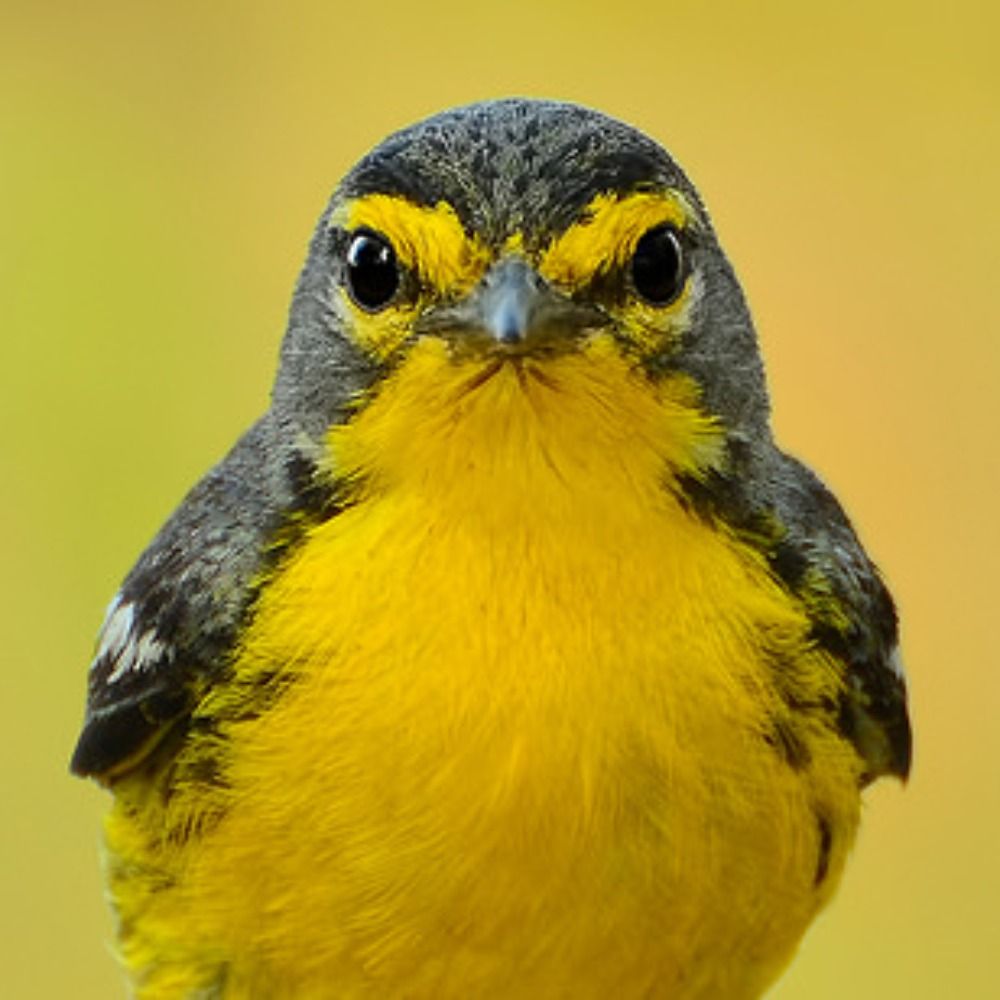
When the turpials arrive, hurricane season is over, trade winds start, and surf is up in #PuertoRico. The tropics have many seasons too if you know how to look.
27.11.2025 13:19 — 👍 2 🔁 0 💬 0 📌 0
Where does everyone send their tropical plant samples for species identification using DNA barcoding? Guelph?🙏 Leaves are preferable, but if the leaves are too high for pole pruner, what then? Cambium? Thanks for any leads.
24.11.2025 18:53 — 👍 1 🔁 1 💬 0 📌 0
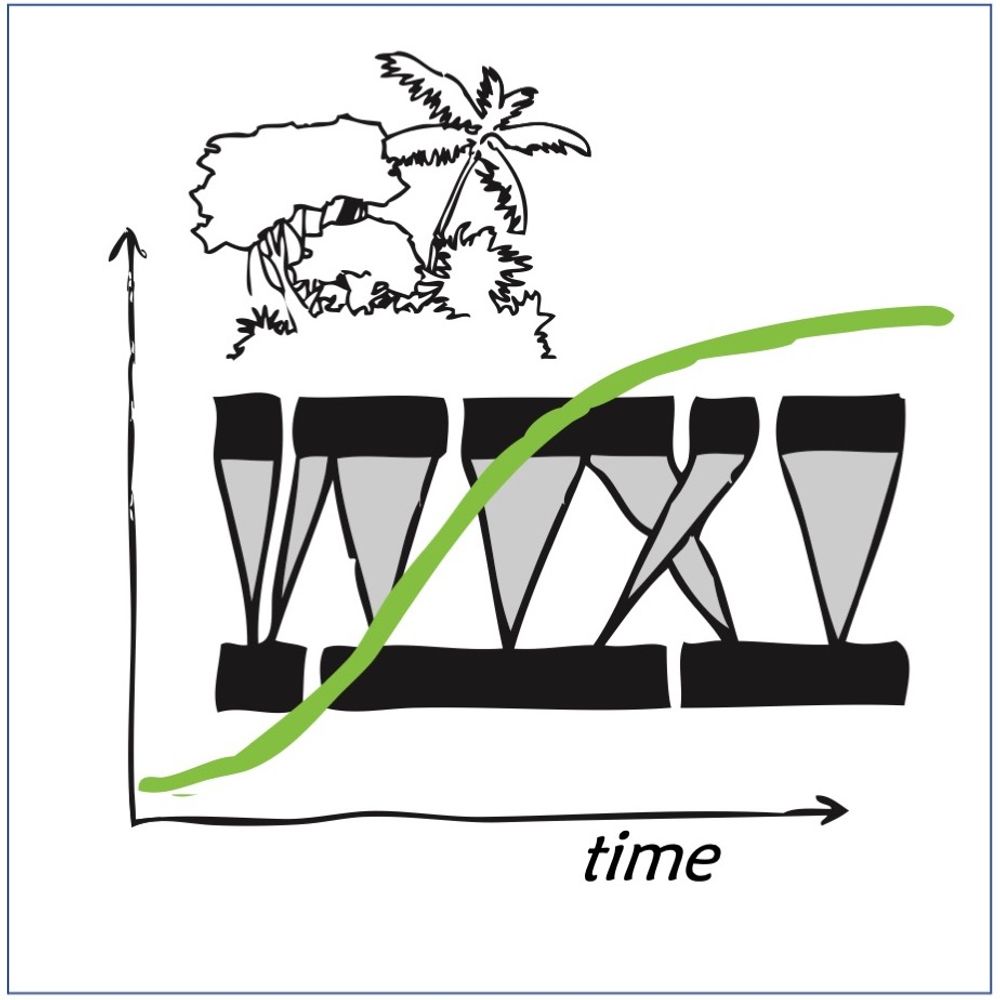
🌵 In tropical dry forests, drought avoiders (isohydric) thrive in dry sites with fast growth, while tolerators (anisohydric) dominate wetter areas, boosting biomass non-linearly 👇
buff.ly/8dpEhNv
19.11.2025 15:05 — 👍 5 🔁 2 💬 0 📌 0
So: if you were to suspend your knee-jerk reaction and, instead, imagine a perfect world, what qualities would a pay-peer-reviewers model have to have for it to work? Now that's the interesting question/thought exercise no importa (y no judgement) whether you are for or against.
Fin.
18.11.2025 21:21 — 👍 0 🔁 0 💬 0 📌 0
I'm not for or against. But I specialize in exploring ideas outside of how we currently operate. Because how we currently operate clearly ain't working.
18.11.2025 21:21 — 👍 0 🔁 0 💬 1 📌 0
We are comfortable with NSF honorariums for review panelists but not comfortable with paying for manuscript reviewers. Why? NSF has prestige advantage? Volume/workload is different? Stakes are different?
18.11.2025 21:21 — 👍 0 🔁 0 💬 1 📌 0
We love data yet are convinced by anecdotal feelings of how this would be a very bad, no good, terrible idea...without any kind of pilot data/info to base those feelings on...what do existing models out there say? I honestly don't know. Just spit-balling and looking for fellow spit-ballers.
18.11.2025 21:21 — 👍 0 🔁 0 💬 1 📌 0
Few people are willing to suspend disbelief and 'play' from a place of imagination/creativity...skills we are suppose to be good at.
18.11.2025 21:21 — 👍 0 🔁 0 💬 1 📌 0
Most people hate the idea for all the obvious reasons. Already part of service, where would $ come from, blah, blah, blah.
18.11.2025 21:21 — 👍 0 🔁 0 💬 1 📌 0

"How Might We" design a pay-peer-reviewers model that prevents perverse incentives? Training/certifications? Vetted reviewers? Rating reviewers? I asked this question in a @esajournals.bsky.social cross-portfolio discussion and here is what I learned:
18.11.2025 21:21 — 👍 1 🔁 0 💬 1 📌 0
Why Transformational Science Can't Get Funded:
The Einstein Problem
"The conservative nature and risk-averse mentality of modern grant review panels are deeply rooted in the scientific community’s culture that values incremental advances over speculative leaps" Why transformational science can't get funded.
open.substack.com/pub/sciencep...
18.11.2025 18:37 — 👍 3 🔁 0 💬 0 📌 0
A US citizen filmed federal agents smashing his car window, as authorities begin a surge of immigration enforcement operations in North Carolina.
The Honduran-born Charlotte resident filed a police report after the officers let him go.
16.11.2025 09:14 — 👍 9729 🔁 4783 💬 713 📌 419
The @esajournals.bsky.social is hosting a cross-portfolio conversation next week. If you are a subject matter editor like me, come and voice your ideas. It's gonna take brave, bold, new ideas to push back against this multi-headed beast.
12.11.2025 14:30 — 👍 5 🔁 1 💬 0 📌 0
A table showing profit margins of major publishers. A snippet of text related to this table is below.
1. The four-fold drain
1.1 Money
Currently, academic publishing is dominated by profit-oriented, multinational companies for
whom scientific knowledge is a commodity to be sold back to the academic community who
created it. The dominant four are Elsevier, Springer Nature, Wiley and Taylor & Francis,
which collectively generated over US$7.1 billion in revenue from journal publishing in 2024
alone, and over US$12 billion in profits between 2019 and 2024 (Table 1A). Their profit
margins have always been over 30% in the last five years, and for the largest publisher
(Elsevier) always over 37%.
Against many comparators, across many sectors, scientific publishing is one of the most
consistently profitable industries (Table S1). These financial arrangements make a substantial
difference to science budgets. In 2024, 46% of Elsevier revenues and 53% of Taylor &
Francis revenues were generated in North America, meaning that North American
researchers were charged over US$2.27 billion by just two for-profit publishers. The
Canadian research councils and the US National Science Foundation were allocated US$9.3
billion in that year.
A figure detailing the drain on researcher time.
1. The four-fold drain
1.2 Time
The number of papers published each year is growing faster than the scientific workforce,
with the number of papers per researcher almost doubling between 1996 and 2022 (Figure
1A). This reflects the fact that publishers’ commercial desire to publish (sell) more material
has aligned well with the competitive prestige culture in which publications help secure jobs,
grants, promotions, and awards. To the extent that this growth is driven by a pressure for
profit, rather than scholarly imperatives, it distorts the way researchers spend their time.
The publishing system depends on unpaid reviewer labour, estimated to be over 130 million
unpaid hours annually in 2020 alone (9). Researchers have complained about the demands of
peer-review for decades, but the scale of the problem is now worse, with editors reporting
widespread difficulties recruiting reviewers. The growth in publications involves not only the
authors’ time, but that of academic editors and reviewers who are dealing with so many
review demands.
Even more seriously, the imperative to produce ever more articles reshapes the nature of
scientific inquiry. Evidence across multiple fields shows that more papers result in
‘ossification’, not new ideas (10). It may seem paradoxical that more papers can slow
progress until one considers how it affects researchers’ time. While rewards remain tied to
volume, prestige, and impact of publications, researchers will be nudged away from riskier,
local, interdisciplinary, and long-term work. The result is a treadmill of constant activity with
limited progress whereas core scholarly practices – such as reading, reflecting and engaging
with others’ contributions – is de-prioritized. What looks like productivity often masks
intellectual exhaustion built on a demoralizing, narrowing scientific vision.
A table of profit margins across industries. The section of text related to this table is below:
1. The four-fold drain
1.1 Money
Currently, academic publishing is dominated by profit-oriented, multinational companies for
whom scientific knowledge is a commodity to be sold back to the academic community who
created it. The dominant four are Elsevier, Springer Nature, Wiley and Taylor & Francis,
which collectively generated over US$7.1 billion in revenue from journal publishing in 2024
alone, and over US$12 billion in profits between 2019 and 2024 (Table 1A). Their profit
margins have always been over 30% in the last five years, and for the largest publisher
(Elsevier) always over 37%.
Against many comparators, across many sectors, scientific publishing is one of the most
consistently profitable industries (Table S1). These financial arrangements make a substantial
difference to science budgets. In 2024, 46% of Elsevier revenues and 53% of Taylor &
Francis revenues were generated in North America, meaning that North American
researchers were charged over US$2.27 billion by just two for-profit publishers. The
Canadian research councils and the US National Science Foundation were allocated US$9.3
billion in that year.
The costs of inaction are plain: wasted public funds, lost researcher time, compromised
scientific integrity and eroded public trust. Today, the system rewards commercial publishers
first, and science second. Without bold action from the funders we risk continuing to pour
resources into a system that prioritizes profit over the advancement of scientific knowledge.
We wrote the Strain on scientific publishing to highlight the problems of time & trust. With a fantastic group of co-authors, we present The Drain of Scientific Publishing:
a 🧵 1/n
Drain: arxiv.org/abs/2511.04820
Strain: direct.mit.edu/qss/article/...
Oligopoly: direct.mit.edu/qss/article/...
11.11.2025 11:52 — 👍 608 🔁 435 💬 8 📌 62
How to not be swamped by your microclimate data
Microclimate data are finally finding their way more routineously into ecological models – and rightly so. Hooray for that! The growing availability of in-situ measurements is helping us brid…
How to not be swamped by your microclimate data?
The rise of microclimate data may have opened Pandora’s box. Gone are the days of simple bioclimatic variables — now heads spin trying to summarize these timeseries.
A much-needed paper by @krystofchytry.bsky.social:
🔗 the3dlab.org/2025/11/11/h...
11.11.2025 09:19 — 👍 17 🔁 7 💬 0 📌 2
Anyone know how to revoke a submission with Wiley's shitty AI system? 6 months with no reviewers? Hellnah.
06.11.2025 23:52 — 👍 2 🔁 0 💬 1 📌 0
A la Stanford's d.school, ASU's Center for Science and the Imagination, @austinkleon.bsky.social
who else?
30.10.2025 19:57 — 👍 0 🔁 0 💬 0 📌 0
Hey creatives: who do you follow for inspiration? Trying to cut out slop and surround myself with incredible, bold, pie-in-the-sky ideas.
30.10.2025 19:48 — 👍 2 🔁 0 💬 1 📌 0
No new lab papers. But here's my first try at digital collage from souvenirs I picked up in #Oaxaca #Mexico during the #ATBC meeting. #arte-ciencia #collage
20.10.2025 23:35 — 👍 5 🔁 1 💬 1 📌 0
Online presence for academics | Website Design, Social Media, Bio Writing https://TheAcademicDesigner.com/
The Social Academic blog @HigherEdPR
https://TheSocialAcademic.com/blog/
Peruvian-American poet ✨️ https://JenniferVanAlstyne.com/social-media/
Macroecologist - Macro-spatial EcoLOgical DYnamics - the MELODY of nature by modeling - bird, mammal, butterfly, moth
Senior Research Scientist @syke.fi
Visiting Researcher @nathist.bsky.social
GA2 Fellow @ipbes.net
AE @jappliedecology.bsky.social
Public Science, Public Good
https://science-foundation.org/donate
DNRF Center of Excellence - Center for Ecological Dynamics in a Novel Biosphere (ECONOVO) headed by Center Director @jcsvenning.bsky.social @aarhusuni.bsky.social, Denmark
Assistant Prof of Forest Ecology in southern Appalachia. Interested in climate change effects on forest plants, especially phenology, ecophys, and species interactions. He/him
Views my own
🧪🌎🌱📜🌐
More at https://peacchlab.com
Posdoc - Universidad Nacional Autónoma de México
Forest Ecology | Biogeography | Ecosystem function | Dendroecology
Together, we can create a world where people and nature thrive. 🌍💚 Subscribe for real-world solutions to our planet’s biggest challenges: nature.ly/GlobalInsights
The world's largest community of ecologists -- dedicated to understanding life on earth and fostering a thriving planet.
Find journals content at @esajournals.bsky.social.
We harmonize Earth observations from ground to space to address global change & help society adapt. earthlab.colorado.edu
@ciresnews.bsky.social
@cuboulder.bsky.social
Comics by Jorge Cham: Oliver's Great Big Universe, Elinor Wonders Why, ScienceStuff and PHD Comics
Showcasing new research from the publishing portfolio of the Ecological Society of America, the world's largest community of ecologists @ecologicalsociety.bsky.social
Citizen, Dad, Husband, Scientist, program officer at NSF, former biology professor and sports “expert”. Views are mine and do not represent my employer. Returning to social media on my personal time .
Evolutionary Biologist | @DEB @NSF | Fighter for Science and Scientists | Former Prof of Bio @Univ AL, Postdoc @UC Berkeley, PhD @UVA | More than just science, but science is my love (views always my own)
We are the British Ecological Society Macroecology & Macroevolution Special Interest Group. We run the annual #BESMacro conference and will gladly repost papers and opportunities of interest to our members!
Science journalist in Flagstaff, Arizona. Author of Brave the Wild River (WW Norton, 2023), Mythical River, and Under Desert Skies. I write about science, nature, rivers, space. Trekkie! www.melissasevigny.com
Geóloga, investigo los climas del pasado. Preocupada por la emergencia climática
Medio especializado en clima y biodiversidad. Léenos en http://climatica.coop | Suscríbete a Climática y apoya el periodismo sin greenwashing en climatica.coop/kiosco
Instituto Pirenaico de Ecología - Consejo Superior de Investigaciónes Científicas | Pyrenean Institute of Ecology - Spanish National Research Council.
Centro de investigación del CSIC dedicado al estudio de los #Ecosistemas terrestres y el #CambioGlobal
The Biodiversity Heritage Library provides free & #OpenAccess to 63+ million pages of #biodiversity literature online. 🔗 biodiversitylibrary.org