Surely interesting, indeed in our study we are not saying cytoarchitectonic isn't at all predictive of any differentiation (I guess it also depends on the regions ), but more specifically that an integration with connectional data could provide more info on the localization of functional properties
22.01.2026 21:36 — 👍 1 🔁 0 💬 1 📌 0
Posted it on the reply above, as I said it's very interesting that we also saw that connectional borders enabled to find a functional organization which would not have been evident by only using cytoarchitectonic ones, especially in the intermediate part of the region we studied
22.01.2026 18:58 — 👍 3 🔁 0 💬 0 📌 0
This is the most interesting point in my opinion, given that in a recent study from the lab I'm working in ,we reached a very similar conclusion considering monkey PFC
22.01.2026 18:04 — 👍 6 🔁 0 💬 2 📌 0
I think it's very interesting that we are focusing our attention on the direct involvement of prefrontal areas in guiding actions within our everyday behavioral context
12.10.2025 09:07 — 👍 0 🔁 0 💬 0 📌 0

𝗔 𝗡𝗘𝗨𝗥𝗢𝗘𝗖𝗢𝗟𝗢𝗚𝗜𝗖𝗔𝗟 𝗣𝗘𝗥𝗦𝗣𝗘𝗖𝗧𝗜𝗩𝗘 𝗢𝗡 𝗧𝗛𝗘 𝗣𝗥𝗘𝗙𝗥𝗢𝗡𝗧𝗔𝗟 𝗖𝗢𝗥𝗧𝗘𝗫
By Mars and Passingham
"Understanding anthropoid foraging challenges may thus contribute to our understanding of human cognition"
Going to the top of the reading list!
doi.org/10.1016/j.ne...
#neuroskyence
11.10.2025 16:31 — 👍 62 🔁 16 💬 4 📌 2

𝗪𝗮𝗻𝘁 𝘁𝗼 𝗹𝗲𝗮𝗿𝗻 𝗮𝗯𝗼𝘂𝘁 𝗵𝘂𝗺𝗮𝗻 𝗮𝗳𝗳𝗲𝗰𝘁𝗶𝘃𝗲 𝗻𝗲𝘂𝗿𝗼𝘀𝗰𝗶𝗲𝗻𝗰𝗲?
This is massive, a lot of great material.
Huge amount of work to put this together, many thanks to Jorge and Patrik for getting the second edition out.
02.10.2025 15:26 — 👍 30 🔁 7 💬 0 📌 0

Exciting news! 🎉 Our Computational Neuroscience course has been awarded NIH BRAIN Initiative funding! Students will get hands-on experience w real BRAIN Initiative datasets, helping them build computational skills that are essential for the future of neuroscience.
www.linkedin.com/feed/update/...
25.09.2025 21:01 — 👍 75 🔁 25 💬 1 📌 1
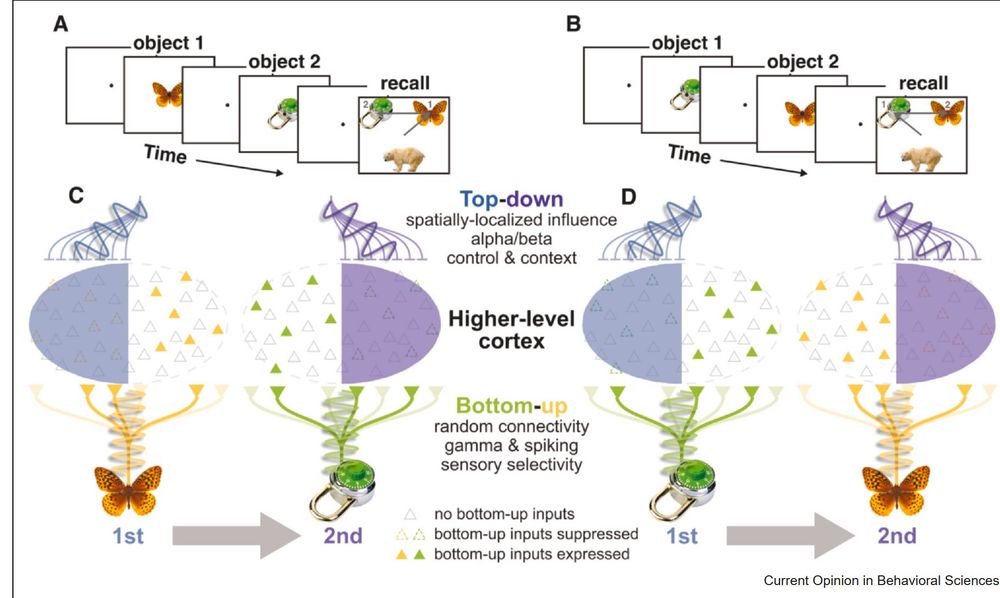
𝗖𝗼𝗴𝗻𝗶𝘁𝗶𝗼𝗻 𝗶𝘀 𝗲𝗺𝗲𝗿𝗴𝗲𝗻𝘁 𝗶𝗻 𝘁𝗵𝗲 𝗯𝗿𝗮𝗶𝗻
by Earl K Miller, Scott L Brincat, Jefferson E Roy
This promises to be a must read
One day we should create an online journal club to just read these kinds of papers!
#neuroskyence
doi.org/10.1016/j.co...
16.08.2025 15:05 — 👍 138 🔁 28 💬 11 📌 3

Overview of the distribution of functional properties in VLPF. P, Principal sulcus; IA, inferior arcuate sulcus; SA, superior arcuate sulcus.
Lateral #PrefrontalCortex is involved in executive functions, but what roles do distinct anatomical subregions play? @clbas.bsky.social &co show that caudal VLPF specializes in visual input processing, while middle areas support context-based behavioral planning @plosbiology.org 🧪 plos.io/4ljEz9W
08.08.2025 13:37 — 👍 8 🔁 2 💬 0 📌 0

Each area differently contributes to the encoding of visual features and to the exploitation of contextual information for guiding behavior. A summary view of the findings in the figure below (5/5)
08.08.2025 12:21 — 👍 0 🔁 0 💬 0 📌 0
The actual execution or withholding of grasping actions predominantly activates neurons in the intermediate VLPF areas, particularly in middle 46v. This indicates that these areas, may primarily contribute to action selection and guidance (4/5)
08.08.2025 12:21 — 👍 0 🔁 0 💬 1 📌 0
The passive presentation of visual stimuli primarily activates neurons in the caudal VLPF areas, especially in caudal 12r. This suggests that these areas, consistently with their strong connections with the inferotemporal cortex, represent the first VLPF stage of visual processing (3/5).
08.08.2025 12:20 — 👍 0 🔁 0 💬 1 📌 0
The coding of different task phases and the behavioral rule is observed across all recorded areas, indicating a distributed representation of these processes within VLPF, which is in line with the strong interconnection among prefrontal areas (2/5)
08.08.2025 12:16 — 👍 0 🔁 0 💬 1 📌 0

GitHub - Julie-Fabre/bombcell: Automated quality control, curation and neuron classification of spike-sorted electrophysiology data
Automated quality control, curation and neuron classification of spike-sorted electrophysiology data - Julie-Fabre/bombcell
🚀 We are excited to share that bombcell is now available in Python! 🐍 Automatically sort your units into good/MUA/noise/non-somatic using quality metrics and interpretable & adjustable classification thresholds.
pip install and play around with our toy dataset:
🔗 github.com/Julie-Fabre/...
13.06.2025 18:55 — 👍 61 🔁 23 💬 2 📌 2
In my hotpink and royalblue era ✨
25.02.2025 17:14 — 👍 15 🔁 1 💬 0 📌 1
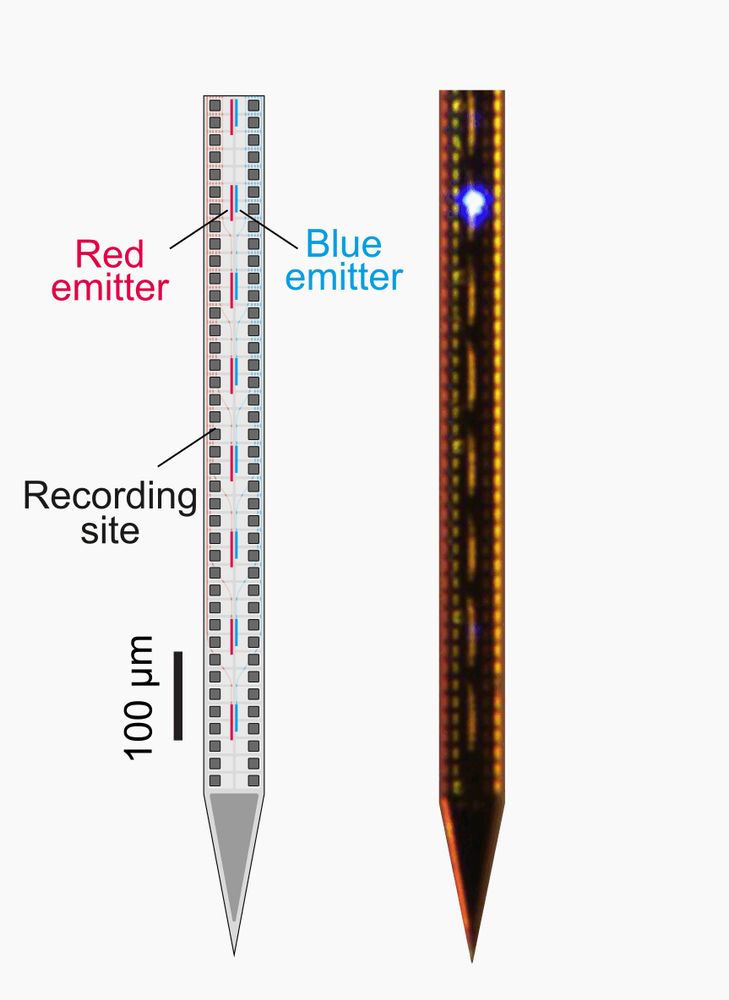
A Neuropixels Opto probe with 3 blue emitters and 3 red emitters lighting up in succession, with corresponding neural activity in different layers of the cortex.
Neuropixels and Optogenetics are delighted to announce the birth of
Neuropixels Opto
Combining high-resolution electrophysiology and optogenetics
Today in bioRxiv
960 sites, 28 emitters, 2 colors
By Lakunina, @karolinazsocha.bsky.social, Ladd, et al
www.biorxiv.org/content/10.1...
(1/2)
07.02.2025 09:18 — 👍 325 🔁 115 💬 7 📌 12
Finally, decoding analyses on the neural activity show that each VLPF area has a shared neural code across specific epochs of the visuomotor task, suggesting that each area plays a distinct role in encoding the contextual information relevant for behavior (5/5).
31.01.2025 13:51 — 👍 0 🔁 0 💬 0 📌 0
Demixed principal component analysis (dPCA) of neural activity reveals that each subdivision of VLPF is characterized by distinct functional features related to the encoding ofboth the task rule (behavioral condition) and the type of stimulus (4/5).
31.01.2025 13:51 — 👍 0 🔁 0 💬 1 📌 0
The execution or withholding of grasping actions predominantly activates neurons in the intermediate VLPF areas, which could contribute to the selection and guidance of contextually appropriate actions, in line with their strong connections to the parietal and premotor cortices (3/5).
31.01.2025 13:51 — 👍 0 🔁 0 💬 1 📌 0
The passive presentation of visual stimuli primarily activates neurons in the caudal VLPF areas. This suggests that these regions represent the first VLPF processing stage of visual input, consistent with their strong connections to the inferotemporal cortex (2/5)
31.01.2025 13:50 — 👍 0 🔁 0 💬 1 📌 0
The passive presentation of visual stimuli primarily activates neurons in the caudal VLPF areas. This suggests that these regions represent the first VLPF processing stage of visual input, consistent with their strong connections to the inferotemporal cortex (2/5)
31.01.2025 13:50 — 👍 0 🔁 0 💬 0 📌 0
Finally, decoding analyses on the neural activity show that each VLPF area has a shared neural code across specific epochs of the visuomotor task, suggesting that each area plays a distinct role in encoding the contextual information relevant for behavior (5/5).
31.01.2025 12:01 — 👍 0 🔁 0 💬 0 📌 0
Demixed principal component analysis (dPCA) of neural activity reveals that each subdivision of VLPF is characterized by distinct functional features related to the encoding ofboth the task rule (behavioral condition) and the type of stimulus (4/5).
31.01.2025 12:00 — 👍 0 🔁 0 💬 1 📌 0
The execution or withholding of grasping actions predominantly activates neurons in the intermediate VLPF areas, which could contribute to the selection and guidance of contextually appropriate actions, in line with their strong connections to the parietal and premotor cortices (3/5).
31.01.2025 11:59 — 👍 0 🔁 0 💬 1 📌 0
The passive presentation of visual stimuli primarily activates neurons in the caudal VLPF areas. This suggests that these regions represent the first VLPF processing stage of visual input, consistent with their strong connections to the inferotemporal cortex (2/5)
31.01.2025 11:58 — 👍 0 🔁 0 💬 1 📌 0
This figure should be posted in every laboratory that uses animal models in behavioral neuroscience, and I might get it tattooed on my forearm.
05.01.2025 02:52 — 👍 44 🔁 5 💬 6 📌 1
The Federation of European Neuroscience Societies is the voice of European #neuroscience.
Cognitive psychologist | Wittenberg University
Cog/neuro/science, gender, race, 🎵, 🇵🇱
US Fulbright Scholar '10-'11 | Witt in Poland '13, '18 | Fulbright-Hays Group Projects Abroad '24 with political theorist Heather Wright. He/him
Neurophysiology researcher and lecturer at University of Michigan. Teaching a course on Psychedelic Science and Medicine.
forever a student
currently a post-doc @ sites.brown.edu/badrelab
curious about control of decision making, neural dynamics, multivariate stats
mcfreund.github.io
Kahnt Lab postdoc @ NIH NIDA investigating adaptive decision making & olfactory functioning in HIV & SUD. EEG & RewP aficionado in a previous life.
CNRS Researcher at CRNL. Research Specialist at Karolinska Institutet, Stockholm. Studying the prefrontal cortex and cognition in rodents. Electronic musician.
lab : https://www.lab.pierrelemerre.com/
personal webpage: https://www.pierrelemerre.com/
Interested in how & what the brain computes. Professor in Neuroscience & Statistics UC Berkeley
Empowering neuroscientists with fiber-based microscopic systems for imaging at any brain depth
CTO at DeepEn, @deepen-imaging.bsky.social
( https://deepen-imaging.com/ )
🧠👨🔬 Postdoc UKE Hamburg - attention, decision-making & large-scale dynamics
Twitter: @itSiemsThatWay
Tutte le news di oggi dall'Italia e dal Mondo, aggiornamenti dell'ultima ora su attualità, cronaca e politica
[bridged from https://fanpage.it/ on the web: https://fed.brid.gy/web/fanpage.it ]
Posting the most normal moments from the politics and history of the worlds (allegedly) greatest country. Not the same guy from twitter or even in America | DMs for suggestions
Writer. Parlo, scrivo, parlo più di quanto scrivo, e scrivo parecchio. She/her, It-Eng, dogless dog person.
linktr.ee/GiuliaB
Neuroscientist: consciousness, perception, and Dreamachines. Author of Being You - A New Science of Consciousness.
Master's in Security Studies_Sheffield | Swapped the Brussels bubble for Swiss freedom, trading EU doctrines for Gramsci’s vision | Star Wars fan 🌐✨
Cognitive Neuroecology Lab at OxCIN/FMRIB (Oxford) and Donders Institute (Nijmegen) headed by Rogier Mars. Interested in what makes different brains tick. www.neuroecologylab.org