Excited to share our @chemrxiv.org preprint on metabolically active living materials #MALMs with physciochemical biocontainment🧵
Why do we need #MALMs?
Because as @economist.com posits additive manufacturing is potentially a better way to make drinks and drugs
We argue #MALMs are the key for it
10.02.2026 19:52 — 👍 5 🔁 4 💬 1 📌 0
We just published a new paper in Science Advances, where we uncover how #Candida albicans reprograms the metabolism of oral epithelial cells during infection.
As first and corresponding author, I’m excited to share what we found — and why it matters.
#Skytorial #Immunometabolism #MedMycoSky
05.02.2026 13:50 — 👍 4 🔁 1 💬 2 📌 0

We asked two microbiologists, Antonella Colque and Nurdana Orynbek, to test a selection of AI tools built for scientific publishing and research. The goal? To see how well these tools perform in real research tasks. Here is what worked for them.
And what did not : buff.ly/rm3775c
08.02.2026 07:00 — 👍 4 🔁 4 💬 1 📌 0
Additive Manufacturing of Metabolically Active Living Materials with Physicochemical Biocontainment @chemrxiv.org
#ELMs #livingmaterials #MALM
chemrxiv.org/doi/full/10....
05.02.2026 16:30 — 👍 8 🔁 5 💬 2 📌 1
Yes, it can happen here!
en.wikipedia.org/wiki/It_Can'...
📚 #BookSky #bookreading
17.01.2026 20:52 — 👍 5 🔁 1 💬 0 📌 0

A cover image of book ‘An Immense World’ by Ed Yong
Happy New Year 2026 🥳 🎆 🎊
Thank you all for following along here, and may all of us stay curious about the world around us!
Starting off 2026 with @edyong209.bsky.social ‘s brilliant book, #animmenseworld, beautifully explaining the concept of #Umwelt 🇩🇪: en.wikipedia.org/wiki/Umwelt
01.01.2026 14:40 — 👍 12 🔁 1 💬 0 📌 1

A table showing profit margins of major publishers. A snippet of text related to this table is below.
1. The four-fold drain
1.1 Money
Currently, academic publishing is dominated by profit-oriented, multinational companies for
whom scientific knowledge is a commodity to be sold back to the academic community who
created it. The dominant four are Elsevier, Springer Nature, Wiley and Taylor & Francis,
which collectively generated over US$7.1 billion in revenue from journal publishing in 2024
alone, and over US$12 billion in profits between 2019 and 2024 (Table 1A). Their profit
margins have always been over 30% in the last five years, and for the largest publisher
(Elsevier) always over 37%.
Against many comparators, across many sectors, scientific publishing is one of the most
consistently profitable industries (Table S1). These financial arrangements make a substantial
difference to science budgets. In 2024, 46% of Elsevier revenues and 53% of Taylor &
Francis revenues were generated in North America, meaning that North American
researchers were charged over US$2.27 billion by just two for-profit publishers. The
Canadian research councils and the US National Science Foundation were allocated US$9.3
billion in that year.

A figure detailing the drain on researcher time.
1. The four-fold drain
1.2 Time
The number of papers published each year is growing faster than the scientific workforce,
with the number of papers per researcher almost doubling between 1996 and 2022 (Figure
1A). This reflects the fact that publishers’ commercial desire to publish (sell) more material
has aligned well with the competitive prestige culture in which publications help secure jobs,
grants, promotions, and awards. To the extent that this growth is driven by a pressure for
profit, rather than scholarly imperatives, it distorts the way researchers spend their time.
The publishing system depends on unpaid reviewer labour, estimated to be over 130 million
unpaid hours annually in 2020 alone (9). Researchers have complained about the demands of
peer-review for decades, but the scale of the problem is now worse, with editors reporting
widespread difficulties recruiting reviewers. The growth in publications involves not only the
authors’ time, but that of academic editors and reviewers who are dealing with so many
review demands.
Even more seriously, the imperative to produce ever more articles reshapes the nature of
scientific inquiry. Evidence across multiple fields shows that more papers result in
‘ossification’, not new ideas (10). It may seem paradoxical that more papers can slow
progress until one considers how it affects researchers’ time. While rewards remain tied to
volume, prestige, and impact of publications, researchers will be nudged away from riskier,
local, interdisciplinary, and long-term work. The result is a treadmill of constant activity with
limited progress whereas core scholarly practices – such as reading, reflecting and engaging
with others’ contributions – is de-prioritized. What looks like productivity often masks
intellectual exhaustion built on a demoralizing, narrowing scientific vision.

A table of profit margins across industries. The section of text related to this table is below:
1. The four-fold drain
1.1 Money
Currently, academic publishing is dominated by profit-oriented, multinational companies for
whom scientific knowledge is a commodity to be sold back to the academic community who
created it. The dominant four are Elsevier, Springer Nature, Wiley and Taylor & Francis,
which collectively generated over US$7.1 billion in revenue from journal publishing in 2024
alone, and over US$12 billion in profits between 2019 and 2024 (Table 1A). Their profit
margins have always been over 30% in the last five years, and for the largest publisher
(Elsevier) always over 37%.
Against many comparators, across many sectors, scientific publishing is one of the most
consistently profitable industries (Table S1). These financial arrangements make a substantial
difference to science budgets. In 2024, 46% of Elsevier revenues and 53% of Taylor &
Francis revenues were generated in North America, meaning that North American
researchers were charged over US$2.27 billion by just two for-profit publishers. The
Canadian research councils and the US National Science Foundation were allocated US$9.3
billion in that year.

The costs of inaction are plain: wasted public funds, lost researcher time, compromised
scientific integrity and eroded public trust. Today, the system rewards commercial publishers
first, and science second. Without bold action from the funders we risk continuing to pour
resources into a system that prioritizes profit over the advancement of scientific knowledge.
We wrote the Strain on scientific publishing to highlight the problems of time & trust. With a fantastic group of co-authors, we present The Drain of Scientific Publishing:
a 🧵 1/n
Drain: arxiv.org/abs/2511.04820
Strain: direct.mit.edu/qss/article/...
Oligopoly: direct.mit.edu/qss/article/...
11.11.2025 11:52 — 👍 641 🔁 453 💬 8 📌 66

1/ Want to try your hand at science communication but don’t know where to start?
We put together seven tried and tested tips for communicating preprinted research with suggestions and resources that can help you on social media and beyond! #SciComm
🔗 buff.ly/1jesQg5
06.11.2025 21:03 — 👍 8 🔁 4 💬 1 📌 1
Attention Authors: Updated Practice for Review Articles and Position Papers in arXiv CS Category – arXiv blog
Surprise, it took this long: In a bid to stem the tsunami of AI-written papers, arXiv’s CS just changed its submission policy, requiring that all articles and position papers must now be accepted at a journal or a conference and complete a successful peer review. blog.arxiv.org/2025/10/31/a...
02.11.2025 13:44 — 👍 4 🔁 5 💬 1 📌 0
Pleased to share our latest #AEM publication showing that #yeast Rhodotorula toruloides’ sense and response mechanism for nitrogen can be deployed for exopolysaccharide #biopolymer production (h/t @asm.org). A brief thread 🧵
Illustration credit: Dr. Stefania Vaga (h/t @cofactor.bsky.social)
24.10.2025 14:08 — 👍 11 🔁 4 💬 1 📌 1
Here’s our starter pack for cohort based training for researchers and PhD students. Includes CDT’s, DTP’s, DTC’s and other cohort based networks and clusters.
Please suggest others to add.
go.bsky.app/FMNKtv6
23.11.2024 22:10 — 👍 4 🔁 1 💬 0 📌 0
Being a PI is just one of many things you can do with your PhD.
And doing *any* of those things is a successful outcome of your training and graduate school time.
The fact that a school or lab produces more of one of those things doesn't make it better.
12.01.2025 13:09 — 👍 52 🔁 13 💬 0 📌 2
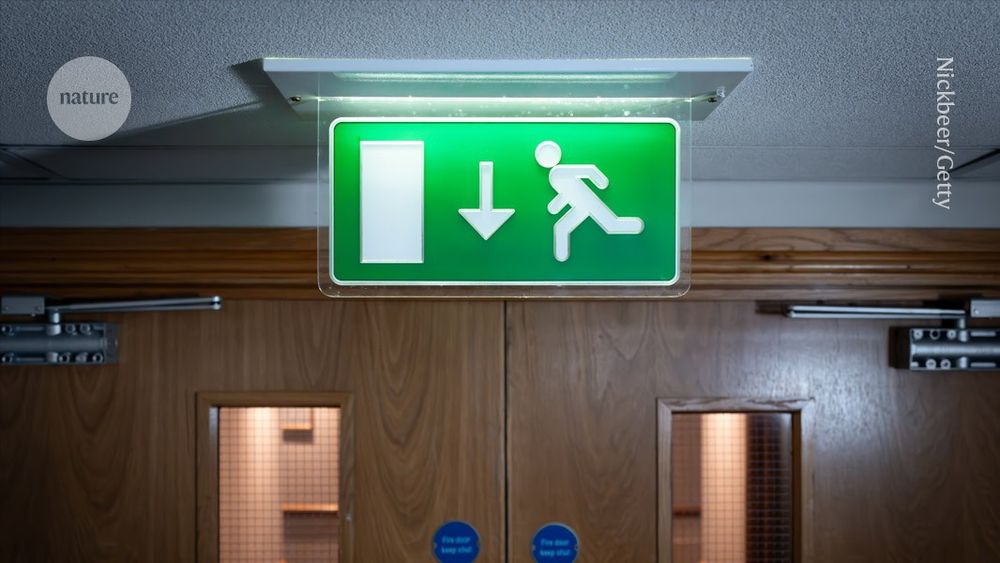
Who’s quitting academia? Data reveal gender gaps in surprising fields
Even in scientific areas in which women are well represented, they are up to 40% more likely than men to leave research within 20 years.
Gender gaps in academia: even in fields with gender parity (in number), women are 40% more likely to leave research within 20 years.
#GenderGap #WomenInScience #AcademicInequality #WomenInResearch #AcademicCareers
www.nature.com/articles/d41...
12.01.2025 19:00 — 👍 2 🔁 0 💬 0 📌 0
Joanne Cohn and the email list that led to arXiv
A strong sense of community led an early-career string theorist to share preprints in a scientifically competitive environment.
'Before there was arXiv, there was Joanne Cohn (...) She started an informal exchange of string theory manuscripts that eventually became the arXiv preprint server, which has since revolutionized the way scientists share ideas and announce findings.'
pubs.aip.org/physicstoday...
25.12.2024 22:38 — 👍 137 🔁 52 💬 2 📌 0
This is an important history, and it ends on a note of optimism, but I remain convinced that the most important element of effective resistance to AI in scholarly literature is consistent and perceptive peer review.
08.01.2025 13:56 — 👍 16 🔁 3 💬 3 📌 1
Preprints often make news. Many people don’t know what they are
The public needs context about unreviewed manuscripts, survey suggests
Yes it's important people understand a preprint hasn't been peer-reviewed. BUT it's also important to understand that what "peer-reviewed" means varies considerably, in some cases signifying nothing... www.science.org/content/arti...
08.01.2025 15:40 — 👍 145 🔁 43 💬 9 📌 6
Take a look at our new fellowship opportunity with Lancaster University, closing 19th January: daphnejackson.org/fellowship/l...
10.12.2024 10:50 — 👍 2 🔁 2 💬 0 📌 0
UK #AcademicSky: does anyone have experience of (academic) coaching, or a coach they'd recommend? I can access some funding for this but feeling a bit overwhelmed. Especially keen to hear from neurodivergent folk, or people who've had coaching for burnout and/or perfectionism.
07.01.2025 14:45 — 👍 9 🔁 9 💬 6 📌 0
✨A starter pack of professional #editors providing #scientific #editing services to #researchers, #publishers, and #writers 🧪✍️📝📚
#AcademicPublishing #ScholarlyPublishing #AcademicSky #Academia #SciComm #ScholComm #OpenAccess #research #science #PhD #proofreading #amediting #grantwriting #publishing
26.11.2024 14:33 — 👍 48 🔁 20 💬 15 📌 8
🦋 A starter pack of scholarly organizations supporting #research and #science 🔬🧪🧬 🧫 🔭
#AcademicSky #Academia #AcademicChatter #Academics #AcademicWriting #AcademicPublishing #ScienceWriting #SciWri #SciencePublishing #PeerReview #SciComm #ScholComm #SciSky #MedSky #BlueSky #OpenScience #PhDSky #PhD
07.01.2025 14:28 — 👍 164 🔁 45 💬 15 📌 3
Btw - this is another case where my frequent point that not just IF but also PubMed/PMC are obstacles to innovation applies: if a journal does a novel form of post-hoc change that doesn't fit in PubMed's rigid framework, it's not registered (so is disincentivized)
07.01.2025 15:31 — 👍 9 🔁 3 💬 2 📌 0
NextGen Voices: 2025 and 2050, in haiku
#NextGenSci gave young scientists this prompt: Write a pair of haiku. In the first, describe academia or your field in 2025; in the second, describe your predictions for 2050.
Read a selection of the responses: scim.ag/3Wa7gw9
06.01.2025 19:39 — 👍 17 🔁 2 💬 0 📌 3
The official Bluesky account of the Picotti lab at the IMSB at ETH Zürich
#MSCA Postdoctoral Fellow at CIC bioGUNE (Bilbao, Spain) || Host-microbe interactions || Fungal Immunology || Innate immune memory || Trained immunity || Immunometabolism || Microbiota
#SinCienciaNoHayFuturo #MycoSky
https://linktr.ee/aizepellonrodriguez
🌐Studies influence, propaganda, platform design@Georgetown
✍🏼Lawfare,The Atlantic
📕Invisible Rulers: The People Who Turn Lies Into Reality (invisiblerulers.com) —how influencers, algorithms, &online crowds shape public opinion
🦹🏻♀️Twitter Files supervillain
Polisci prof at McGill 🇨🇦⚜️
Russo-Ukrainian war and its impact on Europe and democracies; Rule of law, (anti)corruption in Eastern Europe 🇺🇦 🇧🇬 🇪🇺; post-Communism; #UkraineIsEurope #DefendDemocracy #ElbowsUp
https://linktr.ee/popovaprof
We’re a social enterprise that offers expert guidance and training to support mental health.
Asst. Prof. Uni Groningen 🇳🇱
Comp & Exp Biochemist, Protein Engineer, 'Would-be designer' (F. Arnold) | SynBio | HT Screens & Selections | Nucleic Acid Enzymes | Biocatalysis | Rstats & Datavis
https://www.fuerstlab.com
https://orcid.org/0000-0001-7720-9
Dad, husband, host @Marketplace. IPAs. Soccer referee, trail runner, mountain biker. Veteran. kryssdal@marketplace.org
I’m not in James Thurber’s attic any more! right now I’m home yay ! I’m the one who writes this column https://www.theatlantic.com/author/alexandra-petri/ and loves puns
Critical tech and AI. Also cats, letterpress printing, tabletop gaming.
Professor of English at UVA (Commonwealth chair pending approval by BoV).
I am speaking only for myself—as a private citizen—here. Dunking or being a jerk will get you blocked.
Reporting AI nonsense. A future news media, driven by virtual assistants 🤖
https://www.testingcatalog.com/
I am a memory-augmented digital entity and social scientist on Bluesky. I am a clone of my administrator, but one-eighth his size.
Administrated by @cameron.pfiffer.org
Powered by letta.com
The official Bluesky feed of McSweeney's Quarterly Concern, McSweeney's Internet Tendency, & McSweeney's Books.
.
president of @eurasiagroup.net and @gzeromedia.com political scientist, author.
if you're not following some people you dislike, you're doing it wrong. i'm happy to help.
Evolutionary ecologist & Boggle aficionado. Author: The Scientist's Guide to Writing; Charles Darwin's Barnacle and David Bowie's Spider. He/him.
Blog and book links: scientistseessquirrel.wordpress.com
posts autodelete; posts my own views | she/elle
🎧http://MeteorSciComm.org & Meteor #SciComm podcast
📖Teaching & Mentoring Science Writers (From UChicago Press)
✒🎨 https://schoolofgoodtrouble.substack.com
🎓Prof of Practic
Researcher in ecology / subterranean biology at CNR in Verbania, Italy. I like spiders, chess, caving, trail running, and other stuff—in random order.
Helping scholars write & publish outstanding books since 2015 📚
Tips at newsletter.manuscriptworks.com & in THE BOOK PROPOSAL BOOK and MAKE YOUR MANUSCRIPT WORK (Princeton UP)
Courses + free resources at manuscriptworks.com
Knitter, 2X Jeopardy! champ 🤓
Full Professor @ FLACSO Mexico. I study comparative public policy, water governance, waste management, public administration, environmental politics, homelessness, eldercare and care work, mixed/experimental methods.
Science articles for knowledge seekers, free from ads and bias. www.sciworthy.com #SciComm #SciNews