Recent work on (re-)dating the Dead Sea Scrolls strikes me as potentially significant (if correct).
Grateful for info on what the general response to all this has been and/or engagement with it.
journals.plos.org/plosone/arti...

@jamesbejon.bsky.social
Recent work on (re-)dating the Dead Sea Scrolls strikes me as potentially significant (if correct).
Grateful for info on what the general response to all this has been and/or engagement with it.
journals.plos.org/plosone/arti...
P.S. Could someone at @tetraseminar.bsky.social tell me how to register for this. I tried emailing Dr. Hilkens but my email bounced back.
03.01.2026 10:34 — 👍 1 🔁 0 💬 1 📌 0
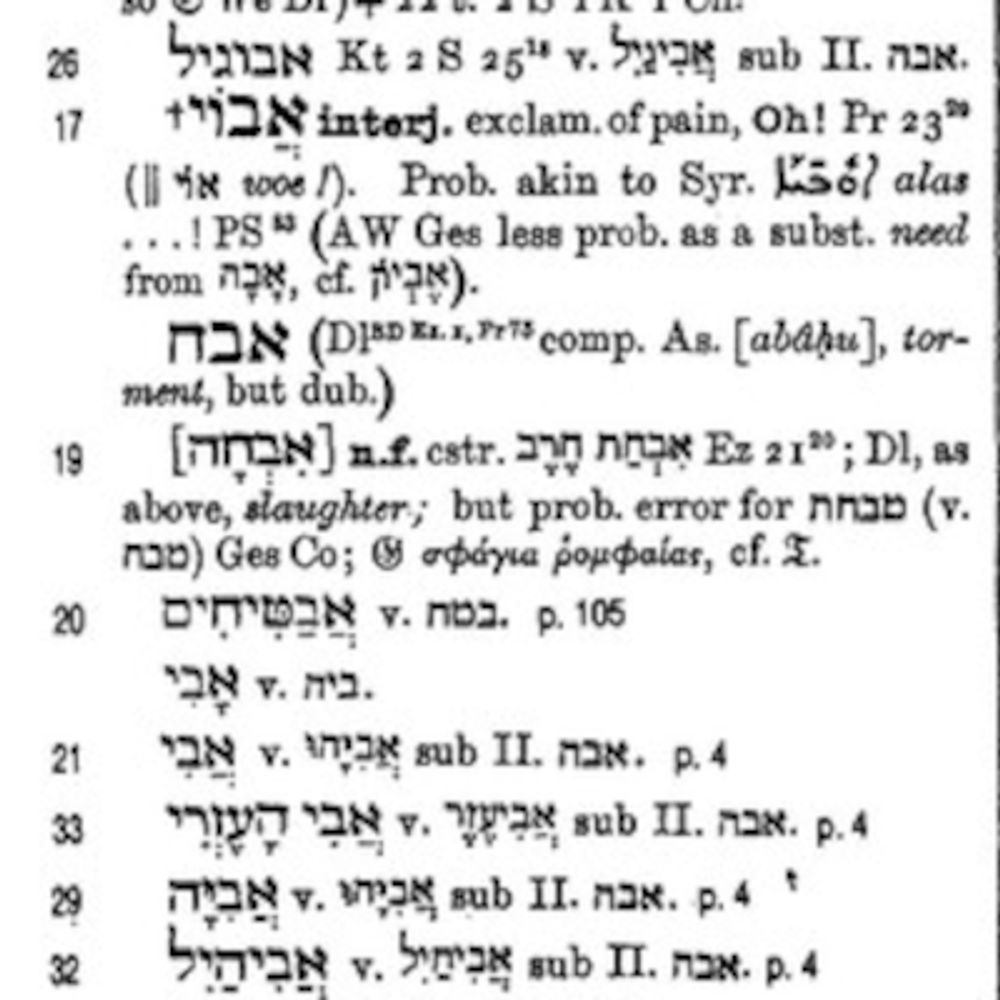
The whole thing baffles me. E.g., see the attached entry from the CAL.
02.01.2026 14:21 — 👍 2 🔁 1 💬 0 📌 0I imagine that this will be superb. Roman Gundacker is an expert on this.
02.01.2026 14:12 — 👍 1 🔁 0 💬 0 📌 0
#OCIANA #Top_10_in_2025 : The #OCIANA team inserted more than 1500 new inscriptions into the database. Here are our top ten (with a three-way tie at #10) of the year, just in case you missed them! From Nabonidus to Dahr, let us known what you think!
www.academia.edu/145461821/OC...
Meanwhile, why would we think that mabbūl is a loan? Is it attested in Akkadian?
15.12.2025 16:05 — 👍 1 🔁 0 💬 1 📌 0😀
I wondered about both of these.
We have kufr as ‘pitch’ in Arabic, and no clear cognates in Aramaic aside from in later Jewish Aramaic (and/or in connection with Genesis). Does this have to be a loan?

The main one was below.
He spoke about the loanwords somewhere else, not sure exactly where now.
www.youtube.com/watch?v=_bBR...
Dear All.
I listened to an interview with Irving Finkel over the weekend.
He claimed that the Biblical Flood narrative contains quite a few Akkadian loanwords. Any ideas what any of them might be? Or whether anyone’s written stuff about them?

Review of Schneider's "The Semitic Sibilants", by yours truly:
academic.oup.com/jss/advance-...
Are you able to send me a pdf? (Have emailed you just now.)
09.12.2025 18:03 — 👍 0 🔁 0 💬 0 📌 0
If מִשְׁאֶ֫רֶת (Exod. and Deut. only) is a kneading trough, it’d be nice if it was cognate with שְׂאֹר (‘leaven’). But what’s happened to its sibilant?
Loaned into Egyptian (where its lateral fricative went) & borrowed back? Feels a bit far-fetched, not least because it’s not attested in Egyptian (afaik).
Related to Geez maʕār (*maʕar) and Amharic mar = ‘honey, honeycomb’?
03.12.2025 17:39 — 👍 0 🔁 0 💬 0 📌 0
Not sure how much weight I can reasonably put on this text:
03.12.2025 14:10 — 👍 2 🔁 0 💬 0 📌 0As a little treat for you, here's an #ArabicBible Advent calendar 🧵. Every day I'll post a verse from the Christmas story from one of the oldest Arabic Gospel lectionaries, Sinai ar. 72, dated 897 CE (and a few other texts in between). [2nd attempt, I won't be offended if you point out my nonsense.]
02.12.2025 14:20 — 👍 73 🔁 32 💬 2 📌 5Thanks.
Do you have a sense of how exceptional it is? Checking a few at random, I have דְּבֵלָה yielding דְּבֶלֶת תְּאֵנִים, and שְׂרֵפָה yielding שְׂרֵפַת הַפָּרָה.
How come the construct of נְבֵלָה (‘carcass’) is נִבְלַת, and, possibly, of לְבֵנָה is לִבְנַת? I wondered if the constructs preserved an older form, since בְּרֵכָה corresponds to *birkat (e.g., بِرْكَة), but then בְּרֵכָה simply becomes בְּרֵכַת, so I don’t know.
02.12.2025 17:06 — 👍 1 🔁 0 💬 1 📌 0Yes, I’ve often suspected that. Those three root consonants seem particularly conducive to metathesis. I have no idea why.
24.11.2025 09:41 — 👍 0 🔁 0 💬 1 📌 0Probably true. But I still quite like it.
23.11.2025 23:47 — 👍 2 🔁 0 💬 1 📌 0Egyptian ḥmꜣ.t (‘salt’) as a cognate of the West Semitic *milḥ?
Not dissimilar metathesis seems to be reflected in the borrowing of West Semitic *rumḥ (‘spear’) as *murḥ (hence Coptic ⲙⲉⲣ(ⲉ)ϩ).


#Updated on #OCIANA - The first Ancient South Arabian inscription from the Ḥarrah, from Zalaf, Syria! Was it carved by a North Arabian who learned the script or a wandering South Arabian trader? Impossible to know! But its irregularities tell a story.
Find more: ociana.osu.edu/inscriptions...
Egyptian ḥmꜣ.t (‘salt’) as a cognate of the West Semitic *milḥ?
Not dissimilar metathesis seems to be reflected in the borrowing of West Semitic *rumḥ (‘spear’) as *murḥ (hence Coptic ⲙⲉⲣ(ⲉ)ϩ).

A neat Masoretic note on II Sam. 13.
Something like, שׁממה [occurs] three times (ג̇), twice defectively (ב̇ חָסֵר) and once fully (וחד מָלֵא). [Ordered by appearance], [the first is] ותשב תמר ושממה, [the second, which is plene]כי־רבים בני־שוממה מבני, [and the third] נתנני שממה.
Ah yes, true.
15.11.2025 22:02 — 👍 1 🔁 0 💬 0 📌 0If I heard this word, I’d have no idea what it meant.
15.11.2025 21:34 — 👍 1 🔁 0 💬 0 📌 0
Huehnergard’s excellent article on Hebrew nominal patterns classifies כֻּתֹּ֫נֶת as a *quttul-t form, which it may be,
but is it better explained in light of the tendency for pre-tonic *u to prompt gemination (עָמוֹק/עֲמֻקִּים), since כֻּתֹּ֫נֶת isn’t geminated in (unstressed) construct forms (e.g., כְּתֹנֶת הַפַּסִּים)?

Idea for paper. List various Modern South Arabian borrowings from Arabic where a lateral fricative is effectively restored, such as in the case of šəmāl ⇒ śēməl(i) = ‘inland/north’.
Entitle the paper ‘The Imputation of Śin’.
Oh, I see. Sorry, I misread your message.
That’s just the vowel, right? i.e., ma-.
This reminds me of a paper I recently read about Chadic (iirc) diminutives formed via reduplication, which are typically used by mothers speaking to their children but not otherwise.
12.11.2025 13:51 — 👍 1 🔁 0 💬 0 📌 0
Idea for paper. List various Modern South Arabian borrowings from Arabic where a lateral fricative is effectively restored, such as in the case of šəmāl ⇒ śēməl(i) = ‘inland/north’.
Entitle the paper ‘The Imputation of Śin’.