Great to read about this - I always enjoyed talking with Tarje at college and how enthusiastic he can be. Delighted that this project has resulted in such an important programme
05.12.2025 21:48 — 👍 0 🔁 0 💬 0 📌 0

Moon halo (22°) tonight in UK. Apparently this illusion is created by millions of hexagonal ice crystals in upper atmosphere
03.12.2025 21:38 — 👍 0 🔁 0 💬 0 📌 0

We conclude that selective accumulation of ptau in the anterodorsal thalamic nucleus disrupts head direction signaling, leading a change in orienting behaviour during initial spatial learning.
Dysfunction of thalamic head direction cells may be a 'preclinical' cognitive biomarker of dementia
21.11.2025 23:59 — 👍 2 🔁 0 💬 0 📌 0
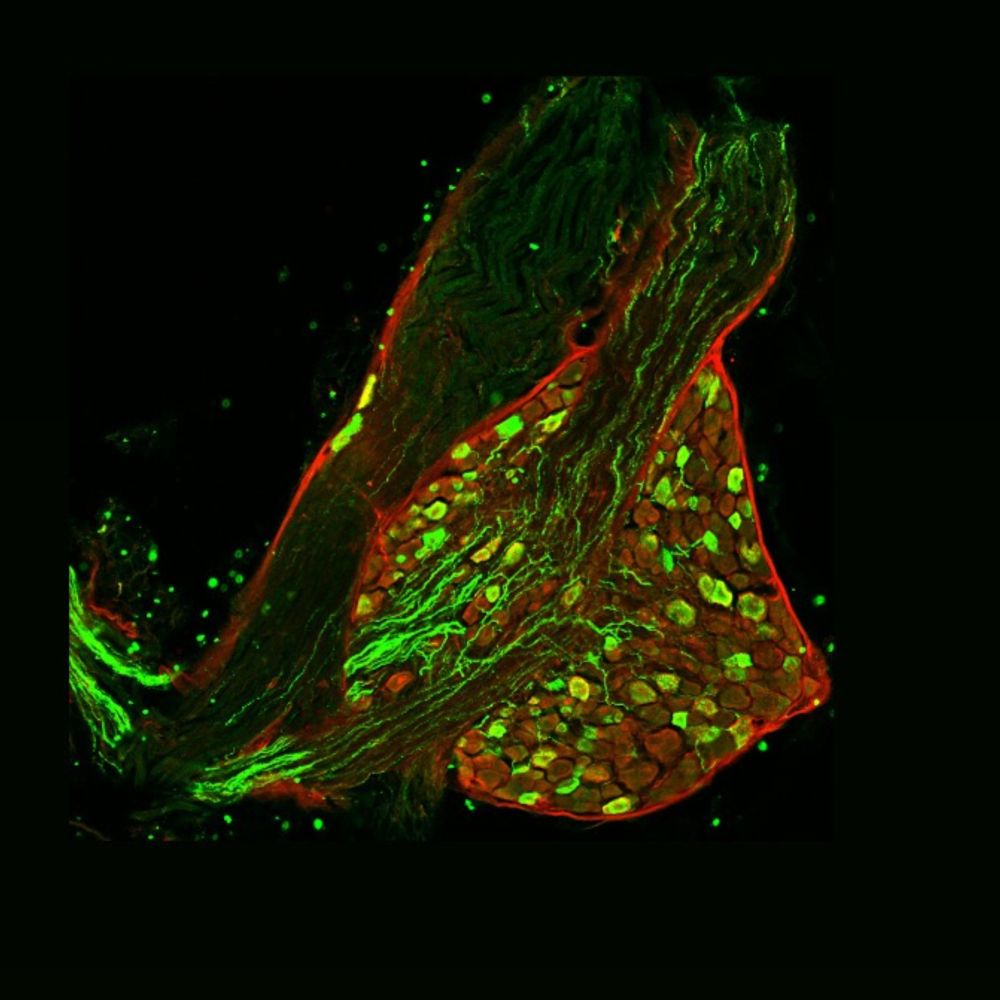
We expressed mutant human tau in the anterodorsal nucleus of the mouse thalamus, which contains a high density of head direction cells.
These mice exhibited spatial disorientation during initial spatial learning, which could be explained by lower directionality of cells recorded in this nucleus
21.11.2025 23:59 — 👍 0 🔁 0 💬 1 📌 0

Title page of our paper
***Publication alert***
"Pathological tau alters head direction signaling and induces spatial orientation"
www.cell.com/cell-reports...
21.11.2025 23:59 — 👍 13 🔁 4 💬 1 📌 0
Reposting some comments via the Science Media Centre on the UK government's ambition of phasing out animal testing in the UK.
I think it is important for scientists to explain to policymakers and the public about pharmacodynamics and pharmacokinetics - complex interactions between drugs and the body
11.11.2025 22:48 — 👍 0 🔁 0 💬 0 📌 0
This is really interesting. These bacteria form biofilms, which are essentially amyloids
24.10.2025 17:25 — 👍 2 🔁 0 💬 0 📌 0
This is a strange and surprising finding. Need to study the electron micrographs in the suppl material carefully (without the colourful shading) to learn more. Note that neurons can have cilia, I wonder if this is what they have detected e.g. recent review here:
doi.org/10.1016/j.tc...
08.10.2025 08:21 — 👍 2 🔁 0 💬 0 📌 0
After many months of work on the revision, we have a paper accepted today (pending minor revisions). Also had a paper rejected at the same time (but going to ignore this email for today!)
02.10.2025 18:51 — 👍 5 🔁 0 💬 0 📌 0

BBC Inside Science - The science behind autism - BBC Sounds
What do we know about the causes of autism?
What do we know about the causes of #autism? @kingscollegelondon.bsky.social Professor Laura Andreae speaks with BBC Radio 4's Inside Science about the genetic factors behind autism, particularly around twin studies.
🔊 Listen now: www.bbc.co.uk/sounds/play/...
26.09.2025 10:49 — 👍 20 🔁 10 💬 1 📌 1
This is incredible news!
It is also a good example of why it is so important to identify and define the most vulnerable brain regions and cell types for a given disease. In this case it is medium spiny neurons of the striatum.
24.09.2025 18:08 — 👍 0 🔁 0 💬 0 📌 0
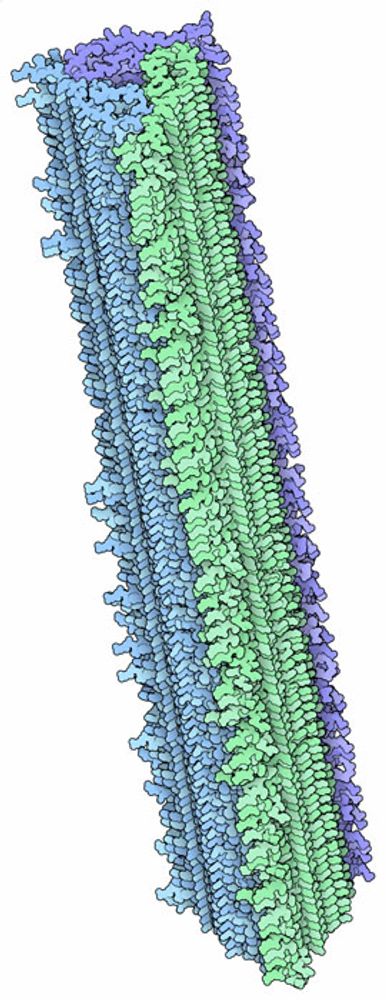
PDB101: Molecule of the Month: Amyloids
Alzheimer's disease and prion diseases are linked to unnatural aggregation of proteins into amyloid fibrils.
September 21 is #WorldAlzheimersDay
Alzheimer's disease and prion diseases are linked to unnatural aggregation of proteins into amyloid fibrils.
19.09.2025 16:12 — 👍 9 🔁 4 💬 0 📌 0
Thanks Abhilasha! And still using the same amplifiers. ADn HD cells also have a distinctive sound that is different from neurons in AV, DG, LD, etc.
17.09.2025 06:21 — 👍 1 🔁 0 💬 0 📌 0
We suggest this ‘HD hub’ consists of different cell types and circuits, acting as ‘parallel channels’ coordinating sensory-modulated updates of the head direction for spatial navigation.
11/11
15.09.2025 15:13 — 👍 3 🔁 0 💬 0 📌 0

Type III HD cells were highly unusual as they avoided the TRN and projected ventrally to the cortex. These cells had distinctive twisted dendrites, were CR+, and were located in the dorsomedial ADn.
10/11
15.09.2025 15:13 — 👍 2 🔁 0 💬 1 📌 0

We found 3 types of projection patterns: type I HD cells formed collaterals in the thalamic reticular nucleus (TRN) and cortex, projecting via the striatum and cingulum bundle. Type II HD cells additionally innervated the dorsomedial striatum.
9/11
15.09.2025 15:13 — 👍 3 🔁 0 💬 1 📌 0

We found a mediolateral gradient of calretinin (CR)-expressing HD cells, with CR+ cells tending to have narrower HD tuning widths, lower firing rates, and produced fewer spikes during rebound bursts compared to CR- cells.
8/11
15.09.2025 15:13 — 👍 2 🔁 0 💬 1 📌 0
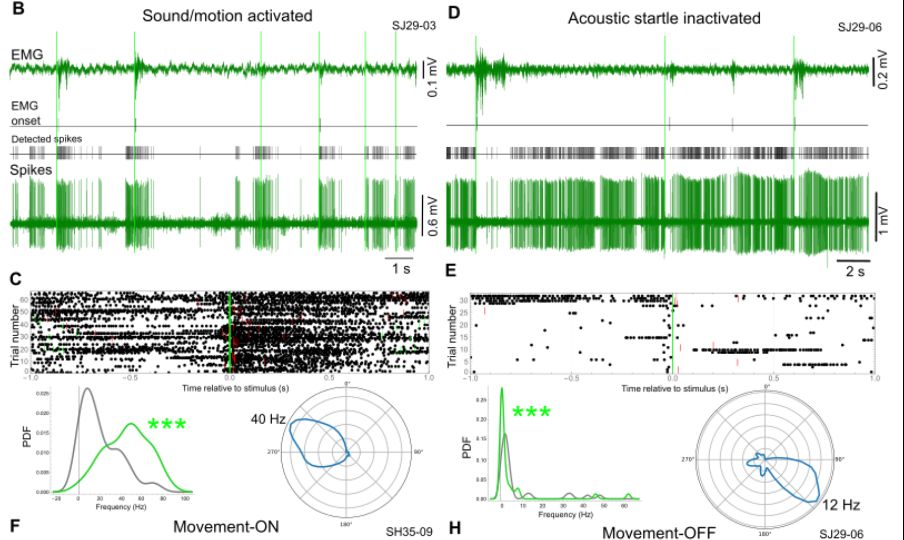
We confirmed that HD cells could respond to sound stimuli, but found that not all cells were responsive, suggesting cell-type-specificity. Also, some sound-responsive cells were ‘boosted’ by muscle twitches. Other HD cells strongly increased or decreased firing during running periods.
7/11
15.09.2025 15:13 — 👍 1 🔁 0 💬 1 📌 0

We recorded HD cells with a range of short-latency responses to light pulses e.g. ‘ON inhibition OFF excitation’, or ‘ON excitation’. We suggest these patterns could help anchor various allocentric cues.
6/11
15.09.2025 15:13 — 👍 2 🔁 0 💬 1 📌 0

We used single neuron extracellular recordings and juxtacellular labelling to define the firing patterns, neurochemical profiles, and connectivity of individual HD cells in the ADn of awake mice.
5/11
15.09.2025 15:13 — 👍 5 🔁 0 💬 1 📌 1
Interestingly, some but not all HD cells stop firing when the animal is held by the experimenter (Taube, J Neurosci 1995) and others increase firing in response to sensory stimuli (Blanco-Hernandez et al, Nat Neuro 2024). This hints at some diversity of thalamic HD cells.
4/11
15.09.2025 15:13 — 👍 1 🔁 0 💬 1 📌 0
A high density of HD cells are found in the anterodorsal nucleus of the thalamus (ADn). The central dogma is that they act as a single functional unit for routing HD signals to the cortex.
3/11
15.09.2025 15:13 — 👍 2 🔁 0 💬 1 📌 0

Have you ever wondered how you know which direction you are facing? This is to do with specialised neurons in the brain known as head direction (HD) cells, which are fundamental for spatial navigation.
(Image from Taube 2024 doi.org/10.1002/hipo...)
2/11
15.09.2025 15:13 — 👍 1 🔁 0 💬 1 📌 0
Asst. Prof. at the University of Bonn in Germany. Research focus: neural basis of navigation and memory in humans
Neuroscience PhD student . . . 🧠🧐. . .
Alvarez Lab 🐭 & Sober Lab 🐔 :: he/him
PhD student @edinburgh-uni.bsky.social
NeuroRSE intern @flatironinstitute.org
NeuroAI intern @cshlnews.bsky.social
Trying to understand spatial computation and memory in biological neural networks.
I run a lot. wulfdewolf.github.io
@Penn Prof, deep learning, brains, #causality, rigor, http://neuromatch.io, Transdisciplinary optimist, Dad, Loves outdoors, 🦖 , c4r.io
Neuroscientist at ESPCI Paris, Professor of Neurobiology, studying memory and circuits. Genuinely curious about people's behavior.
veterelab.weebly.com
The natural home for graduates at Oxford University
Linton Rd, Oxford, Oxfordshire OX2 6UD
Professor at #EPFL - #RNAVelocity inventor - Laboratory of Brain Development and Biological Data Science. Single-cell and spatial biologist studying brain development and lipids. #ERCStg investigator
Oxford University's Medical Sciences Division is an internationally recognised centre of excellence for biomedical and clinical research and teaching, comprised of 16 core departments and the School of Medicine and Biomedical Sciences. www.medsci.ox.ac.uk
Professor of Cognitive Neuroscience in the Department of Psychology, and Head of the School of Biological Sciences, University of Cambridge. Husband, father of two boys and one dog, half-pint rower and ex-cricketer
www.memlab.psychol.cam.ac.uk
Dementia Research Team at the Centre for Preventive Neurology QMUL (Queen Mary University of London)
Psychiatrist & Neuroscientist
Postdoc in the Hayden lab at Baylor College of Medicine studying neural computations of natural language & communication in humans. Sister to someone with autism. F32 NIDCD Fellow | Autism Research Institute funded | she/her. melissafranch.com
Cerebrovascular physiologist at Université laval, Researcher at IUCPQ, Associate Editor: J Appl Physiol; Editorial boards: AJP Regu, Phys Rep, Auton Neurosci
Wellcome CDA fellow at University of Manchester | Postdoc at Sheffield University 🏢, interested in neurovascular coupling in health, ageing and neurodegeneration 🧠🔬
Computational Neuroscience Ph.D. Student @ Boston University. Labs of Dr. Brian DePasquale, Ben Scott, & Steve Ramirez. #JuliaLang stan.
Cognitive neuroscientist studying memory (lab: http://www.kwoklab.org/), associate prof. Duke Kunshan University.
twitter: https://twitter.com/Kwokszechai
🧠🔬 Neuroscientist | Research Fellow @Exeter
💥 Traumatic Brain Injury | 🧪 Immunometabolism
🦠 Microglia, Astrocytes & Brain Energy
🏉 Sport-Related Head Injuries | 🚀 Researching Neurodegeneration
📍 UK | 🏈 American Footballer and current GB Lion
Wellcome Trust PhD student in Translational Neuroscience based at UKDRI, Edinburgh University.
Neuroscientist investigating the role of cerebral cortex and thalamus in behavior
brunolab.org
Neuroimaging, Cognition, Epilepsy | Montreal Neurological Institute, McGill University