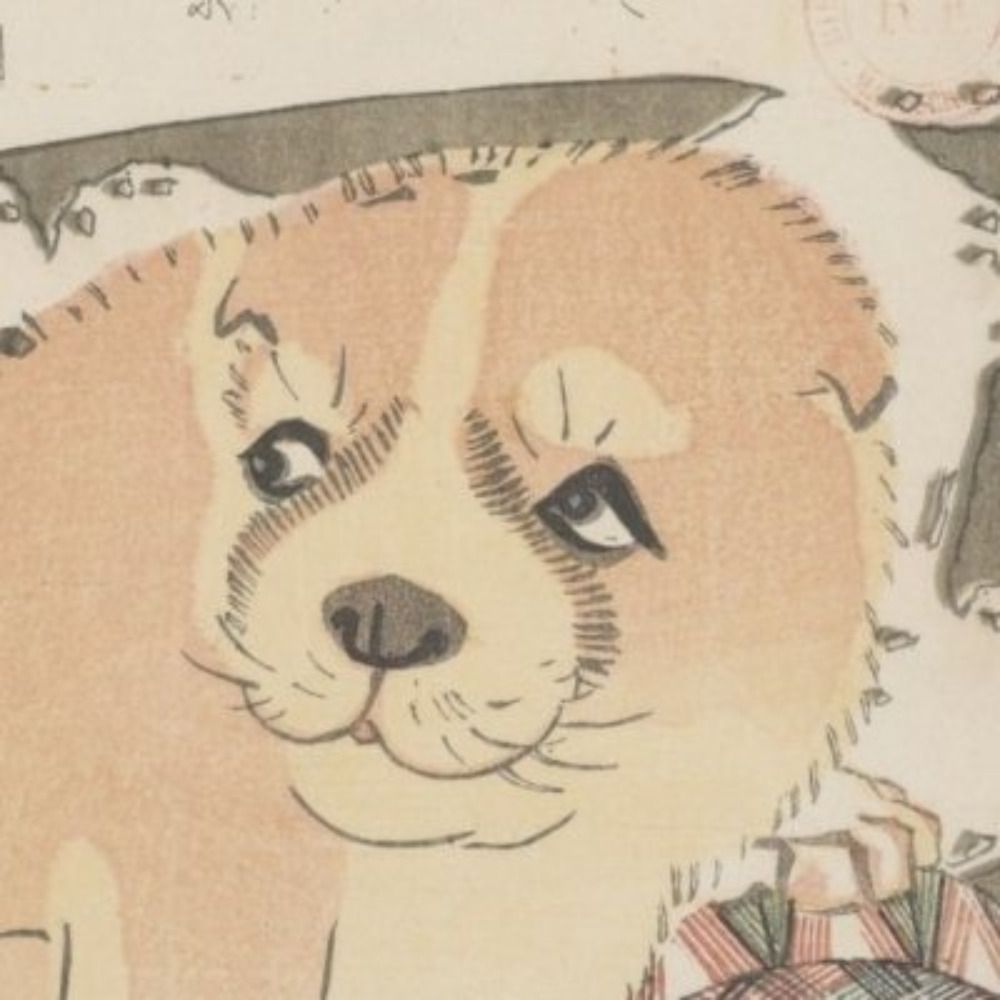
(試しに DeepSeek-OCR に江戸期の康熙字典の版本を読ませてみたが、訓点無視して漢文読んでくれるというか、NDL古典籍OCRと比べてこいつは古典中国語を知ってるという感じがする(NDL古典籍OCRが日本語知ってる感じがするのと同様に)。ただ、割注はダメっぽい。テキストの画像化というのが効いてるかどうかは判らないが、画像の傾きにはシビアかもしれない。やっぱ、漢文のOCRには古典中国語の言語モデルが重要ってことかな?)
23.11.2025 03:20 — 👍 2 🔁 2 💬 0 📌 0
![Lee, Ki-Moon. (2025). 어원 사전 [Etymological dictionary [of Korean]]. Seoul: Kiphun Ppwuli.](https://cdn.bsky.app/img/feed_thumbnail/plain/did:plc:hcuh3re4qud3ihym3wbnp5uu/bafkreibwm42qywrb76naaj4r2ij5at2q64ng63slpllokgmci47tgrbb4e@jpeg)
Lee, Ki-Moon. (2025). 어원 사전 [Etymological dictionary [of Korean]]. Seoul: Kiphun Ppwuli.
Late Prof. Lee, Ki-Moon's Etymological Dictionary [of Korean] has finally left the press. It contains upwards of 3,300 entries, spanning over 1,300 pages.
19.11.2025 14:32 — 👍 5 🔁 4 💬 0 📌 0
'마ᄃᆡ'와 '마노라'의 어원 생각
blog.xn--gt1b.xyz/jekyll/updat...
17.11.2025 07:18 — 👍 1 🔁 3 💬 0 📌 0

동아시아의 한자 | 동아시아 한국학 번역총서 11 | 제프 핸델
중국 주변국에서 한자를 차용하고 변용하여 중국어 외의 언어를 표기하는 방식이 각 언어의 유형론적 특징에 깊은 영향을 받는다는 것을 주된 내용으로 담고 있다. 거시적 관점을 요구하는 이 작업은 한자권 전역의 ...
The Korean-language translation of my 2019 book Sinography has just been published! This is not an easy book to translate; I'm grateful to the team of scholars, led by Prof. Lee Yong (이용 교수님) who worked on it.
The Korean title is: 동아시아의 한자 −중국 문자의 차용과 변용−
www.aladin.co.kr/shop/wproduc...
25.08.2025 23:34 — 👍 16 🔁 9 💬 2 📌 0
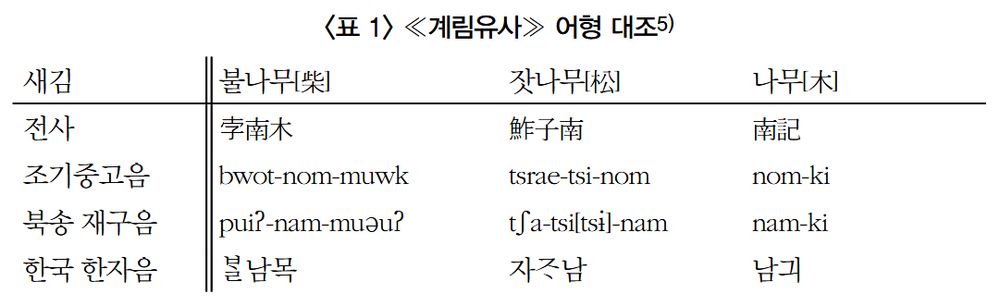
Table of Old Korean 'tree' words in the Jīlín lèishì (鷄林類事, early 12c.); original transcriptions (using Chinese characters) are given alongside their Early Middle Chinese, reconstructed North Song Chinese, and Sino-Korean readings.
My first paper, "On the origin of Korean namwu 'tree'" [in Korean], was published in Kwukehak 114. In it, I explore historical, dialectal, and toponymic evidence to propose a new proto-form for 'tree', involving partial borrowing from proto-Japonic. Read it below:
journal.kstudy.com/service-jour...
02.07.2025 14:58 — 👍 5 🔁 3 💬 0 📌 0