Pregnancy in space: studying stem cells in zero gravity may determine whether it’s safe.
#Space #Pregnancy
#Mars #Placenta
theconversation.com/pregnancy-in...
@karteris.bsky.social
Professor, Bioscientist. Interested in cancer biomarker development, liquid biopsies, and space exploration. Views are of my own. #ovariancancer #CTCs #liquidbiopsy #microgravity #endometrialcancer 🩸🧬🔬🩺🛰🚀
Pregnancy in space: studying stem cells in zero gravity may determine whether it’s safe.
#Space #Pregnancy
#Mars #Placenta
theconversation.com/pregnancy-in...
"The UK is so vulnerable to being influenced by money coming in from people like Musk into our political system because we don't have any checks and balances."
Former Green Party leader Caroline Lucas discusses Musk and British politics.
#Newsnight

Will the future of lung cancer biomarkers be based on deep learning and #AI? Deep learning model predicts response to immunotherapy in NSCLC from one histology slide and performed better than TMB, PD-L1. Report now in JAMA Oncology.
jamanetwork.com/journals/jam...

What to expect in science this year: A new wave of obesity drugs, a multitude of space missions and concern over climate-action policies. 🧪
www.nature.com/articles/d41...

From deciphering burnt Roman scrolls to reading crumbling cuneiform tablets, neural networks could give researchers more data than they’ve had in centuries.
www.nature.com/articles/d41... 🧪

Wishing everyone a Happy, Prosperous, and Productive New Year! Here's to new research opportunities ahead!
#HappyNewYear #2025
Are you a Chinese student? Then you are eligible for a Brunel University of London and the China Scholarship Council PhD Scholarship!
伦敦布鲁内尔大学和中国国家留学基金委博士奖学金项目 2025/26
该奖学金项目为成绩优秀的中国学生提供在伦敦布鲁内尔大学攻读博士学位的机会。该奖学金由中国国家留学基金委 (CSC) 和伦敦布鲁内尔大学共同资助。🎓
Email mkarteris@gmail.com for more details.
#PhD #China

Wishing you all the best for the Holiday Season 🎄☃️🥂
22.12.2024 22:38 — 👍 1 🔁 0 💬 0 📌 0Network analysis of TCGA and GTEx gene expression datasets for identification of trait-associated biomarkers in human cancer - PMC
pmc.ncbi.nlm.nih.gov/articles/PM...

Infection with #SARSCoV2 has highlighted how altered endothelial functions contribute to multiorgan health effects during the acute phase of #COVID19 and potentially to the longer-term consequences associated with #LongCovid.
Learn more in a new #SciencePerspective:

Ho ho ho 🎅
17.12.2024 17:08 — 👍 0 🔁 0 💬 0 📌 0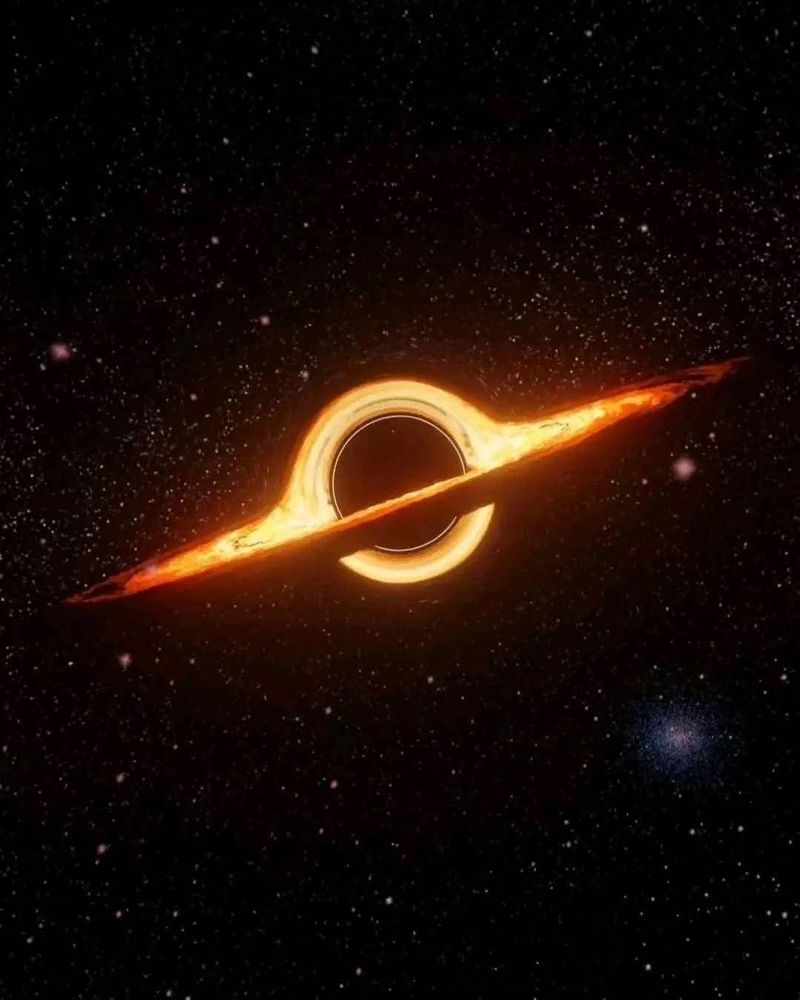
Black Hole
06.12.2024 01:33 — 👍 6785 🔁 437 💬 103 📌 39A scientist new to Bluesky? @steveharoz.com and @markrubin.bsky.social have put together some great resources to get you started!
05.12.2024 17:31 — 👍 56 🔁 34 💬 3 📌 0

The abstract - The paper
05.12.2024 22:04 — 👍 1 🔁 0 💬 0 📌 0
Our latest review entitled: "The Road to Malignant Transformation from Endometriosis to Endometriosis-Associated Ovarian Cancers (EAOCs): An mTOR-Centred Review" is out! #mTOR
pubmed.ncbi.nlm.nih.gov/38893278/

Clearest image ever taken of Heart Nebula, located 7500 light years away from us
05.12.2024 12:34 — 👍 6230 🔁 512 💬 120 📌 35
Credit: NASA, ESA, CSA, STScI Image of a galaxy on the black background of space. The galaxy is a very oblong, blue disk that extends from left to right at an angle (from about 10 o’clock to 5 o’clock). The galaxy has a small bright core at the centre. There is an inner disk that is clearer, with speckles of stars scattered throughout. The outer disk of the galaxy is whiteish-blue, and clumpy, like clouds in the sky. There are different coloured dots, distant galaxies, speckled among the black background of space surrounding the galaxy.
The JWST recently got up-close and personal with the Sombrero Galaxy, located around 30 million light-years away. 🌌
This new image was taken using its MIRI instrument, for which the UK led the design and build. 🛰️
Read more about the UK's involvement in JWST 👉 www.gov.uk/government/c...

I'm about 3 months into my secondment to Parliament and here's the first solid evidence of me having done something (although Nuala wrote almost all it... I argued about small, inconsequential details in the comments... so playing to my strengths 😂) commonslibrary.parliament.uk/research-bri...
05.12.2024 15:21 — 👍 1 🔁 1 💬 0 📌 0
Liquid biopsies. Dr Klaus Pantel of Hamburg Germany studies mets and micro mets #AACR18
15.04.2018 15:13 — 👍 2 🔁 1 💬 0 📌 0
Circulating cell-free DNA (cfDNA) liquid biopsies offer a powerful, non-invasive approach for cancer diagnostics, leveraging DNA fragments primarily released during apoptosis. In this process, nucleosome-bound DNA is protected, while linker DNA is cleaved, generating fragments around 166 base pairs. Using droplet digital PCR (ddPCR) on cfDNA samples from 88 breast and colorectal cancer patients, we uncovered highly consistent nucleosome breakpoints across patients, significantly impacting the sensitivity of somatic mutation assays and underscoring the value of precise nucleosome positioning data. Here, we introduce an advanced fragmentomics method with probabilistic nucleosome protection scoring, enabling high-resolution mapping of nucleosome positions and cfDNA breakpoints. Our results reveal that while the 166 bp fragment size is common to both euchromatin and heterochromatin, it masks distinct nucleosome spacing patterns linked to two chromatin fiber conformations, T1 and T2 topoisomers. This insight enhances understanding of chromatin's role in cfDNA fragmentation, advancing diagnostic potential for liquid biopsy assays.

We have generated high-resolution nucleosome maps in paired tumour and normal tissues from the same breast cancer patients using MNase-assisted histone H3 ChIP-seq and compared them with the corresponding cfDNA from blood plasma. This analysis has detected single-nucleosome repositioning at key regulatory regions in a patient-specific manner and common cancer-specific patterns across patients. The nucleosomes gained in tumour versus normal tissue were particularly informative of cancer pathways, with ~ 20-fold enrichment at CpG islands, a large fraction of which marked promoters of genes encoding DNA-binding proteins. The tumour tissues were characterised by a 5–10 bp decrease in the average distance between nucleosomes (nucleosome repeat length, NRL), which is qualitatively similar to the differences between pluripotent and differentiated cells. This effect was correlated with gene activity, differential DNA methylation and changes in local occupancy of linker histone variants H1.4 and H1X. Our study offers a novel resource of high-resolution nucleosome maps in breast cancer patients and reports for the first time the effect of systematic decrease of NRL in paired tumour versus normal breast tissues from the same patient. Our findings provide a new mechanistic understanding of nucleosome repositioning in tumour tissues that can be valuable for patient diagnostics, stratification and monitoring.
Interesting new preprint on nucleosome spacing from cfDNA [Johnston et al., 2024] biorxiv.org/content/10.1.... The authors refer to NRL changes 10n -> 10n-5 bp. Earlier we showed that NRL decreases in cancer more continuously, context-specific [Jacob et al., 2024] link.springer.com/article/10.1...
19.11.2024 12:49 — 👍 15 🔁 3 💬 0 📌 0
From uncovering some of the causes of lung cancer to developing new treatments, our investment in #LungCancer research has led to groundbreaking discoveries 👇 #LungCancerAwarenessMonth news.cancerresearchuk.org/shorthand_st...
27.11.2024 12:06 — 👍 25 🔁 3 💬 1 📌 0