Our paper is finally out in Cognition! 🎉
We introduce the "CLIP task"—a computerized paradigm for measuring numerical bias in adults: when number and physical size both matter, do you spontaneously rely more on numbers or on physical size?

@almogsi.bsky.social
Assistant Professor at Ben-Gurion University. Computional social psychologist. Studying social media, misinformation, polarization and language
Our paper is finally out in Cognition! 🎉
We introduce the "CLIP task"—a computerized paradigm for measuring numerical bias in adults: when number and physical size both matter, do you spontaneously rely more on numbers or on physical size?
If you're a psychologist working with text data in R, this package is for you.
11.11.2025 07:40 — 👍 3 🔁 1 💬 1 📌 0This project wouldn’t have come together without the amazing team -- Tomer Zipori and @louisteitelbaum.bsky.social for the heavy lifting and computational analysis, @lewan.bsky.social for his insight, and @profsanderlinden.bsky.social whose vision made this possible. Truly grateful for this!
28.10.2025 16:20 — 👍 8 🔁 3 💬 0 📌 0An opportunity to work with the best!
28.10.2025 10:08 — 👍 3 🔁 0 💬 0 📌 0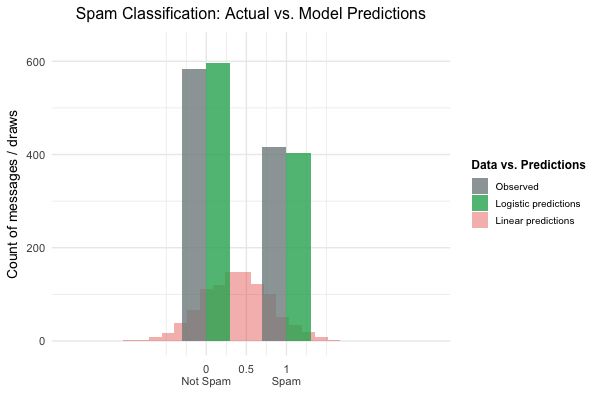
1/3 New post up! 📝 I took the workhorse 🔧 of binary modeling—logistic regression—and gave it a Bayesian tune-up using a Kaggle SMS-spam dataset.
14.07.2025 07:14 — 👍 19 🔁 6 💬 2 📌 2Our new #rstats embeddings tutorial is now published in Psychological Methods! Led by the one and only @louisteitelbaum.bsky.social
24.06.2025 21:10 — 👍 4 🔁 1 💬 0 📌 0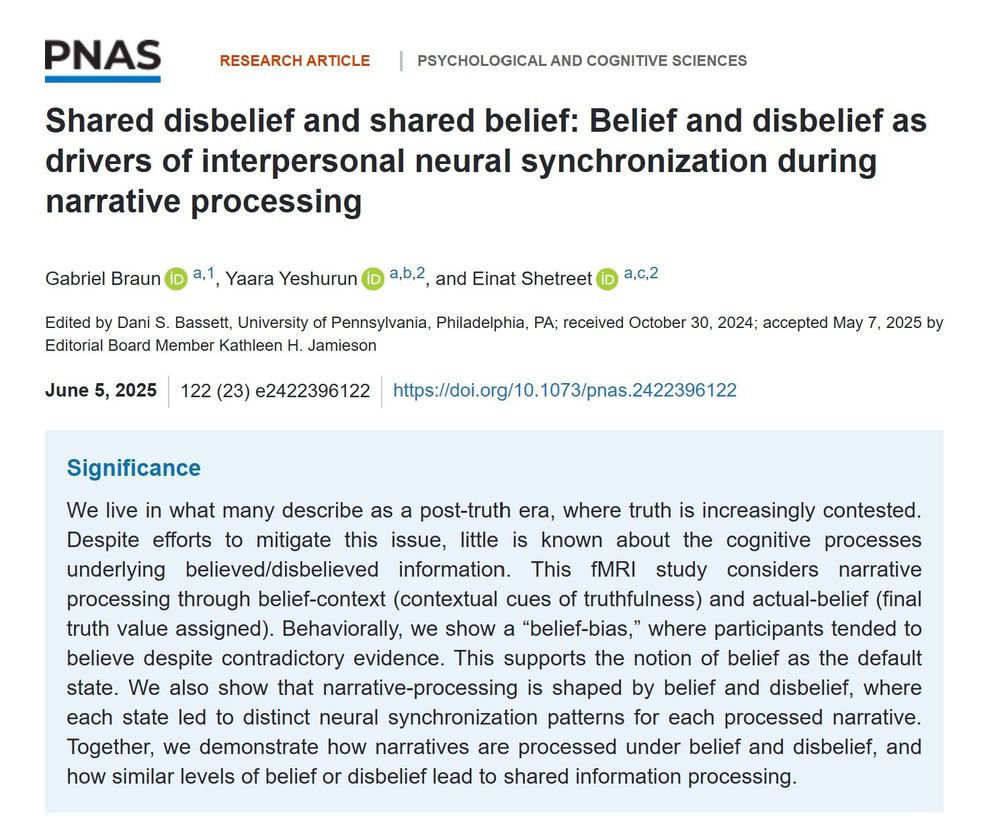
For my first BlueSky post I want to share this freshly published paper in PNAS @pnas.org!
We show how belief and disbelief shape narrative processing in the brain, not just as opposites of a continuum, but as distinct effects, including a cool truth/belief bias.
www.pnas.org/doi/10.1073/...

My latest column in Science went up yesterday doi.org/10.1126/scie... . I argue that “Knowledge is power”—or at least it was when Sir Francis Bacon coined this phrase in the 16th century. 1/n
06.06.2025 16:17 — 👍 63 🔁 24 💬 1 📌 1היה הכי כיף! תודה רבה על ההזמנה 😊
21.05.2025 19:29 — 👍 2 🔁 0 💬 0 📌 0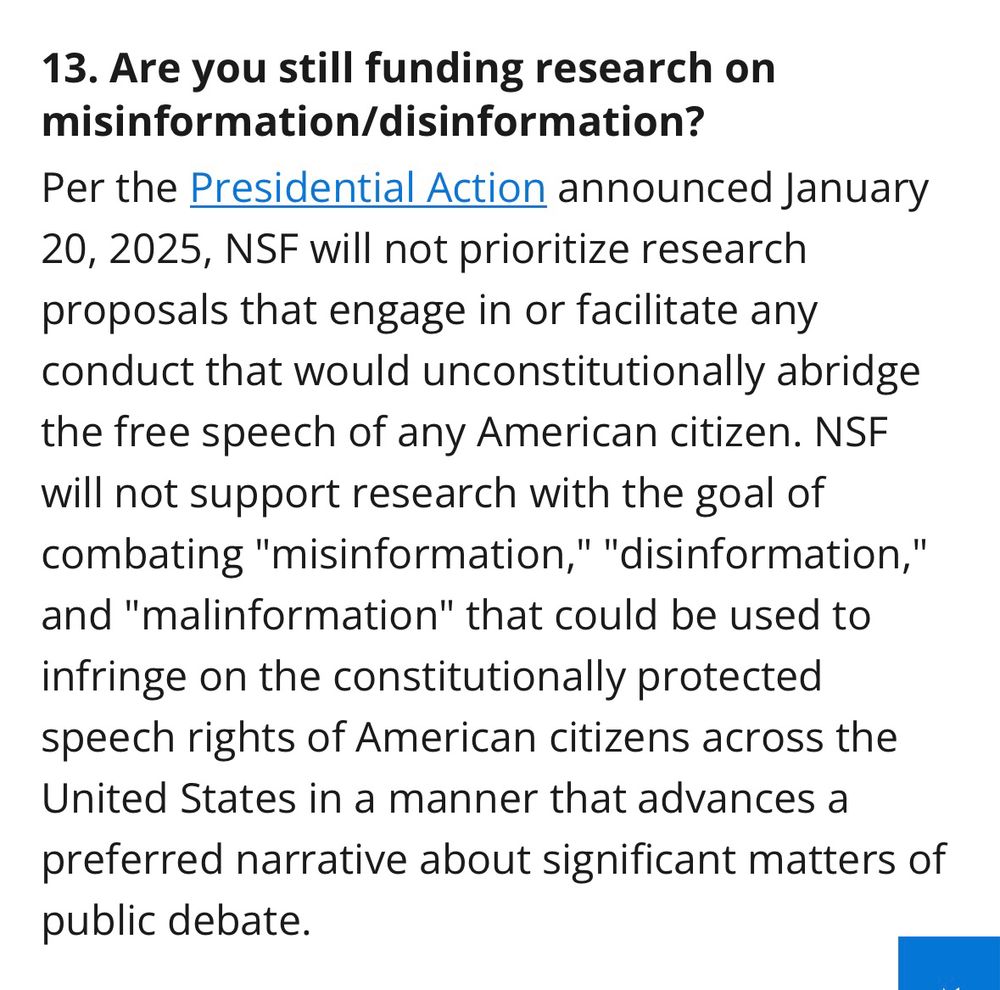
This statement from the NSF is insane.
Science is, in essence, designed to separate the true from the false.
Understanding how falsehoods spread is key to the scientific endeavor. It is not a violation of free speech to be proven wrong.
Turns out @aroyehuns.bsky.social is here after all!
10.04.2025 12:01 — 👍 1 🔁 0 💬 0 📌 0Only @lewan.bsky.social can distill four years of research into such an insightful 🧵. Proud to have co-authored these works and especially grateful to Segun Aroyehun for leading our latest paper. Collaborated with the fantastic team: @janalasser.bsky.social @fabiocarrella.bsky.social @dgarcia.eu
10.04.2025 11:13 — 👍 9 🔁 2 💬 1 📌 01/6 Hello Bluesky! 👋 Excited to join this community and share my new blog. First post: Using Bayesian hierarchical models to rescue "unreliable" cognitive tasks, with the dot-probe task as my case study. cogpsychreserve.netlify.app/posts/dotpro...
07.03.2025 09:14 — 👍 64 🔁 17 💬 7 📌 8
We are delighted to invite applications for an open-rank, tenure-track position at the developmental psychology track within the Department of Psychology at Ben-Gurion University in Israel.
For more information, follow the link:
bgu-academic-recruitment.my.site.com/Recruiters/V...
My latest column just appeared in Science, entitled "Free speech, fact-checking, and the right to accurate information”. (www.science.org/doi/10.1126/...) I use one of President Trump’s first executive orders to unpack the terrain between misinformation and claims to free speech 1/n
06.02.2025 19:31 — 👍 232 🔁 115 💬 4 📌 10Grateful to be a coauthor on this paper led by @fabiocarrella.bsky.social , and part of this terrific team
06.02.2025 20:50 — 👍 1 🔁 0 💬 0 📌 0Steve has summarized more than four years of work into this thread. Interested in microtargeting? Check it out!
01.02.2025 16:55 — 👍 4 🔁 3 💬 0 📌 0Our paper is finally out!
26.01.2025 21:10 — 👍 6 🔁 2 💬 2 📌 0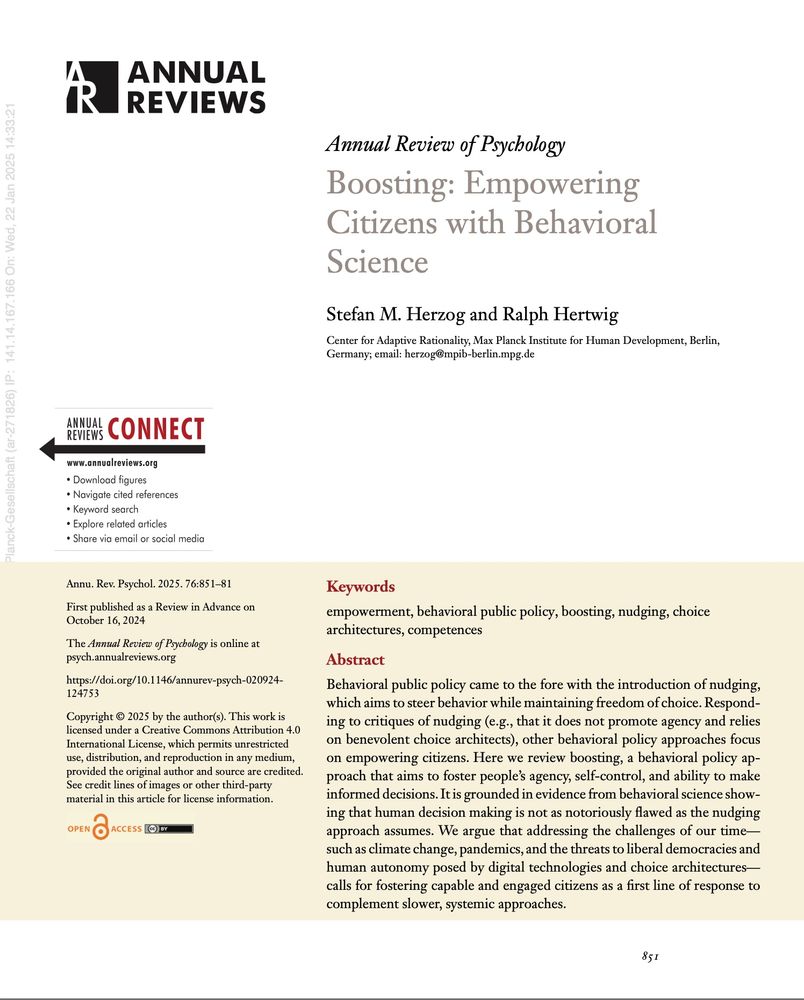
The image is the cover page of an article from the "Annual Review of Psychology" titled "Boosting: Empowering Citizens with Behavioral Science" by Stefan M. Herzog and Ralph Hertwig. It features a brief abstract, keywords, and publication details. The abstract outlines the concept of "boosting" as a behavioral public policy that emphasizes empowering individuals to make informed decisions, in contrast to "nudging," which subtly steers behavior. The abstract reads: Behavioral public policy came to the fore with the introduction of nudging, which aims to steer behavior while maintaining freedom of choice. Responding to critiques of nudging (e.g., that it does not promote agency and relies on benevolent choice architects), other behavioral policy approaches focus on empowering citizens. Here we review boosting, a behavioral policy approach that aims to foster people's agency, self-control, and ability to make informed decisions. It is grounded in evidence from behavioral science showing that human decision making is not as notoriously flawed as the nudging approach assumes. We argue that addressing the challenges of our time—such as climate change, pandemics, and the threats to liberal democracies and human autonomy posed by digital technologies and choice architectures—calls for fostering capable and engaged citizens as a first line of response to complement slower, systemic approaches.
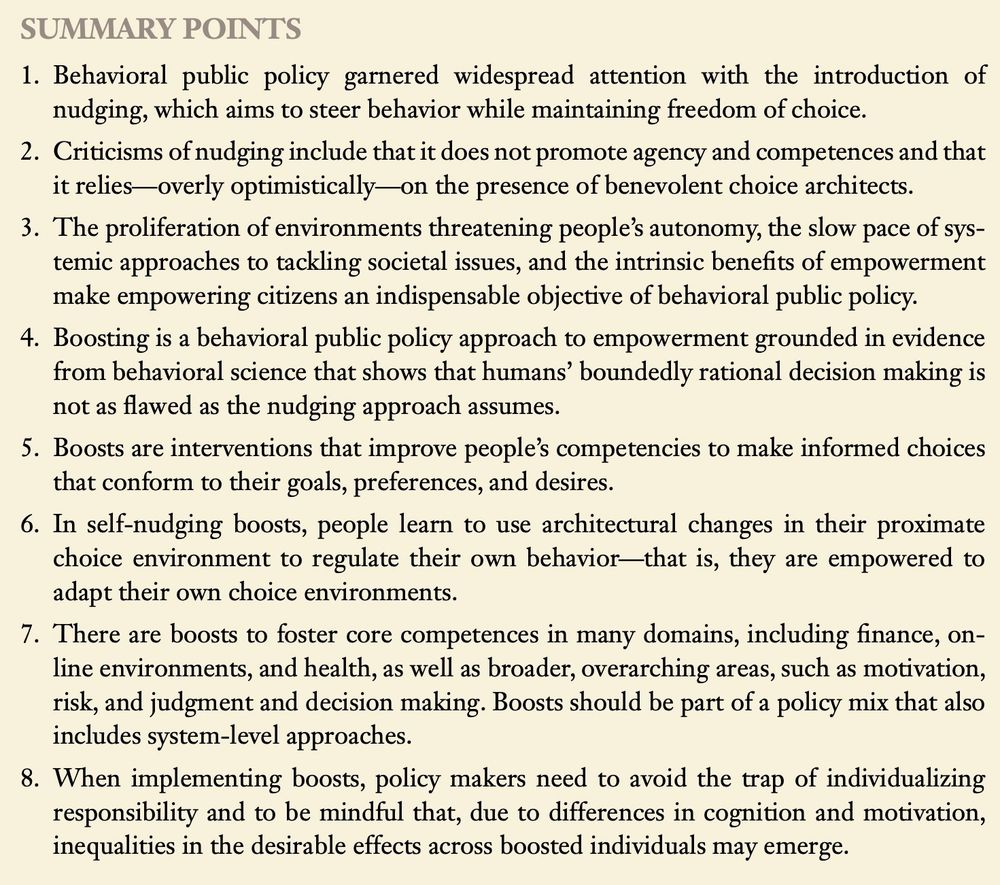
List with summary points: 1. Behavioral public policy garnered widespread attention with the introduction of nudging, which aims to steer behavior while maintaining freedom of choice. 2. Criticisms of nudging include that it does not promote agency and competences and that it relies—overly optimistically—on the presence of benevolent choice architects. 3. The proliferation of environments threatening people's autonomy, the slow pace of systemic approaches to tackling societal issues, and the intrinsic benefits of empowerment make empowering citizens an indispensable objective of behavioral public policy. 4. Boosting is a behavioral public policy approach to empowerment grounded in evidence from behavioral science that shows that humans’ boundedly rational decision making is not as flawed as the nudging approach assumes. 5. Boosts are interventions that improve people's competencies to make informed choices that conform to their goals, preferences, and desires. 6. In self-nudging boosts, people learn to use architectural changes in their proximate choice environment to regulate their own behavior—that is, they are empowered to adapt their own choice environments. 7. There are boosts to foster core competences in many domains, including finance, online environments, and health, as well as broader, overarching areas, such as motivation, risk, and judgment and decision making. Boosts should be part of a policy mix that also includes system-level approaches. 8. When implementing boosts, policy makers need to avoid the trap of individualizing responsibility and to be mindful that, due to differences in cognition and motivation, inequalities in the desirable effects across boosted individuals may emerge.
🌟🧠💪📝
#BOOSTING: Empowering citizens with behavioral science
New, freely available paper in Annual Review of Psychology.
PDF: tinyurl.com/boosting2025
For more: scienceofboosting.org
@arc-mpib.bsky.social @mpib-berlin.bsky.social
@annualreviews.bsky.social
#policy #behavioralscience
1/ 🧵👇
✨ Excited to share our new preprint! ✨
After years of work in @nivreggev.bsky.social 's SCMB lab, we proudly present the Israeli Face Database (IFD)!
Special thanks to co-leader @mayanna.bsky.social, @talmoran.bsky.social, and everyone who made this possible. 🙌
🧵 A thread:
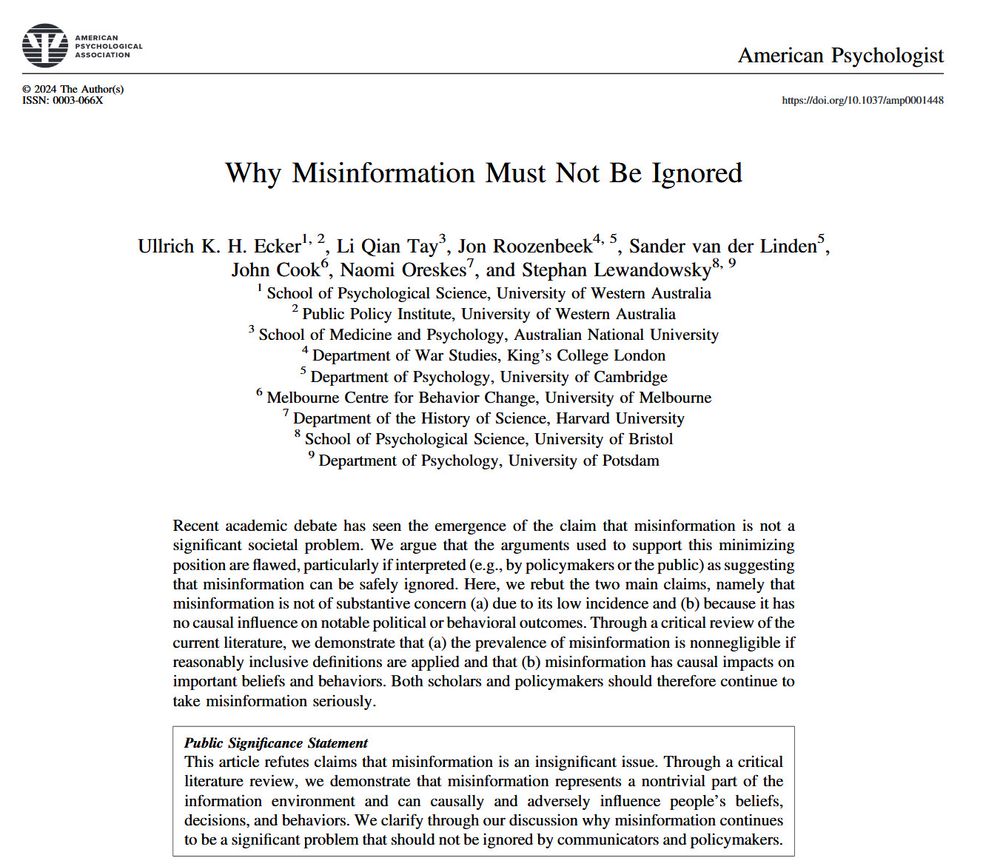
In this new article in American Psychologist we respond to critics in detail and clarify two key points for the field;
(1) The prevalence of misinformation in society is substantial when properly defined.
(2) Misinformation causally impacts attitudes and behaviors.
psycnet.apa.org/fulltext/202...
can't say I disagree :(
10.12.2024 13:36 — 👍 0 🔁 0 💬 0 📌 0I’ve been eagerly awaiting this one for far too long. Outstanding work by @cabels18.bsky.social, @kiiahuttunen.bsky.social, @lewan.bsky.social and Ralph Hertwig.
Dedicated to my fellow Israelis, with a glimmer of hope that we might still manage to dodge that bullet
What an amazing project. So happy to see this finally out. Kudos Inon and team!
09.12.2024 17:26 — 👍 3 🔁 0 💬 0 📌 0It'd be great to be added. Thanks for putting this together!
18.10.2024 18:07 — 👍 1 🔁 0 💬 1 📌 0It'd be great to be added. Thanks for creating this list!
18.10.2024 18:05 — 👍 2 🔁 0 💬 1 📌 0The book is still a work in progress, and if you spot errors or inaccuracies, please reach out!
15.04.2024 12:45 — 👍 0 🔁 0 💬 0 📌 0It is designed to cover the very specific topics I'm teaching in my course at BGU, but it should be a pretty useful resource (I hope!) for students and researchers in social sciences who do text as data in R
15.04.2024 12:44 — 👍 0 🔁 0 💬 1 📌 0Very excited to share a new textbook I am working on (led by Louis Teitelbaum). It's called Data Science for Psychology: Natural Language, and it covers text analysis and social media research w/ example code in R ds4psych.com #css #rstats
15.04.2024 12:44 — 👍 6 🔁 1 💬 1 📌 0To state the obvious -- yes, black-box ML is awesome, LLMs are great, and we do not discourage anyone from using them (I use them all the time). But there is much to gain in transparency, interpretability, and accuracy when integrating theory into our prediction models ✌️
27.03.2024 07:29 — 👍 0 🔁 0 💬 0 📌 0