Dr Kareem Carr
man: i wish to publish
@kareem_carr
Jan 21
reviewer 2: your paper is no good
man: i'll do anything to improve
reviewer 2: it's simple. you must read the work of the great scientist Pagliarini
man: *bursts into tears* but i am Pagliarini
Andre Pagliarini
@apagliar
Jan 21
a first: in rejecting an article I submitted to a journal, reviewer 2 noted I failed to engage the work of one Andre Pagliarini
Jan 21, 2026 • 3:47 PM UTC
I just thought everyone should see this
22.01.2026 23:02 — 👍 25307 🔁 6026 💬 43 📌 231

Literally a publication for eight-year olds 40 years ago
04.01.2026 18:49 — 👍 43509 🔁 16110 💬 326 📌 412
Un super billet d'Arthur, qui met des mots sur des choses qu'on ressent forcément quand on est dans l'ESR, et qui les relie entre elles de manière très convaincante.
01.01.2026 08:15 — 👍 5 🔁 1 💬 1 📌 0
On ne manque pas de problèmes! C'est ça qui est chouette en interdisciplinaire. Je privilégie ceux qui me plaisent, bien sûr, mais c'est un mélange de plaisir / abordabilité / "rentabilité" (étant en postdoc je n'ai pas le luxe de traiter des sujets trop obscurs peu valorisables dans un dossier)
01.01.2026 22:41 — 👍 1 🔁 1 💬 0 📌 0
Il se trouve que je fais des maths appliquées (à la bioinformatique, en l'occurrence). Je cherche la petite bête, le petit coin où il faudrait un peu de maths pour aider les collègues, et après je me lance. De fait, parfois ce que je trouve aide les collègues, mais parfois non.
01.01.2026 22:41 — 👍 1 🔁 0 💬 1 📌 0
Mon idéal à moi, c'est de proposer un problème (à ma portée), de l'attaquer honnêtement et sincèrement, de proposer une solution aussi complète que possible, qui fait le tour du sujet (sans saucissonnage) et, lorsque je n'ai pas à rougir de ce que j'ai à disposition, alors je l'envoie.
01.01.2026 21:54 — 👍 2 🔁 1 💬 1 📌 0
Dans l'article, une application c'est la numérotation des permutations à n éléments : tu peux trouver le rang d'une permutation en calculant sa valeur en num. factorielle, et vice-versa. Pour les gens (comme moi) qui aiment l'énumération c'est super cool, en vrai.
07.12.2025 14:18 — 👍 1 🔁 0 💬 0 📌 0
On a dix chiffres (0, 1, 2, 3, 4, 5, 6, 7, 8 et 9) pour écrire tous les nombres. Vous trouvez pas ça dommage, vous de gâcher les grands chiffres (comme 9, le plus grand chiffre) pour écrire des nombres aussi petits que 9 ou 19 ?
Ça paraît idiot, mais… petit thread de maths !
06.12.2025 21:31 — 👍 22 🔁 5 💬 4 📌 2
Preprint Alert!
We present new strategies to accelerate large-scale document comparison using MinHash-like sketches.
A thread:
01.12.2025 14:57 — 👍 12 🔁 8 💬 1 📌 0
And now, for the 25th post, i.e. CHRISTMAS MORNING, the promised thread by Antoine :
bsky.app/profile/npma...
02.12.2025 12:21 — 👍 2 🔁 0 💬 0 📌 0
Preprint alert!
We introduce new ideas to revisit the notion of sampling with window guarantees, also known as minimizers.
A thread:
02.12.2025 11:11 — 👍 15 🔁 7 💬 1 📌 1
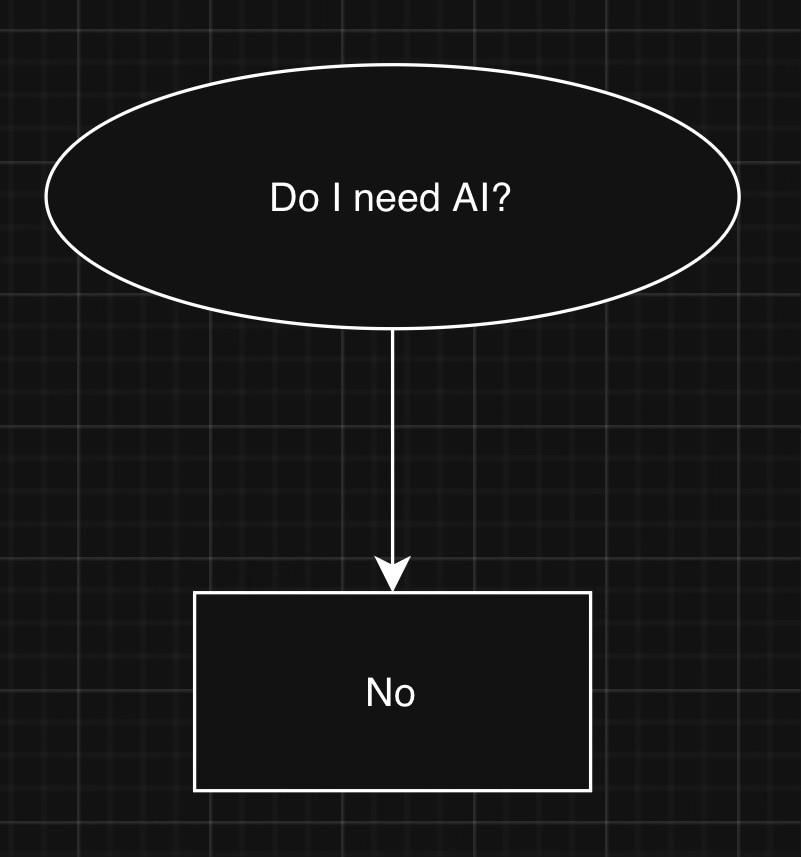
I found a flowchart which helps you navigate the IT landscape
01.10.2025 18:22 — 👍 10581 🔁 3749 💬 53 📌 65
His book "Mathematica" is a real eye-opener. David Bessis describes accurately and vividly the way we perceive and manipulate mathematical objects. Colleagues who read it also felt he put into words what they had not been able to formulate about the mathematical process. Highly recommended.
27.11.2025 20:05 — 👍 1 🔁 2 💬 0 📌 0
This kind of situation appear elsewhere in the simulations, but it happens randomly after Z2, so it is averaged over all 10^6 simulations and the effect is smoothed. That's why I was speaking of a border effect, as Y1/Z1 is very special by being the only window without prior dependencies
27.11.2025 23:05 — 👍 0 🔁 0 💬 0 📌 0
Yeah so basically Y1 is always a rescan, and Y2* (the second selected position) always follows a rescan, so Z2 = Y2* - Y1 is always the gap between a rescan and its successor.
There is some bias as the next minimizer after a rescan is more likely to be far as it follows the min over a whole window
27.11.2025 23:05 — 👍 0 🔁 0 💬 1 📌 0

And yes, the result is true when taking the limit to infinity. In the proof of Theorem 1, we establish the following
--- where E[tau_M] / (M-k+1) is the expected specific density of a random sequence of length M (and then M->infty)
You can derive actually an interval for a finite sequence from this
27.11.2025 23:01 — 👍 1 🔁 0 💬 0 📌 0
You are right in that eps_i is not *technically* a random variable. And yes, we want the average eps_i to be 0.
We chose to consider the eps_i as some realizations of an underlying random variable eps of mean 0, but it is only for the proof and not a big deal actually.
27.11.2025 22:58 — 👍 1 🔁 0 💬 1 📌 0

But as you can see, numerically with Monte Carlo, we obtain that E[Z_i] are somehow around (w+1)/2, so all good.
(and the values E[Z_i] - (w+1)/2 are, equivalently, somewhat around 0)
27.11.2025 22:56 — 👍 1 🔁 0 💬 1 📌 0

They're not, actually ! For instance, this is what we (formally) obtain for Z1 and Z2, with random minimizers. For w=10, E[Z1] = 5.5 whereas E[Z2] = 5.87 (there is a good reason for this, I can explain more if you're curious, but basically it is a border effect).
27.11.2025 22:56 — 👍 1 🔁 0 💬 1 📌 0
Where the Z_i's i.i.d then it would simply be E[Z1] but we didnt want to assume independence nor identical distribution, as to be as general as possible (also they are not iid in real life)
27.11.2025 17:27 — 👍 1 🔁 0 💬 1 📌 0
There are several way to define it actually, but you can think of it as E[E[Z_i]] where Z_i is the i-th gap. So, the average of the average gap.
27.11.2025 17:21 — 👍 1 🔁 0 💬 1 📌 0
I would also argue that n / # samples ≠ avg gap.
Take a sequence with n=6, and sample positions 1 and 3.
You get 3 ≠ ((1-0) + (3-1))/2 = 1.5
You need to account for the remaining bits after the last sample. And this implies going to infinity!
27.11.2025 16:34 — 👍 0 🔁 0 💬 1 📌 0
The only proper formal definition of density I found (the one I just gave) was in the GreedyMini paper. Other references, as far as I know, defines it informally, which is usually enough, but not when you want to claim a mathematical truth !
27.11.2025 16:27 — 👍 0 🔁 0 💬 1 📌 0
Well, usually when things seems trivial, one must be cautious. Since the density is defined as the limit of expected specific density when S tends to infinity, maybe there could have been a trick with the limit. Better safe than sorry, I would say
27.11.2025 16:15 — 👍 1 🔁 0 💬 1 📌 0

a red and blue background with the words that 's all folks on it
ALT: a red and blue background with the words that 's all folks on it
I think I will leave my 🧵 here now, hopeful that you made it to the end (math can be scary sometimes). Thanks for tagging along and wait for @npmalfoy.bsky.social thread on the multiminimizer trick !
24/24
(just like an advent calendar, 24 !)
27.11.2025 10:18 — 👍 3 🔁 0 💬 1 📌 0
Basically, we think that d* is an interesting concept, tackling problems that are not covered by classical density. It seems also difficult to attack from a theoretical aspect (the NP-complete result + that awful formula for random minimizers).
This leaves plenty of work left to do !
23/
27.11.2025 10:18 — 👍 2 🔁 0 💬 1 📌 0
We also prove that applying the multiminimizer trick to filtering application like Needle (sorry again for hiding under the carper what a multiminimizer is) lead to a NP-complete problem - but we provided a good proof of concept greedy heuristic that works nicely.
22/
27.11.2025 10:18 — 👍 1 🔁 0 💬 1 📌 0
Dad of 3 & born-again mathematician. Statistician, economist, fellow actuary & data addict. Professor & researcher in Kyoto 京都 🇯🇵. Previously in Montréal 🇨🇦, Paris 🇫🇷, Hong Kong 🇭🇰, Leuven 🇧🇪 & Rennes 🇫🇷. Full of 'satiable curtiosity
CNRS researcher (hab) in Physics & THz biophotonics. Passionate about using THz spectroscopy to study light-matter interactions in biological systems. ERC Consolidator Grantee. I am looking for motivated students, researchers & partners www.tuscany-erc.fr
Shitpost ; très occasionnellement mathématiques appliquées et physique ; souvent avis désastreux sur tout et surtout n'importe quoi.
Biodiversity genomics; reproduction; k-mers; Evolution of species with weird genomes; frequently featuring diptera and collembola; group leader at the Tree of Life, Wellcome Sanger Institute; dysorthographic
Computer Science -- Data Structures and Algorithms (cs.DS)
source: https://export.arxiv.org/rss/cs.DS
maintainer: @tmaehara.bsky.social
Rogue mathematician
https://davidbessis.substack.com/
Mathemactivist and Craftamatician.
Constantly trying to unleash the beauty of Maths for all to see! 🌈✨
I do nerdy things on the internet, and “real life”
Professor, Graph Algorithms and Bioinformatics @ U. Helsinki
https://www.cs.helsinki.fi/u/tomescu/
Associate Professor of CS @ University of Maryland. Proud Rust advocate! I ♥ science & compiled, statically-typed programming languages! Views are my own. Tech stack: https://github.com/rob-p/tech-stack.
Artist & math nerd. She/her. Actually autistic 🚲
Aspiring polyglot:
🇹🇭🇨🇳🇭🇰🇱🇦🇰🇭🇩🇪
I used to be a tattooer until I took an arrow to the knee
https://linktr.ee/Acid_Lich?utm_source=linkt
Postdoc in computer science and bioinformatics from Finland. Various writings in English and Finnish: https://blog.jnalanko.net. Also on Mastodon: https://genomic.social/@jnalanko
Applied mathematician & Group Leader
@mpipz.bsky.social
Bioinformatics🧬👩🏽💻 and politics👈. Decolonial, anticapitalist, anti imperialist and migrant from 🇨🇴currently living in 🇫🇷. Un corazón de mango 🥭 del Sinú.
Assistant professor in Belgium. Philosophy and history of medicine. Many other things. Autrice "Pilules Roses", julietteferrydanini.com
De la sociologie sauvage avec tout le confort moderne. Enseigne des trucs, écrit des livres, fait des blagues sur Batman. May contain cake.
https://linktr.ee/deniscolombi
Sequence bioinfomatician, algorithms, methods.
Postdoc in Institut Pasteur in Rayan Chikhi's lab
Post-Doc at Institut Pasteur France. Interested in algorithms and data structures for bioinformatics