1/ #SantaScience 🎅🧵
🐥1st Bluesky Rodeo
🔄💬X cross-post
A year ago today @theguardian.com featured our festive research
🔎We discovered Santa has a facial #phenotype distinct from elderly bearded men
💗Evidence #Santa is real
📰 www.theguardian.com/lifeandstyle...
📝 pubmed.ncbi.nlm.nih.gov/36548933
24.12.2024 16:14 — 👍 10 🔁 3 💬 1 📌 0

Our new study defines a distinct #neurogenetic condition arising from recurrent structural variants at 16p13.3 palindrome.
Individuals show progressive ataxia, cognitive decline, and a characteristic MRI pattern with caudate & cerebellar atrophy.
#Genomics #RareDisease 🧵1/3
08.12.2025 08:41 — 👍 14 🔁 7 💬 2 📌 0
another great international collaboration with our friends in UK and Australia to which we could contribute, describing a very unique disease mechanism for a novel neurodegenerative disorder #genetics #raredisease @ajhgnews.bsky.social @jamesfasham.bsky.social @rdexeter.bsky.social
06.12.2025 11:23 — 👍 9 🔁 5 💬 0 📌 0


Yesterday, our Chair and Secretary presented the latest ESHG-Young activities at the ERN-ITHACA Board Meeting 🧬
Great chance to show how we connect early-career human geneticists across Europe 🌍 and to recruit please for our next matchmaking at ESHG Gothenburg 🤝
#ERNITHACA #ESHGYoung #ESHG
05.12.2025 11:42 — 👍 3 🔁 1 💬 0 📌 0

What do we mean by "actionability" in genomic medicine? An important question as we think more about using genomes for screening as well as diagnosis... read our new paper @gimjournal.bsky.social, authors.elsevier.com/a/1mBYc3vlFV...
01.12.2025 08:43 — 👍 5 🔁 3 💬 0 📌 0

More international collaborative work:
Single nucleotide variants in UNC13C associated with neurodevelopmental disorders affect ethanol sensitivity in Drosophila #raredisease #morbidgene #genetics #diseasemodelling www.sciencedirect.com/science/arti...
28.11.2025 17:14 — 👍 2 🔁 1 💬 0 📌 0

Ensembl 2026
Abstract. The Ensembl project (https://www.ensembl.org) is a public and open resource providing access to genomes, annotations, high-quality tools, and met
Our Ensembl 2026 paper is out!
Learn about 1,900+ new genomes, expanded pangenome support, new regulation interfaces, and what’s coming in our 2026 releases.
doi.org/10.1093/nar/gkaf1239
28.11.2025 16:30 — 👍 13 🔁 9 💬 0 📌 1

OpenSAFELY team awarded Queen Elizabeth Prize for Higher and Further
Oxford’s OpenSAFELY team wins the prestigious Queen Elizabeth Prize for revolutionising secure NHS data research, protecting patient privacy while unlocking life-saving health insights.
I'm delighted to say we have won the Queen Elizabeth Prize for Education with our work on OpenSAFELY, inventing new methods that let researchers analyse NHS GP data while protecting everyone's privacy, and with complete transparency, in a hugely productive platform!
www.ox.ac.uk/news/2025-11...
26.11.2025 17:53 — 👍 190 🔁 51 💬 9 📌 1
🧠🧲 BRAIN-MAGNET: A functional genomics atlas for interpretation of non-coding variants
💡 Fantastic initiative from the Barakat Lab
👀 Great to have a sneak peak at #MDC25
🧬 Predicts enhancer activity from DNA sequence
🕵️♂️ Prioritises functional non-coding variants
👇🧵 Check it out
20.11.2025 09:58 — 👍 2 🔁 2 💬 0 📌 0
So proud of the wonderful progress in the specialty and my colleagues in Manchester who contributed great science and organised this event
18.11.2025 22:46 — 👍 1 🔁 1 💬 0 📌 0

📸 Photo of Prof Bert Callewaert presenting at the 20th Manchester Dysmorphology and Developmental Disorders Conference during Oral Presentations F: Vascular and Connective Tissue.
🗣️ Title of this talk was: “An integrative machine learning approach to classify cutis laxa patients, supported by electron microscopy.”
🎆 The slide depicted shows a clinical diagnostic framework for cutis laxa, including a sequential classification algorithm and multiple electron microscopy panels illustrating characteristic ultrastructural findings across diagnostic subgroups. The slide also displays the EpiSign (epigenetic signature analysis) and GastaltMatcher (facial phenotype analysis) logos, informing the diagnostic classification workflow.

📸 Photo of Prof Meena Balasubramanian, Professor of Medical Genetics at the University of Sheffield and Honorary Consultant Clinical Geneticist at Sheffield Clinical Genetics Service, presenting at the 20th Manchester Dysmorphology and Developmental Disorders Conference during Oral Presentations F: Vascular and Connective Tissue.
🗣️ Title of this talk was: “Changing Landscape: Advancing Diagnostics in Rare CTDs”
🎆 The slide depicted shows the title slide of the talk over a bright blue background featuring zebrafish illustrations, alongside the logos of the University of Sheffield, Sheffield Children's NHS Foundation Trust, and Bateson Centre for Disease Mechanisms. A link to Prof Balasubramanian’s University page is also presented, signposting audience to the laboratory website and research group.

📸 Photo of Dr Stefan Barakat presenting at the 20th Manchester Dysmorphology and Developmental Disorders Conference during Oral Presentations G: Developmental Epileptic Disorders.
🗣️ Title of this talk was: “SETD1B variants drive neurodevelopmental disorders and epilepsy: delineation of the clinical phenotype of more than 120 patients and insights from 2D and 3D human models”
🎆 The slide depicted is titled “Goals of Barakat lab in a nutshell”:
1. Understanding unknown causes of disease and the role of non-coding genome in neurogenetic disorders
2. Building bridges behveen the clinic research and diagnostic, leading to patient benefit in the field of neurogenetics
The slide includes other images including pathway schematics, Clinical Genetics and Erasmus MC logos.

📸 Photo of Dr Elizabeth VanSickle of Corewell Health Helen DeVos Children's Hospital and the International Center for Polyamine Disorders, presenting at the 20th Manchester Dysmorphology and Developmental Disorders Conference during Oral Presentations G Developmental Epileptic Disorders session
🗣️ Title of this talk was: "All pediatric patients with Bachmann-Bupp syndrome treated with repurposed
Eflornithine demonstrate clinical and biochemical improvement”
🎆 The slide depicted highlights BABS/ODC1 patients 20 and counting and encourages clinicians to check patient logs, check databases, and ask colleagues to contact the specialist team as "THERE IS TREATMENT”.
Day 3 at #MDC25 was fantastic 👏
F: 🩻 Vascular and Connective Tissue
G:🧠 Developmental Epileptic Disorders
H: 👥 Phenotyping and Cohort Studies
🧬💭🥘🎸🪩
On to Day 4! 🎬
19.11.2025 09:07 — 👍 1 🔁 0 💬 0 📌 0

📸👨⚕️ Photo of Prof Andrew Jackson from the University of Edinburgh taken at the 20th Manchester Dysmorphology and Developmental Disorders Conference.
This was the first talk in oral presentations C on Day 2. The Session was title “Epigenomics of Rare Diseases (Symposium for Rare Disease Research UK EpiGenRare MRC Node)”
🗣️ Title of this talk was: “A novel segmental ageing syndrome demonstrates DNA methylation causes multiple age-related pathologies”
The photo depicts Prof Jackson delivering the conclusion of the talk, which states: “DNA hypermethylation causes age-related pathologies”. The slide includes a scatter plot with “DNA methylation age” on the Y axis and “chronological age” on the X axis, showing that CpG methylation changes strongly correlate with chronological ageing.
This conclusion followed the description of a novel segmental ageing syndrome caused by gain-of-function variants in DNMT3A, characterised by a phenotype that mimics aspects of ageing with associated DNA methylation changes.

📸👨⚕️Photo of Dr Adam Jackson presenting at 20th Manchester Dysmorphology and Developmental Disorders Conference in “The Non-coding, Regulatory and Genomic Disorders” session.
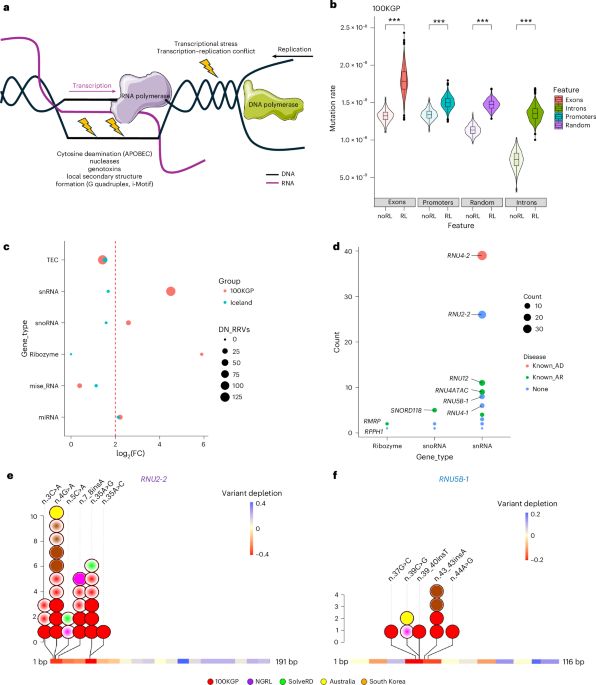
📖🗣️ The opening slide featured a quote from Arthur Conan Doyle (1892): “It has long been an axiom of mine that the little things are indefinitely the most important”, setting the scene for the story that followed: the discovery of RNU2-2 and RNU5B-1 neurodevelopmental disorders, caused by pathogenic variants in two “small” major spliceosomal RNA genes, collectively termed RNUpathies.
🔗📄 https://www.nature.com/articles/s41588-025-02209-y

📸👨⚕️Photo of Dr Alex Blakes presenting at 20th Manchester Dysmorphology and Developmental Disorders Conference in “The Non-coding, Regulatory and Genomic Disorders” session.
🗣️ Title of this talk was: “Biallelic variants in the non-coding RNA gene RNU4-2 cause a recessive
neurodevelopmental syndrome with distinct white matter changes”
🎆 The slide depicts the conclusions of the talk:
1) An SGE (Saturation Genome Editing) assay highlights a novel autosomal recessive neurodevelopmental syndrome in RNU4-2
2) Cystic white matter changes are a key feature
3) The U4-2:U4-1 ratio is a potential diagnostic biomarker
4) Dominant and recessive disorders in RNU4-2 are genetically, clinically, and molecularly distinct
📰 👉 Preprint available at the following link:
https://www.medrxiv.org/content/10.1101/2025.08.13.25333306v1

📸👨⚕️Photo of Dr Pamela Bowman Senior Clinical Lecturer and SpR in Clinical Genetics in Exeter, presenting at 20th Manchester Dysmorphology and Developmental Disorders Conference in “Metabolic and Endocrine Disorders” session.
🗣️ Title of this talk was: “Early initiation of sulphonylurea therapy improves neurodevelopmental outcomes in individuals with KCNJ11-related iDEND syndrome (developmental delay, epilepsy and neonatal diabetes)”
🎆 The slide depicts three “Draw a man” tasks, each performed by individuals with KCNJ11-related iDEND syndrome that received sulphonylurea (SU) therapy at different ages (drawn aged 9, SU in utero; drawn aged 16, SU aged 4; drawn aged 22; SU aged 17) alongside the caption “NVIQ highest (70) in individual also treated with glibenclamide in utero”
📰 👉 Publication available at the following link:
https://diabetesjournals.org/care/article/48/2/e10/157632
Day 2 at #MDC25 did NOT disappoint 👏
C:⚕️🧬 Epigenomics of Rare Diseases (EpiGenRare Symposium) rdrukhub.bsky.social
D: 🔀➰ Non-coding, Regulatory and Genomic Disorders
E: 🏥🩺 Metabolic and Endocrine Disorders
🥐☕️🤓🍲
On to Day 3! 🔭
18.11.2025 06:56 — 👍 1 🔁 0 💬 1 📌 0

Black and white drawing contrasting two scientific mindsets.
On the left, a large man labelled "Lumpers" hugs a bundle of small logs tied together as one group. On the right, a thin man labelled "Splitters" chops a single large log into many small pieces with an axe.
Victor A McKusick described these concepts in the paper "On lumpers and splitters, or the nosology of genetic disease" (Perspectives in Biology and Medicine, 1969)

Photo of Dr Miguel del Campo giving a talk titled:
"The Fetal Fentanyl syndrome – delineation of the phenotype in 37 infants prenatally exposed to fentanyl
This was during Oral Presentation B session "Environment, Exposures, and Imprinting” at the 20th Manchester Dysmorphology and Developmental Disorders Conference.
Dr del Campo stands at the lectern with the presentation slide projected behind him, showing the 1973 Lancet paper describing fetal alcohol syndrome.
Day 1 at #MDC25 delivered 👏
A: 🧩🪵 Lumping, Splitting and Allelic Disorders
B: 🤰🏼🧠 Environment, Exposures and Imprinting
☕️💬
☁️2️⃣3️⃣🥂
On to Day 2! 🧬🔬
17.11.2025 07:51 — 👍 4 🔁 1 💬 1 📌 0

20th Manchester Dysmorphology and Developmental Disorders Conference opened with a warm welcome from @mft-imrare.bsky.social clinical director Prof Banka
Celebrating the history of the conference, we were treated to a glimpse of the original 1984 programme curated by @ddysmo.bsky.social 👑🧬
#MDC25
16.11.2025 15:20 — 👍 6 🔁 2 💬 2 📌 0

A table showing profit margins of major publishers. A snippet of text related to this table is below.
1. The four-fold drain
1.1 Money
Currently, academic publishing is dominated by profit-oriented, multinational companies for
whom scientific knowledge is a commodity to be sold back to the academic community who
created it. The dominant four are Elsevier, Springer Nature, Wiley and Taylor & Francis,
which collectively generated over US$7.1 billion in revenue from journal publishing in 2024
alone, and over US$12 billion in profits between 2019 and 2024 (Table 1A). Their profit
margins have always been over 30% in the last five years, and for the largest publisher
(Elsevier) always over 37%.
Against many comparators, across many sectors, scientific publishing is one of the most
consistently profitable industries (Table S1). These financial arrangements make a substantial
difference to science budgets. In 2024, 46% of Elsevier revenues and 53% of Taylor &
Francis revenues were generated in North America, meaning that North American
researchers were charged over US$2.27 billion by just two for-profit publishers. The
Canadian research councils and the US National Science Foundation were allocated US$9.3
billion in that year.

A figure detailing the drain on researcher time.
1. The four-fold drain
1.2 Time
The number of papers published each year is growing faster than the scientific workforce,
with the number of papers per researcher almost doubling between 1996 and 2022 (Figure
1A). This reflects the fact that publishers’ commercial desire to publish (sell) more material
has aligned well with the competitive prestige culture in which publications help secure jobs,
grants, promotions, and awards. To the extent that this growth is driven by a pressure for
profit, rather than scholarly imperatives, it distorts the way researchers spend their time.
The publishing system depends on unpaid reviewer labour, estimated to be over 130 million
unpaid hours annually in 2020 alone (9). Researchers have complained about the demands of
peer-review for decades, but the scale of the problem is now worse, with editors reporting
widespread difficulties recruiting reviewers. The growth in publications involves not only the
authors’ time, but that of academic editors and reviewers who are dealing with so many
review demands.
Even more seriously, the imperative to produce ever more articles reshapes the nature of
scientific inquiry. Evidence across multiple fields shows that more papers result in
‘ossification’, not new ideas (10). It may seem paradoxical that more papers can slow
progress until one considers how it affects researchers’ time. While rewards remain tied to
volume, prestige, and impact of publications, researchers will be nudged away from riskier,
local, interdisciplinary, and long-term work. The result is a treadmill of constant activity with
limited progress whereas core scholarly practices – such as reading, reflecting and engaging
with others’ contributions – is de-prioritized. What looks like productivity often masks
intellectual exhaustion built on a demoralizing, narrowing scientific vision.

A table of profit margins across industries. The section of text related to this table is below:
1. The four-fold drain
1.1 Money
Currently, academic publishing is dominated by profit-oriented, multinational companies for
whom scientific knowledge is a commodity to be sold back to the academic community who
created it. The dominant four are Elsevier, Springer Nature, Wiley and Taylor & Francis,
which collectively generated over US$7.1 billion in revenue from journal publishing in 2024
alone, and over US$12 billion in profits between 2019 and 2024 (Table 1A). Their profit
margins have always been over 30% in the last five years, and for the largest publisher
(Elsevier) always over 37%.
Against many comparators, across many sectors, scientific publishing is one of the most
consistently profitable industries (Table S1). These financial arrangements make a substantial
difference to science budgets. In 2024, 46% of Elsevier revenues and 53% of Taylor &
Francis revenues were generated in North America, meaning that North American
researchers were charged over US$2.27 billion by just two for-profit publishers. The
Canadian research councils and the US National Science Foundation were allocated US$9.3
billion in that year.

The costs of inaction are plain: wasted public funds, lost researcher time, compromised
scientific integrity and eroded public trust. Today, the system rewards commercial publishers
first, and science second. Without bold action from the funders we risk continuing to pour
resources into a system that prioritizes profit over the advancement of scientific knowledge.
We wrote the Strain on scientific publishing to highlight the problems of time & trust. With a fantastic group of co-authors, we present The Drain of Scientific Publishing:
a 🧵 1/n
Drain: arxiv.org/abs/2511.04820
Strain: direct.mit.edu/qss/article/...
Oligopoly: direct.mit.edu/qss/article/...
11.11.2025 11:52 — 👍 637 🔁 453 💬 8 📌 65

A Day of Discussion: The ELSI Conference 2025
Authors: Emily Clarke, Tara Clancy, Amy Hunter, Faye Johnson, Simon Jones, Sinduja Manohar, Gracie Mellalieu, Yvette Mellalieu, Melissa McKie, Arti Patel, Peter Style, Shelley Wagon, Sarah Wynn Introd...
Article summarising the the key themes identified at the ELSI Conference which look place earlier this year. Highlighting a range of different priorities and challenges of rare condition clinical trials.
31.07.2025 13:09 — 👍 2 🔁 1 💬 0 📌 1
Our new study characterises ELFN1 deficiency as a novel autosomal recessive neurodevelopmental disorder marked by epilepsy, GDD/ID, & movement disorders. Biallelic ELFN1 variants disrupt synaptic protein trafficking to the cell surface—validated through functional assays and mouse/zebrafish models.
26.07.2025 22:11 — 👍 2 🔁 2 💬 0 📌 0

New research set to uncover lost ancient medical texts
A team of researchers at the University of Manchester have secured a major €2.5 million (£2.1 million) grant from the European Research Council to uncover lost medical writings that could transform ou...
New research set to uncover lost ancient medical texts
A team of researchers at @manchester.ac.uk have secured a major €2.5 million grant from the @erc.europa.eu to uncover lost medical writings that could transform our understanding of ancient medicine. ⤵️
www.manchester.ac.uk/about/news/n...
17.06.2025 11:13 — 👍 9 🔁 3 💬 0 📌 0
OpenSAFELY Schools
A collaboration between the National Institute of Teaching and the Bennett Institute for Applied Data Science
"Have you thought about applying the @opensafely model, for data privacy and efficiency, to non-health data?"
YES WE HAVE
Behold the new... OpenSAFELY-Schools!!
schools.opensafely.org
17.06.2025 11:18 — 👍 49 🔁 19 💬 2 📌 3

Great talk by Jamie Ellingford about UPD as a cause of rare conditions in the 100k Genomes at the ACGS meeting in Birmingham
12.06.2025 09:38 — 👍 2 🔁 1 💬 1 📌 0
Check out this article by @carolineleacarnall.bsky.social and other members of our Spin Lab team! Funded by @nihr.bsky.social MH-TRC Mission, hosted at @oxhealthbrc.bsky.social: www.sciencedirect.com/science/arti...
11.06.2025 16:03 — 👍 5 🔁 1 💬 1 📌 0
National resource & catalyst for change in Scotland's Digital Health and Social Care Sector. Funded by the Scottish Funding Council and Scottish Government. Organiser of @digiinventors.com
https://linktr.ee/dhiscotland
Associate Professor @ Big Data Institute, University of Oxford
2024 Lister Institute Fellow
genomics | rare disease | gene regulation | genetic therapies
https://rarediseasegenomics.org/
(field) hockey player | cyclist | hiker
Innovation has the potential to revolutionise healthcare, enabling smarter and more sustainable care. Our Exeter HRC is helping bring this future to life alongside (@exeter.ac.uk) and Royal Devon NHS.
Learn more: https://hrc-sustainable.nihr.ac.uk/
ICREA Research Professor. Evolution, Genetics, Neuroscience, Linguistic Cognition
https://www.cedricboeckx.com
Programming, bioinformatics, algorithms, cycling. MS/BA. He/him. Works in Wheeler Lab at U of AZ. Author of Command-Line Rust (2024, O'Reilly), Mastering Python for Bioinformatics (2021, O'Reilly), Tiny Python Projects (2020, Manning)
Cell Press partners with scientists across all disciplines to publish and share work that will inspire future directions in research. #ScienceThatInspires
New PI interested in #immune #evolution, host #pathogen interactions, and #ScientificPublishing @ University of Exeter, UK. He/him. 🇨🇦
Want to support my scientific publishing work? Buy me a coffee: https://ko-fi.com/insectpathogenlab/tip
Associate Professor, Vice Dean EDI University of Galway, researching microRNAs in muscle and ageing
An alliance of non-profit organisations working across borders and diseases to improve the lives of all people living with rare diseases.
Our Research: Creating knowledge as the basis of tomorrow's medicine!
Leibniz-Forschungsinstitut für Molekulare Pharmakologie (FMP) in #BrainCityBerlin. Part of Forschungsverbund Berlin e.V.
Legal Notice: https://leibniz-fmp.de/legal-notice
Postdoc at Language & Genetics Department at Max Planck Institute, Netherlands. Interested in genotype-phenotype associations & Evo-Devo using neural models and transcriptomics across species
Associate Professor at Erasmus MC. MD, PhD, Clinical Geneticist, interested in gene regulation and the non-coding genome, bridging research and patient care
Genomics and epigenomics to better understand giant cell arteritis and other rheumatic diseases 🖥️🧬 Philosophy and sciart enthusiast. 🏳️🌈
PhD Student at IPBLN-CSIC in Granada, Spain. He/him
Where Science Meets Vision
At the Institute of Molecular and Clinical Ophthalmology Basel (IOB), our mission is to advance the understanding of vision and its diseases, and to develop new therapies for vision loss.
PhD Student at Institute for Molecular Medicine Finland, University of Helsinki. Interested in Lipidomics, Genetics, Bioinformatics and Biostatistics.
DVM PhD | Researcher at the University of Auckland | Genomics, variant interpretation | Rare diseases | Cancer, Molecular Tumour Boards | Inherited cardiac diseases | 🧬
Genomics scientist by day, amateur potter and yogi by night, who loves culture and nature. Ex-MPI_MolGen Posts are my own; Repost ≠ endorsements. instagram/wawapot
Interested in all things tech 👩🏽💻
Bioinformatician/PhD Researcher @ Rosa Rademakers Lab
International Open Access journal publishing on molecular and translational medicine. IF 2024,9.4; Scopus Citescore 2024, 8.4.