The voices of thousands of overseas voters weren't heard due to postal delays at the last General Election.
Yet the government has proposed a new law with no improvements for Brits abroad:
❌ No postal vote improvements
❌ No dedicated overseas representation
❌ No automatic voter registration
16.02.2026 11:58 — 👍 10 🔁 13 💬 3 📌 2
A heads up to my dual citizenship friends. 🇬🇧 🇺🇳
They are updating the rules about which passports you can use to enter the UK - so don't get caught out!
If you will be negatively impacted by this change, please reach out and make your voice heard!
07.02.2026 09:53 — 👍 1 🔁 0 💬 0 📌 0
Are you working with a particular pathogen. As I mentioned below, opportunistic pathogens, for example, have no selective pressure for genome reduction. Unfortunately, I had a quick search and couldn't find a citation (although several papers claim it because it is obvious!).
24.12.2025 09:28 — 👍 3 🔁 0 💬 1 📌 0
I would also add that genome reduction only makes sense in obligate pathogens. I think the reason we don't see genome reduction in scabies etc. is because they are facultative (or possibly opportunistic).
24.12.2025 09:19 — 👍 1 🔁 0 💬 1 📌 0

1/ 🔬 Our work, "Dynamic transitions of initiator binding coordinate the replication of the two chromosomes in Vibrio cholerae", is now published in Nature Communications.
Here's a thread on how we think Chr1 and Chr2 replication is coordinated in Vibrio. 🧵
Link : www.nature.com/articles/s41...
09.01.2025 12:32 — 👍 51 🔁 30 💬 2 📌 2

Then @thombooth.bsky.social used the presence/absence of known telomere proteins to identify a potentially new telomere protein which is linked to the Sg2247 class telomere, which previously did not have an identified maintenance system (notice the dot in the red circle)
15.10.2025 10:24 — 👍 2 🔁 1 💬 1 📌 0
Did you know most 'complete' Streptomyces genomes are missing their telomeres?
Thanks to David and Tues hard work, we now have a new tool to recover them!
A pleasure to be part of a team. :)
🦠🧪💻 #microsky
24.10.2025 13:53 — 👍 6 🔁 5 💬 0 📌 0
It really was a pleasure!
24.10.2025 13:48 — 👍 1 🔁 0 💬 0 📌 0
Check out this new amazing preprint by David, @tuesparholt.bsky.social , @thombooth.bsky.social, and @tilmweber.bsky.social!
20.10.2025 08:14 — 👍 5 🔁 3 💬 0 📌 0
Is it time to start calling out the scientific board? Why aren't these people laughed out of town?
20.09.2025 10:37 — 👍 0 🔁 0 💬 0 📌 0
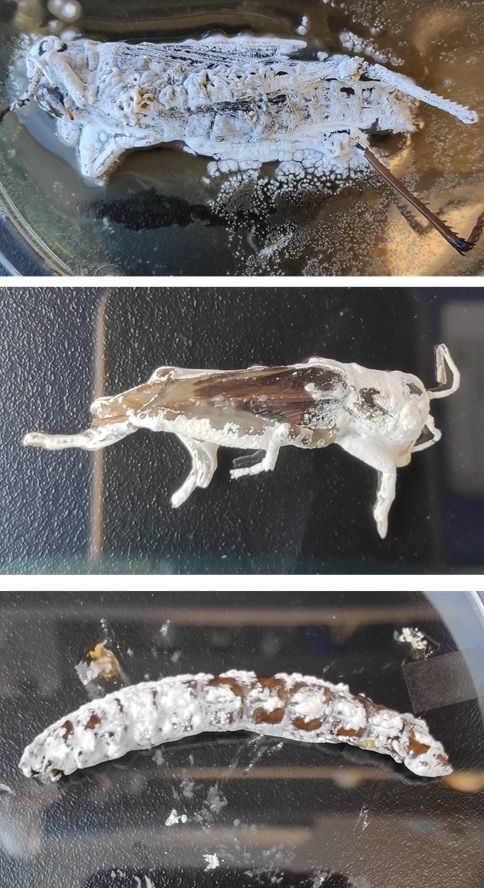
Images of Streptomyces venezuelae consuming the chitin-rich exoskeleton of a dead grasshopper (top), cricket (middle) and superworm (bottom).
More than a billion tons of #chitin are produced on Earth each year. This study shows that the soil #bacterium #Streptomyces venezuelae thrives on chitin from #insect #exoskeletons, using a potent mix of chitinases and a dedicated chitobiose importer @plosbiology.org 🧪 plos.io/45sg4S5
06.08.2025 18:09 — 👍 44 🔁 12 💬 2 📌 3
Very cool! More labs should do this! :)
27.07.2025 09:57 — 👍 2 🔁 0 💬 0 📌 0
ZiemertLab
The Ziemert lab is interested in the evolution and distribution of bacterial secondary metabolites. These bioactive compounds are especially important in human medicine as the chemical scaffolds are t...
Check out the Ziemert Lab’s new YouTube channel
m.youtube.com/@ZiemertLab
We’ve uploaded short tutorial videos on how to use our tools for genome mining and natural product discovery.
Thanks Semih, @martinaadamek.bsky.social @turgutmesut.bsky.social ! #GenomeMining #SecMet #naturalproducts
08.07.2025 20:09 — 👍 48 🔁 25 💬 2 📌 1
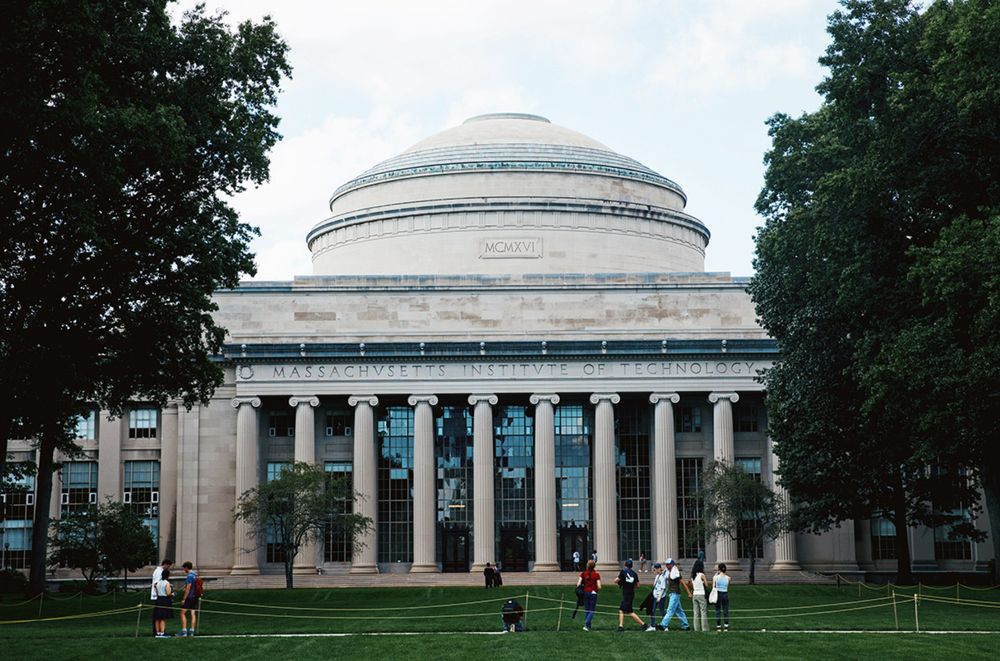
Large study of scientists who move their labs reveals how location drives productivity
Concentrating funding at high-powered universities can maximize output, paper argues, but may sacrifice broader benefits
The mantra “location, location, location” isn’t just about real estate. For life scientists, more than 50% of their productivity can be attributed to the institution where they work, according to a new study. scim.ag/4kKs1YO
17.07.2025 13:56 — 👍 124 🔁 30 💬 1 📌 4
go.bsky.app/8zZNEGV
Great resource to connect early career folks with more senior scientists looking to hire postdocs! 🧪
17.07.2025 03:41 — 👍 89 🔁 61 💬 16 📌 1
A great story begun by Siobhan Dorai-Raj and taken over the line by @thombooth.bsky.social and Juan Pablo Gomez-Escribano. It's been tremendous fun and wonderful to watch old lab members become collaborators and leaders!
15.07.2025 09:42 — 👍 2 🔁 1 💬 0 📌 0

Independent Fellowship in Plant-Associated Microbial Interactions | John Innes Centre
An exciting opportunity for an Independent Fellowship in Plant-Associated Microbial Interactions has arisen at the John Innes Centre. To read the full job description for this role…
New Independent Fellowship position in Microbiology to launch your lab in our department @johninnescentre.bsky.social (UK). We are conducting a broad search in the area of plant-associated microbial interactions. Message me if you have any questions.
Apply here: www.jic.ac.uk/vacancies/in...
10.07.2025 06:28 — 👍 75 🔁 94 💬 1 📌 4
Fantastic opportunity to start your independent career at the JIC here. Great startup package. Repost = nice. Thank you!!!
10.07.2025 06:52 — 👍 11 🔁 15 💬 0 📌 0
I should also add, thanks to you Susan! And everyone else who gave feedback at ISBA. It was incredibly helpful!
09.07.2025 15:34 — 👍 1 🔁 0 💬 0 📌 0
Is this what they were talking about when they said 'ignorance is bliss'?
09.07.2025 15:31 — 👍 1 🔁 0 💬 1 📌 0
I can't reach you on here apparently, but I will send you an email tomorrow. :)
09.07.2025 15:27 — 👍 0 🔁 0 💬 1 📌 0
Hi! Thanks for the kind words! It is reassuring to see other people as excited about this as we are! I'll send you a DM now! :)
09.07.2025 15:19 — 👍 1 🔁 0 💬 1 📌 0
Sorry David, I forgot to tag you! @tweakyaustin.bsky.social
09.07.2025 11:58 — 👍 1 🔁 0 💬 0 📌 0
Also to all the funders and institutions involved: @leibniz-dsmz.bsky.social, @johninnescentre.bsky.social, @earlhaminst.bsky.social, @dtu.dk, @novo-nordisk.bsky.social and the BBSRC.
6/6
09.07.2025 11:56 — 👍 1 🔁 0 💬 1 📌 0
I want to thank everyone involved in this project: Juan Pablo Gomez-Escribano, Siobhan Dorai-Raj, David Baker, Ern Lacey and Barrie Wilkinson (@barriewilks.bsky.social)!
A truly international effort.
5/6
09.07.2025 11:56 — 👍 2 🔁 0 💬 1 📌 0
Also of note, EEC1 is chock-full of biosynthetic gene clusters - it is more than twice as dense as the genome. Since all the known metabolites from E. australiensis are encoded on the chromosome, EEC1-like replicons are a unique reservoir of new natural products!
4/6
09.07.2025 11:56 — 👍 1 🔁 0 💬 1 📌 0
Fascinatingly, EEC1 is different to proteobacterial secondary chromosomes (chromids) as it does not appear to replicate like a plasmid. This suggests an evolutionary mechanism distinct from that of chromids, which are believed to have evolved from plasmids.
3/6
09.07.2025 11:56 — 👍 1 🔁 0 💬 1 📌 0
BBSRC Discovery Fellow
John Innes Centre
Interested in drug discovery, gene editing, gene regulation and AMR
I study how bacteria kill plants. Interested across biological scales: molecular 🧬, cellular🦠, organismal 🧫, ecological 🥀🌍, and evolutionary 🧬.
Optimistic pessimist: The world is dark, so how can we slow the decline?
Cyclist 🚴🏼♂️
Dog daddy 🐶
Lib Dems Abroad 🔶🧡
Software engineer 👨🏼💻
He/him 🏳️🌈
INM – Leibniz Institute for New Materials is a research institute in Saarland, Germany that is exploring new materials for a better world
leibniz-inm.de/en/imprint/
Leverhulme Trust Early Career Fellow @ University of East Anglia. Interested in the evolutionary ecology of host-microbe interactions. Microbiomes, phylosymbiosis, viromics, island populations.
PhD candidate at UWA researching fungal natural products chemistry ⚗️🧪 and biosynthesis 🧫🧬
Associate Professor at the Department of Fundamental Microbiology at the University of Lausanne. Also vice-Director of its School of Biology. Passionate about bacterial genetics!
We study natural products (secondary metabolites) from bacteria using genomics, reverse genetics, and synthetic biology approaches.
University of Illinois at Chicago
eustaquio.lab.uic.edu
We are an independent, international centre of excellence in plant science, genetics and microbiology.
www.jic.ac.uk
A hub of #lifescience research, training, and innovation focused on understanding the natural world through the lens of #genomics.
📍 Norwich, UK
🔗 earlham.ac.uk
Engineer come bio-technologist running core Sequencing at the Quadram, UK.
Cryo-EM ❄️🔬 | Molecular machines & mechanisms 🧬 | Associate professor @oxfordbiochemistry ghilarovlab.com
PDRA at the University of Glasgow 🧫🧬
Also interested in rugby, books and cycling
Personality psych & causal inference @UniLeipzig. I like all things science, beer, & puns. Even better when combined! Part of http://the100.ci, http://openscience-leipzig.org
Junior Research Group Leader @leibniz-hki.de in Jena, Germany.
Lab: @mnd-hki.bsky.social
Interested in natural products, metabolomics, RiPPs, mosses and their microbiome.
https://www.leibniz-hki.de/en/metabolomics-guided-natural-product-discover.html
Bioinformatics, R, Python
she/her
🏳️🌈 🏳️⚧️
views expressed are my own
Computational microbiologist
I like to post about: microbial genomics, microbial ecology, evolution, micro+plant biotechnology, climate, symbiosis, virology, ag, sci publishing and policy
Scientist working somewhere around mathematical, computational and experimental microbiology
Professor and Department Head of Chemistry at NC State. Natural products synthetic biology. Husband. Father. Liverpool Football Club fan.
BBSRC Fellow @ University of Glasgow. Pathogen biology and natural products 🦠