And special thanks to Handal and Kaspersen et al. (doi.org/10.1093/jac/...) for sharing their AST data to serve as a UTI validation set for this genomic dataset.
20.01.2026 09:49 — 👍 0 🔁 0 💬 0 📌 0
It's still largely infeasible for national genomic surveillance at the scale AST data is available (here 24,866 BSI and 28,639 UTI E. coli, 2006–2021), but combining existing 3254 BSI genomes and AST data allowed us to estimate the importance of this notorious MDR clone in Norwegian UTIs.
20.01.2026 09:49 — 👍 0 🔁 0 💬 1 📌 0
This was a really fun study in collaboration with Theodor A. Ross and colleagues @uitnorgesarktiske.bsky.social @sfi-vi.bsky.social, training a model to predict the ST131-C genotype from antimicrobial susceptibility testing data, providing insight into its UTI prevalence and context for BSI trends.
20.01.2026 09:49 — 👍 1 🔁 0 💬 1 📌 0
"Machine learning-based lineage prediction from antimicrobial susceptibility testing phenotypes for Escherichia coli sequence type 131 clade C surveillance across infection types" Spoiler: the MDR ST131-C is pervasive in UTIs, underlying BSI trends. doi.org/10.1099/mgen... @microbiologysociety.org
20.01.2026 09:49 — 👍 4 🔁 6 💬 1 📌 0
Being able to data plasmid acquisition, and to see the diversity of plasmids being gained and lost from lineages, was really eye opening! It was a pleasure to contribute my tiny bit to this huge paper and the data has so much more to give! @arredondo.bsky.social @gerrythill.bsky.social et al.
03.04.2025 11:34 — 👍 22 🔁 7 💬 0 📌 0
Fantastic! Can you add @themaklin.bsky.social too?
10.01.2025 11:39 — 👍 1 🔁 0 💬 1 📌 0
I'm putting together a Microbial Bioinformatics starter pack to help get everyone connected in our community. Let me know if there are any bluesky users to be added and share so that twitter refugees can tune back in to the fantastic world microbes go.bsky.app/3ezLo7e
10.01.2025 09:38 — 👍 107 🔁 60 💬 27 📌 0
We are hiring remote bioinformaticians at @theiagen . If you have a passion for microbial bioinformatics or public health, send your CV to careers@theiagen.com . You can be based nearly anywhere but need to be available to work US business hours.
05.12.2024 14:46 — 👍 17 🔁 9 💬 2 📌 0
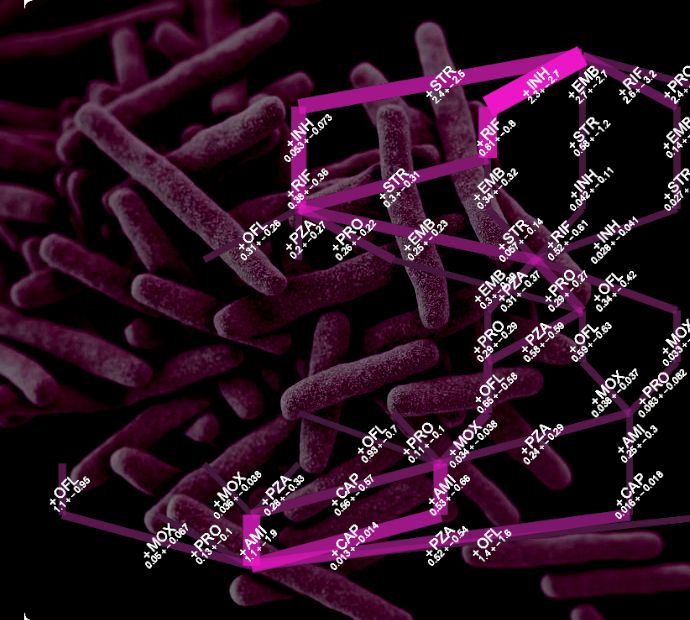
RTs much appreciated... would love to reach both AMR and biomath folks!
"Evolutionary accumulation modelling in AMR: machine learning to infer and predict evolutionary dynamics of multi-drug resistance"
arxiv.org/abs/2411.00219
We think EvAM methods have some potential in AMR. 🧵
29.11.2024 07:03 — 👍 10 🔁 5 💬 1 📌 1
Interesting and useful post from Altmetric.
TDLR:
🎉 BlueSky is an awesome place to share research.
❌ Don’t use link shorteners (unless it’s the DOI one)
✅ Keep the link in the post (don’t remove it once you have the auto-preview)
#AcademicSky #PhDSky
05.12.2024 07:42 — 👍 55 🔁 23 💬 2 📌 1
A Norwegian Centre for Research-based Innovation (SFI) researching the next generation of deep learning and AI methodology.
Den offisielle kontoen til UiT Norges arktiske universitet. The official account for UiT The Arctic University of Norway. https://uit.no
Microbiology Society: A world in which the science of #microbiology provides maximum benefit to society | microbiologysociety.org
lnk.bio/microbiosoc
A platform for life sciences. Publications, research protocols, news, events, jobs and more. Sign up at https://www.lifescience.net.
AMR Antimicrobial Resistance
Fernanda C. Petersen,
Professor, University of Oslo and
Ulf R. Dahle,
Specialist Director,
Norwegian Institute of Public Health
Phylodynamics | The Kirby Institute & UNSW
GPS, the Global Pneumococcal Sequencing project funded by The Bill and Melinda Gates Foundation is sequencing ~50,000 pneumococci to monitor global vaccine implementation and impact.
https://www.pneumogen.net/gps/
Clinical Microbiology #Bioinformatics @ Karolinska Hospital | PhD alum http://pharmb.io | Author of scipipe.org | Looking to get more into genomic algorithms & systems understanding of microbes+hosts, TEs etc
Married to Emebet. Dad. Sinner saved by grace.
Bioinformatician, CLIMB-TRE dev, CLIMB-COVID admin. Likes food, movies, music, and writing code.
He/Him.
Tenured Researcher | Chair in Computational Microbiology | Data Science Lead, MSc Applied Microbiology 🇵🇹
Before: Maria Zambrano @cbgpmadrid.bsky.social 🇪🇸, postdoc Max Planck Institute 🇩🇪
https://sciproj.ptcris.pt/en/12767EEC
https://tinyurl.com/57rc2w3z
📍 Liverpool
👨🏾💻 Bioinformatics and EDI
💭 Microbiome and Genomic Diagnostics
🏋🏾♂️ Powerlifter
Views and typos my own
Assistant prof @ UofT, associated scientist @ Helmholtz Institute for RNA-based Infection Research. Pathogen systems biology / informatics / functional genomics. Coastal New Hampshirite. Drink Moxie.
Computational biologist. Views/opinions mine, not my employer's. Repost != agreement. Not green, just pleasant. Fabian. =﹥÷
I can’t see DMs because of the Online Safety Act.
Do my science @ace_uq studying coral reef microbiomes. Data wrangler, meta-omics and long-read wonk, clean energy enthusiast, Saganist zealot, collector of weird zoology facts, other nonsense.
Metagenomics, Software Engineering
Microbiome Scientist interested in microbial metagenomics, symbiosis & microbiomes, bioinformatics
Diversity, Ecology and Evolution of Microbes (DEEM) team. Posts by David Moreira. #treeoflife #evolution
Paris, France
https://www.deemteam.fr/en/
Experimental biologist dabbling in bio-informatics. Focus on algae and their fascinating life cycles 🦠 Post-doc @ VIB/UGent Belgium (FWO fellowship)