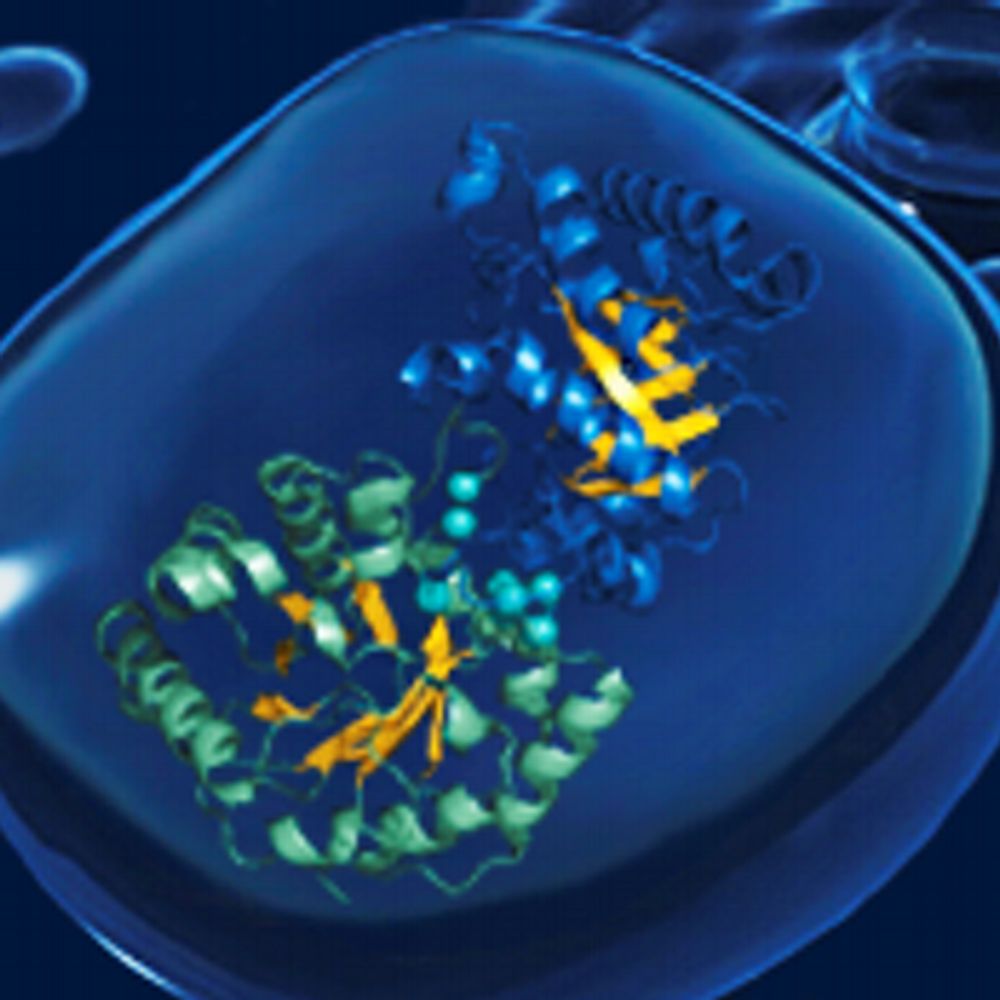
Amazing findings in geometry-based immune activation! Two bacterial defence systems detect phage-encoded ring oligomers, assemble high-order molecular complexes, and trigger abortive infection.
www.nature.com/articles/s41...
www.nature.com/articles/s41...
04.02.2026 18:24 — 👍 22 🔁 10 💬 1 📌 0
Bacterial defense via RES-mediated NAD+ depletion is countered by phage phosphatases
Many bacterial defense systems restrict phage infection by breaking the molecule NAD+ to its constituents, adenosine diphosphate ribose (ADPR) and nicotinamide (Nam). To counter NAD+ depletion-mediated defense, phages evolved NAD+ reconstitution pathway 1 (NARP1), which uses ADPR and Nam to rebuild NAD+. Here we report a bacterial defense system called aRES, involving RES-domain proteins that degrade NAD+ into Nam and ADPR-1″-phosphate (ADPR-1P). This molecule cannot serve as a substrate for NARP1, so that NAD+ depletion by aRES defends against phages even if they encode NARP1. We further discover that some phages evolved an extended NARP1 pathway capable of overcoming aRES defense. In these phages, the NARP1 operon also includes a specialized phosphatase, which dephosphorylates ADPR-1P to form ADPR, a substrate from which NARP1 then reconstitutes NAD+. Other phages encode inhibitors that directly bind aRES proteins and physically block their active sites. Our study describes new layers in the NAD+-centric arms race between bacteria and phages and highlights the centrality of the NAD+ pool in cellular battles between viruses and their hosts. ### Competing Interest Statement The authors have declared no competing interest. European Research Council, ERC-AdG GA 101018520 Israel Science Foundation, MAPATS grant 2720/22 Deutsche Forschungsgemeinschaft, SPP 2330, grant 464312965 Minerva Foundation with funding from the Federal German Ministry for Education and Research research grant from Magnus Konow in honor of his mother Olga Konow Rappaport Ministry of Aliyah and Immigrant Absorption, https://ror.org/05aycsg86 Clore Scholars Program
We found a new mode by which bacteria deplete NAD+ to protect from phages. And then we found how phages overcome this defense
Discovered by talented biochemist Dr Ilya Osterman, read the preprint: tinyurl.com/Narp-ap
A thread 🧵
29.01.2026 15:34 — 👍 43 🔁 15 💬 2 📌 0

Hello world! I am excited to announce my lab is open at the University of Utah in the Department of Biochemistry. We are looking for scientists at all levels interested in studying host-virus interactions in both bacteria and animals. Come join us in beautiful Utah! (photo is 10 steps from lab)
22.01.2026 22:06 — 👍 72 🔁 31 💬 6 📌 0
A methylome-derived m6-dAMP trigger assembles a PUA-Cal-HAD immune filament that depletes dNTPs to abort phage infection
Bacteria must distinguish phage attack from normal homeostatic processes, yet the danger signals that trigger many defence systems remain unknown. Here, we show that a PUA-Calcineurin-CE-HAD module from Escherichia coli ECOR28 confers broad anti-phage protection by binding Dam-methylated deoxyadenosine monophosphate (m6-dAMP) generated during phage-induced chromosome degradation. Ligand binding converts a preassembled PUA-Calcineurin-CE hexamer loaded with six HAD phosphatases into a polymerising filament. The filament acts as a high-flux dNTP sink through a two-enzyme cascade: HAD first dephosphorylates dATP to dADP, and Calcineurin-CE then converts dADP to dAMP. dNTP collapse halts phage replication and enforces abortive infection. Multiple mobile-element DNA mimic proteins block filament assembly, revealing a direct phage counter-defence. More broadly, our findings extend a conserved, cross-kingdom paradigm of immune filament assembly to nucleotide-depletion antiviral defence and suggest modified-nucleotide sensing by related PUA-Calcineurin-CE modules as a widespread, underappreciated bacterial strategy. ### Competing Interest Statement The authors have declared no competing interest. NIHR Southampton Biomedical Research Centre, https://ror.org/01qqpzg67, Postdoctoral Bridging Fellowship F.L.N. is supported by a Wessex Health Partners (WHP) and National Institute for Health and Care Research Wessex Experimental Medicine Network (NIHR WEMN), Seed fund National Institutes of Health, GM145888, U24 GM129539) Maloris Foundation Memorial Sloan Kettering Cancer Center, P30-CA008748 Simons Foundation, SF349247 New York State Assembly
Preprint out: We characterise PUA-Cal-HAD, a widespread bacterial antiphage defence family. An infection cue switches a preassembled complex into an immune filament that drains dNTPs via a coupled two-enzyme cascade, and phage DNA mimics can block filament assembly (anti-polymerisation).
17.01.2026 14:52 — 👍 34 🔁 19 💬 1 📌 0

Illustration of gene flow along the succession of events leading from a simple archaeal ancestor through the more complex Asgard intermediate capturing the proto-mitochondrial alphaproteobacterial endosymbiont to the LECA. The wide coloured shape denotes the dominant trend of the origin of eukaryotic genes from Asgard ancestors, with light blue portions corresponding to archaeal evolution and the light brown portion to the evolution of protoeukaryotes starting with the alphaproteobacterial endosymbiosis. The purple arrows denote the smaller, piecemeal contributions of gene influx from various bacteria that are posited to have been occurring at all stages of the depicted evolutionary scenario.
Asgard archaea may have facilitated the evolutionary development of the mitochondria via endosymbiosis of α-proteobacteria at some point between the first eukaryotic common ancestor (FECA) and the last eukaryotic common ancestor (LECA)! 🧪
www.nature.com/articles/s41...
15.01.2026 00:18 — 👍 30 🔁 14 💬 1 📌 1
Many congratulations Martijn!
15.01.2026 08:17 — 👍 0 🔁 0 💬 1 📌 1
Many congratulations Francois and well deserved!
14.01.2026 15:39 — 👍 1 🔁 0 💬 0 📌 0

Happy to share our recent preprint:
"DNA-intercalating antiphage molecules trigger abortive infection through mutual destruction and synergize with bacterial immunity"
www.biorxiv.org/content/10.6...
@spp2330.bsky.social, @mibinet.bsky.social, @dfg.de @hhu.de @fzj.bsky.social
14.01.2026 08:57 — 👍 43 🔁 26 💬 2 📌 0
Many congratulations Shai!!
11.12.2025 19:22 — 👍 0 🔁 0 💬 0 📌 0

Happy to share that I’m opening my lab at the Weizmann Institute of Science!
We’ll study systems-level regulation of bacterial defense, driven by RNA-protein interactions shaping cell fate.
Now recruiting PhD students & postdocs
tinyurl.com/4yfa55vd
Please reach out and share!
09.12.2025 21:35 — 👍 21 🔁 15 💬 2 📌 0
✨New preprint!
🧵1/4 Excited to share our work on AI-guided design of minimal RNA-guided nucleases. Amazing work by @petrskopintsev.bsky.social @isabelesain.bsky.social @evandeturk.bsky.social et al!
Multi-lab collaboration @banfieldlab.bsky.social @jhdcate.bsky.social @jacobsenucla.bsky.social🧬
🔗👇
09.12.2025 07:52 — 👍 98 🔁 47 💬 1 📌 8

Phages are full of genes of unknown function that are likely adaptive in specific conditions.
New preprint: Phage TnSeq identifies essential genes rapidly and knocks all non-essentials. We would like to send a pool of phiKZ mutants to anyone wanting it! Reach out
tinyurl.com/bdcfrejh
08.12.2025 15:04 — 👍 90 🔁 42 💬 2 📌 2
Preprint: Systematic discovery of TIR-based immune signaling systems in bacteria
Conservation of TIR-derived signals accross the tree of life! We found bacterial TIR immune systems that signal via canonical cADPR (like in humans) and 2'cADPR (a plant immune signal).
Documented 11 Thoeris types
04.12.2025 13:56 — 👍 34 🔁 13 💬 1 📌 0
SISB2026
Check this out for the 2026 SISB (phage defense) meeting in NYC. Mark your calendar! (and note the Zoom option, if needed)
sisb2026.rockefeller.edu
01.12.2025 23:44 — 👍 35 🔁 19 💬 0 📌 5


🧬🛡️How are new immune mechanisms created?
We show how Lamassu antiphage system, originated from a DNA-repair complex and evolved into a compact and modular immune machine, wt Dinshaw Patel lab in @pnas.org.
👏 @matthieu-haudiquet.bsky.social, Arpita Chakravarti & all authors!
doi.org/10.1073/pnas...
27.11.2025 09:35 — 👍 104 🔁 47 💬 1 📌 2

The SMC Hinge is a Selective Gate for Obstacle Bypass - Nature Communications
SMC complexes are ring-shaped motors that fold DNA by extruding loops, but how they navigate large DNA obstacles is unclear. Here, Liu et al., show that SMC complexes bypass obstacles by threading obs...
The hinge bypass gate paper is finally out! doi.org/10.1038/s414...
We show how loop-extruding SMC complexes can maintain DNA entrapment while bypassing obstacles on DNA — including transcription machinery & potentially other SMCs.
A lucky convergence of 3 projects lead to the initial discovery!
25.11.2025 15:26 — 👍 31 🔁 15 💬 1 📌 2

Intracellular competition shapes plasmid population dynamics
From populations of multicellular organisms to selfish genetic elements, conflicts between levels of biological organization are central to evolution. Plasmids are extrachromosomal, self-replicating g...
Hot off the press! Our latest paper led by @fernpizza.bsky.social, understanding how plasmids evolve inside cells. These small, self-replicating DNA circles live inside bacteria and carry antibiotic resistance genes, but also compete with one another to replicate. 1/
www.science.org/doi/10.1126/...
20.11.2025 21:42 — 👍 436 🔁 200 💬 11 📌 18
Congrats @aharms485.bsky.social and @humollidorentina.bsky.social, very cool method!
21.11.2025 14:33 — 👍 4 🔁 0 💬 0 📌 0

🚨Preprint alert - this is a big one! We transfer the revolutionary power of TnSeq to bacteriophages.
Our HIDEN-SEQ links the "dark matter" genes of your favorite phage to any selectable phenotype, guiding the path from fun observations to molecular mechanisms.
A thread 1/8
20.11.2025 20:39 — 👍 210 🔁 90 💬 11 📌 5
Chair of Biochemistry @wur, interested in the biochemical basis of multicellular development and auxin response, and science in general; Views are my own
https://shorturl.at/U80ZH
We determine the structure and function of newly discovered bacterial immune systems to uncover novel biotechnologies.
Molecular biology of bacteria and phage @algao lab 🧪 PhD student at Stanford Biochemistry
David Bartel's lab @WhiteheadInst @MIT @HHMI | microRNAs, mRNAs, and other RNAs
Asst. Prof. at Copenhagen University. Excited about phages, plasmids, and bacterial immunity!👨🔬🔬 https://pinillaredondolab.com/
Assistant Professor at University of Utah studying host-virus interactions
http://hobbs.biochem.utah.edu/
Still trying to figure out how to clone the perfect coffee.
Postdoc fellow @ Zhang lab, The Broad institute of MIT and Harvard
PhD student studying phage-host interactions at ETH Zürich | Lab of Molecular Phage Biology
Group leader at Leiden University Medical Centre
Innate immunity, antiviral immunity, inborn errors of immunity
Professor and Interim Chair | Dept. of Systems Biology | Columbia University | Synthetic Biology | Microbiome | Genome Engineering
http://wanglab.c2b2.columbia.edu
Assistant Professor, NISER, India.
Bacterial and phage genetics.
Bacterial immune systems and phage encoded anti-microbials.
Postdoctorate fellow @SorekLab, Weizmann Institute of Science.
Alumnus of the Weinstain and Shani labs, Tel Aviv University.
Structural biologist, Cryo-EM aficionado, signal peptide nerd, teacher, mentor, dad, …
European Research Council (ERC) Coordinator of Panel LS1 (Molecules of Life: #StructBiol,#MolBiol,#Biochem,#ChemBiol&Mol #Biophysics). Opinions my own!
Bioinformatics, protein modeling, cryoEM, drug screening, function prediction. Daisuke Kihara, professor of Biol/CS, Purdue U. https://kiharalab.org/ YouTube: http://alturl.com/gxvah
Postdoc in Bharat group at MRC-LMB | cryo-EM | cryo-ET |
Solid-state NMR, Zernike Institute, university of Groningen. Posts = personal. Spectroscopy, biochemistry, structural biology, amyloid &
condensates, Huntington disease, membrane biophysics, biomaterials etc