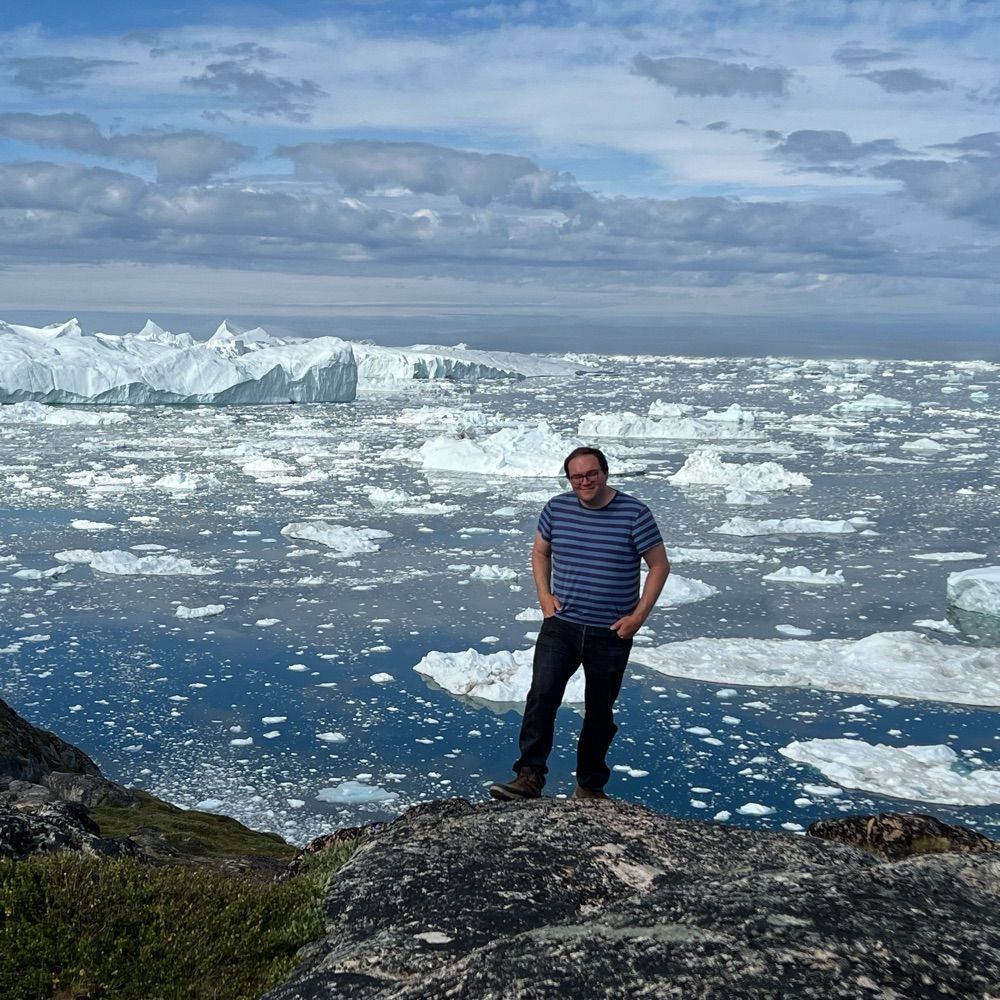
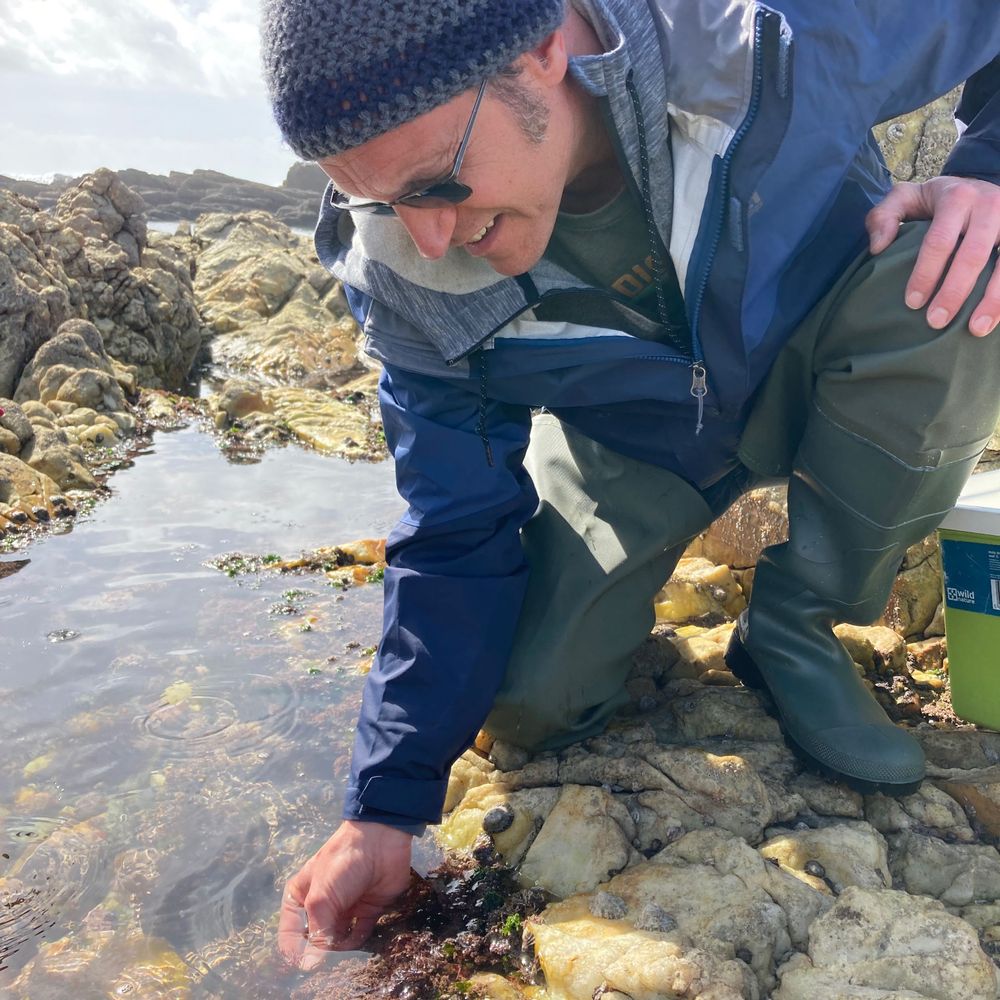
It's been a while since I ran this short workshop, but I'm excited to introduce some graduate students from McMaster University to the world of #metaanalysis and #EvidenceSynthesis this morning!
09.12.2025 11:48 — 👍 2 🔁 0 💬 0 📌 0
@biolumijeffence.bsky.social
Bikes🚴♂️borks🐕 beers🍻 bivalves🦪 | Research Scientist at Fisheries and Oceans Canada | Really into the behaviour of the brainless | I curse a lot | Cape Bretoner | Views my own | he/him 🌐 https://jclementsphd.ca
It's been a while since I ran this short workshop, but I'm excited to introduce some graduate students from McMaster University to the world of #metaanalysis and #EvidenceSynthesis this morning!
09.12.2025 11:48 — 👍 2 🔁 0 💬 0 📌 0
Tree's up!🌲🎅
07.12.2025 19:25 — 👍 0 🔁 0 💬 0 📌 0
We'd like to welcome Felix Mark to our #AssociateEditor team!
Felix is a marine ecophysiologist 🌊🐟 studying the effects of #ClimateChange & #Anthropogenic impacts on marine ectotherms, with a particular interest in the polar regions ❄️

Meet our new #AssociateEditor Tamzin Blewett @drtblew.bsky.social !
Tamzin is a #Multidisciplinary scientist with an interest in the protection of #Aquatic ecosystems 💧 Her research supports the development of regulatory tools which limit the levels of aquatic contaminants.

A group of penguins standing on the edge of the ocean with a wave background.
Have you seen our guidelines for reviewers?
With tips on:
✅ The review process
✅ Reviewer credits
✅ Co-reviewing
Read and bookmark ➡️ academic.oup.com/conphys/page...
#PeerReview #ECR #EarlyCareerResearcher

A warm welcome to our newest #AssociateEditor Juan Scheun!
Juan will bring his expertise on #EcologicalStressors and #EnvironmentalManagement to this role

✳️ We are delighted to announce a new editorial internship scheme for #EarlyCareerResearchers! ✳️
Interns will gain experience of:
✅ manuscript handling
✅ peer review
✅ editorial decision making
Full details and how to apply here: academic.oup.com/conphys/page...
#Publishing #ECR #PeerReview

Today in my 1-week Scientific Writing course we tackle two hard bits of a paper: the Introduction and the Discussion. So it's fitting that this week's blog post is "Three Things Your Introduction Section Isn't"! scientistseessquirre...
(yes, still with the link card apparently not working...)
Are you an #EarlyCareerResearcher interested in gaining editorial experience with a peer reviewed journal?
Check out this brilliant opportunity with our journal over at @conphysjournal.bsky.social!
@sebiology.bsky.social

Here is an excellent article on the issues with STOTEN journal, and with scientific publishing in general:
english.elpais.com/science-tech...
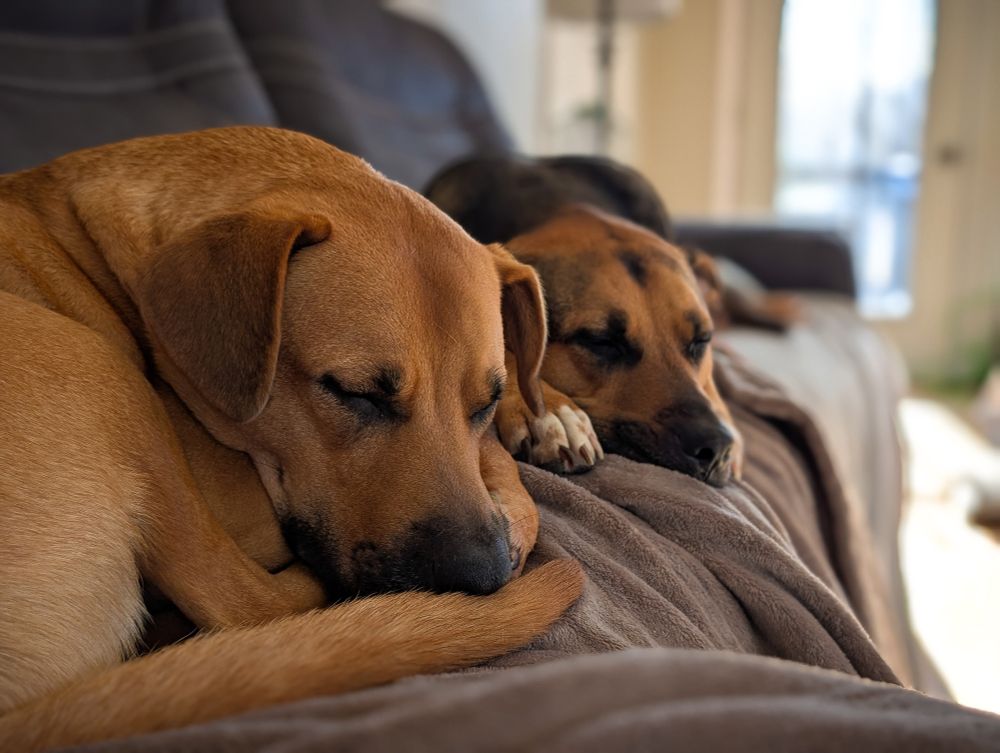


The difference in birthday celebrations now vs my younger years becomes more apparent each year.
Beers & shots gave way to rest & relaxation. Snuggling the pups replaced shouting at parties.
After 38 trips around the sun, I wouldn't have it any other way.
Thanks for the wishes, friends.
Cheers 🍻

Excited that I'll get to relive my teenage years in April!!
25.11.2025 16:48 — 👍 1 🔁 0 💬 0 📌 0
See Ovi score a goal live before I die ✅
21.11.2025 01:09 — 👍 4 🔁 0 💬 0 📌 0A big shout out to Dr. Guillaume Brie D'Hier (postdoc at UQAR) for leading these efforts, and the folks at Mallet Oysters for logistical support in running these experiments! A fantastic collaborative effort.
20.11.2025 20:47 — 👍 0 🔁 0 💬 0 📌 0We think this probably reflects a physiological trade-off: conserving energy reserves (limited in seed) until feeding resumes at the end of dormancy, rather than expending energy to regulate membrane fluidity.
20.11.2025 20:47 — 👍 0 🔁 0 💬 1 📌 0Overall, these findings indicate that while both adult and juvenile oysters enter dormancy during winter months, the physiological mechanisms facilitating this dormant state are very different between adults and juveniles.
20.11.2025 20:47 — 👍 0 🔁 0 💬 1 📌 0Our results provide evidence that, like adults, juvenile oysters do indeed enter a state of dormancy during the winter months. However, unlike adults, juveniles ceased this regulation and instead mobilized glycogen reserves throughout the winter months until the end of dormancy.
20.11.2025 20:47 — 👍 0 🔁 0 💬 1 📌 0We conducted a series of laboratory experiments to reveal the overwintering physiology of juvenile eastern oysters at their northern distribution limit in eastern Canada.
20.11.2025 20:47 — 👍 0 🔁 0 💬 1 📌 0While the winter physiology of adult oysters is well studied, it is unknown if smaller juvenile (seed) oysters also enter a dormant phase during the winter. Furthermore, if seed do use dormancy as an overwintering strategy, it is unclear if they use the same physiological strategy as adult oysters.
20.11.2025 20:47 — 👍 0 🔁 0 💬 1 📌 0For example, to survive winter conditions in the Gulf of St. Lawrence in eastern Canada, adult eastern oysters adjust their cell membrane fluidity by altering the fatty acid composition of their lipid membranes and enter a period of dormancy during winter months.
20.11.2025 20:47 — 👍 1 🔁 0 💬 1 📌 0
In North America, animals living at the northern limit of their geographic distribution have developed creative adaptations for surviving cold winters.
Our latest study, soon to be published in Marine Ecology Progress Series, explores how juvenile oysters have adapted to winters in Atlantic Canada.


In Montreal for science policy meetings all week—my first time back here since 2017!
Two questions:
1. Who do I know still living in Montreal & would you like to grab a beer at some point? 🍻
2. Who wants to catch the Habs-Caps game with me Thursday night at & watch Ovi play before he retires? 🏒 🥅
This is the first time in a long time that I've been away more days than I'm home in a month, and it really has me missing Jenna and the girls.
The older I get, the more of a homebody I become, and I can't wait for an extended vacation over the holidays.

Squeezing in some chores between travel.
Change water filter in the house ✅
Change furnace air filter ✅
Change Civic air filters ✅
Get winter tires on the Civic ⬜
Then to pack and head off to Montreal for the week—thankfully, the last bit of work travel until the new year.

A big thanks to Shawn Robinson for assembling the team and leading this.
link.springer.com/article/10.1...

This scientific obituary, published today in the Journal of Applied Phycology, collates a series of personal tales highlighting some of Thierry's relationships from across the world. We hope it gives a sense of the type of person & scientist Thierry was, & the lasting legacy he's left.
08.11.2025 13:44 — 👍 5 🔁 1 💬 1 📌 0
Thierry was a brilliant scientist of international acclaim, particularly known for pioneering the modern concept of "Integrated Multitrophic Aquaculture" (IMTA).
After his sudden passing in July 2024, it only seemed fitting that we solidify his legacy in the scientific record.

In 2016, these conversations led to a collaborative paper exploring the potential impacts and mitigation strategies for ocean acidification in the context of marine aquaculture—my most cited paper to date. Over the years, a professional relationship transitioned to a friendship.
08.11.2025 13:44 — 👍 0 🔁 0 💬 1 📌 0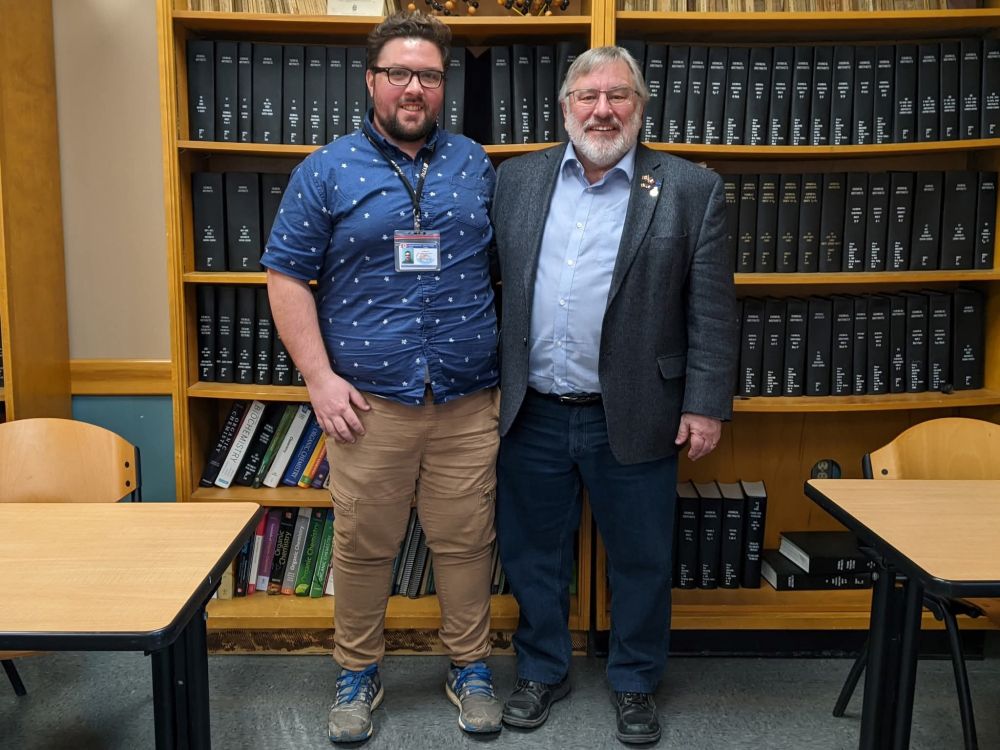
During my PhD, I was fortunate to learn from & work with Dr. Thierry Chopin. While Thierry wasn't directly involved with my thesis, he was generous w/ his time & giving advice; we had many lasting conversations about marine biology, climate change, life as a marine scientist, &, of course, seaweeds.
08.11.2025 13:44 — 👍 2 🔁 0 💬 1 📌 0
You can also read the full paper here: www.nature.com/articles/s42...
05.11.2025 19:32 — 👍 1 🔁 0 💬 0 📌 0