Happy New Year from all of us at SCAPE!
Thank you to our volunteers, followers, partners and funders for all your support in 2025.
We look forward to seeing you as we survey Scotland's coast in 2026...
#coastarch #hessupported #scotarchstrat

@coastarch.bsky.social
SCAPE works with the public to research, investigate, interpret and promote the archaeology of Scotland’s coast. https://scapetrust.org/
Happy New Year from all of us at SCAPE!
Thank you to our volunteers, followers, partners and funders for all your support in 2025.
We look forward to seeing you as we survey Scotland's coast in 2026...
#coastarch #hessupported #scotarchstrat
They allow us to link names, owners, and life stories to vessels whose timbers still lie on the foreshore. These photos are revelatory in showing the scale and majesty of the Moray coast herring fleet.
24.12.2025 13:13 — 👍 2 🔁 0 💬 0 📌 0
BF 1986 Polestar. Zulu, carvel, decked. Built 1897 Gardiner, Cullen. First registered 2/04/1897 to owners George Wood (master), John Wood, James Wood. 1917-19 owner John Mair, Cullen. Information from The Mighty Zulu, Joseph Reid, 2012 - Buckie & District Fishing Heritage Centre Thanks to Chris Harker for sharing these historic images

Remains of a Zulu on the beach at Binsness - the boiler still in position

BF 586 Beautiful Star. Zulu, carvel, decked. Built 1901 George Thomson, Buckie. First registered 10/04/1901 to owners Alexander Mair (master), Alexander Mair Jnr, Portknockie, Alexander Reid, George Thomson, Buckie. 1905-1919 owners A. Mair and A Mair Jnr. Portknockie and Co. 26/12/1919 register closed. Vessel broken up. BF 1933, Grateful. Zulu, carvel, decked. Built 1896 builder not recorded. First registered 27/04/1896 to owner James Bruce (master), Andrew Findlay, Portessie who had her to 1902. 25/03/1902 sold to James Murray, George Murray (master) Portessie, James Bruce. 1904 to 1908 Portessie, registered to J. Bruce & Co. 1909 to 1920 Findochty, registered to A. Campbell. Not in 1921-25 almanacs. No further information. Information The Might Zulu, Joseph Reid, 2012 - Buckie & District Fishing Heritage Centre Thanks to Chris Harker for sharing these historic image

Aerial view of two well-preserved Zulu vessels usually below the low tide line at Binsness. Photo Eddie Martin
#5- our final pick in our highlights of 2025 - the discovery of a photo archive of Zulu herring drifters at Findorn linked to the fishing boat graveyard we investigated with Findhorn Heritage in 2015.
This stunning set of stereoscopic glass plates show them on the shore in 1917.

Fresh erosion shows the upper and lower buildings clearly, separated by a layer of sand.
... The main building is most likely to date to between 1500 and the late 1600s - with earlier structures beneath.
This is our first firm indication of the site’s age and sheds light on the speed of coastal change in the historic period.
#coastarch #HESsupported #scotarchstrat

Erosion has exposed the clear edges of a building

Cod and ling bones recovered from an undisturbed layer
#4 of our #Top5 2025 - A new date for Newark, Sanday.
Fish, whale & dolphin bone, recorded here over many years, suggested a specialised fish processing site.
In early 2025 Storm Éowyn exposed stone buildings buried in sand. We sampled fish bone for radiocarbon dating. The result? ...

Volunteer lifesaving brigades erected these poles as a stand-in for a ship’s mast – used during regular practice drills firing a line from a mobile rocket apparatus to a ship in distress.

Everyone in coastal communities would have been familiar with this life-saving equipment. We even found an illustration of a rocket apparatus being used in an 1888 children’s book ‘Launch the Lifeboat’.
At #3 a newly identified Rocket Pole, Ness of Duncansby, Caithness
Invented in the mid-1800s a mobile rocket apparatus fired a line to a ship in distress. A harness was attached to carry passengers&crew to safety.
Rocket poles stood in for the ships mast in practice drills- very few survive!

At Gossaborough, on Yell, several metres of shoreline reveal tumbled masonry, burnt stone and scattered finds – strong evidence of prehistoric houses now being lost to the sea.

The eroding section at Papil on Yell is a classic. Here, bands of white shell stand out against darker layers of heat cracked stone and charcoal, showing how the midden built up through repeated dumps over time. A closer look revealed struck quartz tools, and just around the corner we spotted half of a saddle quern set within a tumbled wall.

The Ness of Portnaculter in the Dornoch Firth is a wonderful example of a shell midden mixed with heat cracked cobbles, showing people once cooked and ate shellfish here. Similar examples of seasonal shoreline feasts have been recorded in the prehistoric and up to the early medieval periods.

At Basta Voe, Yell, a layer of clean white sand runs through the dark peat. This may record a major storm surge or even a tsunami that hit around 1,500 years ago. Thanks to Allen Fraser for showing us this site.
#2 of our 2025 highlights - coming face to face with history revealed in eroding coast edges…
As the sea cuts into the land, it reveals layers of past human activity, like layers of a cake, revealing glimpses of past events. Here’s a few favourites from the Yell and Dornoch surveys.
#coastarch
Many clifftop Shetland brochs are either partially eroded or teetering on the edge, giving a sense of the scale of cliff erosion over the last 2000 years.
This photogenic site has been captured over the years in sketches & photos, take a look on Trove.Scot
#coastarch #hessupported #scotarchstrat


We’ve had an amazing year of fieldwork - here’s our #Top5 2025 highlights:
Pick #1 Broch of Burland, Shetland mainland.
It looks spectacular from the air and like many on Shetland, is in a highly defended location - bounded by the sea on three sides and with massive banks and ditches.
Gletness made it into the Top 5 archaeological discoveries of 2025!
Thanks to our collaborators and volunteers @archshet.bsky.social - we had a great time!

The strong winds of Storm Bram coincided with high tides, potentially causing coastal erosion. When it’s safe you can help monitor changes by reporting any damage you see. Use Dynamic Coast's new Coastal Erosion Reporter tool at www.DynamicCoast.com
Thank you!
#stormbram #coastarch #hessupported

Aerial photo of a beach with ‘shadow trees’ (pupils from the local school standing on tree stumps to represent the forest)
In 2018, @coastarch.bsky.social raced against the tide to investigate a submerged prehistoric forest on a beach in Na h-Eileanan Siar (the Outer Hebrides) 🌳
It's one of the many sites in Scotland that are under threat from erosion and rising sea levels: www.digitscotland.com/how-to-help-...
We've not been able to identify it - yet. It's possible there is some local knowledge of the boat, and we'll update our records if we find out!
30.10.2025 12:53 — 👍 1 🔁 0 💬 0 📌 0

...Bonus pictures of the zulu, a rare example of a wooden sailing drifter
24.10.2025 15:22 — 👍 3 🔁 1 💬 0 📌 1

The Dornoch Firth Coastal Survey (Mar/Apr2025) Report is out! Highlights: a monumental fish trap, Bonar bridge coastal engineering, & a wonderful discovery of zulu sailing drifter. Download here: scapetrust.org/wp-content/u...
#coastarch #scotarchstrat #hessupported

Aerial image of the excavation trenches
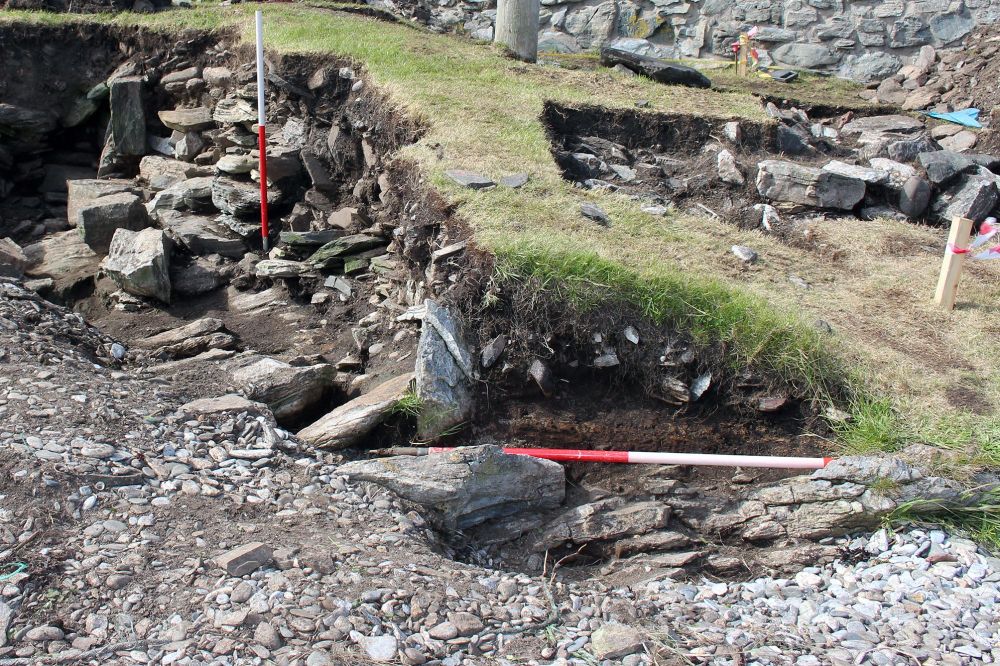
Prehistoric buildings exposed by coastal erosion
Gletness Excavation Report is out!
In May, SCAPE & Archaeology Shetland excavated an eroding Middle-Late Iron Age settlement & a Bronze Age burnt mound.
Short visit, big archaeology.
Download the Report: scapetrust.org/wp-content/u...
@archshet.bsky.social
#coastarch #CoastalHeritage #hessupported

TR Manson bought her from Hay & Co. in Lerwick, salvaging her oak timbers to build Ladybank House in West Sandwick. A remarkable journey. She may be the only surviving Lowestoft-built fishing smack in Scotland.
The full biography is on our blog here: scapetrust.org/candace-the-...
With the name and help from local researchers, it's been possible to trace her story. Built in Lowestoft in 1888, Candace LT171 was a herring fishing smack. She came to Shetland in 1902, re-registered as LK554 to fisherman William Gear. In 1919, the Admiralty advertised her in the Shetland Times...
19.09.2025 12:09 — 👍 0 🔁 0 💬 0 📌 0
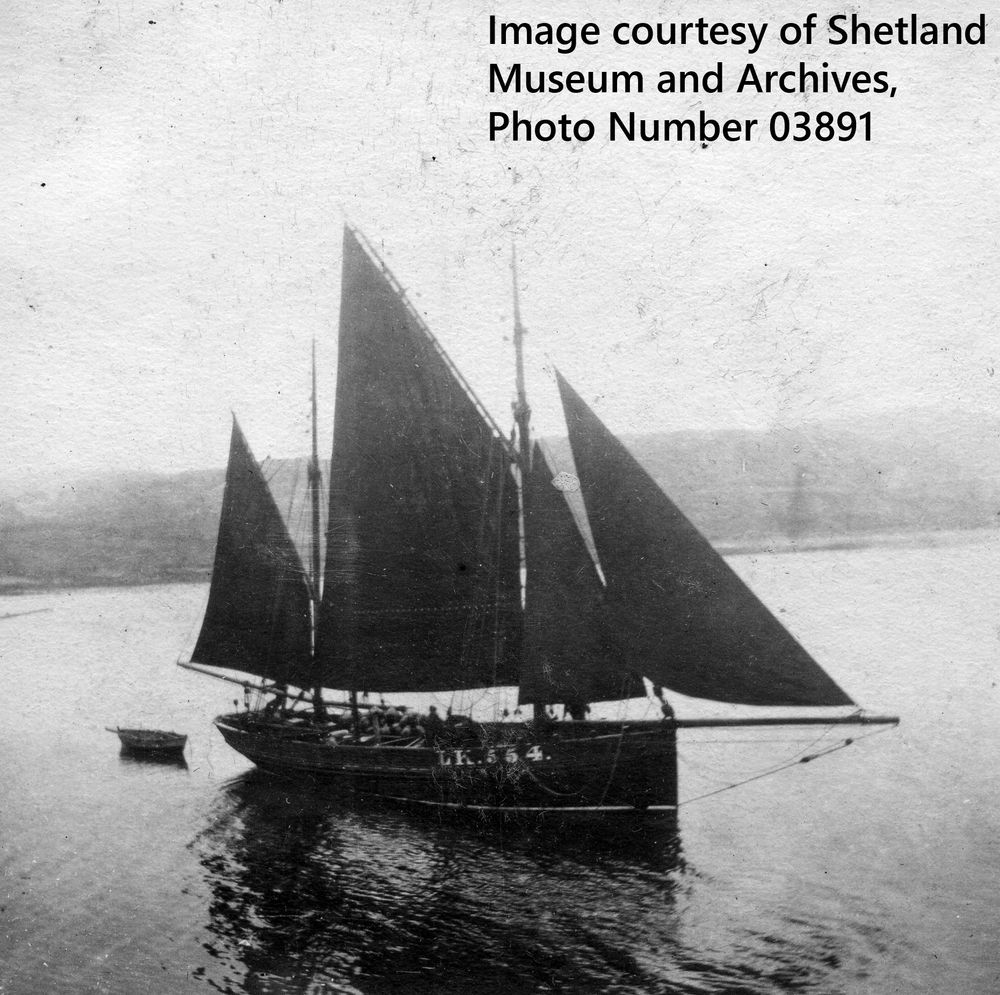
A mystery solved. . .
Back in May, we asked for help identifying a wreck in Sandladie Voe, West Sandwick. Amazingly, someone gave us a possible name: Candace.
#hessupported #shetlandwreck

(4/4) These incredible sites are under threat from coastal erosion and shifting sands. Recording and monitoring them, we gather vital information about how our coastline is changing, and protect our coastal heritage for future generations.
Read our blog here: scapetrust.org/a-walk-of-di...

Eroding beach section at Sads of Breckon
(3/4) At the north end of Sands of Breckon beach sea erosion and dune blowouts have exposed layers of sand and fine gravel in the coastal section. This reflects natural dynamics of a beach system, but due to the archaeology so close by, these dunes should be monitored for any changes.
08.09.2025 15:35 — 👍 2 🔁 0 💬 1 📌 0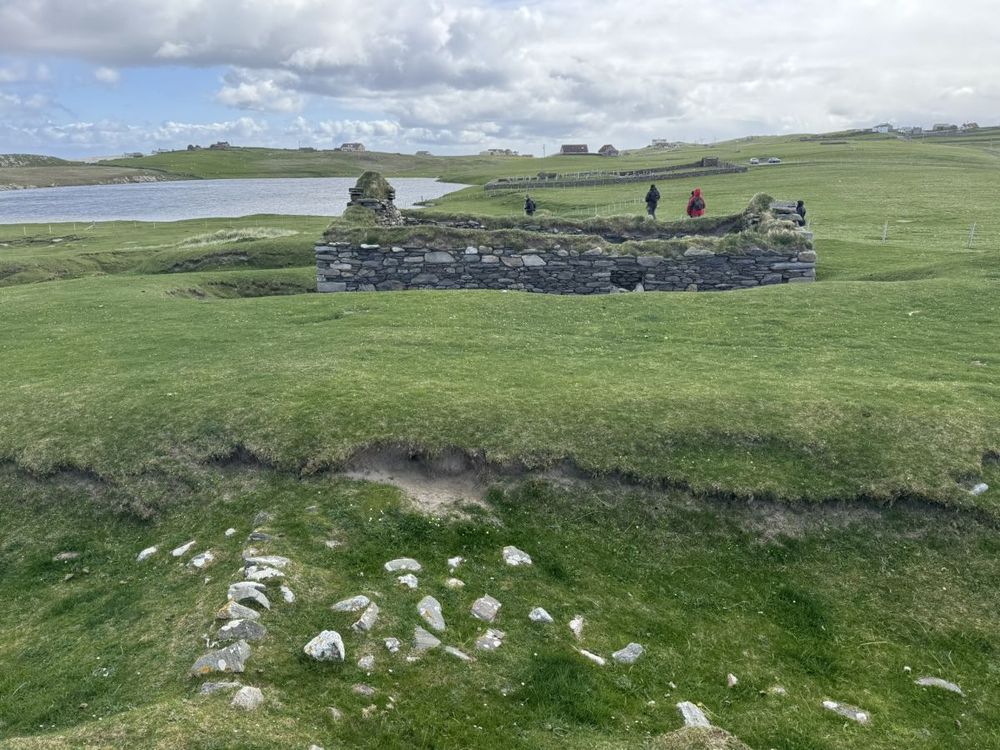
Toft house and enclosure wall in the sand dunes
(2/4) The house at Toft was occupied in 1877 and is now partly buried in sand, with traces of walls disappearing into the dunes - evidence of how quickly sand can overwhelm a place and make it impossible to live in.
08.09.2025 15:33 — 👍 1 🔁 0 💬 1 📌 0
broch outer works at the edge of a cliff
Join us on the latest Walk of Discovery in North Yell, Shetland.
First up is the broch at Fillacomb point, not much to see except the faint outer traces of the bank. The coastline is exposed to the high energy of the North Atlantic Ocean battering against the rock (1/4)...
A fantastic piece of research brought together place names, written sources, and local knowledge, along with visiting sites to test the waulking process. We recommend this 2023 Shetland Amenity Trust blog about the project - it is a fascinating read: www.shetlandamenity.org/talking-toev...
(3/3)

Here are two from our Shetland survey - a shallow trough type "Devakoddi" at Gletness, Mainland and a cleft type at Cruness, Breckon, Yell. Difficult to see at first, once you get your eye in to the enclosed space and gentle waves, these understated sites are rather special! (2/3)
08.08.2025 17:57 — 👍 3 🔁 0 💬 1 📌 0
Tovakuddas are coastal rock pools and clefts used by Shetlanders between the 12th to 17th century to shrink or waulk 'Wadmal' - a handwoven wool cloth. The cloth was secured in these protective pools and the motion of the sea strengthened and thickened it... (1/3)
#tovakudda #hessupported
Aerial photographs from our May 2025 Yell Survey are helping us understand how this fragile landscape is changing.
Full findings coming soon in the Yell Survey Report! stay tuned...


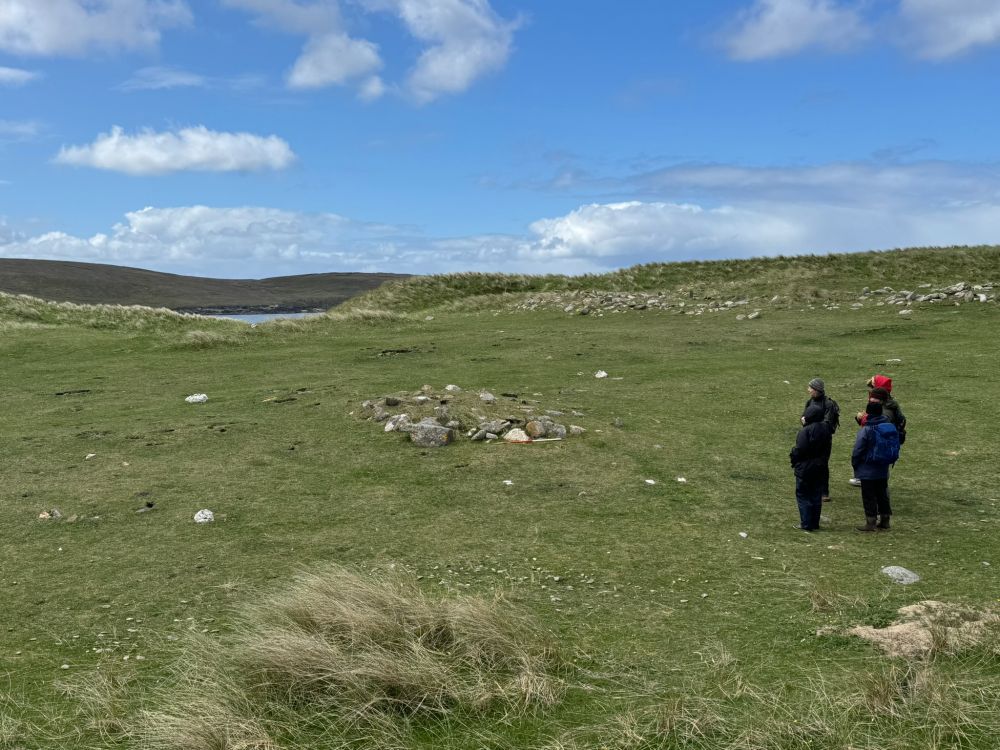
This remarkable site at Sands of Breckon, Yell, is revealing layers of history. Coastal processes have exposed prehistoric houses and burial cairns.
@archshet.bsky.social @standrewshist.bsky.social
#HESsupported #coastarch #scotarchstrat

And read about the Bressay burnt mound reconstruction too. Thanks to the landowners, supporters, and volunteers! scapetrust.org/bronze-age-b...
10.07.2025 16:40 — 👍 0 🔁 0 💬 0 📌 0
SCAPE have helped local communities on Bressay (Shetland) and Sanday (Orkney) to recover eroding complex burnt mounds before they were lost to the sea and reconstruct them for the community and visitors to enjoy. Read about the Sanday burnt mound here scapetrust.org/meur-burnt-m...
10.07.2025 16:37 — 👍 0 🔁 0 💬 0 📌 0