New paper 🙂
arxiv.org/abs/2511.15792

@drjmatharu.bsky.social
MPIA Prize Fellow at The Max Planck Institute for Astronomy. 🔭 Galaxy Evolution with Space-based Slitless Spectroscopy 🔭. Former DAWN Fellow at The Cosmic Dawn Center and Postdoctoral Research Associate at Texas A&M University. 🇬🇧 -> 🇺🇸-> 🇩🇰 -> 🇩🇪.
New paper 🙂
arxiv.org/abs/2511.15792
A PhD student told me yesterday that they really liked my most recent paper because I actually explained the basic concepts that most people don’t bother to explain in their papers. It was the biggest compliment I could have received. I remember being that frustrated student 🥹❤️
14.05.2024 21:17 — 👍 7 🔁 1 💬 0 📌 1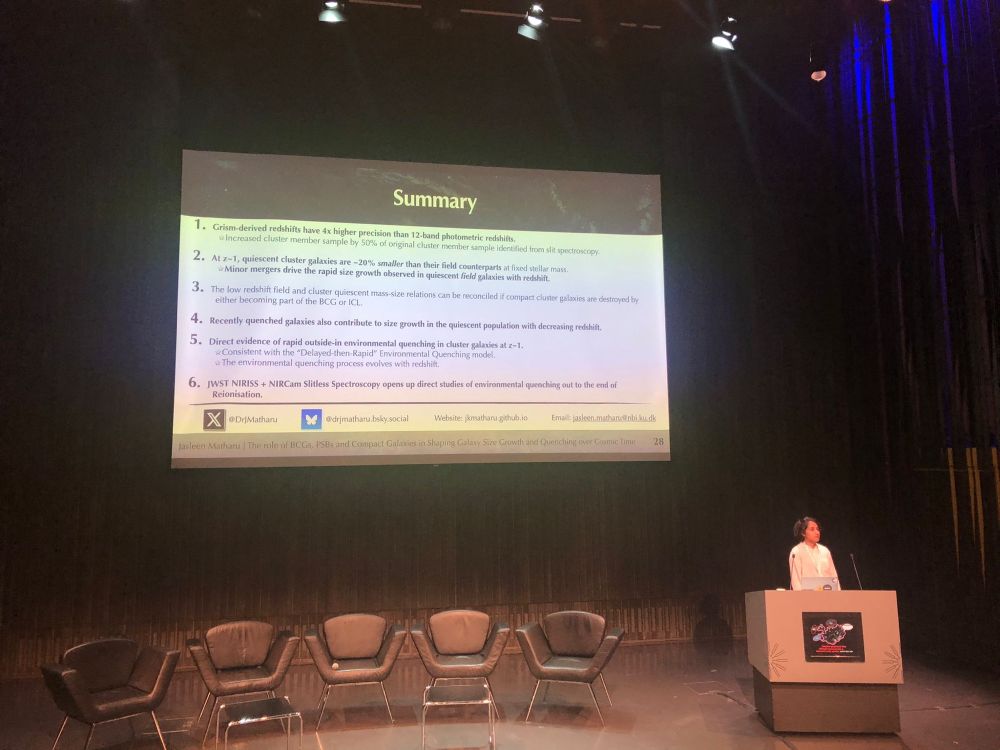
… And that’s a wrap! Privileged to be amongst so many scientists in galaxy evolution really at the top of their game. Hands down the best conference I have been to so far. Nice work Benedetta Vulcani, Gregory Rudnick and Adam Muzzin!
#extremegal24
Photo credit: Jacqueline Antwi-Danso

No big deal, just a first look at spatially resolved star formation just after the epoch of reionisation with JWST NIRCam Slitless Spectroscopy 😜.
arxiv.org/abs/2404.17629
I promise it’s just a placeholder.
19.01.2024 16:32 — 👍 2 🔁 0 💬 0 📌 0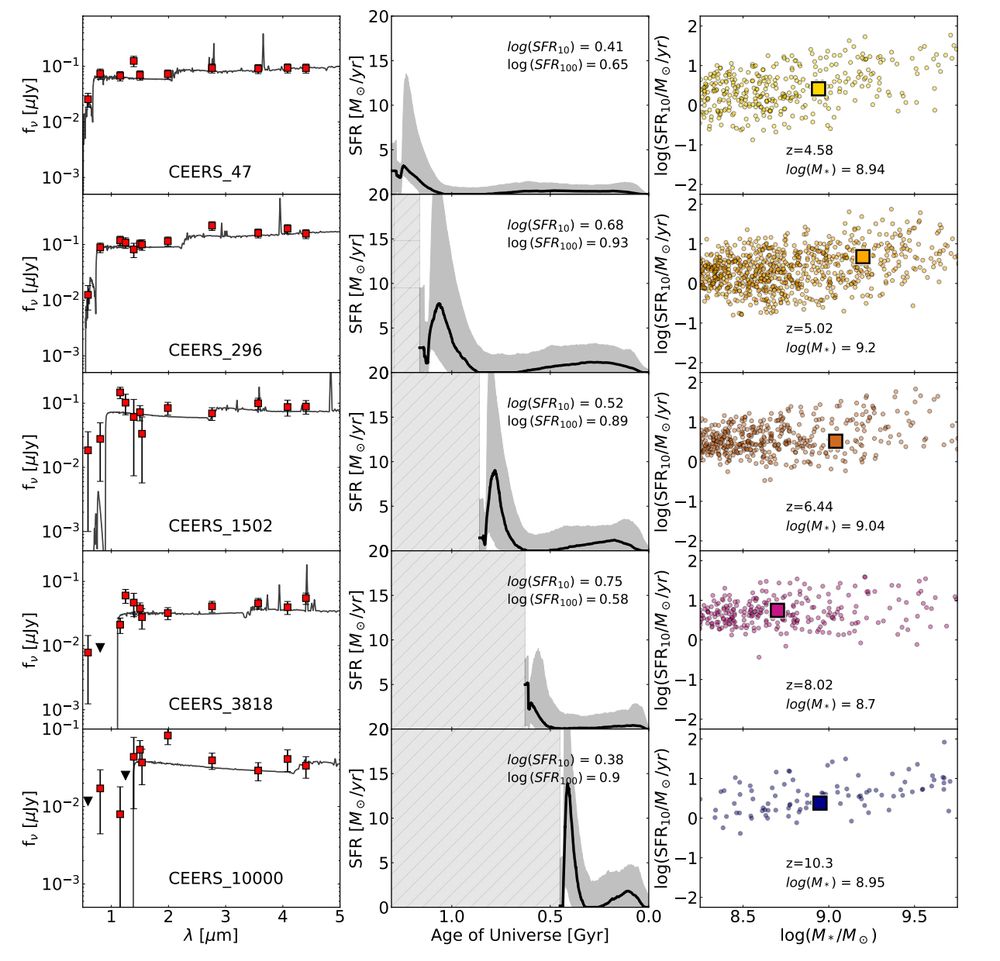
star formation histories of galaxies during the first few billion years after the Big Bang. Some are "napping" between star-forming episodes.
JWST results in the distant universe: galaxies in the early universe spend more time resting between star-formation episodes. This means something different is happening in how they form stars. Great work from NASA FINESST investigator Justin Cole at Texas A&M. arxiv.org/abs/2312.10152
19.12.2023 16:53 — 👍 5 🔁 1 💬 0 📌 0Guilty. Haven’t updated mine in a while.
15.12.2023 00:28 — 👍 0 🔁 0 💬 0 📌 0i knew the academic job market is tricky but I don’t think I had fully appreciated the role of timing. You may be someone who would be great at being a professor but only a handful of positions that are a good fit for you may become available during your postdoc years
14.12.2023 16:43 — 👍 65 🔁 6 💬 7 📌 1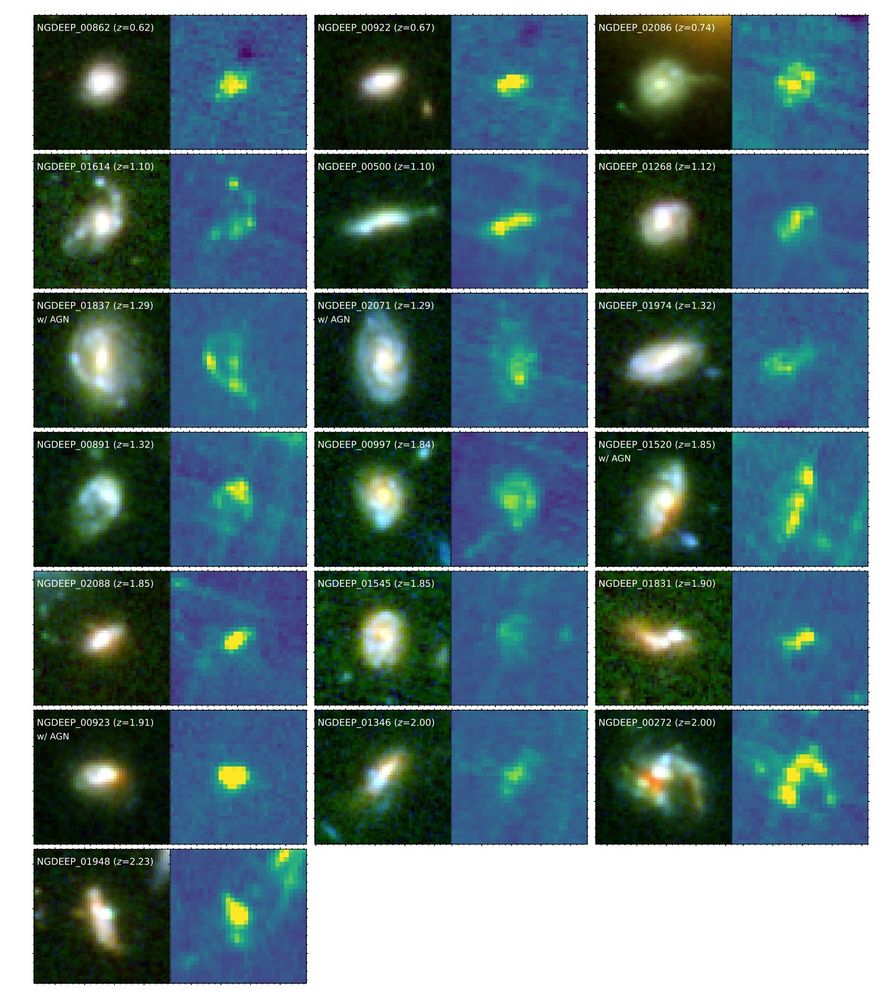
Images of galaxies from JWST and their hydrogen emission (also from JWST), which shows where stars are forming.
Happy to join bluesky. First post is to highlight excellent paper led by Dr. Lu Shen using JWST to understand how galaxy bulges form. Images show where stars form in galaxies (from their Hydrogen emission) compared to the galaxies themselves. arxiv.org/abs/2310.13745
28.11.2023 21:07 — 👍 14 🔁 3 💬 2 📌 0
Happy Diwali folks 🪔
12.11.2023 17:33 — 👍 0 🔁 0 💬 0 📌 0Yup. Overcome one deadline simply to be faced with the next so soon.
27.10.2023 21:16 — 👍 1 🔁 0 💬 1 📌 0#JWSTCycle3 will officially be the most number of proposals received for any one ground- or space-based proposal cycle in the history of astronomy, beating ALMA Cycle 6 by ~100 proposals. Unofficial number is ~1,937 JWST Cycle 3 proposals.
27.10.2023 14:07 — 👍 24 🔁 4 💬 1 📌 2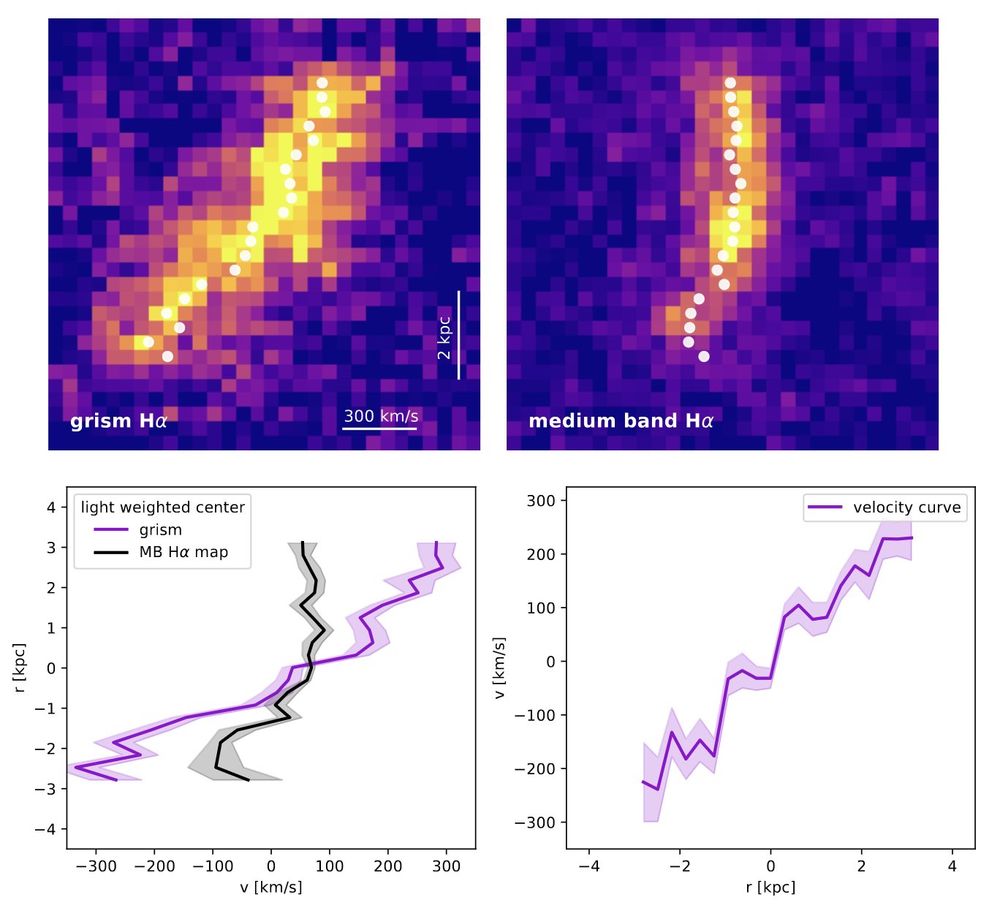
SUPER exciting new frontier in the use of JWST NIRCam slitless spectroscopy to do kinematics at ridiculous redshifts 🤩. Been such a treat to watch Erica Nelson bring this paper to life. The future is slitless, and it is here 😏.
arxiv.org/abs/2310.06887