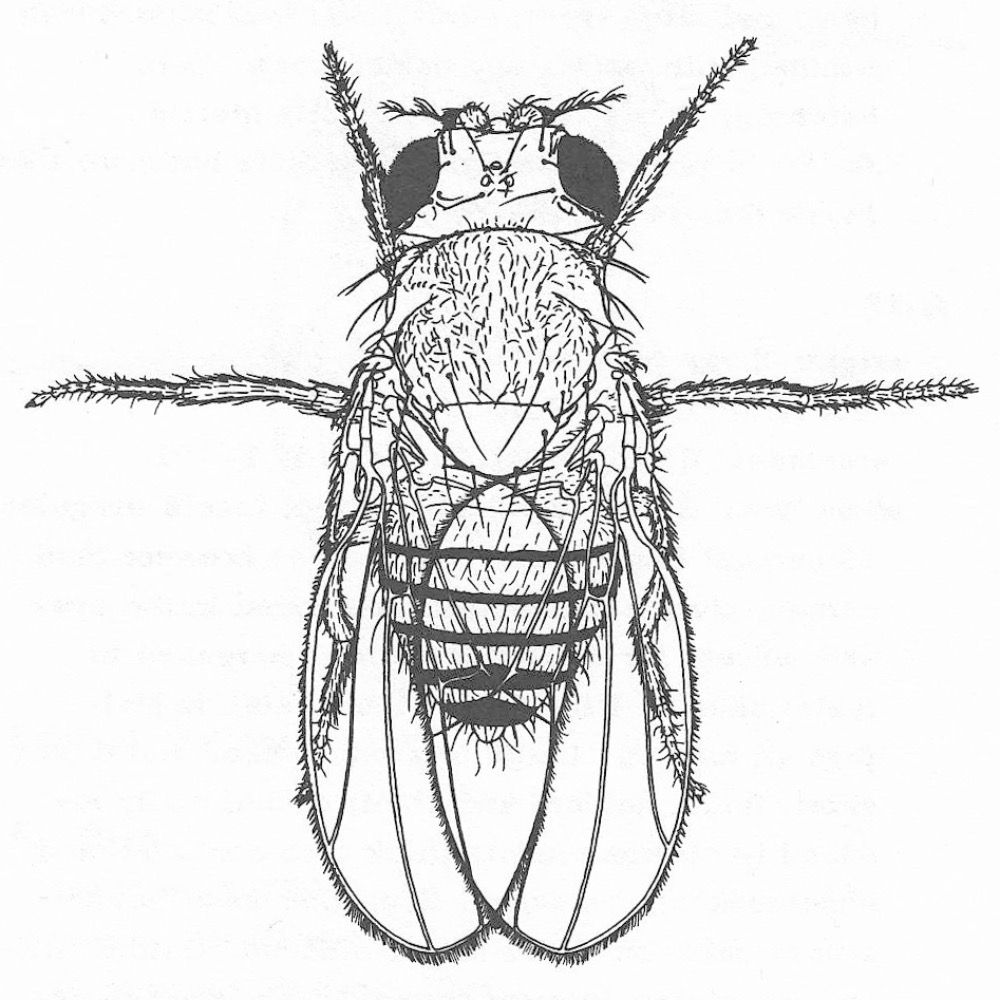
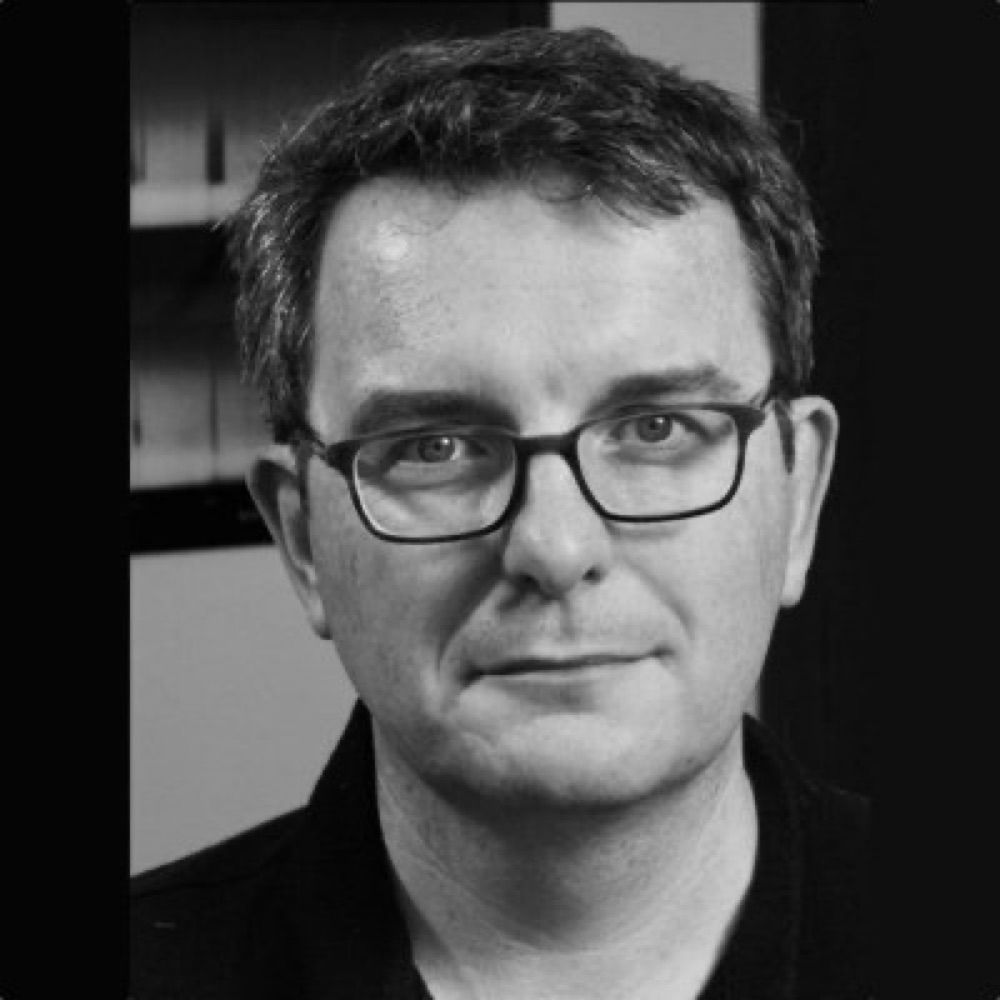
🌟 Meet the Scientific Committee: @filodelbene.bsky.social 🌟
Filippo del Bene is a member of the Scientific Committee of #EZM2026, and we are thrilled to have him join us in Vienna!
Stay tuned as we continue to introduce the outstanding scientists of EZM2026! 🐟🧬
13.02.2026 14:12 — 👍 5 🔁 3 💬 0 📌 0
🤯
11.02.2026 05:43 — 👍 9 🔁 4 💬 0 📌 0

Meet our keynote speakers at #EZM2026!
13th European Zebrafish Meeting, taking place in Vienna, July 7–11.
🧬 Elly Tanaka (IMP, Vienna) is a leader in the molecular and cellular biology of limb and spinal cord regeneration, with pioneering contributions to regenerative biology.
10.02.2026 08:35 — 👍 6 🔁 3 💬 0 📌 0

Thinking about EZM2026 in Vienna? 🐟
Travel grants are now open for students & ECRs.
7–11 July 2026 | Deadline: March 15
Hope to see many of you there! @ezsociety.bsky.social #zebrafish
06.02.2026 10:19 — 👍 11 🔁 10 💬 0 📌 0

🎉 Congratulations to Prof. Elizabeth Patton, recipient of the 2026 CNV Award! 🎉
Prof. Elizabeth Patton is a pioneer in zebrafish models for melanoma research and is renowned for her unwavering dedication to community service! Thank you! 🙏
Let's celebrate her at the #EZM2026 in Vienna! 🥂
05.02.2026 16:36 — 👍 6 🔁 1 💬 0 📌 1

Time for a thread on our Christmas preprint “Origin and evolution of acrocentric chromosomes in human and great apes”. I had so much fun with this project and paper. It will be hard to summarize in a thread, but I’ll try www.biorxiv.org/content/10.6... [1/21]
02.02.2026 14:58 — 👍 40 🔁 29 💬 1 📌 1

📅EZM2026-Save the date!
We are delighted to welcome you to the 13th European Zebrafish Meeting in Vienna, Austria!
📑Submit your abstract by March 15 2026!
✅Early bird registrations are now open until April 15th 2026
We are looking forward to seeing you there!
28.01.2026 11:12 — 👍 12 🔁 9 💬 0 📌 1
I stand corrected! :)
05.01.2026 20:14 — 👍 0 🔁 0 💬 0 📌 0
Who's Who? Course Instructors | History of the Marine Biological Laboratory
And Goodrich has also abandoned later zebrafish for other fish species with intriguing patterns. But he remained affiliated with Wesleyan and also served as instructor for multiple MBL courses (including the one in 1939, where he was director: history.archives.mbl.edu/browse/exhib...). (9/9)
05.01.2026 17:37 — 👍 0 🔁 0 💬 1 📌 0

The figures shows photomicrographs of the regenerating anal fin from the 1931 Goodrich paper. The anal fin was removed on October 9. Shown is a 40x picture taken on October 22 1930, with a 90x magnification in one area. The same area is als shown in 90x on October 25 1930.
What is even more remarkable, this might be also the paper with the first documented experiment on fin (albeit anal fin) regeneration (discussed in the context of pattern re-formation). See below at 13 and 16 dpi. (7/9)
05.01.2026 17:37 — 👍 0 🔁 0 💬 1 📌 0
That’s not all: in 1931 Goodrich “revisited” zebrafish and described the emergence of the color pattern in more detail in another paper (onlinelibrary.wiley.com/doi/abs/10.1...), which is still often quoted in papers on zebrafish pigmentation (openalex.org/works?filter...) (6/9)
05.01.2026 17:37 — 👍 0 🔁 0 💬 1 📌 0
But the D. rerio x D. malabaricus cross is a mysterious one. Malabar danios have been since reclassified in the Devario genus of the Danionidae family, and work from Francisco Pelegri’s lab showed that zebrafish - Devario hybrids are nonviable. (5/9) onlinelibrary.wiley.com/doi/10.1111/...
05.01.2026 17:37 — 👍 1 🔁 0 💬 1 📌 0

The phenotype of different hybrids is shown: D. rerio × D. dangila, D. rerio × D. albolineatus, D. rerio × D. kerri, D. rerio × D. nigrofasciatus, D. albolineatus × D. nigrofasciatus and D. albolineatus × D. kerri.
I could not find the original Schreitmüller descriptions, but as for the D. rerio x D. albolineatus, we can always rely on earlier work from @dparichy.bsky.social, where these patterns have been described in detail (link.springer.com/article/10.1...). (4/9)
05.01.2026 17:37 — 👍 1 🔁 0 💬 1 📌 0

A list of crosses by Schreitmüller and some other aquarists from the article.
Briefly discussing crosses by various aquarists, Goodrich credits Wilhelm Schreitmüller (de.wikipedia.org/wiki/Wilhelm...) in describing “Danio rerio" x "D. albolineatus" and “Brachydanio rerio" x “Danio malabaricus" crosses. (3/9)
05.01.2026 17:37 — 👍 0 🔁 0 💬 1 📌 0
Mendelian Inheritance in Fish on JSTOR
H. B. Goodrich, Mendelian Inheritance in Fish, The Quarterly Review of Biology, Vol. 4, No. 1 (Mar., 1929), pp. 83-99
Arguably, the oldest scientific paper that mentions zebrafish is his “Mendelian Inheritance in Fish” from 1929, where amongst lengthy discussions of inheritance of color patterns in guppies, medakas, swordfish and platyfishes, zebrafish also make a cameo. (2/9) www.jstor.org/stable/28082...
05.01.2026 17:37 — 👍 0 🔁 0 💬 1 📌 0

Photo of Hubert Baker Goodrich (1887-1963) from the Smithonian Learning Lab.
We usually credit Charles W. Creaser with the first scientific zebrafish paper, but that is true only with some caveats. Meet another strong contender, Hubert B. Goodrich, interested in all things related to fish genetics. (Photo: Smithsonian, prod.learninglab.si.edu/resources/vi...) (1/9)
05.01.2026 17:37 — 👍 3 🔁 1 💬 1 📌 1
It would seem logical, but I am not aware anyone else repeating this. (Which might very well be only me being ignorant, of course.)
05.01.2026 10:52 — 👍 1 🔁 0 💬 0 📌 0
Search
NASA Insight web page
Sadly, I could not find a real publication or any archival trace for this experiment, although I do think it was one of the coolest things she did in her long career. And yes, that includes sending killifish embryos into orbit on Cosmos-782 (nlsp.nasa.gov/view/lsdapub...). (4/4)
04.01.2026 19:46 — 👍 0 🔁 0 💬 0 📌 0

Introductory parts of the 1936 abstract: "8659 C
Structures Developed in Amphibians by Implantation of Living Fish Organizer.
JANE M. OPPENHEIMER.*(Introduced by J. S. Nicholas.)
From Osborn Zoological Laboratory, Yale University.
The study of mutual interactions between developing fish andamphibian tissue was tested by implanting parts of fish blastulxinto the blastwcele of developing amphibians. This method appliesalso t o the study of the capacity for differentiation of isolated em-bryonic cells of the teleostean. Halves of blastula of the eggs ofDanio rerio (the Zebra fish), isolated from their yolk an hourbefore the commencement of the visible processes of gastrulation,were implanted into the blastoccele of Triturus torosus eggs. Thehosts were fixed after 10 days of development."

Highlighted text from the results part of the abstract: "The induction consisted of well-differentiatedunilateral medulla, an auditory ganglion and an auditory vesicle.The indwed medulla formed 1)y the amphibian cells was similarin ccnfiguration to normal amphihian medulla; it was coextensivewith the fish notochord in length. In contrast to this, the inducedauditory vesicle u-as situated anterior to the fish notochord andthe induced amphibian medulla, and probably was induced directlyby the amphibian medulla."
Yet, in the same year (while still at Yale) she did publish an abstract in Proc. Soc. Exp. Biol. Med. about a transplantation experiment about which I was always dreaming as a PhD student (not knowing that it was done 70 years prior): putting a fish organizer into a newt embryo. (3/4)
04.01.2026 19:46 — 👍 3 🔁 0 💬 2 📌 0
Historical Introduction to the Study of Teleostean Development on JSTOR
Jane M. Oppenheimer, Historical Introduction to the Study of Teleostean Development, Osiris, Vol. 2 (1936), pp. 124-148
Oppenheimer was very much into fish embryology, but that was mostly killifish (Fundulus), and not zebrafish. To give some perspective: in her epical "Historical Introduction to the Study of Teleostean Development” (1936) zebrafish is not even mentioned once. www.jstor.org/stable/301554 (2/4)
04.01.2026 19:46 — 👍 0 🔁 0 💬 1 📌 0

Photograph of Jane Marion Oppenheimer sitting at a microscope.
Next, in my miniseries on early researchers using zebrafish is Jane M. Oppenheimer, fish embryologist and science historian par excellence. (True, I’m cheating here a bit, but if I mentioned Hellen Battle in the previous bluetorial, it is fair to mention Oppenheimer here.) (1/4)
04.01.2026 19:46 — 👍 11 🔁 3 💬 1 📌 1

One more achievement for Hisaoka: as far as I could tell, he was amongst the first to suggest the use of breeding tanks to collect zebrafish eggs in his "Further Studies on the Embryonic Development of the Zebrafish, Brachydanio rerio (Hamilton-Buchanan)” paper from 1960. (8/8)
03.01.2026 17:33 — 👍 3 🔁 0 💬 0 📌 0
In 1963 he left academia to become an NIH Grants Associate. Soon he was the assoc. director for the NIDR Extramural Program, and then became head of the NINCDS Extramural Program. He was also a Judo expert, member of the US Judo Federation. Sadly, he died in 1978, at the age of 53, in cancer. (7/8)
03.01.2026 17:33 — 👍 0 🔁 0 💬 1 📌 0

He also made a movie of the developmental process, together with John Ott, a pioneer of time-lapse imaging (but sadly, this movie cannot be found in the Loyola Archives). (6/8)
03.01.2026 17:33 — 👍 1 🔁 0 💬 1 📌 0

At Loyola he continued his work on toxicology and teratology (openalex.org/works?page=1...) , but for this he also needed a more detailed developmental table, covering somitogenesis stages, so he published one with Battle, using phase contrast microscopy. (5/8)
03.01.2026 17:33 — 👍 0 🔁 0 💬 1 📌 0

Immigration and Nationality Act of 1952 - Wikipedia
In 1953 Hisaoka received his PhD from Rutgers and he got a job at Loyola, but initially was barred based on the McCarran-Walter Immigration Act to enter the US, and needed to get a special exemption to take up his position. (4/8) en.wikipedia.org/wiki/Immigra...
03.01.2026 17:33 — 👍 0 🔁 0 💬 1 📌 0
About Us | Moore Water Gardens
Battle’s and Hisaoka’s first paper, "Effects of ethyl carbamate (urethan) on the early development of the teleost Brachydanio rerio” is from 1952, and in the Acknowledgements they credit Monte Moore, founder of Moore Water Gardens, providing the adult zfish. moorewatergardens.com/about-us/. (3/8)
03.01.2026 17:33 — 👍 0 🔁 0 💬 1 📌 0

Picture of a young Helen I. Battle standing on a pier with a big fish in her hands (on a stick) and a girl. A large water body and a shoreline can be seen in the background.
His involvement in toxicology was not by chance: he completed his MSc in the University of Western Ontario, where he was tutored by Hellen Battle - the legendary fish embryologist, educator and feminist. Shout-out to DFO-MPO for this badass picture of Battle: www.instagram.com/p/DAqidOtvsEM/. (2/8)
03.01.2026 17:33 — 👍 0 🔁 0 💬 1 📌 0
Historian of science & medicine and writer @ Johns Hopkins & Berkeley. Biography of James Watson coming soonish from Basic Books. Also rock climbing, roots music, tattoos, dogs, humor. My opinions are his –>
Group Leader at EMBL Heidelberg. temperature, single cell genomics, proteins, and lots of fish.
Biologist - ethologist working on dog-human interaction, human/animal-robot interaction, founder of ethorobotics
The Complete Work of Charles Darwin Online (https://darwin-online.org.uk/)
The official Bluesky account of the European Zebrafish Society - supporting and connecting the zebrafish research community across Europe. Updates on events, training, resources, and community initiatives.
(plant) molecular biologist. Love RNA and watered a plastic plant once.
🌈
Heart development | heart regeneration | congenital heart disease | imaging | seeing is believing
Cell and developmental biology at the University of Sheffield unravelling the mysteries of planar polarity using Drosophila
molecular biologist 🧬🧪
PhD student at Institute of Archaeogenomics ELTE RCH 🧬🦴💀
@elte-rch-iag.bsky.social
Associate professor of physiology @ Semmelweis University. We create novel fluorescent tools to study tissue damage and inflammation biology. #inflamapping
Led the completion of the zebrafish reference genome, advancing genomic resources for the research community.
The EZRC at the KIT maintains and distributes mutant and transgenic zebrafish lines.
This account is managed by @rastapopolus.bsky.social and #Rima on behalf of EZRC.
PhD student @bryjalab.bsky.social, Masaryk University, Brno 🔬🧠
Fan of developmental biology, choroid plexus, meninges, brain, scRNAseq, Wnt proteins, mountains, books, and dogs 🌄📚🐕
Social science and other distractions. Old posts get deleted pretty quick.
https://kieranhealy.org /
https://theordinalsociety.com
EU-LIFE is the alliance of independent research institutes in the life sciences across Europe, aiming to promote and strengthen European research excellence.
https://eu-life.eu/
dataviz and information graphics at ELTE MMI
portfolio: https://attilabatorfy.com/
head of visual journalism project: https://atlo.team/
book order: https://eltebook.hu/batorfy-attila-adatvizualizacio
blog: https://attilabatorfy.substack.com/