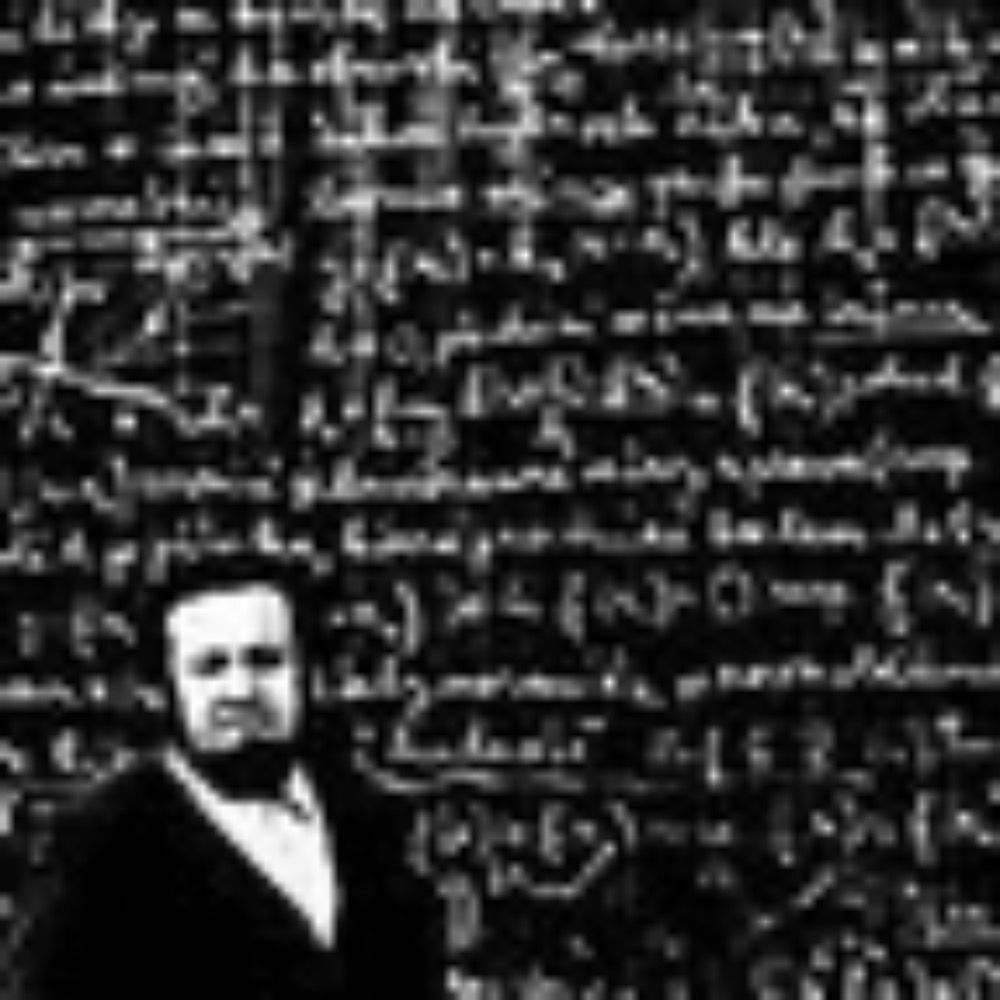
I found the old 35mm slide for the cover for Neuromancer and had it scanned in for your pleasure. Enjoy!
16.02.2026 04:37 — 👍 2356 🔁 527 💬 41 📌 25
@willflux.bsky.social
Only hardware makes it possible! FPGA, RISC-V, 68K, OS, graphics, demos, permacomputing http://projectf.io | http://systemtalk.org
I found the old 35mm slide for the cover for Neuromancer and had it scanned in for your pleasure. Enjoy!
16.02.2026 04:37 — 👍 2356 🔁 527 💬 41 📌 25
Sign in window of shop reads: !!!STOP!!! GIVING CATS !!!TREATS!!! DONT PUT HAND THROUGH LETTERBOX
This Hastings shop wants you to STOP! 🙀 Though I'm now thinking of @gossjam.bsky.social.
16.02.2026 17:42 — 👍 2 🔁 0 💬 0 📌 0I searched for "gnu assembler directives" (without quotes) and the top match on DuckDuckGo and Google is: ftp.gnu.org/old-gnu/Manu...
Looks promising apart from the fact it's from 1994! Back when my computer was an Amiga 1200 and Linux 1.0 was released.
Current docs: sourceware.org/binutils/doc...

An image showing Scotland with Aberdeen Airport marked and a sunny spell symbol
After 21 days without sunshine, Aberdeen recorded its first sunshine since 21st January this afternoon 😎
12.02.2026 17:18 — 👍 86 🔁 17 💬 1 📌 5It is rendered in hardware. The current design only has 128 8x16 glyphs in rom. I'm still working on how I handle the full GNU Unifont with a mix of full (16x16) and half-width (8x16) glyphs. I will share my findings.
12.02.2026 15:10 — 👍 1 🔁 0 💬 0 📌 0
Isle.Computer running on ULX3S dev board connected to computer monitor over HDMI. The text on the monitor reads: Isle.Computer Hello, hardware friends. Demos look better on a dev board :) Thanks to my sponsors.
And a quick lunchtime shot of 🏝️ Isle.Computer running on #ULX3S.
Simulation may be practical for software dev, but it feels so much better seeing it running on real hardware. This is #riscv asm decoding UTF-8 sent over UART to Isle hardware running on #fpga. Verilog and asm written by hand. 😊

Verilator/SDL simulation window on macOS reads: Isle.Computer Hello, this is a 115200 baud test on Isle Computer. We also have delete and carriage return. Next up there's buffered input with a fifo...
I'm beavering away on practical input and output with UTF-8 on Isle.Computer. Text is a wonderful thing in its own right and also decidedly handy for debugging. The designs for the next chapter aren't too far away. #FPGA
11.02.2026 20:41 — 👍 4 🔁 0 💬 1 📌 0You might be thinking, but Flux, if this is Unicode, why aren't you showing some cool Katakana, a little Hangul, or an emoji?
Alas, there's more to do, including full-width characters for text mode and larger storage to hold GNU Unifont (we currently only have basic Latin and block elements).

Verilator/SDL simulation running on macOS. The window displays the following text in orange on a dark background "▚▚ Hello, World! UTF-8 UART ▚▚".
Unicode UART goodness for 🏝️ Isle #FPGA Computer.
SDL key presses to UART via C++, sent to Isle hardware running under Verilator. The Isle #riscv asm software decodes the UTF-8 for display, including ▚ (U+259A).
We get Unicode user input in Verilator using same mechanism as physical dev boards. ☺️
I'm trying trailing underscore style, though I am seeing this form of message quite a bit. 😅
error: use of undeclared identifier 'data_idx'; did you mean 'data_idx_'?
It's easy to make someone's day.
When someone shares something beautiful or cool they've made, don't just favourite, take 30 seconds to write a comment. ✍️
Trite? Yes. But we still need reminding.
Well that’s one way to lose these walking blues. Diamonds on the soles of our shoes.
05.02.2026 00:26 — 👍 1 🔁 0 💬 0 📌 0What do C++ devs think of Google's convention of naming class data members with a trailing underscore? google.github.io/styleguide/c...
uint32_t cnt_ = 0;
This looks odd to me, but it's been a while since I've done much C++. Verilator simulation is giving me cause to get back into it a bit.

ULX3S PCB connected to computer monitor showing “Hello, World! This is an Isle FPGA Computer UART test.”
Work on 🏝️ Isle #FPGA computer input chapter continues. Here I’m testing UART with #ULX3S dev board.
03.02.2026 15:49 — 👍 12 🔁 2 💬 1 📌 0
“While the RISC-V specification provides strong security primitives… implementations consistently choose insecure defaults… The decisions vendors make today… will be baked into billions of chips we cannot patch.” #riscv #fosdem
fosdem.org/2026/schedul...
“While the tradition remains popular in the 21st century, studies have found no consistent association between a groundhog seeing its shadow and the subsequent arrival time of spring-like weather.” — Wikipedia
03.02.2026 10:31 — 👍 1 🔁 0 💬 0 📌 0Saying a Makefile link command out loud is strange: "dash R dollar caret, dash O dollar snail..." 🐌
I guess that's an AT not a snail, but after the carrot (caret) I unconsciously chose to say snail.

A thoughtful and informative article from Wiki Education on LLM use in #Wikipedia: wikiedu.org/blog/2026/01...
“Our fundamental conclusion about generative AI is: Wikipedia editors should never copy and paste the output from generative AI chatbots like ChatGPT into Wikipedia articles.”
I realised I never posted a video of the advanced asm animation introduced in this chapter.
30.01.2026 16:04 — 👍 3 🔁 0 💬 0 📌 0
Lattice Semiconductor Temporarily Down for Maintenance
No #FPGA data sheets for you today! Lattice reminding us of the good old days of the Internet.
30.01.2026 11:11 — 👍 1 🔁 0 💬 1 📌 0
Oops, it's only Thursday. Wishful thinking on my part. 😄
www.youtube.com/watch?v=kfVs...
Happy #FPGAFriday. I'm starting work on the next part of 🏝️Isle #FPGA Computer. I'm looking at input and the early system library. UTF-8 is surprisingly easy to decode in assembler; that's not some sort of humble brag, it's a testament to the design of UTF-8.
29.01.2026 16:19 — 👍 3 🔁 0 💬 1 📌 0Unimpressed music shop cat is unimpressed. What *have* you been listening to?
29.01.2026 11:06 — 👍 0 🔁 0 💬 0 📌 0I'm not familiar with VIPER, but its formal proof claim is interesting.
"It was the first commercial microprocessor design to be formally proven correct, although there was some controversy surrounding this claim and the definition of proof."
The CPU mostly works to the frame signal. It checks for I/O, does some processing, then polls for the next frame start.
I’m deliberately not starting with interrupts for simplicity, and so I can develop the hardware and software to work with them.
It’s interesting that early microprocessors, such as the 6502 and Z80 have interrupts, but many open-source #RISCV designs do not. 🤔
Not having interrupts makes practical computer design both simpler and more complex. 🏝️ Isle #FPGA computer doesn’t yet have interrupts, and it’s testing my ingenuity.
Nice. Audio circuit? 🔊
24.01.2026 14:43 — 👍 1 🔁 0 💬 0 📌 0A fascinating thread. 🙏 The RISC v CISC wars were silly, as if the dividing line were clear and absolute.
The 68000 is a brilliant design, but Motorola leaned into complexity (addressing modes) with the 68020. With the benefit of hindsight, I think this was a mistake as pipelining became essential.

A die photo of the 8086 microprocessor. The image shows a tan square with complex patterns of beige and dark lines showing the circuitry. Thicker light lines distribute power across the chip while black bond wires are attached around the edges. Various regions with different patterns are labeled with their function including a large rectangular region in the lower right that holds the microcode and the 16-bit ALU in the lower left. The ALU Control circuit at the bottom is highlighted.
The arithmetic/logic unit (ALU) in the Intel 8086 processor (1978) is more complicated than you might expect, performing 28 different operations from addition and logical AND to shifts and BCD adjustment. A special control circuit reconfigures the ALU for each operation. Let's look closer...
23.01.2026 18:07 — 👍 78 🔁 13 💬 2 📌 1Thanks. I enjoyed doing it, so I recommend building your own text mode hardware.
I have more features I want add, like supporting full-width characters (e.g. Japanese scripts). GNU Unifont is what makes the Unicode support practicable.