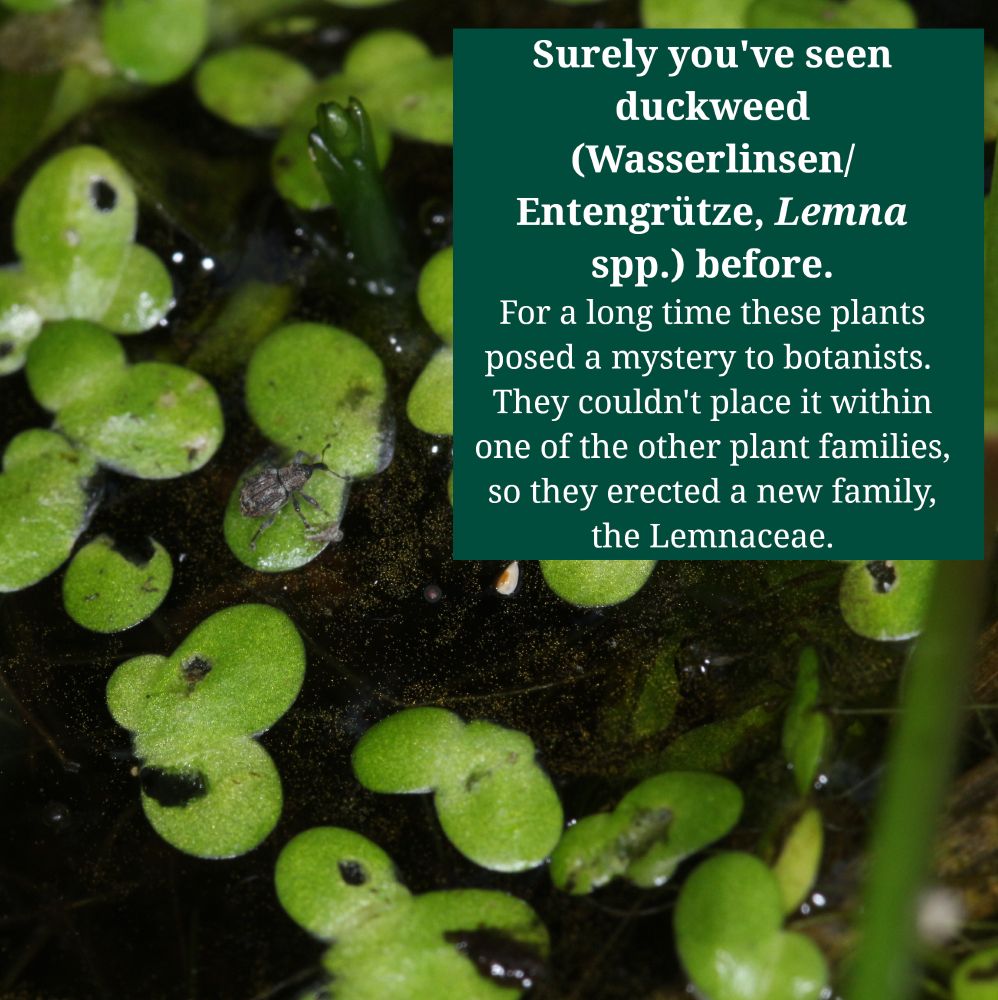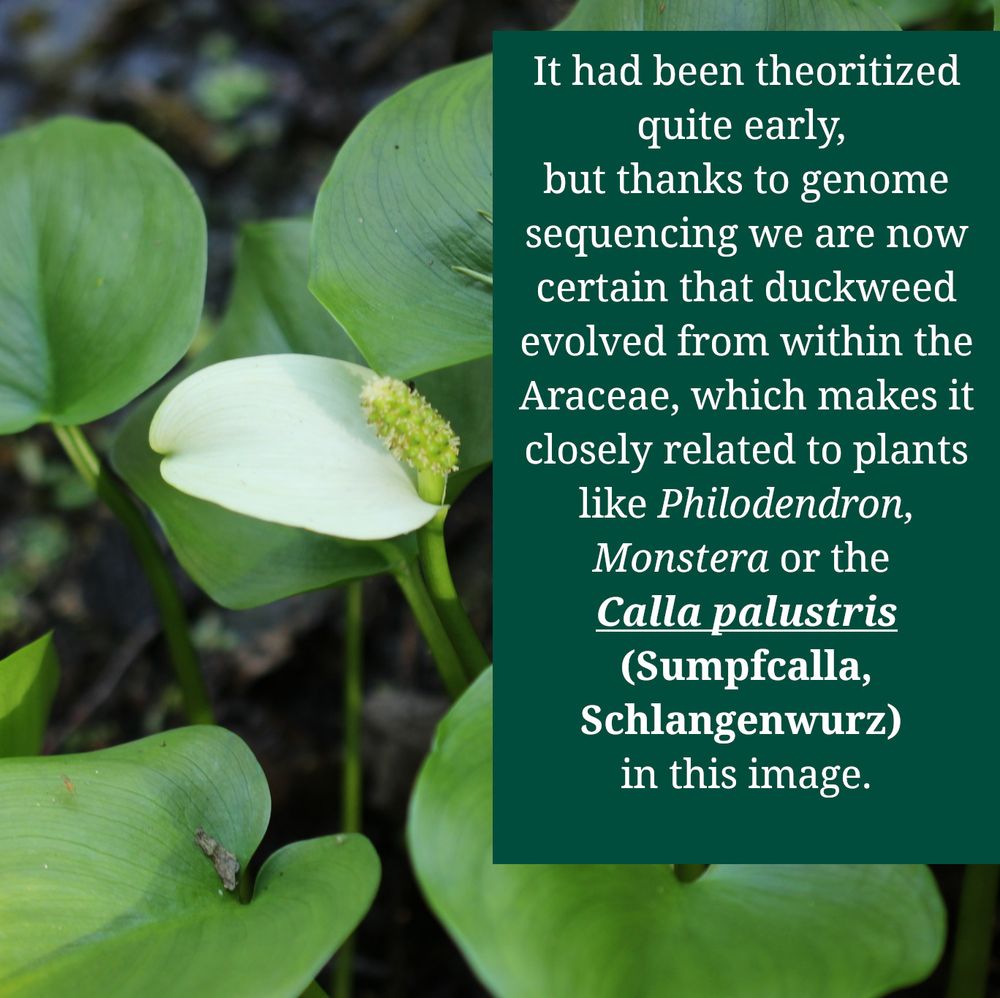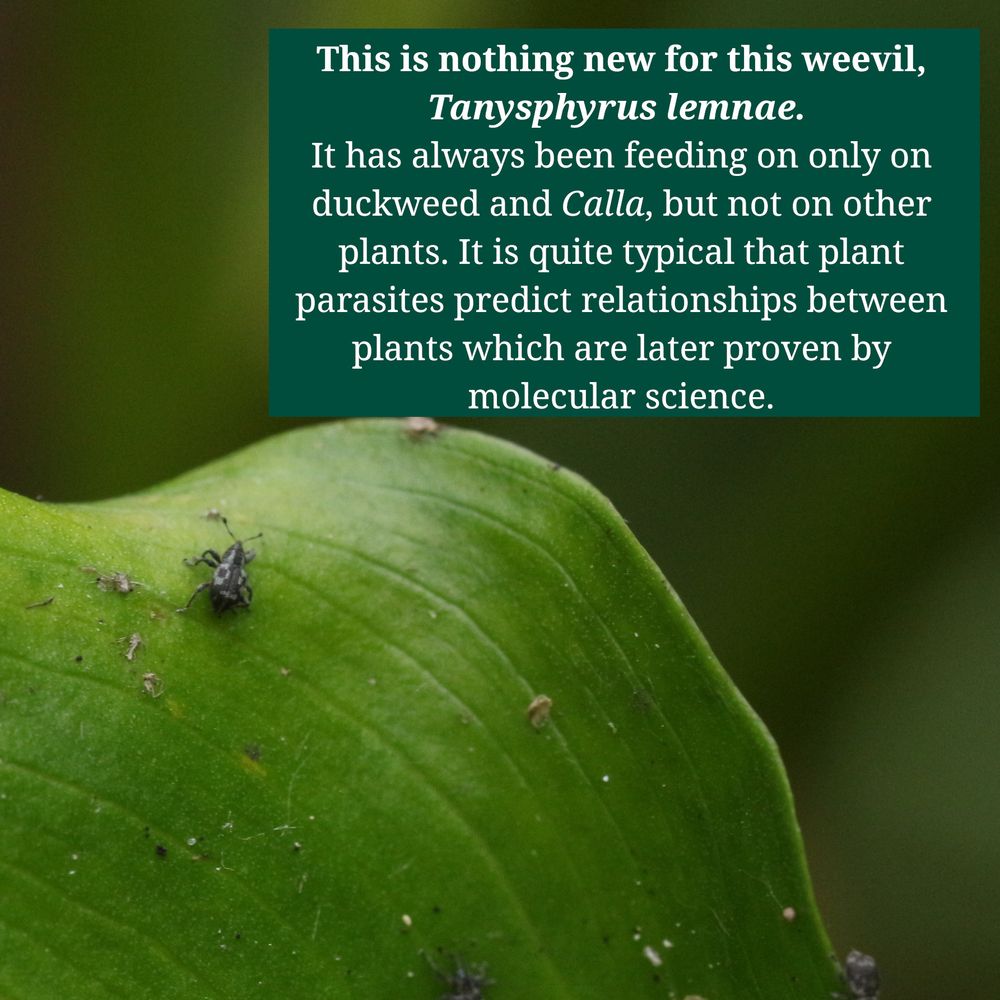
Species Identifications: Common Pitfalls
Some thoughts about Identifications. How do we identify properly? How do we avoid mistakes?
I started a blog and my first post is online!
The posts will try to explore topics which are not typically covered by introductory literature and textbooks, e.g. because they are considered to be "too basic". Let me know what you think!
weevil-see.github.io/taxonomy/Ide...
08.08.2025 16:45 — 👍 2 🔁 0 💬 0 📌 0
Do I understand correctly that you do this to criticize iNats plans? I agree!
I see the main problem that reasoning for an identification changes based on context.
Id like iNat as the worldwide standard, but people in Europe are already concerned as the servers are located in the US...
11.06.2025 14:10 — 👍 1 🔁 0 💬 1 📌 0
Could the needle be made out of silver? The corrosion is looking similar to that which is illustrated in this paper here: www.natsca.org/sites/defaul...
09.05.2025 21:06 — 👍 0 🔁 0 💬 0 📌 0
TaxonWorks Together
Annual event about the collective work in the creation of data to Describe life
It is one week until TaxonWorks Together 2025.
With 7 in-depth conversations ranging from eDNA to Research Software Engineers and the role of vouchering, and stories of #data in transition, there's more than TaxonWorks on the table.
Join over 125 registrants, for free, at together.taxonworks.org.
29.04.2025 14:32 — 👍 0 🔁 1 💬 0 📌 0
Do I have to be a paying member of the ESA to take part? When clicking "register", it's not clear for me if I'm creating a free account or if I'm registering as a member :)
(asking publicly because it may matter to others as well, hope that is okay)
04.05.2025 16:21 — 👍 1 🔁 0 💬 1 📌 0
I think they like moist habitats, I've seen them once in Brandenburg on a moist meadow (on Urtica), and once in the south of Poland, montane environment, on a vegetation of large herbs, mainly Petasites.
16.03.2025 13:24 — 👍 1 🔁 0 💬 1 📌 0
I'm writing my master's thesis in the lab of Marianna Simões at the Senckenbergmuseum in Frankfurt. Its very inspiring to see how the team has been growing in numbers and is exploring new research areas
The lab is now on instagram, follow for updates: www.instagram.com/msimoeslab/
msimoeslab.com
16.03.2025 13:17 — 👍 1 🔁 0 💬 0 📌 0
Ganz sicher dass es O. gemmatus ist? Otiorhynchus hat ja über 1000 Arten in Europa, und in Slowenien würde ich auch Arten erwarten, die nicht über Fotos (z.B. im Internet) zugänglich sind.
Ich bin mir wegen der Bestimmung selbst nicht sicher, aber er sieht ungewöhnlich aus.
10.03.2025 15:54 — 👍 1 🔁 0 💬 1 📌 0
Komisch dass ObsIdentify daneben liegt, die Art wird oft fotografiert und ist für Otiorhynchus-Verhältnisse gut bestimmbar. Es ist Otiorhynchus gemmatus, eine Art die nur im westlichen Alpenraum vorkommt.
10.03.2025 15:50 — 👍 1 🔁 0 💬 2 📌 0
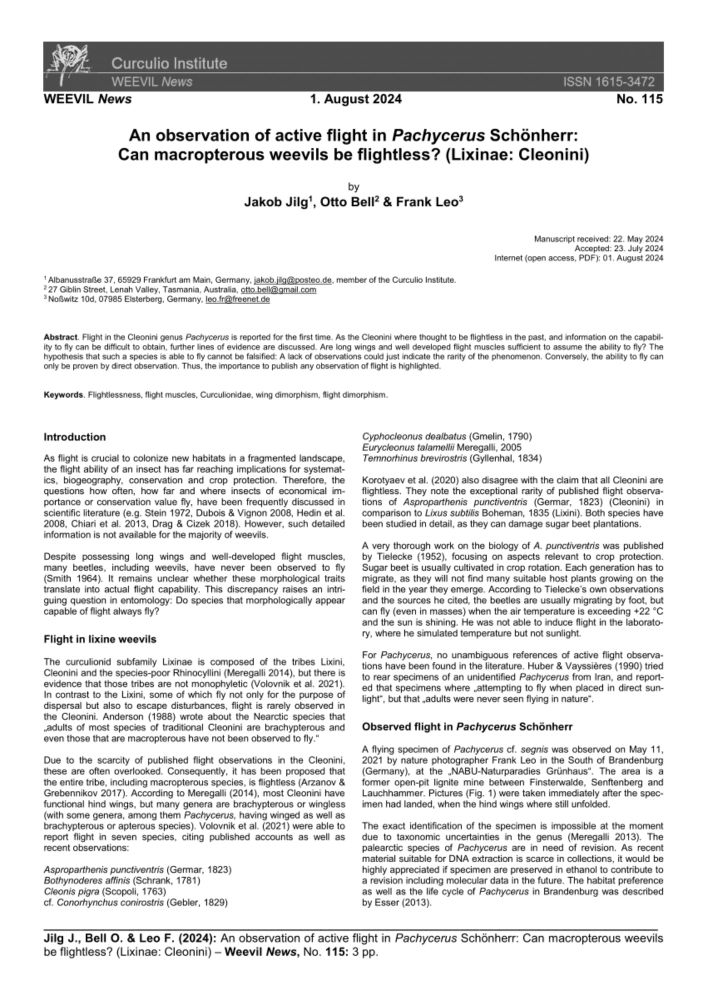
Interesting question! Flight in beetles can be a complicated phenomenon. Usually Id say that you can check if they have long wings. I would assume that long wings and flight muscles are reduced in species which do not use them. However, many species with long wings are rarely/never observed flying.
05.01.2025 16:56 — 👍 0 🔁 0 💬 1 📌 0
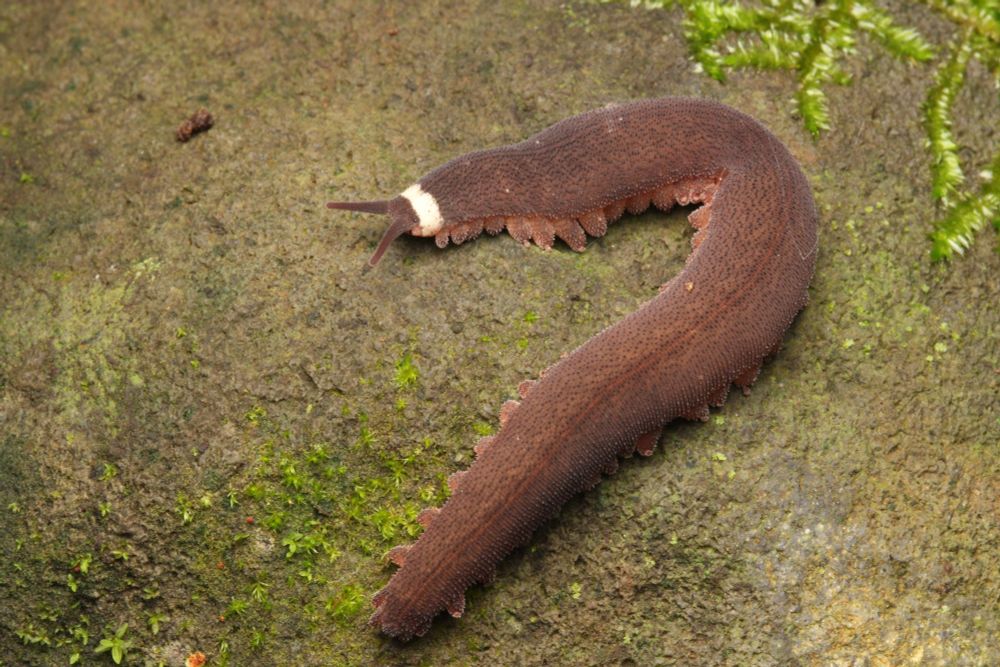
A velvet worm (Onychophora: Peripatidae) in Chiriqí (Panamá). I was incredibly amazed to find this specimen under a bunch of logs and stones, but had to suppress my urge to frantically turn logs after realizing how dangerous some snakes in the area are...
15.12.2024 14:01 — 👍 12 🔁 1 💬 0 📌 0
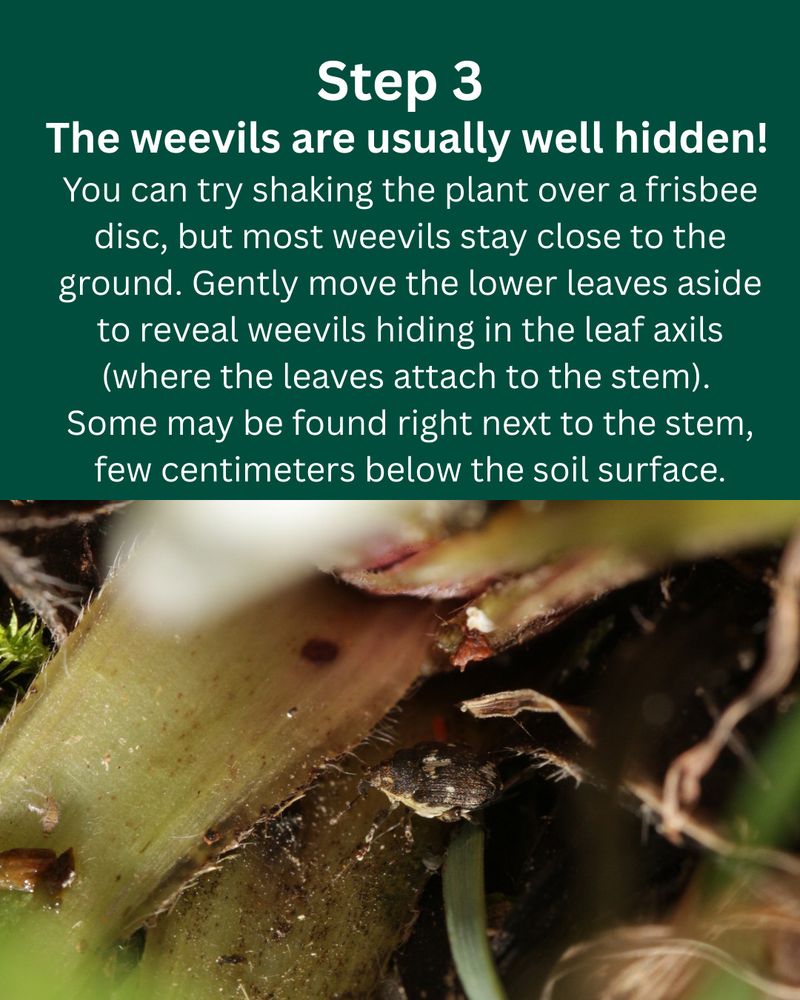
This is how I find twiglet weevils (Acalles and related genera) in Central Europe. Weevils with comparable ecology are found wordwide, you can try it no matter where you are.
When beating twigs, be swift and careful, as they will drop to the ground at the slightest disturbance.
12.12.2024 13:17 — 👍 5 🔁 0 💬 0 📌 0
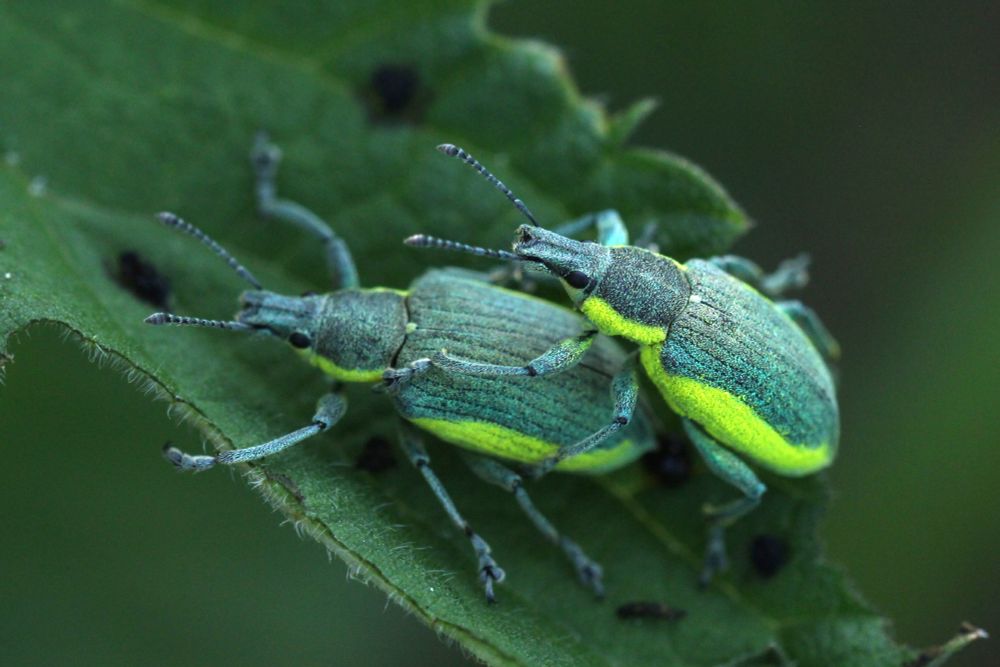
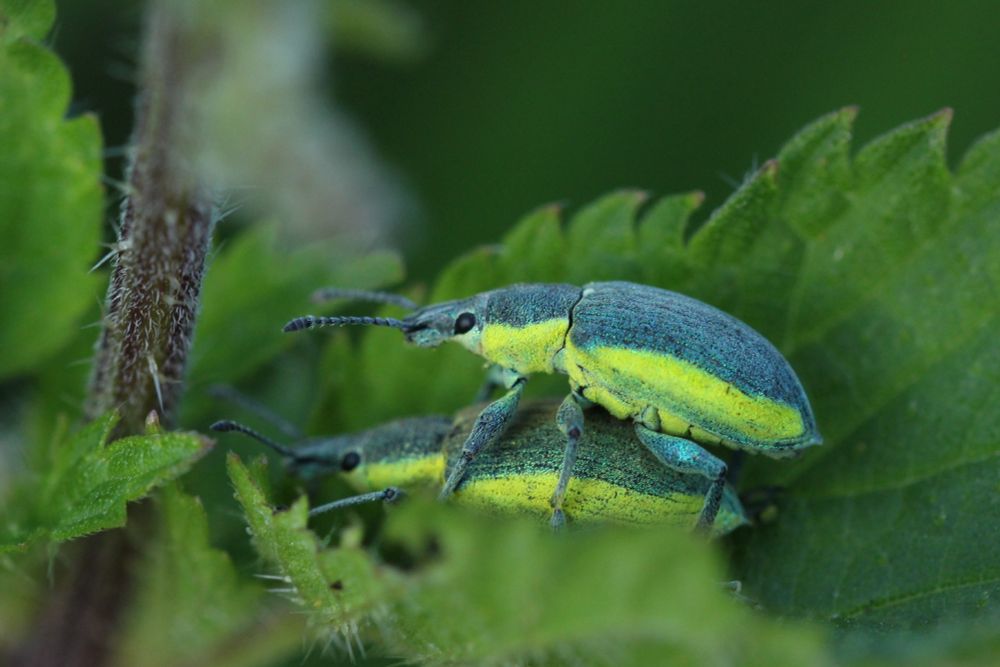
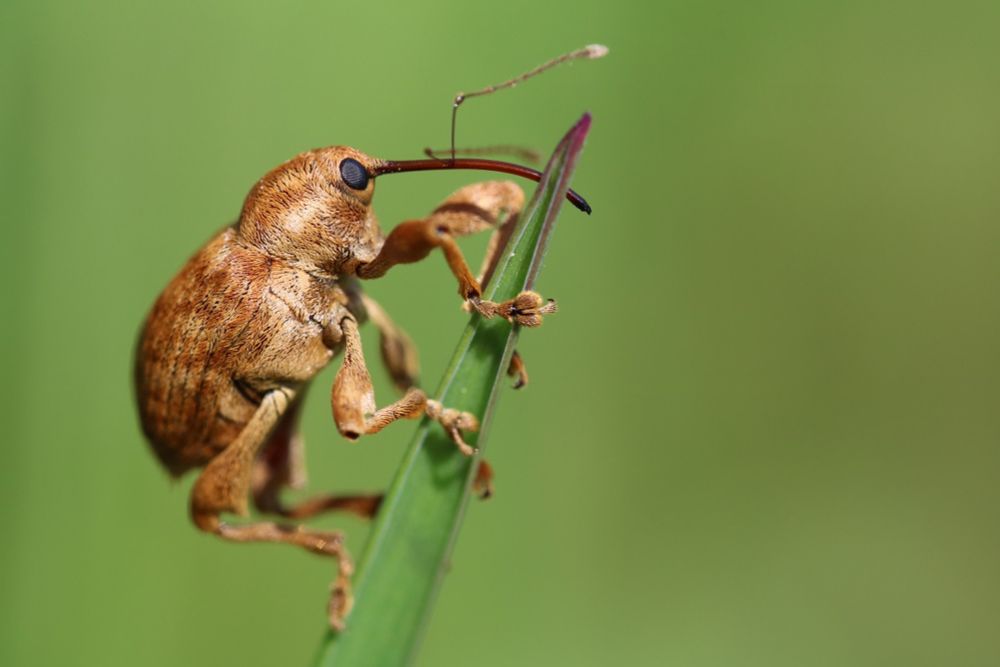
I already run an instagram on weevils (@weevil.see) but wanted to give Bluesky a shot.
So here's my first post: Chlorophanus viridis
The species is widespread in Germany, but according to Rheinheimer & Hassler has become rarer for unknown reasons. You'll find it in damp habitats, and its polyphagous
09.12.2024 16:18 — 👍 8 🔁 0 💬 1 📌 0
PhD Candidate @UChicago Committee on Evolutionary Biology | Field Museum | Beetles | Palm Flower Weevils | Pollination | Ontologies | she/her
Twitter: @aemagland
Entwicklung von https://floraweb.de, Ort für wild wachsende Pflanzen im Internet.
Es skeetet der Entwickler @heiland.earth
Open source development: https://gitlab.opencode.de/bfn/open-access/floraweb
Mastodon: https://social.bund.de/@floraweb
PhD Researcher @newcastleuni.bsky.social @ForagingEcology.bsky.social investigating impacts of artifical light at night on ecological networks, using eDNA and nutritional analysis 🧬🔬🌿🐛🐜🪲🦗🦋🪳🐝🐞🕷
Describe life.
https://taxonworks.org
#biodiversityinformatics
Entomologist and artist. All views are my own.
Alberta, Canada.
They/them
🍉🌈🏳️⚧️
Bug, microbiome, and -omics enthusiast. UTSC Postdoc studying wood-eating wasps and moths. Aspiring academic twitter cool girl. 🐝🧬🪵🔬✨
Wildlife photographer/filmmaker 📸🐍🪲🦋
https://www.patreon.com/c/nlwild
Agency for Nature and Forests, nature protection and policy. Belief in independent science. Nature and wildlife photographer with a heart for the less known creatures. Trying to promote and protect the animals by showing their beauty. Birds Beetles Bonkers
Freelance entomologist specialising in reserve management, conservation grazing, rewilding & farming. 2nd place pan-species listing. Spiders. Bugs. Grew up below poverty line. AuDHD. Writing this https://pelagicpublishing.com/products/pan-species-listing
24 & totally obsessed with the tiniest insects :)
Photographing hidden biodiversity from leaf litter, deadwood & soil alive @ up to 10x
+other habitats & museum specimens
Preparator of beetles @smnstuttgart.bsky.social
inaturalist.org/people/coleomaniac
Independent entomologist, ornithologist, botanist, grazing ecologist, human. Integrating landscapes & conservation of animals, plants & more. I believe in observation & data, nothing else! Beware, I may speak out inconvenient truths about my own kind.
Lecturer, Monash Uni. Research focus: animal movement, citizen science, conservation, global change. First-gen MS, PhD.
More: https://shawanchowdhurylab.com/.
Entomologist 🇵🇷
Former ITAP Invert chair ITAP.gov
Advocate for Federal Unions: aginspectors.org
Film Ent: imdb.com/name/nm13959020/
Editorial admin at: https://www.sswento.org/
Board Member: circulodepr.org
Views are personal.
Beetle Curator in Leibniz LIB Museum of Nature Hamburg. Evolutionary biologist & entomologist. Fascinated by #rovebeetles diversity. Check also www.zylalab.com
Doctoral student in the Toussaint Lab at the Natural History Museum of Geneva. Studying trait evolution of ground beetles using museomics
https://crcardenas.github.io/
🍉🍉🍉
Bike polo is okay
-------▯°
🐙 Biologist and
🎨 Artist/Illustrator
with lots of love for little critters 🕷️🐞🦗🐝🐜🐌
smartwork.bigcartel.com
Biologische Schutzgemeinschaft Göttingen - Vereinigung für Natur- und Umweltschutz e.V.
Website: https://www.biologische-schutzgemeinschaft.de/
Praktischer Naturschutz | Biodiversitätsforschung | Exkursionen | Vorträge | Beweidungsprojekt
Curation de contenu en entomologie liée à la plateforme Scoopit
➡️ https://www.scoop.it/u/bernadette-cassel
#arthropods #science #biology #ecology #biodiversity
#education #nature #environment #edusky #insects
📸 Haute-Loire (France)
Mad about diapriid wasps/bees 🐝taxonomy, zoological nomenclature, museums, entomology curation & IPM! Former NHMUK, now freelance. Recording Lauriston Agroecology Farm🌾🥕 🏴🇪🇺 https://www.researchgate.net/profile/David-Notton #Edinburgh
PhD student in the Sönke lab at Duke University / Vision, behavior, sensation / Arachnids, beetles, crabs, really whatever funky arthropods / He/him