Coexisting With Humans: Genomic and Behavioral Consequences in a Small and Isolated Bear Population
academic.oup.com/mbe/article/...

@rsbiello.bsky.social
Evolutionary biologist | #Conservation #Genomics #PopGen | #Tortoises et al 🐢🐸🐳🐻🐉🦋
Coexisting With Humans: Genomic and Behavioral Consequences in a Small and Isolated Bear Population
academic.oup.com/mbe/article/...
These findings reveal the population structure and adaptive potential of P. spumarius, Europe’s key vector of X. fastidiosa. They highlight the need for targeted surveillance of locally adapted populations and provide genomic tools to monitor vector dynamics and disease risks.
16.12.2025 12:50 — 👍 1 🔁 0 💬 0 📌 0
Maps of Europe, with zoomed in views of Italy and the UK, coloured by the historic rates of gene-flow showing areas of high- and low- movement, and graphs showing the different relationships between genetic- and geographic-distance in populations in Italy and the UK.
Migration analyses indicate limited long-distance dispersal but strong local connectivity in Italy, consistent with the rapid regional spread of X. fastidiosa. In contrast, we find complex historical gene flow within the UK, suggesting geographic or climatic barriers to movement.
16.12.2025 12:50 — 👍 2 🔁 0 💬 1 📌 0
Graphs showing the selection analysis with peaks in SULT genes, the geographical distribution of different ST4 alleles, and structural modelling showing the effect of an amino acid change in the active site of ST4.
Genomic scans revealed loci under selection in southern Italian populations, including signals in sulfotransferase (SULT) genes, potentially linked to detoxification, behavioural plasticity, host use, or insecticide resistance in olive-growing regions.
16.12.2025 12:50 — 👍 0 🔁 0 💬 1 📌 0
Graphs showing the results of population structure analysis including PCA, a phylogenetic tree, and admixture analysis showing the distributions of different haplotypes across populations in different locations.
By resequencing 430 individuals, we uncovered three major lineages shaped by geography and climate. These lineages differ in reproductive isolation and mito-nuclear divergence. Particularly, Spanish populations grouped with P. tesselatus, adding to regional genetic complexity.
16.12.2025 12:50 — 👍 1 🔁 0 💬 1 📌 0
Graphs showing genome assemble quality including a Hi-C contact map with the chromosomes fully assembled, a snail plot of genome completeness, and coverage graphs across the chromosomes showing 50% coverage in the X chromosome (the sequenced individual was female).
We generated a chromosome-level genome assembly for Philaenus spumarius and high-quality genome assemblies for four related spittlebug species. These resources provide a strong genomic framework for evolutionary and epidemiological studies.
16.12.2025 12:50 — 👍 1 🔁 0 💬 1 📌 0
A map of Europe, North America and New Zealand showing the locations of collection of samples, several hundred in Europe and a few elsewhere.
To address this, we worked with a global network of researchers and citizen scientists to assemble a geographically and ecologically diverse collection of spittlebugs from across the world. This enabled a truly large-scale population genomic analysis.
16.12.2025 12:50 — 👍 0 🔁 0 💬 1 📌 0
The common meadow spittlebug P. spumarius, a small brown insect sitting on a leaf.
The meadow spittlebug, Philaenus spumarius, feeds on xylem, has a broad host range, and thrives across diverse landscapes, making it an exceptionally efficient vector of X. fastidiosa. Yet, its genetic diversity, migration, and local adaptation were poorly understood.
16.12.2025 12:50 — 👍 0 🔁 0 💬 1 📌 0w/ @samtmugford.bsky.social @qunliu07.bsky.social @tom-mathers.bsky.social @saskiahogenhout.bsky.social @johninnescentre.bsky.social
16.12.2025 12:50 — 👍 1 🔁 0 💬 1 📌 0We have a new preprint!
In this study, we use #genomic data to uncover population structure and adaptive potential in the meadow #spittlebug, the main European #vector of #Xylella fastidiosa.

Scientific productivity gap based on English-language peer-reviewed papers. Shown are the maximum % differences in the number of peer-reviewed papers published by female native English speakers from a high-income country (-45%), female non-native English speakers from a high-income country (-60%), and female non-native English speakers from a lower-middle income country (-70%), compared to male native English speakers from a high-income country (red flag).
Women, non-native English speakers & those form low-income countries are disadvantaged in science but by how much? We found that women with non-English first languages from low-income countries publish up to 70% fewer in English than their counterparts. 1/5
doi.org/10.1371/jour...
#languagebarriers
This is now published at #MolecularEcology onlinelibrary.wiley.com/doi/10.1111/...
Check it out!

🚀 PhD Opportunity 🎓: Why do some species survive #climatechange while others vanish?
Join us in 🧜♀️ to 🔍🌊🐌🐚 🤿🔬🧬💻🧠🤝🌈:
🐚Unravel rapid #evolution & #adaptation, biological invasions & extinction
🐚Integrate #PopGen, #consgen, ecology & more
🐚Turn science into conservation action
ℹ️ tinyurl.com/fhzxr7ed
Thanks Ines!
20.05.2025 07:55 — 👍 0 🔁 0 💬 0 📌 0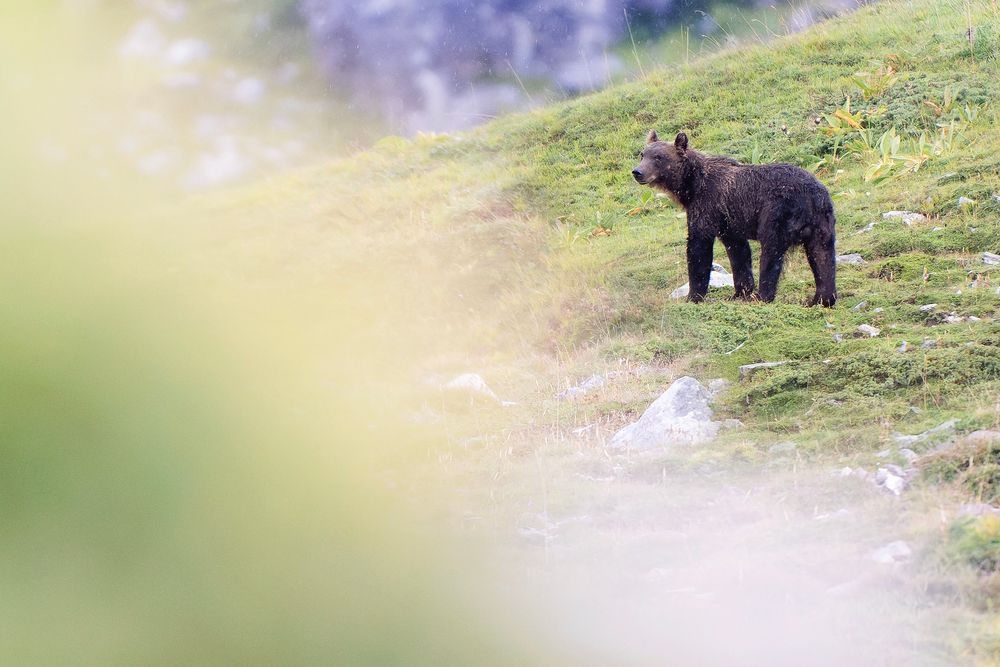
🐻New preprint🐻
We analysed WGS data from the Apennine brown bear—a small and isolated population which has coexisted with humans for millennia—and found unique genomic diversity, including adaptation associated with reduced aggressiveness.
#ConsGen #Genomics #Bears
www.biorxiv.org/content/10.1...
We have a new pre-print!
If you are interested in #smallpopulations, here we show how selection may shape behavioral traits in small isolated populations. We also show selective signatures at genes associated with reduced aggressiveness, possibly involving alternative splicing
#consgen #popgen

I'll be teaching in the SIBE Summer School in Ferrara, from the 7th to 11th of September.
Great place to learn about PopGen, comparative genomics and ✨Conservation Genomics✨
🚨Deadline to apply: 11th of May🚨
sites.google.com/view/sibesum...
See you there!

Marty Kardos
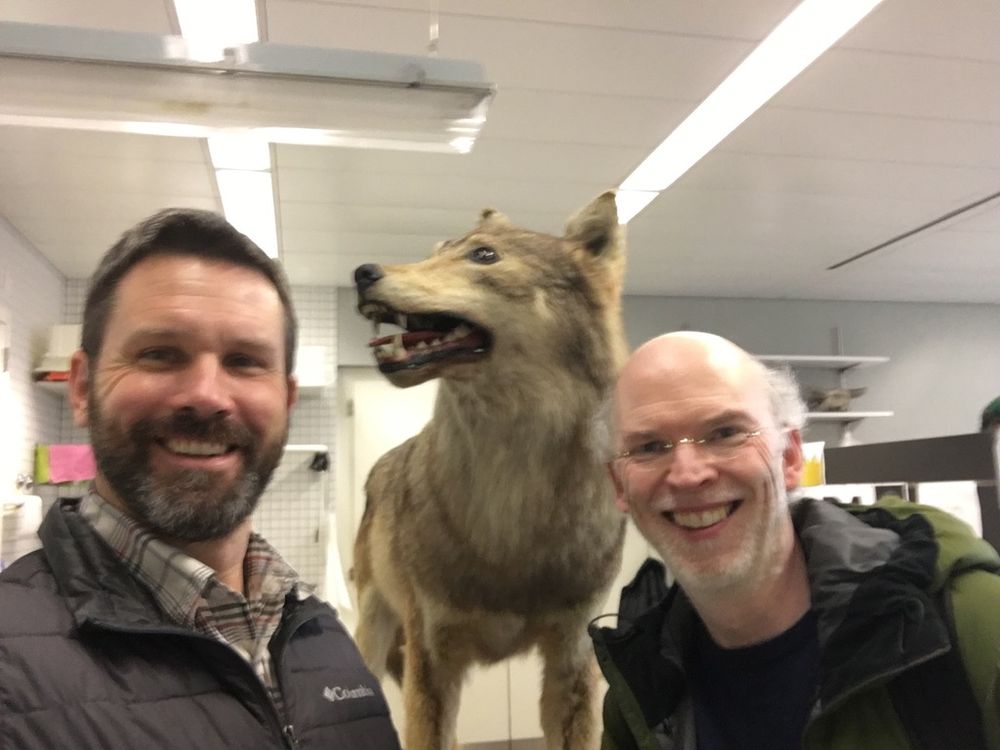
Lukas Keller, Chris Funk, and fury toothy friend.
What can genome sequence data reveal about population viability? (And equally important, what CAN'T it reveal??) These are key questions that @martykardos.bsky.social, Lukas Keller, and I address in our new paper in a Molecular Ecology special issue: onlinelibrary.wiley.com/doi/epdf/10....
#congens
We’re delighted to share our latest preprint from the Hogenhout lab (@saskiahogenhout.bsky.social) on the molecular mechanisms on plant-aphid interactions. Here we show how the aphid Mp10 effector protein acts as a local anaesthetic to suppress the plant perception of aphid attack
18.11.2024 09:58 — 👍 69 🔁 39 💬 1 📌 2