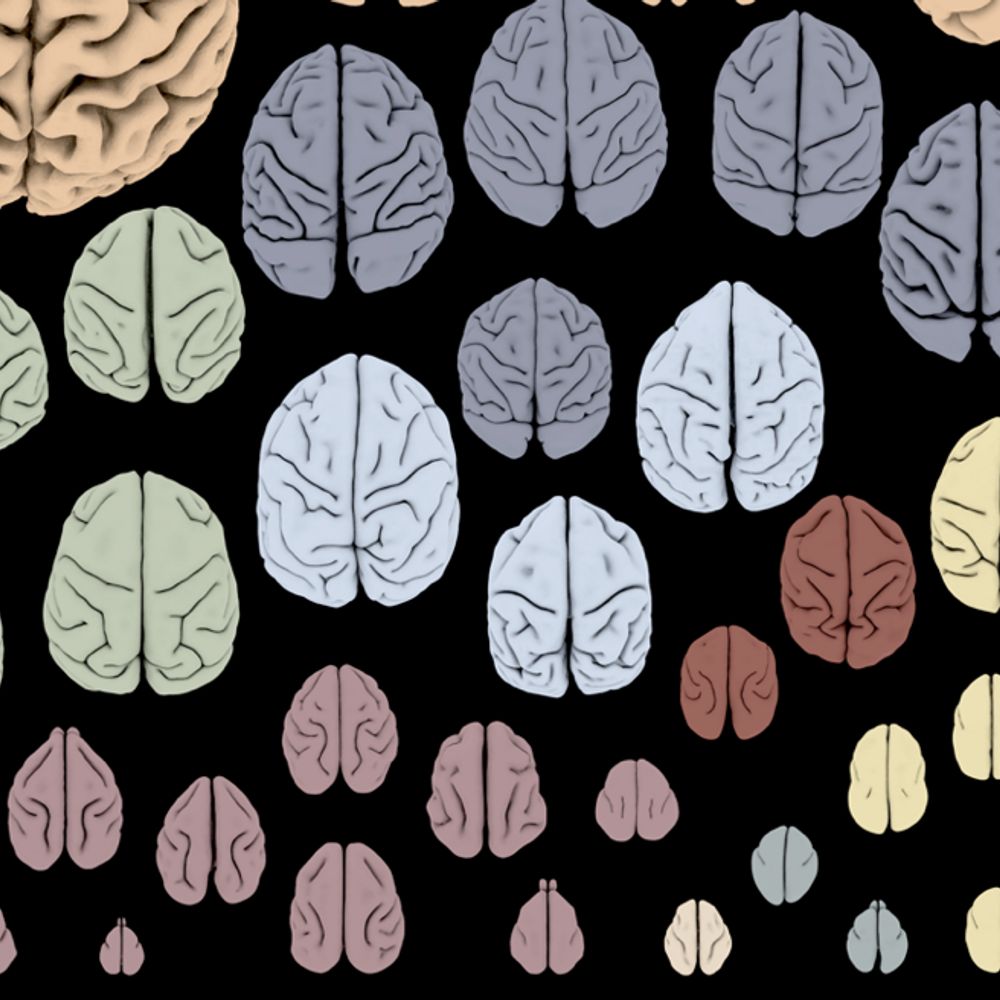
𝗨𝗻𝗱𝗲𝗿𝘀𝘁𝗮𝗻𝗱𝗶𝗻𝗴 𝗰𝗼𝗿𝘁𝗶𝗰𝗮𝗹 𝗲𝘃𝗼𝗹𝘂𝘁𝗶𝗼𝗻 sounds straightforward:
compare species, identify differences, explain them.
In reality, it 𝗶𝘀 𝗼𝗻𝗲 𝗼𝗳 𝘁𝗵𝗲 𝗵𝗮𝗿𝗱𝗲𝘀𝘁 𝗽𝗿𝗼𝗯𝗹𝗲𝗺𝘀 𝗶𝗻 𝗻𝗲𝘂𝗿𝗼𝘀𝗰𝗶𝗲𝗻𝗰𝗲.
𝘞𝘩𝘺?
#CorticalEvolution2026

@diegoconcalma.bsky.social
Developmental neurobiologist. Neurogenesis, neurodevelopmental disorders & evolution. Group leader in a hotel named IBIS. I'm serious. https://neurogenesis-lab.org/
𝗨𝗻𝗱𝗲𝗿𝘀𝘁𝗮𝗻𝗱𝗶𝗻𝗴 𝗰𝗼𝗿𝘁𝗶𝗰𝗮𝗹 𝗲𝘃𝗼𝗹𝘂𝘁𝗶𝗼𝗻 sounds straightforward:
compare species, identify differences, explain them.
In reality, it 𝗶𝘀 𝗼𝗻𝗲 𝗼𝗳 𝘁𝗵𝗲 𝗵𝗮𝗿𝗱𝗲𝘀𝘁 𝗽𝗿𝗼𝗯𝗹𝗲𝗺𝘀 𝗶𝗻 𝗻𝗲𝘂𝗿𝗼𝘀𝗰𝗶𝗲𝗻𝗰𝗲.
𝘞𝘩𝘺?
#CorticalEvolution2026
Beautiful story! Congratulations!
30.01.2026 10:13 — 👍 1 🔁 0 💬 1 📌 0
🧠 Cortical Evolution 2026
📍 Bilbao, Spain | 🗓 June 15–17, 2026
Join us for an international meeting on the evolution, development & organization of the cerebral cortex.
More information coming soon 👀
🔗 www.ventricular.org/corticalevolution26
#CorEvo26
Well deserved, congrats! @doetschlab.bsky.social
15.01.2026 18:16 — 👍 2 🔁 0 💬 1 📌 0
2025 was an exceptional year for the Earth's climate
⬆️ Warmest ocean heat content
⬆️ Tied as second warmest surface temps
⬆️ Second warmest troposphere
⬆️ Record high sea level and GHGs
⬇️ Record low winter Arctic ice
New State of the Climate over at Carbon Brief: www.carbonbrief.org/...

🎉 Great news! Our paper is now published in @naturecomm
We identify a specific astrocyte ensemble that mediates THC-induced cognitive impairments during adolescence
Huge thanks to our collaborators @marsicanolab @khakhlab @grandeslab
🔗 rdcu.be/eY0Or
@jsromero.bsky.social @crismonteagudo.bsky.social
Congrats again, Marta! 🥳🥳
14.01.2026 12:57 — 👍 0 🔁 0 💬 0 📌 0
NEW article by me!
We can now visualize pathogens down to atoms; design vaccines in weeks; manufacture them in microbial factories; engineer them more precise than ever before.
We're living through a golden age of vaccine development, but only if we continue to invest in them.
Wow! Massive congrats, Idoia!
🎉🎉
A study on 1.7 million people in Hong Kong shows superior hybrid immunity to Covid in people who got vaccinated before infection vs. people who got infected first. "Our findings are a direct rebuttal to arguments for natural immunity," the authors write. doi.org/10.1016/j.va...
06.12.2025 17:02 — 👍 3116 🔁 1263 💬 41 📌 77
We are looking for a motivated and creative PhD student who wants to investigate neurogenesis and brain development in beautiful Seville. Do you want to join our team?
Please, check lacaixafoundation.org/en/doctoral-... and get in touch!
How often have you heard that schizophrenia is “80% genetic”?
That number is almost certainly too high because it comes from twin studies that overestimate heritabilty.
Great explainer of this phenomenon👇
#neuroskyence #neuroscience #psychiatry
Relevant thread II
22.11.2025 11:23 — 👍 0 🔁 0 💬 0 📌 0Relevant thread
22.11.2025 11:22 — 👍 1 🔁 0 💬 0 📌 0
Nature research paper: Rewiring an olfactory circuit by altering cell-surface combinatorial code
go.nature.com/3MbCoZT
Where on earth is the best laboratory to demonstrate the beauty of fluid dynamics?
Actually, it’s not on earth. Here is the story of the soft cell.
And a longer read: www.maths.ox.ac.uk/node/74308
Lo cierto es que me toca echarlo 😂
17.11.2025 07:27 — 👍 1 🔁 0 💬 1 📌 0
🤔🤔🤔🤔
17.11.2025 07:00 — 👍 2 🔁 0 💬 1 📌 0“Among the EU countries, the proportion of female scientists and engineers varied widely in 2023, with the highest shares registered in Denmark (50.8%), Spain (50.0 %,) and Bulgaria (49.1%), Latvia and Ireland (each 49%).”
Fuente: ec.europa.eu/eurostat/web...

Our new manuscript, led by Emily Corrigan, examines inhibitory neuron diversity across approximately 160 million years of evolutionary divergence, as part of BRAIN Initiative Cell Atlas Network (BICAN) developing brain atlas package: www.nature.com/articles/s41...
07.11.2025 18:06 — 👍 60 🔁 22 💬 2 📌 1
Cover of this week's Nature showing a brain rendering Cover caption from the journal: Brain development: Our ability to process information into complex emotions, behaviours and decisions relies on the rich diversity of cell types that make up the human brain. Uncovering the molecular and cellular events that take place during brain development could reveal not only the mechanisms that give rise to this diversity but also shed light on how this process might go awry in neurodevelopmental disorders such as autism and schizophrenia. In this week’s issue, the BRAIN Initiative Cell Atlas Network (BICAN) builds on its previous work creating atlases of cell types in the adult mouse, non-human primate (NHP) and human brains to present cell-type atlases of the developing human, mouse and NHP brains. Across a suite of papers, nine of which are published in Nature, the researchers uncover the complex programs through which cell types emerge during brain development in humans and animals, revealing both the shared and unique features of the human brain. The latest work, along with future research directions, is summed up in a Perspective article by Tomasz Nowakowski and colleagues
New issue of Nature - with NINE studies on #brain #development from the BRAIN Initiative Cell Atlas Network (BICAN) 🧠🧪🔬
An amazing set of resources for all scientists working on the brain!
🧠 Immersive feature:
www.nature.com/immersive/d4...
🧠 Perspective:
www.nature.com/articles/s41...
Paul Nurse describing the main job of a PI
(From ‘The Thinking Game’, 2024)

🤔 Is motile #cilia dysfunction a cause of #hydrocephalus ?
The answer depends on who you ask and which species you study. 🤔😕🧐
In mice, motile cilia dysfunction almost always leads to hydrocephalus. In humans, however, the link is far less clear. So why the difference?

A depiction of expression patterns of the FOXP1, FOXP2, and FOXP4 genes in the brain, based on the developmental human RNA sequencing dataset of BrainSpan (http://www.brainspan.org/). Data cover different prenatal timepoints starting at 8-to-10 weeks postconception (abbreviated as pcs), postnatal timepoints from 0-to-12 months (abbreviated as mos), and expression measured in adulthood. A dashed vertical line represents time of birth. Individual dots are shown each representing one brain sample, and lines show loess curves fitted through the datapoints. The analyzed brain regions are A1C, primary auditory cortex; CB, cerebellum; CBC, cerebellar cortex; DFC, dorsolateral prefrontal cortex; DTH, dorsal thalamic nucleus; HIP, hippocampus; IPC, inferior parietal cortex; ITC, inferior temporal cortex; M1C, primary motor cortex; MD, mediodorsal thalamic nucleus; MFC, medial frontal cortex; OFC, orbitofrontal; S1C, primary sensory cortex; STR, striatum; TC, superior temporal cortex; V1C, primary visual cortex; VFC, ventromedial prefrontal cortex. This image comes from Figure 1 of a paper entitled “Molecular networks of the FOXP2 transcription factor in the brain” written by den Hoed, Devaraju and Fisher, published in the journal EMBO Reports in August 2021 (Volume 22, article e58203).
More than two decades have passed since we discovered that rare disruptions of the FOXP2 gene disturb development of proficient speech/language skills. Today we know of multiple FOXP genes that are directly implicated in distinct brain-related conditions with differences in symptoms & severity.🧪 1/n
29.10.2025 17:08 — 👍 65 🔁 24 💬 2 📌 3Que la "i" de CSIC no viene de "inversión"
20.10.2025 15:47 — 👍 1 🔁 0 💬 2 📌 0Interested in understanding how new cell types evolve? Consider joining our group for a PhD!
07.10.2025 16:43 — 👍 19 🔁 16 💬 0 📌 1RIP John Gurdon
07.10.2025 18:06 — 👍 29 🔁 12 💬 0 📌 0¡Muy chula tu charla, Carmen!
¡Enhorabuena! 👏👏

Vertebrate Genome Evolution. Annual Symposium of the @louisjeantetfdn.bsky.social Foundation in Geneva. Free access on site and on line. Great speakers for a super interesting topic. #SvantePaabo #HenrikKaessmann organisers 🙏 See you there! @biology-unige.bsky.social @genevunige.bsky.social
03.10.2025 07:14 — 👍 27 🔁 17 💬 1 📌 1
👇🏽
03.10.2025 15:07 — 👍 6 🔁 1 💬 0 📌 1