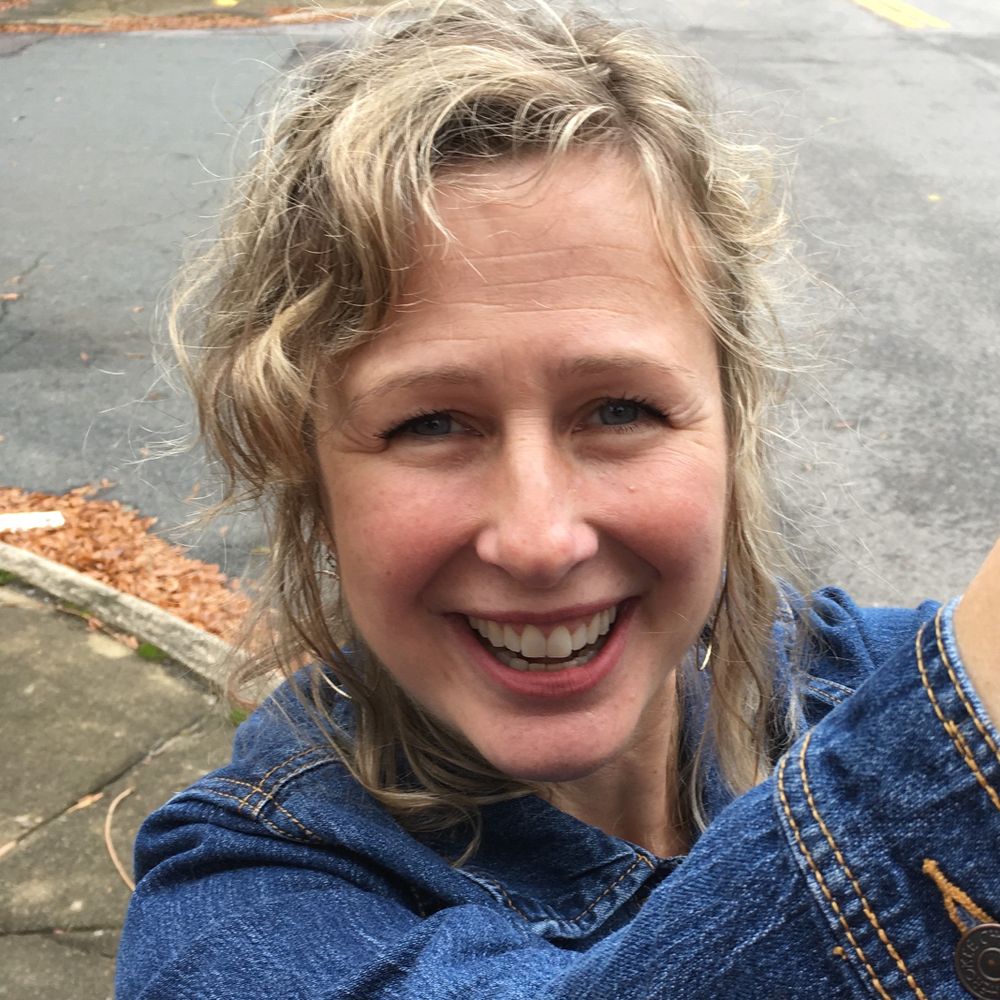
Hey, I know this place!
11.02.2026 02:47 — 👍 3 🔁 1 💬 1 📌 0
Hey, I know this place!
11.02.2026 02:47 — 👍 3 🔁 1 💬 1 📌 0
I just found out that one of the walking trees in the Super Bowl halftime show is a former Rice graduate student who has been a guest in my home. 🌳
10.02.2026 00:52 — 👍 35 🔁 1 💬 4 📌 2
I just found out that one of the walking trees in the Super Bowl halftime show is a former Rice graduate student who has been a guest in my home. 🌳
10.02.2026 00:52 — 👍 35 🔁 1 💬 4 📌 2
I see a lot of Republican commentators are confused on the question of 'are Puerto Ricans American' in a way that the law and the basic facts of history and politics are not
09.02.2026 13:42 — 👍 227 🔁 28 💬 4 📌 2

Jessica Ally
Day in the life of a Minneapolis resident:
I realize amongst the chaos of endless wrongs occurring in our city every single day, the overwhelming amount of stories may be hard to take in. So please take a moment to understand what an average day is for me.
I wake up, only getting a few hours of sleep the night before, because in an occupied city, it is difficult to sleep.
My husband and I get the kids ready, I have to take them to daycare before heading to work. A task that was once his, but it's no longer safe for him to go anywhere with the children in case he’s detained . . . they too would be taken. A real possibility, despite being a US Citizen, born in New York, and serving as a US Marine. His safety or lack thereof is purely due to the color of his skin.

I have to use my lunch to run all errands for the household, because it's simply not safe for my husband to be out. While out running errands it's not uncommon to encounter ICE, terrorizing people around me. Taking people who are begging to show their papers. Non-violent terrified people being slammed to the ground. It's difficult to get the sound of their skulls hitting the concrete out of my head. It is perplexing why they always throw people to the ground, even when they are cooperating.
I return to work. I'm supposed to somehow focus on my job, which I do, because I have no choice. Occasionally I'll hear a colleague upset over a loved one being taken. Sad, but not uncommon.
I leave work to fetch my kids from daycare. Last week on my way home, a car of ICE agents aggressively swerved at my vehicle and jumped lanes mid intersection to get behind me. With my two small children in the car I realized if they followed me I couldn't go home and risk harm to all of us. I mapped out in my mind the fastest way to the police station even though I know they won't help us. Thank god I wasn't followed long, they almost hit me a second time when swerving at me when passing me as I turned.

No matter what happens in the day, I get home with my small children. My older kids present when I arrive. I have to leave any horror behind me and pull it together knowing their day may have been just as bad. Some days we are all quiet. Other days we try to find things to laugh about, but every day the air is heavy. It's hard to not be afraid.
Now, with the escalation of events. Knowing my husband's passport, birth certificate, or drivers license won't save him, he has left the state. He is safe elsewhere with one of our small children. My days look slightly different now that he's gone, but the weight of responsibility remains the same.
My husband and I are both professionals. Neither of us have a criminal record. We live in a wealthy suburb. I don't think I even know a single person here "illegally". Yet here we are, our family torn apart.

Everyone should keep in mind, our children are watching. They know what hell is now, at least they do if they live here. They will not forget the racism. They will not forget the violence. Most of all, they will not forget the silence. Those who remain silent, only increase the chances our kids will be left to fight this battle we left for them.
There will be more bloodshed in our streets at the hands of our government if this continues. That blood will not only be on the hands of our government, but on the hands of people who supported this. It will be on the hands of those who remained silent.
This is not about immigration. It's about terrorism. Decide what side of history you want to be on.
The witness of an attorney in the Twin Cities:
09.02.2026 01:57 — 👍 9 🔁 4 💬 0 📌 0
Jessica Ally
Day in the life of a Minneapolis resident:
I realize amongst the chaos of endless wrongs occurring in our city every single day, the overwhelming amount of stories may be hard to take in. So please take a moment to understand what an average day is for me.
I wake up, only getting a few hours of sleep the night before, because in an occupied city, it is difficult to sleep.
My husband and I get the kids ready, I have to take them to daycare before heading to work. A task that was once his, but it's no longer safe for him to go anywhere with the children in case he’s detained . . . they too would be taken. A real possibility, despite being a US Citizen, born in New York, and serving as a US Marine. His safety or lack thereof is purely due to the color of his skin.
I have to use my lunch to run all errands for the household, because it's simply not safe for my husband to be out. While out running errands it's not uncommon to encounter ICE, terrorizing people around me. Taking people who are begging to show their papers. Non-violent terrified people being slammed to the ground. It's difficult to get the sound of their skulls hitting the concrete out of my head. It is perplexing why they always throw people to the ground, even when they are cooperating.
I return to work. I'm supposed to somehow focus on my job, which I do, because I have no choice. Occasionally I'll hear a colleague upset over a loved one being taken. Sad, but not uncommon.
I leave work to fetch my kids from daycare. Last week on my way home, a car of ICE agents aggressively swerved at my vehicle and jumped lanes mid intersection to get behind me. With my two small children in the car I realized if they followed me I couldn't go home and risk harm to all of us. I mapped out in my mind the fastest way to the police station even though I know they won't help us. Thank god I wasn't followed long, they almost hit me a second time when swerving at me when passing me as I turned.
No matter what happens in the day, I get home with my small children. My older kids present when I arrive. I have to leave any horror behind me and pull it together knowing their day may have been just as bad. Some days we are all quiet. Other days we try to find things to laugh about, but every day the air is heavy. It's hard to not be afraid.
Now, with the escalation of events. Knowing my husband's passport, birth certificate, or drivers license won't save him, he has left the state. He is safe elsewhere with one of our small children. My days look slightly different now that he's gone, but the weight of responsibility remains the same.
My husband and I are both professionals. Neither of us have a criminal record. We live in a wealthy suburb. I don't think I even know a single person here "illegally". Yet here we are, our family torn apart.
Everyone should keep in mind, our children are watching. They know what hell is now, at least they do if they live here. They will not forget the racism. They will not forget the violence. Most of all, they will not forget the silence. Those who remain silent, only increase the chances our kids will be left to fight this battle we left for them.
There will be more bloodshed in our streets at the hands of our government if this continues. That blood will not only be on the hands of our government, but on the hands of people who supported this. It will be on the hands of those who remained silent.
This is not about immigration. It's about terrorism. Decide what side of history you want to be on.
The witness of an attorney in the Twin Cities:
09.02.2026 01:57 — 👍 9 🔁 4 💬 0 📌 0
🤣
08.02.2026 00:03 — 👍 1 🔁 0 💬 0 📌 0
🎶 “Daa, daaaa, de, da, da, da, daa . . .” 🎶
💙💛🖤💚❤️❄️🏂🏔️🎿🌨️⛷️🚡⛸️🥇🥈🥉
07.02.2026 17:15 — 👍 7 🔁 1 💬 0 📌 0
🎶 “Daa, daaaa, de, da, da, da, daa . . .” 🎶
💙💛🖤💚❤️❄️🏂🏔️🎿🌨️⛷️🚡⛸️🥇🥈🥉
07.02.2026 17:15 — 👍 7 🔁 1 💬 0 📌 0
I love seeing teams from countries around the world at the opening ceremonies of the Olympics.
(And I have to admit that when I saw the Australians dressed in 💚 and 💛, I could only think of breakdancer Raygun from the Summer Olympic Games in 2024.)
07.02.2026 03:38 — 👍 13 🔁 1 💬 1 📌 0

Front page headline in the Winston-Salem Journal on February 24, 2002: “U.S. men take silver, bronze in bobsled: Kernersville athlete Randy Jones wins medal in his 3rd Winter Olympics.”
Watching the opening ceremonies of the Winter Olympic Games always brings to mind the fact that I went to high school in North Carolina with Randy Jones, silver medalist in the 4-man bobsledding event at the 2002 Winter Olympics in Salt Lake City.
07.02.2026 04:22 — 👍 7 🔁 2 💬 0 📌 0
Front page headline in the Winston-Salem Journal on February 24, 2002: “U.S. men take silver, bronze in bobsled: Kernersville athlete Randy Jones wins medal in his 3rd Winter Olympics.”
Watching the opening ceremonies of the Winter Olympic Games always brings to mind the fact that I went to high school in North Carolina with Randy Jones, silver medalist in the 4-man bobsledding event at the 2002 Winter Olympics in Salt Lake City.
07.02.2026 04:22 — 👍 7 🔁 2 💬 0 📌 0
I love seeing teams from countries around the world at the opening ceremonies of the Olympics.
(And I have to admit that when I saw the Australians dressed in 💚 and 💛, I could only think of breakdancer Raygun from the Summer Olympic Games in 2024.)
07.02.2026 03:38 — 👍 13 🔁 1 💬 1 📌 0

PANEL REMARKS FOR US CONFERENCE OF MAYORS
IMMIGRATION ENFORCEMENT MEETING
Thursday, January 29, 2026
Mayor Jim Hovland
Fellow mayors, I come to report plainly what we have seen and felt in our towns and cities of Minnesota.
The work of federal enforcement has entered our neighborhoods, our workplaces, our schools, our churches and our medical facilities. The effects are not abstract; they are human, immediate and consequential and, as presently carried out, are reshaping our cities in ways none of us who were elected to lead our communities can ignore.
We are told the actions are precise- they are not. We are told their effects are contained. They are not. Fear has not confined itself to a single household or status. Citizens withdraw alongside non-citizens. Law abiding residents learn that invisibility feels safer than participation.
We have observed, first, a deep chill of uncertainty settle over many lawful, hardworking residents--citizens and noncitizens alike, and we have seen enforcement as visible, sudden and physical; it does not stop neatly at the door of those it seeks. It spreads outward, touching mixed status families, lawful permanent residents and even long-standing citizens who share a name, an accent, a color or a fear.
Attendance falls at schools putting kids behind in their education; patients delay care and risk adverse outcomes and faith and worship becomes a private matter. Trust, once shaken, is slow to return.
Second, there is the economic reckoning. In Minnesota, our restaurants, food-processing plants, construction sites, elder-care facilities and hospitals rely upon immigrant labor. When enforcement actions are abrupt, entire workforces can vanish overnight-not only undocumented workers, but legal employees who choose silence or absence over risk.
Third, we face the paradox of public safety. Local law enforcement, sworn to protect all residents, finds its work harder when communities fear that any interaction may carry federal consequ…

In just a few short weeks, this is what we have learned: no city can thrive without the rule of law and no nation can govern without borders; but enforcement, as currently practiced, is not merely removing individuals, it is hollowing out civic life, undermining public safety and leaving local leaders to pick up the pieces. A democracy cannot prosper when enforcement is divorced from proportionality, clarity and humanity. The strength of our country has never rested solely in the rigor of its laws; but in the confidence of its people that those laws are carried out with fairness and wisdom.
Minnesotans have long understood that order is preserved not by fear, but by legitimacy; that rules endure not because they are imposed but because they are believed to be fair; that when authority overreaches, as it did in our state, Minnesotans do not only shout-they reason, they document, they challenge and they persist. They insist relentlessly that power explain itself. They demand that force justify its use. They appeal not to impulse, but to principle and they persevere in seeking to right injustice. In doing so, they have kept faith with the Constitution -not as an abstraction, but as a living discipline that defines moral and legal conduct.
In these trouble-filled days, the nation should know that Minnesota has not resisted legal immigration enforcement; it has resisted excess. It does not reject law; it rejects lawlessness clothed in authority. It does not deny the nation's right to govern its borders; but it insists that such governance be worthy of and deferential to a free people.
These distinctions matter. The future of immigration policy in America will not be shaped by those who merely cheer or condemn; but by those who demonstrate-through practice and wisdom-that security and humanity can coexist; that enforcement can be both firm and lawful; and, that the dignity of persons need not be a casualty in the implementation of policy.
Whether the federal governmen…

We ask not for an exit strategy from our federal government but for partnership, not for chaos, but for coherence. And above all, for policies that recognize that the smallest city block may bear the weight of the largest national decisions.
If enforcement continues as it has, we will not be debating immigration alone. We will be confronting the long-term damage done to the relationship between government and the governed. And that is a reckoning no republic should take lightly.
In time, when this chapter in Minnesota history is read, not in headlines, but in history, I hope it may be said that when the nation faltered between fear and fairness regarding who deserves to live in our country, that Minnesota chose the harder path: not merely to oppose what was wrong but to help build what is right.
That will be no small service to a troubled country.
Jim Hovland is the Mayor of Edina, Minnesota, which is a conservative suburb of Minneapolis where I was previously the Rector of St. Stephen’s Episcopal Church. He made this statement last week, as reported by Frederick Melo of the St. Paul Pioneer Press:
05.02.2026 02:42 — 👍 32 🔁 9 💬 5 📌 2
"In these trouble-filled days, the nation should know that Minnesota has not resisted legal immigration enforcement; it has resisted excess. It does not reject law; it rejects lawlessness clothed in authority.
05.02.2026 02:42 — 👍 20 🔁 2 💬 2 📌 1
“It does not deny the nation's right to govern its borders; but it insists that such governance be worthy of and deferential to a free people." ⚓️
05.02.2026 02:42 — 👍 13 🔁 2 💬 0 📌 0
Kernersville native here.
(Live in Houston now.)
06.02.2026 05:09 — 👍 0 🔁 0 💬 0 📌 0
I grew up in North Carolina. But the first time I ever walked into a Piggly Wiggly was when I lived on Hilton Head Island in South Carolina.
05.02.2026 12:56 — 👍 1 🔁 0 💬 0 📌 0
“It does not deny the nation's right to govern its borders; but it insists that such governance be worthy of and deferential to a free people." ⚓️
05.02.2026 02:42 — 👍 13 🔁 2 💬 0 📌 0
"In these trouble-filled days, the nation should know that Minnesota has not resisted legal immigration enforcement; it has resisted excess. It does not reject law; it rejects lawlessness clothed in authority.
05.02.2026 02:42 — 👍 20 🔁 2 💬 2 📌 1
PANEL REMARKS FOR US CONFERENCE OF MAYORS
IMMIGRATION ENFORCEMENT MEETING
Thursday, January 29, 2026
Mayor Jim Hovland
Fellow mayors, I come to report plainly what we have seen and felt in our towns and cities of Minnesota.
The work of federal enforcement has entered our neighborhoods, our workplaces, our schools, our churches and our medical facilities. The effects are not abstract; they are human, immediate and consequential and, as presently carried out, are reshaping our cities in ways none of us who were elected to lead our communities can ignore.
We are told the actions are precise- they are not. We are told their effects are contained. They are not. Fear has not confined itself to a single household or status. Citizens withdraw alongside non-citizens. Law abiding residents learn that invisibility feels safer than participation.
We have observed, first, a deep chill of uncertainty settle over many lawful, hardworking residents--citizens and noncitizens alike, and we have seen enforcement as visible, sudden and physical; it does not stop neatly at the door of those it seeks. It spreads outward, touching mixed status families, lawful permanent residents and even long-standing citizens who share a name, an accent, a color or a fear.
Attendance falls at schools putting kids behind in their education; patients delay care and risk adverse outcomes and faith and worship becomes a private matter. Trust, once shaken, is slow to return.
Second, there is the economic reckoning. In Minnesota, our restaurants, food-processing plants, construction sites, elder-care facilities and hospitals rely upon immigrant labor. When enforcement actions are abrupt, entire workforces can vanish overnight-not only undocumented workers, but legal employees who choose silence or absence over risk.
Third, we face the paradox of public safety. Local law enforcement, sworn to protect all residents, finds its work harder when communities fear that any interaction may carry federal consequ…
In just a few short weeks, this is what we have learned: no city can thrive without the rule of law and no nation can govern without borders; but enforcement, as currently practiced, is not merely removing individuals, it is hollowing out civic life, undermining public safety and leaving local leaders to pick up the pieces. A democracy cannot prosper when enforcement is divorced from proportionality, clarity and humanity. The strength of our country has never rested solely in the rigor of its laws; but in the confidence of its people that those laws are carried out with fairness and wisdom.
Minnesotans have long understood that order is preserved not by fear, but by legitimacy; that rules endure not because they are imposed but because they are believed to be fair; that when authority overreaches, as it did in our state, Minnesotans do not only shout-they reason, they document, they challenge and they persist. They insist relentlessly that power explain itself. They demand that force justify its use. They appeal not to impulse, but to principle and they persevere in seeking to right injustice. In doing so, they have kept faith with the Constitution -not as an abstraction, but as a living discipline that defines moral and legal conduct.
In these trouble-filled days, the nation should know that Minnesota has not resisted legal immigration enforcement; it has resisted excess. It does not reject law; it rejects lawlessness clothed in authority. It does not deny the nation's right to govern its borders; but it insists that such governance be worthy of and deferential to a free people.
These distinctions matter. The future of immigration policy in America will not be shaped by those who merely cheer or condemn; but by those who demonstrate-through practice and wisdom-that security and humanity can coexist; that enforcement can be both firm and lawful; and, that the dignity of persons need not be a casualty in the implementation of policy.
Whether the federal governmen…
We ask not for an exit strategy from our federal government but for partnership, not for chaos, but for coherence. And above all, for policies that recognize that the smallest city block may bear the weight of the largest national decisions.
If enforcement continues as it has, we will not be debating immigration alone. We will be confronting the long-term damage done to the relationship between government and the governed. And that is a reckoning no republic should take lightly.
In time, when this chapter in Minnesota history is read, not in headlines, but in history, I hope it may be said that when the nation faltered between fear and fairness regarding who deserves to live in our country, that Minnesota chose the harder path: not merely to oppose what was wrong but to help build what is right.
That will be no small service to a troubled country.
Jim Hovland is the Mayor of Edina, Minnesota, which is a conservative suburb of Minneapolis where I was previously the Rector of St. Stephen’s Episcopal Church. He made this statement last week, as reported by Frederick Melo of the St. Paul Pioneer Press:
05.02.2026 02:42 — 👍 32 🔁 9 💬 5 📌 2

Photo of a dog napping on a couch, resting her head on a pillow.
Addie is napping at the Rectory,
exhaustified by the world these days. ⚓️
04.02.2026 03:35 — 👍 26 🔁 4 💬 0 📌 0
From the Old North State, my homeland:
“Investigators did not report how many pizzas the suspect made and sold to unaware customers.”
04.02.2026 03:53 — 👍 7 🔁 2 💬 0 📌 0
From the Old North State, my homeland:
“Investigators did not report how many pizzas the suspect made and sold to unaware customers.”
04.02.2026 03:53 — 👍 7 🔁 2 💬 0 📌 0
Greetings from Houston. 😬
04.02.2026 03:46 — 👍 0 🔁 0 💬 0 📌 0
Photo of a dog napping on a couch, resting her head on a pillow.
Addie is napping at the Rectory,
exhaustified by the world these days. ⚓️
04.02.2026 03:35 — 👍 26 🔁 4 💬 0 📌 0
I served on a jury in 2018 for a civil trial in Harris County, Texas. The judge’s middle name was Rambo, and the name of the defendant's attorney was Sam Houston. While I'll never be elected Presiding Bishop of the Episcopal Church, I was elected Presiding Juror. Thus I did address Rambo.
02.02.2026 00:00 — 👍 5 🔁 2 💬 0 📌 0
The Hospitality of Abraham ⚓️
01.02.2026 21:43 — 👍 44 🔁 10 💬 1 📌 0
child of God, wife, boy mom, Church in Wales priest, school chaplain, lover of puns and food and football (Wrexham!), pilgrim through this barren land 🇩🇪🇺🇸🏴
Gamer. Musician. Writer. Geek. UGA Dawg. GenX AuDHD burned out gifted kid.
My day job is editing text files that make the internet work.
#amquerying : The Sanctuary Lock (fantasy)
#amwriting : The Thousand Doors (fantasy)
Website: dchauser.com
🧑💻 Bootstrapping https://projectionlab.com
📈 Currently $1M+ ARR
Bone vivant of Edina, MN. Purveyor of non sequiturs. Advocate for two spaces and the Oxford comma. I like cake, dogs, music, hockey, and basketball -- not necessarily in that order. Tell your dog I said hi.
Sometimes writer, focusing on the religious right & homeschool movement history | UF Law & Covenant College alum | Manatee Dems
#GatorNation #GoBolts #GoBucs #RaysUp
#FLwx
they/them
Opinions mine
https://ko-fi.com/KEBrightbill
Seminary president & former bishop: Lutheran all day long.
Citizen of the Osage Nation, Oklahoma native, lives in Pennsylvania with his husband and their parrot, but generally longs for Germany.
Historian, theologian, bibliophile, and genealogist.
Author, preacher, & moral activist. Assistant Director & Lecturer, Yale Center for Public Theology & Public Policy. Substack: https://ourmoralmoment.substack.com/
Historian: White Flight; New Suburban History; Fog of War; One Nation Under God; Fault Lines; Voter Suppression; Myth America. CAMPAIGN TRAILS: campaign-trails.ghost.io
Former public defender, now U.S. Congresswoman, proudly serving the good people of Texas’ 30th Congressional District. ✊🏾
Candidate for US Senate | Congresswoman #TX30 | Civil Rights & Criminal Attorney | Progressive | Fmr. St. Rep. HD100 | DST 1913 🐘🔥| She/Her/Ella | #TEXASTOUGH
Professor, UW Biology / Santa Fe Institute
I study how information flows in biology, science, and society.
Book: *Calling Bullshit*, http://tinyurl.com/fdcuvd7b
LLM course: https://thebullshitmachines.com
Corvids: https://tinyurl.com/mr2n5ymk
he/him
The podcast where historians pluck lesser-known stories from the past and serve them to you one episode at a time. New episodes every other Saturday. Est. 2013.
Texas history from different perspectives.
texashistorylessons.com
Created by Michael Sparkman
Women's historian of early America and slavery. Liberty, Liberty for ever Mother, while I exist
Exposing injustice, strengthening democracy, and building community for change in the South. Publisher of Facing South: https://www.facingsouth.org/
https://divinity.duke.edu/sites/default/files/documents/cv/ALH%20CV%202025%20short%20version.pdf
Bbq lover, political realist, trying to golf when I can. Timberwolves lifer and Vikings sadist. Equity Trader with Economics background