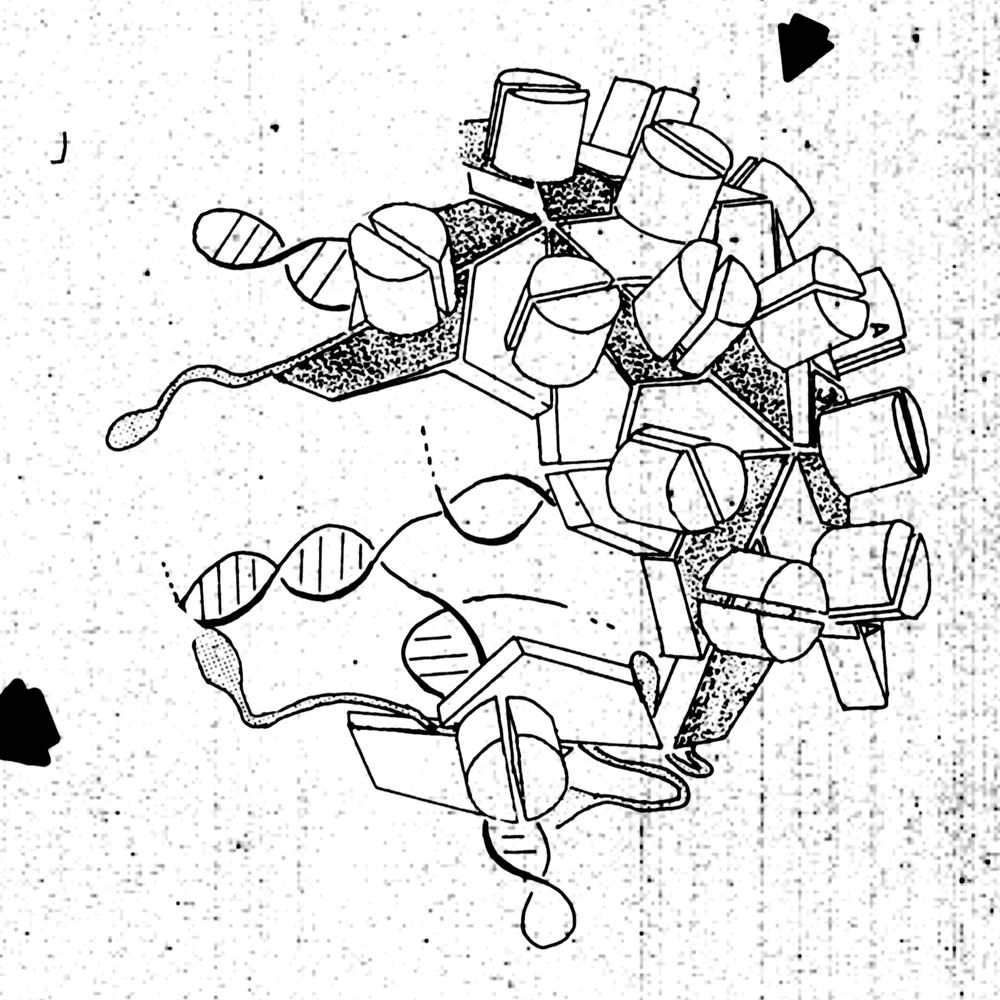
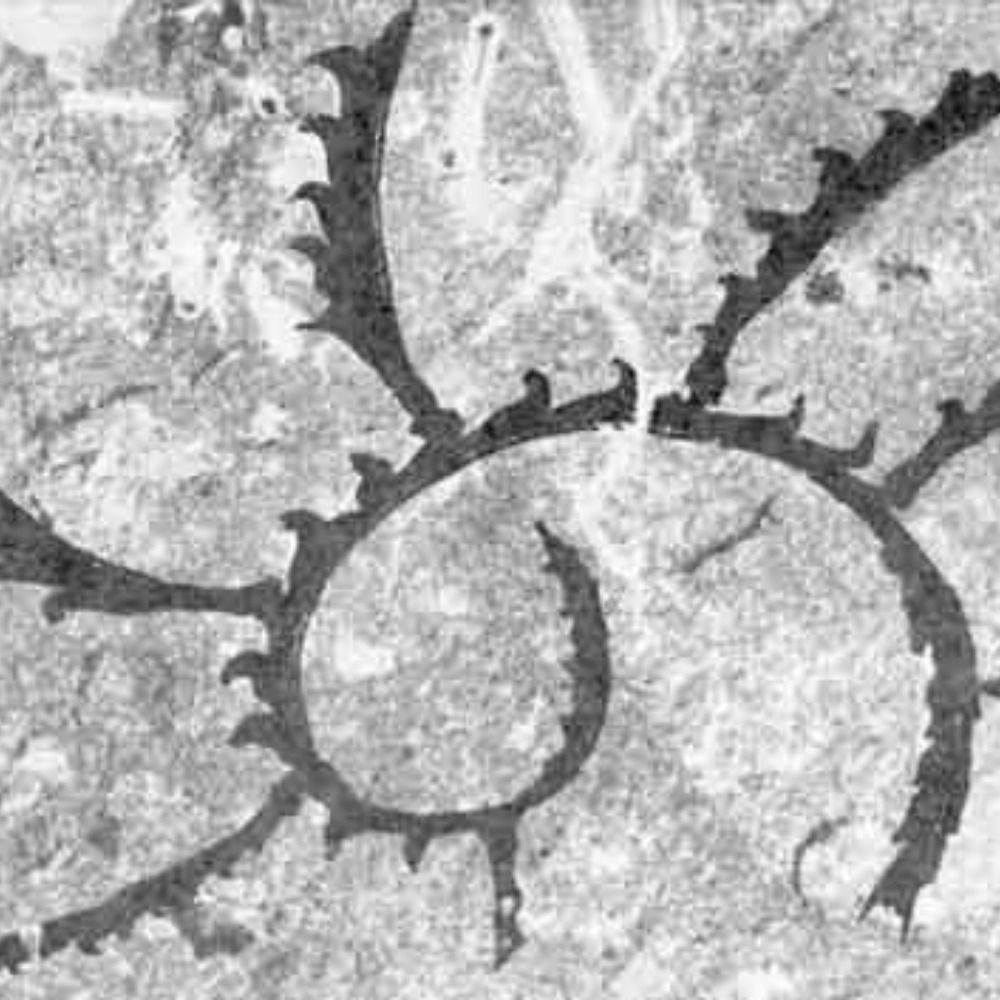
Tintinnidorin, the name we have chosen for the shell proteins, has roots in different languages (Greek: dôron, neuter, noun). Its core meaning revolves around the concept of a gift handed down through generations.
29.12.2025 13:04 — 👍 1 🔁 0 💬 0 📌 0
Thank you!
28.12.2025 09:53 — 👍 0 🔁 0 💬 0 📌 0
Yeast become tintinnids!
27.12.2025 15:38 — 👍 1 🔁 0 💬 1 📌 0
Thank you Kenneth. I am super proud of this discovery. What tintinnids can do is just amazing!
27.12.2025 15:05 — 👍 1 🔁 0 💬 1 📌 0

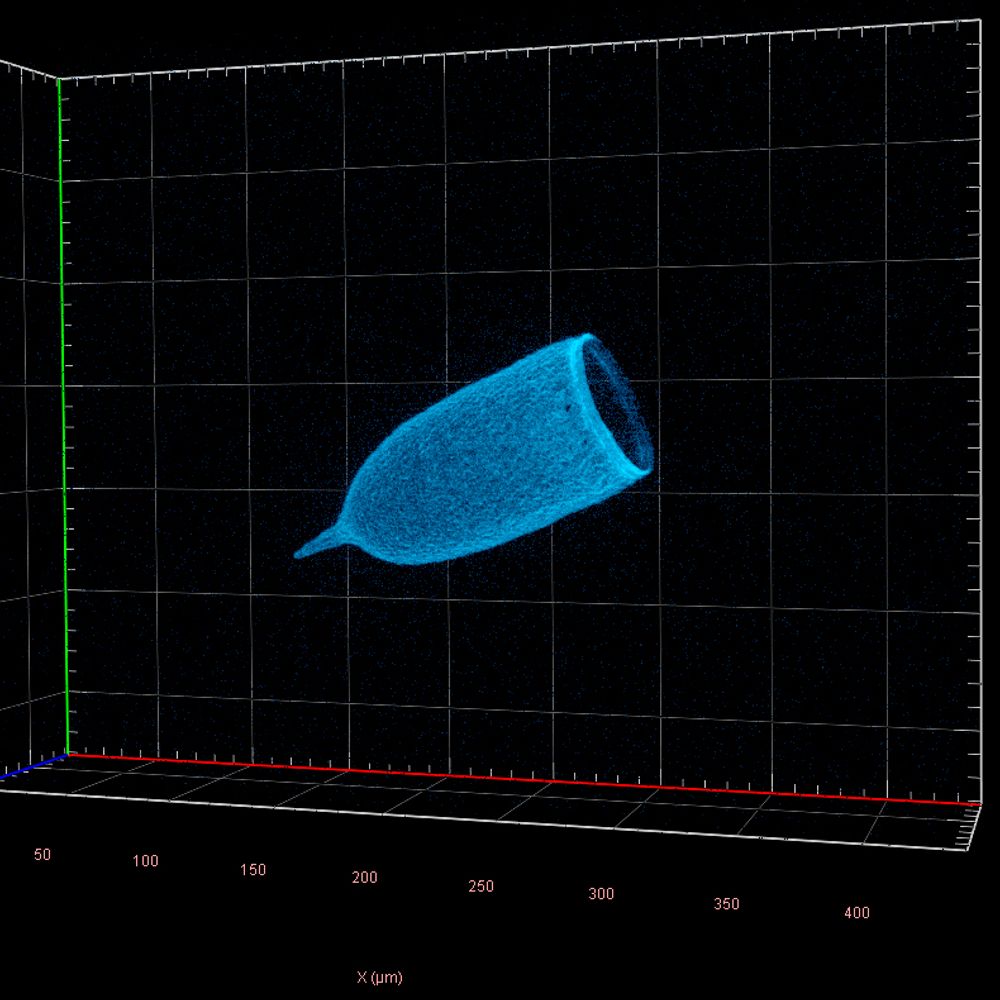
Finally, we’ve solved a long-standing mystery: what tintinnid shells are actually made of:
A new class of biomaterial formed by remarkable structural proteins unique to tintinnids.
A major milestone after 3 years of work! Read about it in our preprint: doi.org/10.64898/202...
#ProtistsOnSky
27.12.2025 10:30 — 👍 95 🔁 35 💬 4 📌 3
Currently, we have no culture unfortunately. There might be an opportunity in spring next year, so we should keep it in mind!
16.12.2025 08:58 — 👍 0 🔁 0 💬 1 📌 0
Next try: @dudinlab.bsky.social 😅
16.12.2025 08:19 — 👍 0 🔁 0 💬 1 📌 0

Top row images showing cells of the tintinnid ciliate Schmidingerella from early to late division stages. Shell-forming material ist stained in purple/red. Bottom row images show 3D models of the material for volumetric analyses.
We recently investigated how much and when tintinnid ciliates produce shell material during the cell cycle to construct a new shell (lorica) after division: tinyurl.com/49usp8xw
We adapted a classical staining technique.
Still no #UExM for tintinnids dudinlab.bsky.social? (wink)
#protistsonsky
16.12.2025 08:12 — 👍 14 🔁 4 💬 2 📌 0

Plankton sampled in Villefranche-sur-Mer. Animal larval stages, copepods, ciliates, tintinnids, foraminifera, and radiolarians.
Tinntinid ciliates are known because of their remarkable and taxonomically relevant shells. Can you spot the #tintinnids we sampled in Villefranche-sur-Mer (visiting @tintinnman.bsky.social) among the other planktonic organisms?
Do you want to know how tintinnids build their shells?
#protistsonsky
27.11.2025 10:03 — 👍 9 🔁 0 💬 0 📌 0
Microscopic farmer 🔬🌺
Microscopy core director @UNC Chapel Hill
Former plant developmental biologist
Hier postet die TU Darmstadt: #TUDa #researchTUDa Impressum: https://tu-darmstadt.de/impressum/
Postdoc @Jékely lab, Heidelberg University
From light to electron microscopy of marine organisms
Virginie Hamel & Paul Guichard Lab at University of Geneva
#cryoEM/ET❄️ and #UExM ⚗️ #ExpansionMicroscopy #TeamTomo
Genève, Suisse 🇨🇭
https://mocel.unige.ch/research-groups/guichard-hamel/overv
Cutting-edge research, news, commentary, and visuals from the Science family of journals. https://www.science.org
Professor of Biology at Portland State U.
Extreme Virologist - Astrovirologist
Opinions, Posts, Reposts and Privilege my own.
(he/him/his).
eXtreme Virus Lab - PI
Virus origins & evolution - cruciviruses - fuselloviruses
Research associate in the eXtreme Virus Lab
Center for Life in Extreme Environments
Portland State University
A quarterly magazine exploring the world of microscopic life. Step into the unseen world!
👉 Download the complete magazine for free: stefanluketa.com/amoeba-discovery
Microbial Oceanographer interested in protistan ecology / Post-doc at Station Biologique de Roscoff, France / PhD Caron Lab at USC / Happiest when outside / She/Her/Hers
Group Leader at EMBL spying on the social life of marine microbes and pushing for more inclusive sciences | Tara Oceans | Plankton Manifesto
https://www.embl.org/groups/vincent/
https://planktonmanifesto.org/
Senior Scientist of Coastal and Marine Ecology Division at GUIDE. Oceanography and Marine biologist.
Paleontologist, Graptolite Geek, R Programmer, creator of paleotree, Tabletop Roleplaying Game Nerd, Catcher of Pokémon, faculty senator. All comments are my trash opinion alone.
Science!
Evolutionary biologist, geneticist
All extant & extinct life forms
Phylogenetic trees
Modern physics
Romantic neurology
Postdoctoral researcher at UC Berkeley | Microalgae, environmental stress, molecular and synthetic biology | Formerly @ Université Paris Sud, Sorbonne Université, AgroParisTech, and ISA Lille.
https://scholar.google.com/citations?user=f5eOF_YAAAAJ
Molecular Transport in Cell Biology and Nanotechnology - Research group of Stefan Diez at B CUBE, TU Dresden and MPI-CBG Dresden
interested in microbial eukaryotes; #protists #chytrids
https://www.tu.berlin/en/umbio/research/working-groups/group-strassert
Natural History Museum, University of Oslo
Paleontologist, lover of early eukaryotic evolution, all of the protists, fan of the Proterozoic and I bake.
Assistant Professor at Purdue University | Evolution of Cells, Symbionts, & Organelles | ecsolab.com