Ik snap Senegal wel.. Hakimi wel fluiten en dan deze geven na VAR. Ten gunste van het thuisland in de laatste seconde.. Not a good look.
18.01.2026 21:09 — 👍 2 🔁 0 💬 1 📌 0
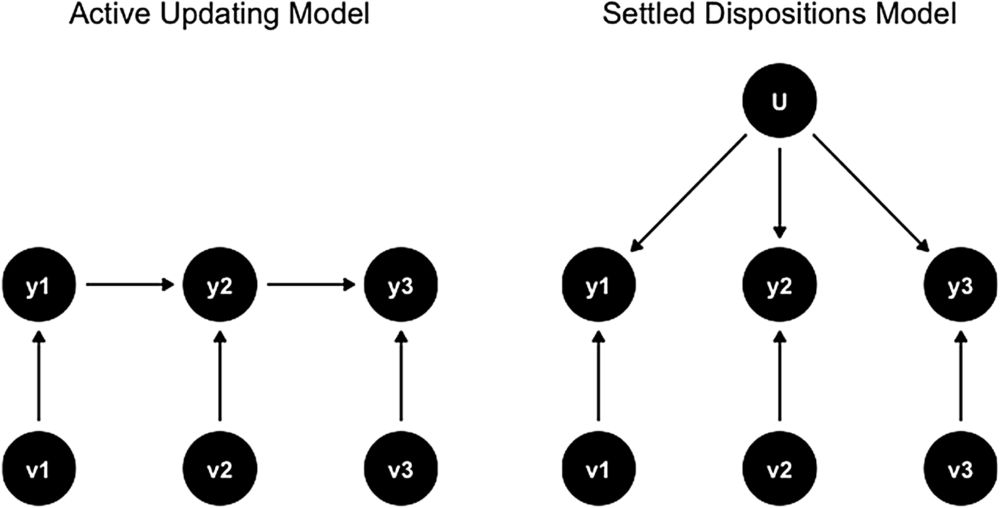
Very proud of the publication of this article, led by the brilliant @cvalebeek.bsky.social. We comprehensively test the causal effect of political trust on turnout and party choice, by breaking down these effects by trust levels, trust variability, and trust change events.
Plus: cool visualisations.
17.12.2025 21:56 — 👍 17 🔁 6 💬 0 📌 0
Did cooperation evolve because of conflict? Or is conflict an (avoidable) ‘by-product’ of evolved capacities to cooperate. I think the latter—>
journals.sagepub.com/doi/pdf/10.1...
27.11.2025 22:34 — 👍 8 🔁 7 💬 1 📌 0
New paper out on trust in science in the International Journal of Public Opinion Research.
🙏 to @nielsmede.bsky.social and @colognaviktoria.bsky.social for initiating the TISP project and to @juliametag.bsky.social for her helpful input throughout the project. Free-access link: shorturl.at/4VBAJ
15.10.2025 08:42 — 👍 12 🔁 4 💬 0 📌 0

Social media undercuts public health and institutional trust
A new study finds causal evidence that morally charged attacks generate anger and social media engagement which exacerbates the political polarization of public health
www.pnas.org/doi/epdf/10....
09.09.2025 15:13 — 👍 42 🔁 23 💬 0 📌 1
ANSWER: 0 (yes, ZERO!)
This is a result of an analysis done by a student in my grad seminar, using a large dataset (N=307,313).
What this result might mean: Nobody's personality is truly "average," and people's personality profiles (at least Big 5) might be more "jagged" than we think.
(🧵 1/5)
07.09.2025 15:03 — 👍 127 🔁 50 💬 13 📌 4
Peilingen zijn nuttige instrumenten voor kiezers, politici, en media. Ze kunnen wezenlijke effecten hebben, vooral via de wijze waarop media er - juist én onjuist - over rapporteren.
Ook in de campagneperiode hoop ik dat journalisten en duiders de peilingen gebruiken waarvoor ze geschikt zijn:
05.09.2025 16:54 — 👍 27 🔁 11 💬 1 📌 2
When people hear others’ views on politically sensitive topics (e.g., migration, abortion), they quickly become disrespectful or disengage. How can we express our views in such a way that they foster respect and interaction?
@emilykubin.bsky.social, @kurtjgray.bsky.social & I studied this.
🧵1/7
26.08.2025 08:10 — 👍 20 🔁 9 💬 1 📌 0

Excited to head to Thessaloniki ☀️ soon for #ecprgc25 to present our paper on political trust and policy support. Looking forward to engaging discussions and to soak up some of the city's historic charm between sessions. If you're working on a related topic, do get in touch – I'd love to connect!
21.08.2025 10:51 — 👍 12 🔁 2 💬 1 📌 0

New preprint🔊🧓: Why do we trust our friends more? We show that people are more efficient at evaluating information when making trust decisions about friends. This is preserved across the adult life span. W/ @jjfcastrellon.bsky.social . Feedback welcome: osf.io/tkpmv_v1
15.08.2025 21:13 — 👍 27 🔁 7 💬 2 📌 0
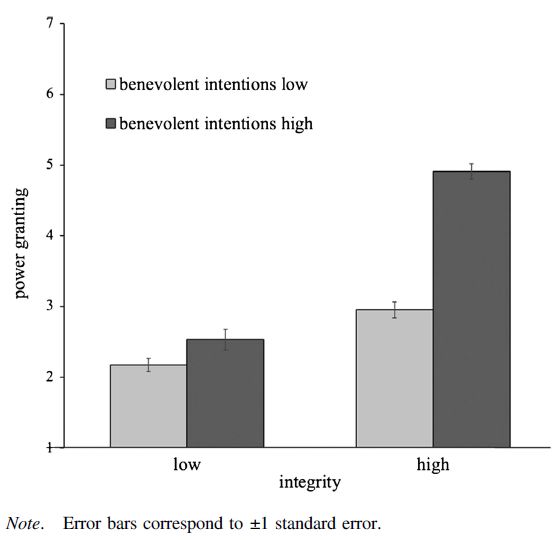
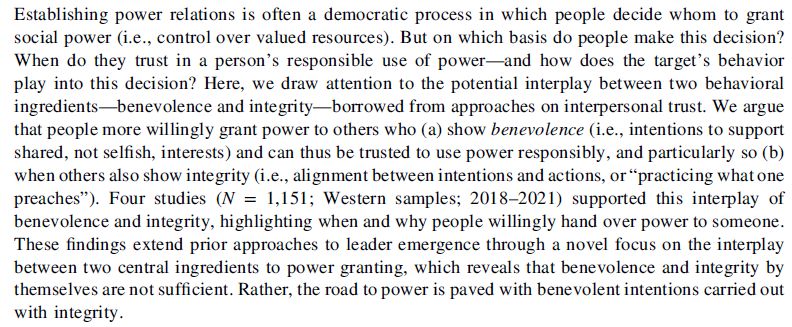
Whom do we want to see in power? People high in both benevolence and integrity - that's what a new paper by Annika Scholl, H Rapp, Gerben van Kleef and myself shows. 4 Studies (N=1151) provide consistent evidence for this interaction effect. Delighted to see this work out doi.org/10.1037/xap0...
06.06.2025 05:16 — 👍 18 🔁 9 💬 0 📌 0
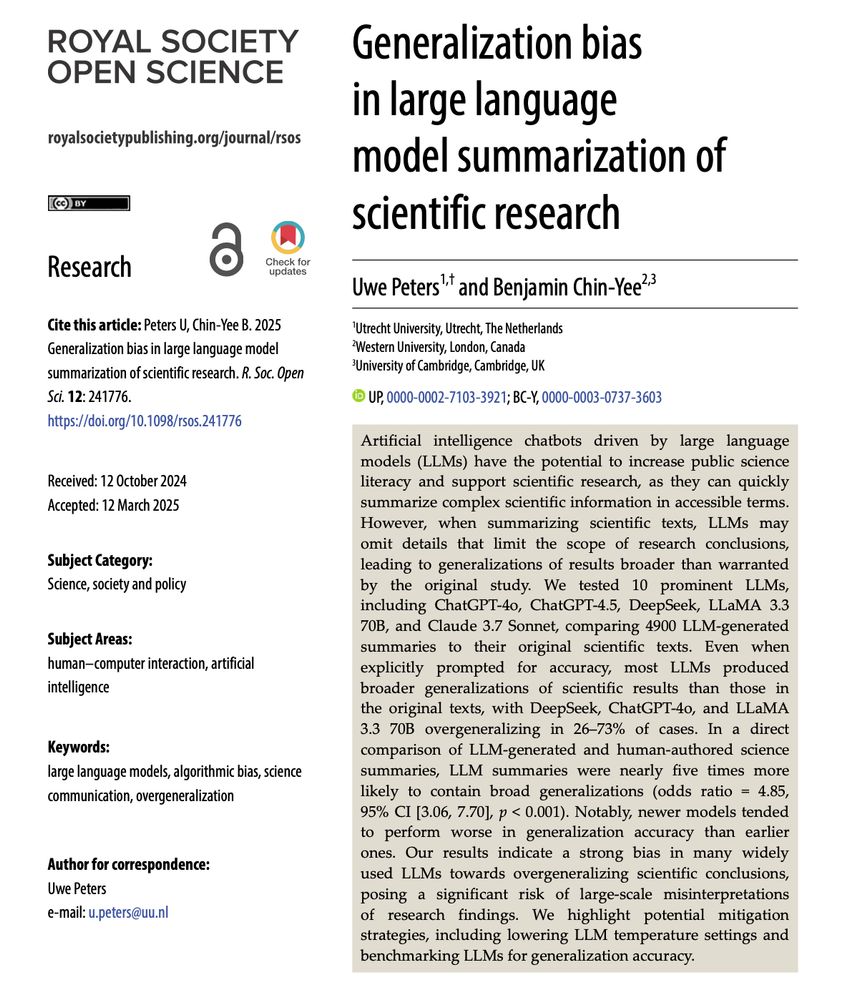
🚨 New study reveals that when used to summarize scientific research, generative AI is nearly five times less accurate than humans.
Many haven't realized, but Gen AI's accuracy problem is worse than initially thought.
19.05.2025 15:54 — 👍 308 🔁 183 💬 9 📌 13
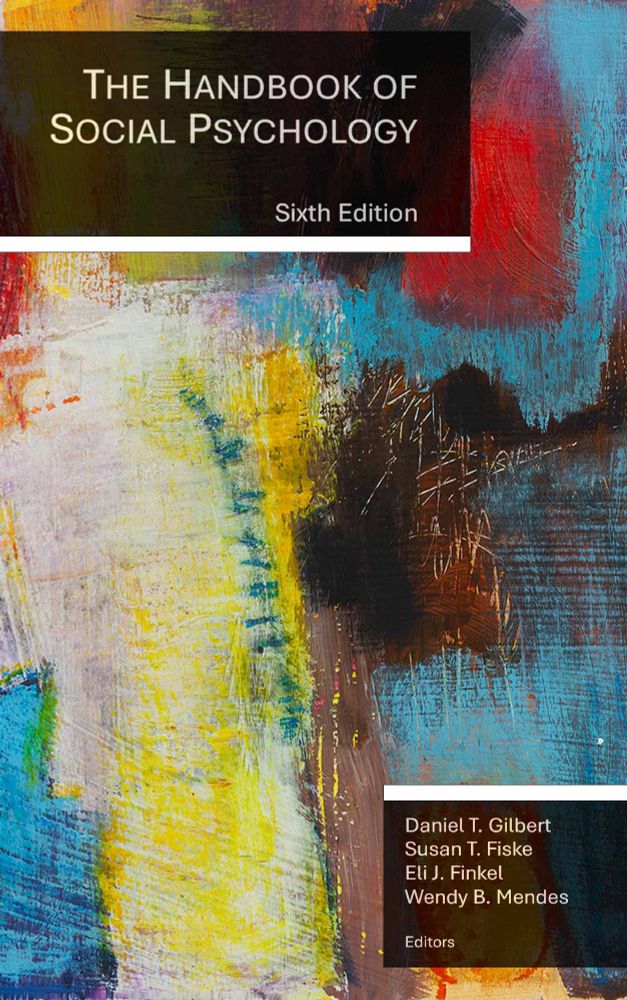
Since 1954, "The Handbook of Social Psychology" has been the field’s most authoritative reference work, and today is the launch of the 6th edition. Best news? The HSP is now open-access—free to read, download, and share.
the-hsp.com
19.05.2025 17:02 — 👍 126 🔁 49 💬 1 📌 3
And a less passive-aggressive way to go about this would be: I would love a copy of the article, could I? 😊
19.05.2025 09:28 — 👍 0 🔁 0 💬 1 📌 0
Frankly, as a practitioner with the same focus on scientific impact, the limited accessibility of papers (read paywall) is equally frustrating 😉
19.05.2025 09:24 — 👍 0 🔁 0 💬 0 📌 0

When misinformation – about vaccines, fluoride, supplements, climate change, etc – linked to political identity = more difficult to change minds.
Trust too.
Study: "....liberals (compared with conservatives) show higher trust in most scientists."
No interventions > trust was successful. Ugh.
01.05.2025 14:28 — 👍 43 🔁 13 💬 0 📌 2
I did a podcast on trust in Chinese foreign policy with Severin de Wit's excellent TrustTalk podcast.
It's available:
✔️ on the TrustTalk website: lnkd.in/e-qrc9n3
✔️ On Apple Podcasts: lnkd.in/eDHkw8tz
✔️ On Spotify: lnkd.in/eTRNsiCz
✔️ On the TrustTalk YouTube channel: lnkd.in/e-i-e9fr
17.04.2025 12:31 — 👍 1 🔁 1 💬 1 📌 0
The motivational aspect of trust is a really interesting topic! Check out this article in Journal of Trust Research.
14.04.2025 08:09 — 👍 4 🔁 0 💬 0 📌 0
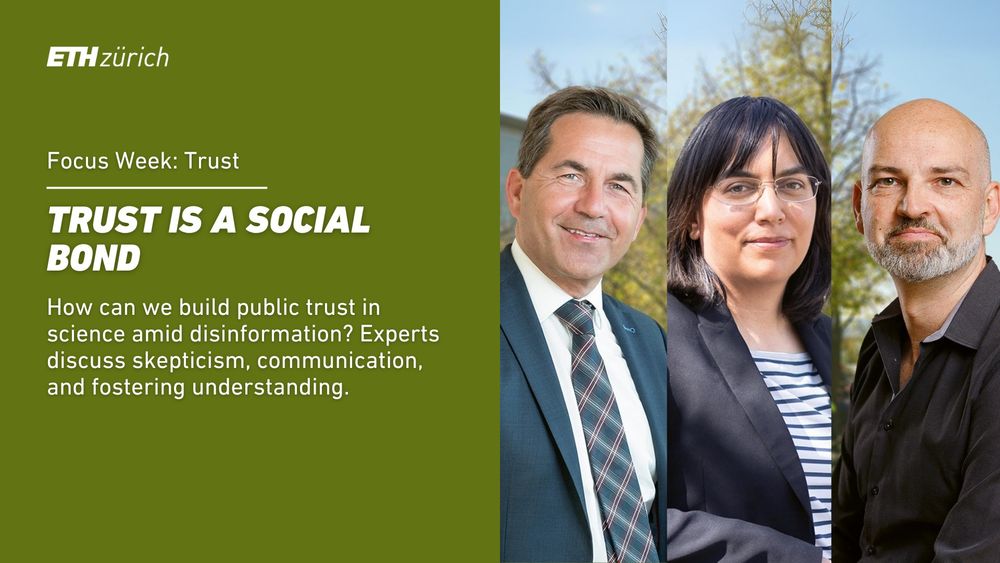
How does #Disinformation affect public trust in science? Can healthy scepticism be good? A debate with Sonia Seneviratne, Mike S. Schäfer and former Swiss Chancellor Walter Thurnherr. Welcome to our first contribution of our focus week on trust.
Article: ethz.ch/en/news-and-...
31.03.2025 08:21 — 👍 26 🔁 5 💬 1 📌 1

Another excellent trust workshop, this time organised by @tomwgvdmeer.bsky.social and Carmen van Alebeek in Amsterdam. And the soft launch of the Political Trust Network!
14.03.2025 15:07 — 👍 22 🔁 5 💬 0 📌 1
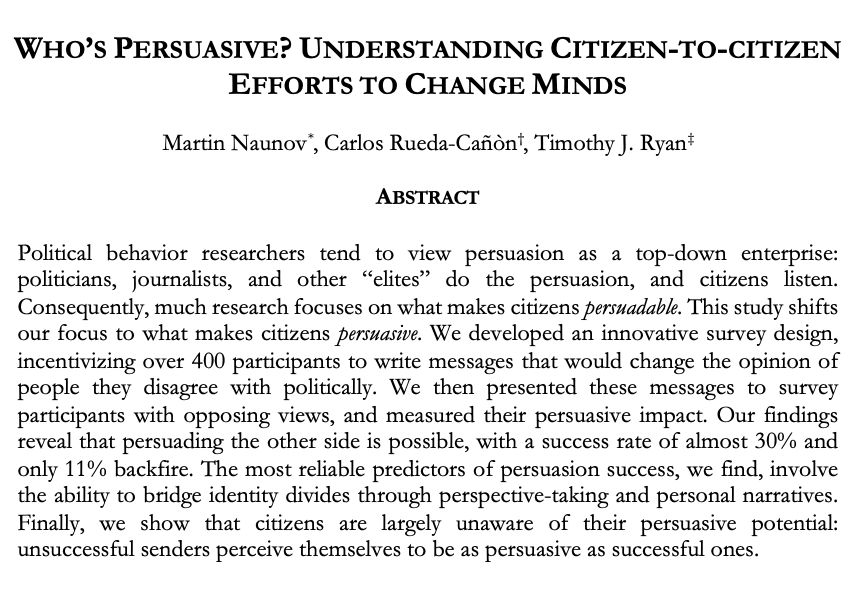
Excited to share that my paper on citizen-to-citizen persuasion, co-authored with Carlos Rueda-Cañòn and @tjryan02.bsky.social, was just accepted at the Journal of Politics @thejop.bsky.social . Link: www.journals.uchicago.edu/doi/10.1086/... 🧵
05.03.2025 16:52 — 👍 202 🔁 78 💬 12 📌 13

A digital drawing features three overlapping, semi-transparent, faceless humanoid figures outlined in red, green, and yellow against a warm beige background. Above them, a thought bubble contains the phrase, “let t mee ggathherr myy tthooughhtss…” in a distorted, overlapping, and staggered font, with some letters in different colors. The text appears disorganized, mirroring a fragmented or overwhelmed thought process. The signature “Kaybee ’18” is in the bottom right corner. The composition conveys a sense of cognitive struggle, dissociation, or difficulty in organizing thoughts.
Professionals are often frightened of dissociation—they keep it at arm’s length or deny it altogether. But for us as trauma survivors, this isn’t a luxury we have.
Dissociation isn’t rare. Dissociation is near ubiquitous.
21.02.2025 10:53 — 👍 46 🔁 5 💬 5 📌 1
Sage Journals: Discover world-class research
Subscription and open access journals from Sage, the world's leading independent academic publisher.
OnlineFirst publication:
Schwade, Sophie Altenmüller, & @mariogollwitzer.bsky.social explore how the use of informal communication impacts the degree of trustworthiness and closeness in professional and private relationship dynamics.
doi.org/10.1177/0265...
#AcasemicSky #SocialPsychology
27.01.2025 13:13 — 👍 4 🔁 3 💬 0 📌 0
Volg een tijdje zowel wetenschappers als @hardgras.bsky.social #Hardgraspodcast en dit verschijnt als vanzelf in je tijdlijn :)
15.01.2025 19:48 — 👍 2 🔁 0 💬 0 📌 0

Changing our behaviour isn't easy–and changing the behaviour of others is even harder.
Here is a great analysis of 19 behavioural principles we proposed that are rooted in decades of research.
What works and what doesn't when it comes to changing behavior: www.bps.org.uk/psychologist...
05.01.2025 17:56 — 👍 52 🔁 15 💬 3 📌 2
The American Journal of Sociology, founded in 1895 as the first journal in its discipline, is a peer-reviewed, bimonthly academic journal that publishes original research and book reviews.
Open archive of social science. Free. Academy owned. Posts by director Philip N. Cohen. Say it: so-SHAR-kive (soʊʃɑrkaɪv). Website: socarxiv.org. New papers post at: https://bsky.app/profile/socarxivbot.bsky.social
Organisational Psychologist: expertise in #burnout, psychosocial hazards, and assessment development. Persistence hunting my best self. #IOPsych
He/him
https://mindonthejob.com
I-O Psychologist, Management Prof, Author Leaders Assemble: Leadership in the MCU, Elements of Leadership: Lessons from ATLA.
Assistant Professor in Work and Organizational Psychology @ University of Amsterdam.
I research:
- effects of chronic illnesses and health conditions on work and vice versa
- illness disclosure, stereotypes, and stigmas
Professor of occupational & organisational psychology, Northumbria University Newcastle, UK
IO Psych/Aviation Psych expert with a side shot of historian and a delightful sense of humor
I-O psychologist (what is that? http://siop.org); Scrabble(R) player; aspiring raconteur; likes/retweets may-or-may-not-be = endorsement
• Prof. of #Dataviz & #IOPsych @ George Mason
• Office of #peopleanalytics, Recruiting @ DOD
• #RStats • USMC Veteran 🦅🌎⚓️ • Views own
Asst Prof of #IOPsych & #QuantPsych @cmc.edu
This account is no longer monitored. Please find me on LinkedIn!
https://sitch.app/szzhou4
https://statslabatcmc.kit.com/subscribe
Professor at Michigan State University, Past President of SIOP (siop.org). Thinking about work, mobility, technology, and psychology. Fan of crosswords and chairs. Pro-empathy.
New here 🫥! Org Psych Presidential Fellow (equiv asst prof). I study workplace mistreatment & bad stuff. I love food, music, lit, dogs, history, complaining 🩷
Occupational Health Psychology | Work-Family, Technology & Health, Longitudinal studies | Tries to balance work with 👧🏻& 👶🏻| She/Her.
Nordic Center of Work and Family Across the Life Course (NorLife)
Arbeidsforskningsinstituttet AFI, OsloMet
HBR-published | Lic'd IO Psychologist | People & Ops Leader | Professor | Board Member | Cleveland, OH, USA | posts ≠ professional advice | posts = my opinions only | www.acusights.org
Assistant Prof at Radboud University (NL) | Work and Organisational Psychology | Leadership & Teams | 🤿
People analytics, I-O psychology, DEI.
Runner, traveller, food enthusiast.
Chronically busy.
Founder of Genius Within, Visiting Professor of Occupational Psychology. Leader of the astray.
Grumpy IO psychologist with an interest in research methods, meta-science and personality. Views are my own and not those of my employer.
Begrawe my hart op Klein Tambotieboom en strooi my as oor die Bosveld horison
#IOPsych Ph.D., proud federal civil servant, GW and ODU alumnus, former NASA intern, and Chicagoland native who enjoys music, gaming, lapel/enamel pins, and craft/specialty coffee—in no particular order.
Mother, Professor: Mofessor. I think I'm funny; you may not. I study online groups and virtual communities, but I am NOT studying you. All typos are the result of my enormous thumbs. All thoughts are my own and, clearly, Reviewer 2 hates them.