
The first paper from the lab is now out in Science Advances: Multimodal social context modulates larval behavior in Drosophila
www.science.org/doi/10.1126/...
We find that fly larvae keep their distance to conspecifics in the absence of food, enjoy reading! @cbehav.bsky.social @uni-konstanz.de
02.02.2026 20:31 —
👍 81
🔁 36
💬 6
📌 0
Together, our results show how evolution can repurpose existing genes and sensory circuits for new purposes so systems that were once used for threat avoidance were rewired to support predation. This illustrates how complex behaviours emerge through evolutionary innovations. @mpinb.mpg.de
29.01.2026 12:30 —
👍 3
🔁 0
💬 0
📌 0

At the neural level, both sensory pathways converge in the same IL2 neurons. These neurons form the first point of contact with prey and act as a hub that translates combined sensory input into attack.
29.01.2026 12:30 —
👍 5
🔁 1
💬 1
📌 0
Importantly, while mechanosensation was important for detecting prey efficiently it was not the only sense these predatory worms were using. We found successful hunting requires the integration of touch and smell together and disrupting both causes stronger defects than disabling either alone.
29.01.2026 12:30 —
👍 2
🔁 0
💬 1
📌 0
Therefore, a gene that once only helped worms feel touch, has taken on a new job in predatory nematodes—helping them find their prey. This revealed a surprising new role for an old sensory gene.
29.01.2026 12:30 —
👍 3
🔁 0
💬 1
📌 0
To begin, we made mutations in genes predicted to mediate mechanosensation in our predatory nematode. Like C. elegans, several of these function in touch and threat avoidance. Strikingly, one gene was essential not only for touch but also for efficient prey detection. This is a gene called mec-6.
29.01.2026 12:30 —
👍 2
🔁 0
💬 1
📌 0
To understand how this predatory feeding behaviour may have evolved, we examined genes involved in a key sensory modality that we predicted might be involved in detecting prey - mechanosensation.
29.01.2026 12:30 —
👍 2
🔁 0
💬 1
📌 0

In our study we compared the predatory nematode Pristionchus pacificus to its close relative Caenorhabditis elegans. While C. elegans feeds on microbes, P. pacificus can actively hunt and kill other worms!
29.01.2026 12:30 —
👍 2
🔁 0
💬 1
📌 0

Evolution of sensory systems underlies the emergence of predatory feeding behaviors in nematodes | PNAS
Understanding how animal behavior evolves remains a major challenge, with few studies
linking genetic changes to differences in neural function and...
How does evolution turn a harmless bacterial feeder into an active predator?
Our new study led by @marianneroca.bsky.social and published in @pnas.org explores how sensory systems were rewired to enable prey detection and predatory behaviour in nematodes.
www.pnas.org/doi/10.1073/...
🧵below!
29.01.2026 12:30 —
👍 49
🔁 24
💬 1
📌 1
YouTube video by MPINB
How new behaviors evolve: from peaceful worm to predator
How do new behaviors evolve?
A new Nature study shows how predatory aggression can emerge through changes in neuromodulatory circuits – without adding new neurons.
We’ve created a short animated explainer video to walk through the key ideas.
youtu.be/wNhjKDCPs_8?...
21.01.2026 16:35 —
👍 11
🔁 3
💬 0
📌 1

These results not only explain the mechanism of predatory aggression in nematodes but also highlight how evolution can create new behaviors by redirecting neuromodulatory signals within existing neural circuits. @mpinb.mpg.de @maxplanck.de
21.01.2026 16:31 —
👍 4
🔁 0
💬 0
📌 0

Finally, to trace the evolutionary origins of aggression, we examined predatory nematodes across this lineage. We found these behaviors emerged early and are similarly regulated by octopamine, indicating an ancient origin for aggression in these nematodes.
21.01.2026 16:31 —
👍 2
🔁 0
💬 1
📌 0
Evolution of sensory systems underlies the emergence of predatory feeding behaviours in nematodes
Understanding how animal behaviour evolves remains a major challenge, with few studies linking genetic changes to differences in neural function and behaviour across species. Here, we identify specific sensory adaptations associated with the emergence of predatory feeding behaviours in the nematode Pristionchus pacificus . While Caenorhabditis elegans uses contact-dependent sensing primarily to avoid threats, Pristionchus pacificus has co-opted this modality to support both avoidance and prey detection, enabling context-dependent predatory behaviour. To uncover a potential mechanism underlying the evolution of P. pacificus prey perception, we mutated 27 canonical mechanosensory genes and assessed their function using behavioural assays, automated behavioural tracking, and a machine learning analysis of behavioural states. While several mutants showed mechanosensory defects, Ppa-mec-6 mutants specifically also impaired prey detection, indicating the emergence of a novel mechanosensory module linked to predatory behaviour. Furthermore, disrupting both mechanosensation alongside chemosensation revealed a synergistic influence for these modalities. Crucially, both mechanosensation and chemosensation pathways converge in the same environmentally exposed IL2 neurons, and silencing these cells induced severe predation defects validating their importance for prey sensing. Thus, predation evolved through the co-option of mechanosensory and chemosensory systems that act together to shape the evolution of complex behavioural traits. ### Competing Interest Statement The authors have declared no competing interest. Max Planck Society, https://ror.org/01hhn8329
Silencing these neurons strongly inhibited the aggressive drive in our predators indicating they have been repurposed to trigger aggression and also detect prey. Their prey detection role has also been explored further in a concurrent paper www.biorxiv.org/content/10.1....
21.01.2026 16:31 —
👍 5
🔁 0
💬 1
📌 0

In particular, some of these are an exciting group of sensory neurons projecting out around the toothy mouth of these predators. These neurons are beautiful with six-fold symmetry and are the first point of contact between predator and prey.
21.01.2026 16:31 —
👍 5
🔁 0
💬 1
📌 0
With the role of these molecules established, we leveraged the genetic tools available in these worms to map the molecular pathways involved. This identified not only the receptors that detect the signals but also the neurons they modulate.
21.01.2026 16:31 —
👍 5
🔁 0
💬 1
📌 0
We found that there was a push – pull mechanism at play with octopamine pushing the worms towards aggression and tyramine making them more pacifistic (@nobelpeacecenter.bsky.social). Similar roles for octopamine and noradrenergic systems have been found in other species but not in a little nematode!
21.01.2026 16:31 —
👍 5
🔁 0
💬 1
📌 0
In C. elegans, many behavioral switches are generated through neuromodulator control so we thought this might be true for P. pacificus predatory aggression. To explore this, we turned to our machine learning tool and we screened all major bioamines for any involvement.
21.01.2026 16:31 —
👍 6
🔁 0
💬 1
📌 0
21.01.2026 16:31 —
👍 5
🔁 0
💬 1
📌 0

To begin with, we set about developing tools to capture the changing states automatically. We trained a machine-learning model that identified stereotypical behavioral states in P. pacificus including three predation-specific states. Even these tiny animals display surprisingly structured behavior!
21.01.2026 16:31 —
👍 6
🔁 0
💬 1
📌 0
Importantly, while P. pacificus is a voracious killer of other nematodes, this is not indiscriminate. Instead, it alternates between aggressive bursts and a pacifist mode. This lead us to explore how these behavioral states are controlled and why they appear in P. pacificus but not C. elegans.
21.01.2026 16:31 —
👍 7
🔁 0
💬 1
📌 0
We still know surprisingly little about how new behaviors evolve and how they are encoded in molecules and neural circuits. To explore this, we compared the bacterial feeding nematode Caenorhabditis elegans with its predatory cousin Pristionchus pacificus, which can attack other worms.
21.01.2026 16:31 —
👍 6
🔁 0
💬 1
📌 0

Predatory aggression evolved through adaptations to noradrenergic circuits - Nature
Noradrenergic circuits support and balance aggressive behavioural states in predatory nematodes, distinguish predatory from non-predatory nematode species and are associated with the evolution of comp...
Why do some worms graze on bacteria while others hunt and kill?
Our study, published today in Nature, reveals how predatory aggression evolved in nematodes.
Led by @gunizgozeeren.bsky.social and @leoboeger.bsky.social across the @jameslightfoot.bsky.social and @monikakscholz.bsky.social labs.
21.01.2026 16:31 —
👍 80
🔁 35
💬 9
📌 5
Curious about how the cannibalistic nematode Pristionchus pacificus hunts its prey? Check out our preprint on BioRxiv, where we explore the roles of mechanosensation and chemosensation, using behaviour tracking among other methods!
www.biorxiv.org/content/10.1...
26.03.2025 10:01 —
👍 9
🔁 4
💬 0
📌 1
Two weeks to go until @jameslightfoot.bsky.social lab and I will host some excellent colleagues from around the world at the NWG meeting in Göttingen for Symposium 24@neurowissg.bsky.social!
Be ready for a diverse line up with 🐸 🕷️ 🪱 🪰 under the common umbrella of 'evolution of behavior'!
12.03.2025 10:34 —
👍 6
🔁 2
💬 0
📌 0
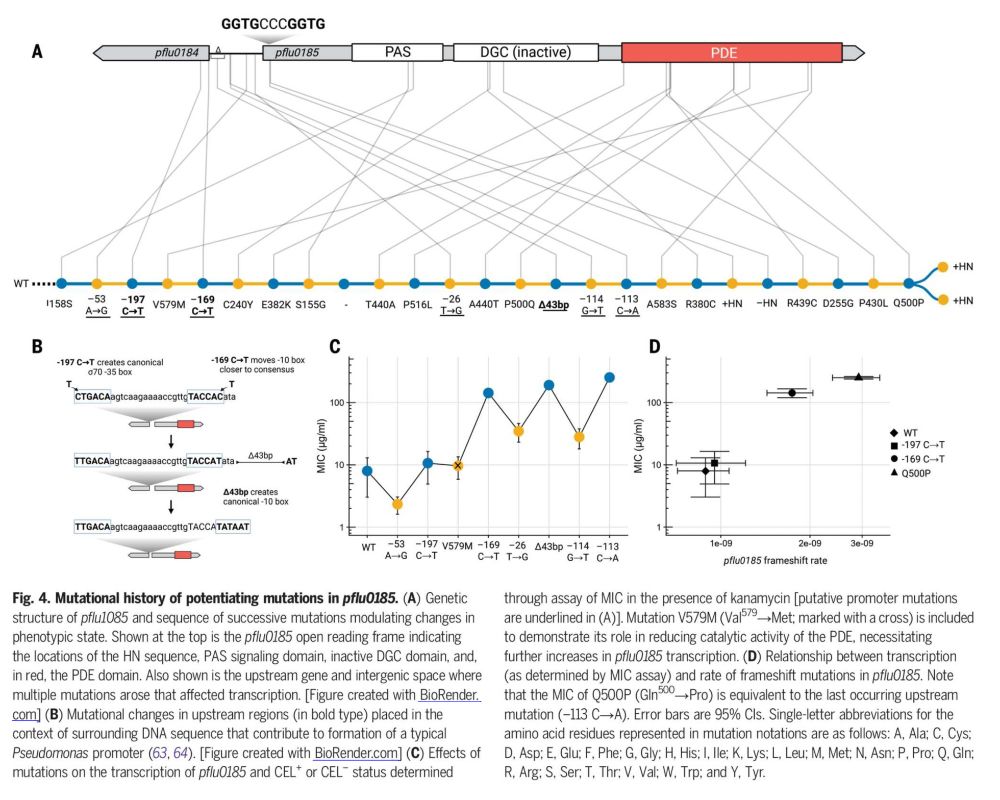
Fantastic work from the lab of @maxplanck.de colleague Paul Rainey, demonstrating how a locus can evolve to become hypermutable. Mutation rates depend on evolutionary relevance of this evolved locus!
www.science.org/doi/10.1126/...
23.02.2025 11:34 —
👍 59
🔁 13
💬 0
📌 1
Have you ever wondered what is on the surface of a #nematode like #Celegans?
…it turns out they are surprisingly greasy little critters and covered in many different lipids.
To read more about this, check out the excellent paper from the Chauhan lab which we were very happy to be a small part of.
18.02.2025 12:32 —
👍 16
🔁 7
💬 0
📌 0
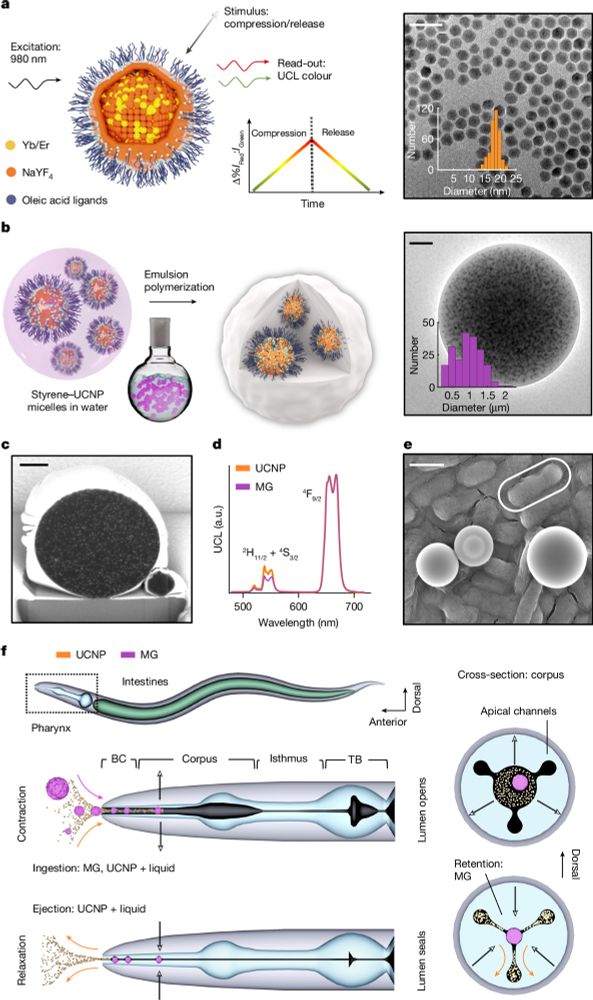
Upconverting microgauges reveal intraluminal force dynamics in vivo
Nature - Nanoparticle-based ‘microgauges’ are developed for in vivo force sensing and deployed in C. elegans to investigate how mechanical force correlates with electrical signalling in...
How hard do bacteria-eating nematodes bite in order to break the bacterial cell wall? Check out our new paper, led by Jason Casar & collab with Jen Dionne, using pressure sensing beads that change color upon compression (bluetorial coming soon) rdcu.be/d5n7v
01.01.2025 17:44 —
👍 108
🔁 38
💬 9
📌 9
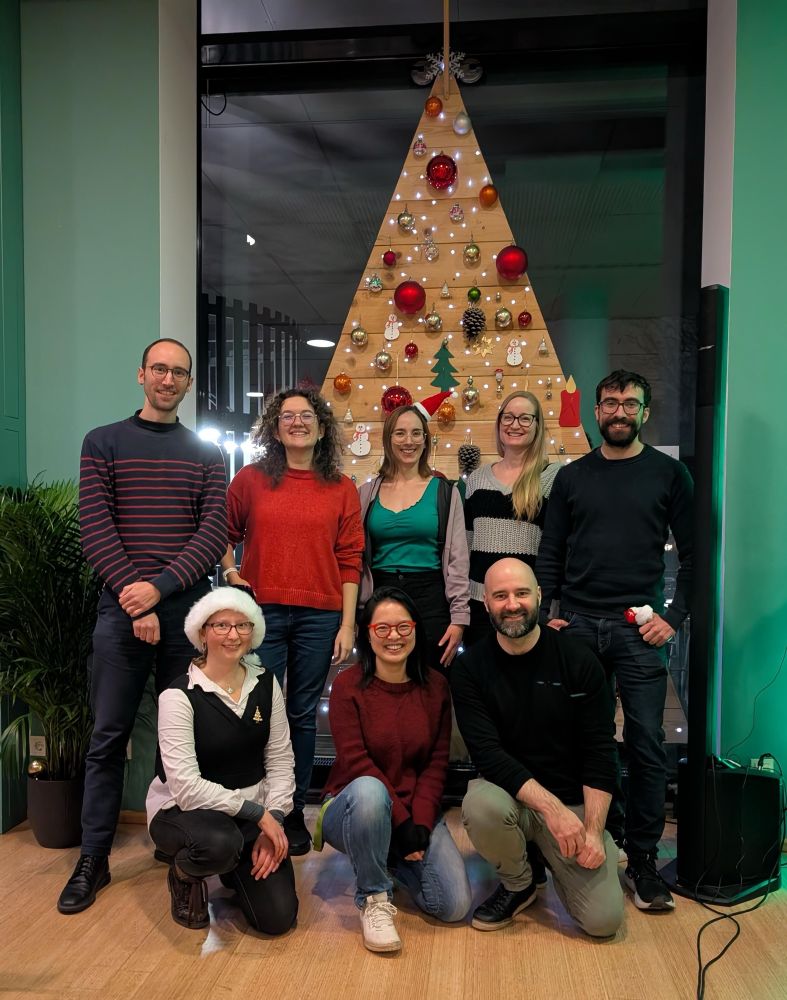
Institute Christmas party shenanigans 🪱🥳
12.12.2024 21:52 —
👍 8
🔁 1
💬 0
📌 1
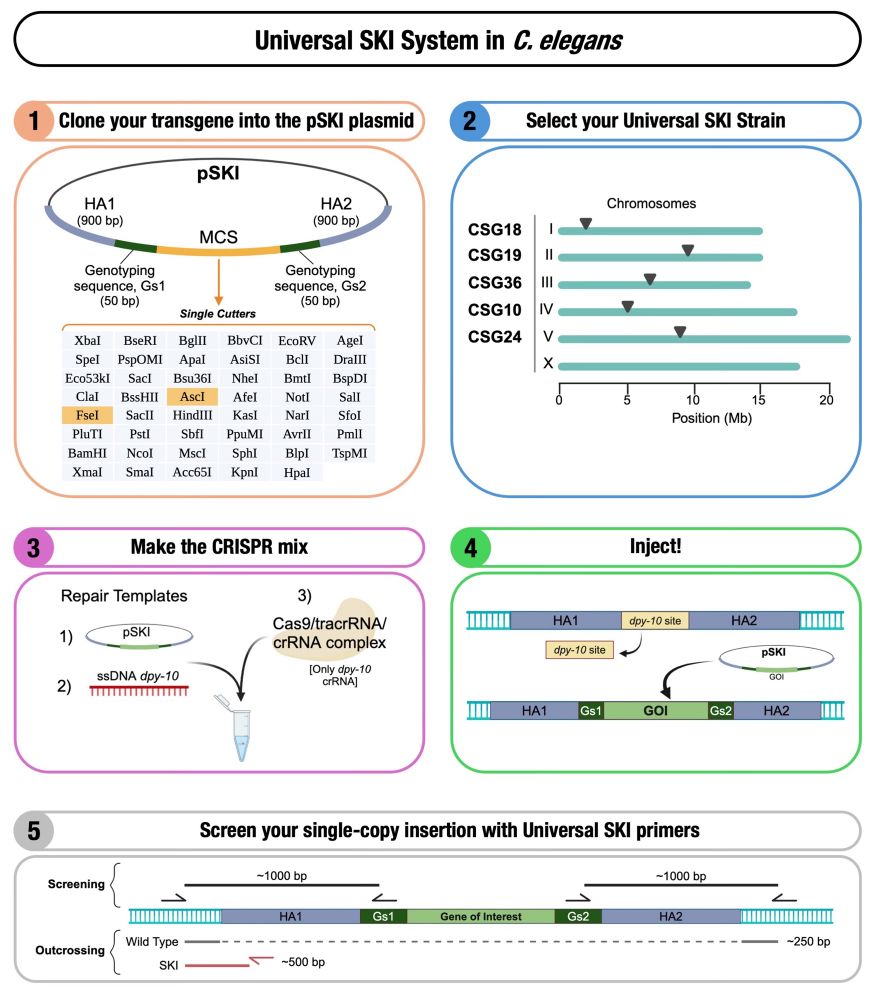
Are you planning to perform single-copy insertions in C. elegans???
Check out our first lab paper!! 🥳
Our *Universal SKI System* uses just one plasmid that can be inserted into any chromosome! Easy peasy!
#Celegans #CRISPR #worms #research #science #techniques
www.biorxiv.org/content/10.1...
11.12.2024 02:03 —
👍 50
🔁 27
💬 1
📌 2


