PhD Opportunity: Understanding and Enhancing Consent in Manual Therapy.
A doctoral opportunity exploring meaningful consent, and what helps it happen. The focus can be around your interests.
www.hsu.ac.uk/course/resea...
#PhDOpportunity #ManualTherapy
16.02.2026 18:52 — 👍 1 🔁 1 💬 0 📌 0
Dúiseacht le dúthracht… briseadh an seaca ó Dhrom Chónáin
14.02.2026 07:51 — 👍 1 🔁 0 💬 0 📌 0
YouTube video by Andrew Perfors
Part 1: How do LLMs work?
I just created a series of seven deep-dive videos about AI, which I've posted to youtube and now here. 😊
Targeted to laypeople, they explore how LLMs work, what they can do, and what impacts they have on learning, well-being, disinformation, the workplace, the economy, and the environment.
22.01.2026 00:45 — 👍 488 🔁 191 💬 19 📌 18

Writing is thinking
"On the value of human-generated scientific writing in the age of large-language models."
www.nature.com/articles/s44...
18.01.2026 21:06 — 👍 178 🔁 59 💬 4 📌 5
Great news for @issls.bsky.social and the European Spine Journal!
18.01.2026 10:38 — 👍 1 🔁 0 💬 0 📌 0
Great study - only just picking up on it now! Are you continuing this line of work in your research?
18.01.2026 10:18 — 👍 1 🔁 0 💬 1 📌 0

www.nature.com/articles/s41... "AI paradox" in science: helps individual scientists publish more and get cited faster, but it narrows the collective focus of science.
Instead of exploring riskier/more uncertain new avenues AI encourages researchers to crowd around established, data-rich topics.
16.01.2026 07:24 — 👍 13 🔁 5 💬 1 📌 0
Really sad news. What a huge loss. Ar dheis Dé go raibh a anam dílis.
03.10.2025 10:36 — 👍 0 🔁 0 💬 0 📌 0
A massive loss to us all. His care for and wonder at both nature and the Irish language was a great gift that he shared with us all
03.10.2025 06:33 — 👍 162 🔁 39 💬 3 📌 1

Testing the effectiveness of an innovative information package on practitioner reported behaviour and beliefs: The UK Chiropractors, Osteopaths and Musculoskeletal Physiotherapists Low back pain ManagemENT (COMPLeMENT) trial [ISRCTN77245761] - BMC Musculoskeletal Disorders
Background Low back pain (LBP) is a common and costly problem. Initiatives designed to assist practitioner and patient decisions about appropriate healthcare for LBP include printed evidence-based clinical guidelines. The three professional groups of chiropractic, osteopathy and musculoskeletal physiotherapy in the UK share common ground with their approaches to managing LBP and are amongst those targeted by LBP guidelines. Even so, many seem unaware that such guidelines exist. Furthermore, the behaviour of at least some of these practitioners differs from that recommended in these guidelines. Few randomised controlled trials evaluating printed information as an intervention to change practitioner behaviour have utilised a no-intervention control. All these trials have used a cluster design and most have methodological flaws. None specifically focus upon practitioner behaviour towards LBP patients. Studies that have investigated other strategies to change practitioner behaviour with LBP patients have produced conflicting results. Although numerous LBP guidelines have been developed worldwide, there is a paucity of data on whether their dissemination actually changes practitioner behaviour. Primarily because of its low unit cost, sending printed information to large numbers of practitioners is an attractive dissemination and implementation strategy. The effect size of such a strategy, at an individual practitioner level, is likely to be small. However, if large numbers of practitioners are targeted, this strategy might achieve meaningful changes at a population level. Methods The primary aim of this prospective, pragmatic randomised controlled trial is to test the short-term effectiveness (six-months following intervention) of a directly-posted information package on the reported clinical behaviour (primary outcome), attitudes and beliefs of UK chiropractors, osteopaths and musculoskeletal physiotherapists. We sought to randomly allocate a combined sample of 1,800 consenting practitioners to receive either the information package (intervention arm) or no information above that gained during normal practice (control arm). We collected questionnaire data at baseline and six-months post-intervention. The analysis of the primary outcome will assess between-arm differences of proportions of responses to questions on recommendations about activity, work and bed-rest, that fall within categories previously defined by an expert consensus exercise as either 'guideline-consistent' and 'guideline-inconsistent'.
Twenty-five years ago, I had the privilege of working with an exceptional group of researchers on what would become a great study about low back pain care and practice. The same team have revisited this. Fascinating results bmcmusculoskeletdisord.biomedcentral.com/articles/10....
02.10.2025 11:17 — 👍 2 🔁 1 💬 0 📌 0
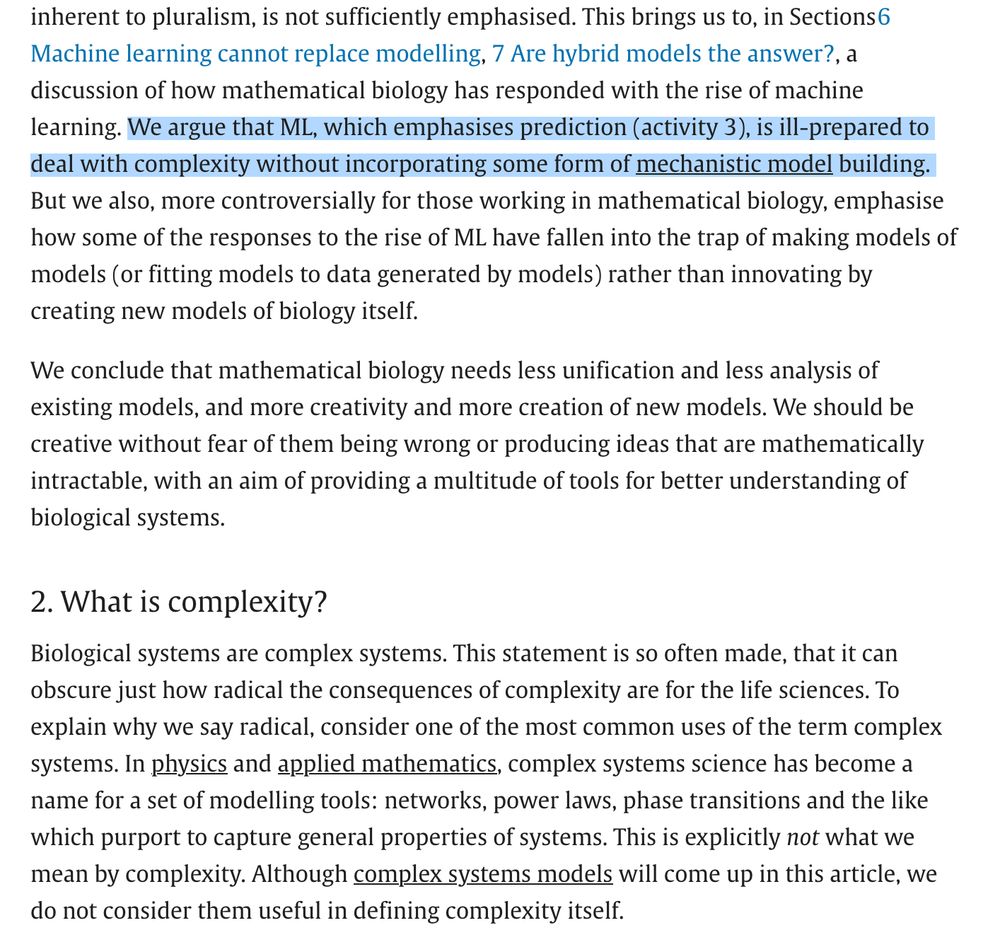
We argue that currently, the universalist approach dominates and creation of new models, which is inherent to pluralism, is not sufficiently emphasised. This brings us to, in Sections 6 Machine learning cannot replace modelling, 7 Are hybrid models the answer?, a discussion of how mathematical biology has responded with the rise of machine learning. We argue that ML, which emphasises prediction (activity 3), is ill-prepared to deal with complexity without incorporating some form of mechanistic model building. But we also, more controversially for those working in mathematical biology, emphasise how some of the responses to the rise of ML have fallen into the trap of making models of models (or fitting models to data generated by models) rather than innovating by creating new models of biology itself.
We conclude that mathematical biology needs less unification and less analysis of existing models, and more creativity and more creation of new models. We should be creative without fear of them being wrong or producing ideas that are mathematically intractable, with an aim of providing a multitude of tools for better understanding of biological systems.
![Instead, the radical definition of complex systems comes from, what is known as, critical complexity. Work by Paul Cilliers and Alicia Juarrero warned against aggrandising models (even supposedly complex systems models) [3], [4]. They emphasise the need to embrace the ambiguous, messy, fluid, non-determinable, contextual, and historical nature of complex systems. They describe complex phenomena as unfinalizible and inexhaustible, which means that we can never capture any given biological system entirety with models [5]. Fig. 1, adapted from Di Paolo et al. (2018), captures the interdependence, fluidly and interactivity of agents and environments in a complex system [2]. Complex systems are open-ended, which means there is no uncontested way of telling whether what we have included in a model is crucial or what we have omitted as irrelevant is indeed so. Models can, according to the critical complexity approach, be contradictory: we can accept two incompatible predictions as both describing the same system.](https://cdn.bsky.app/img/feed_thumbnail/plain/did:plc:26hkfmtr7jrchexamh7hk6rz/bafkreidbtcuxfz7vv53zk3c37lti4el26hankzdt72dlwwiuphmcjjw6ai@jpeg)
Instead, the radical definition of complex systems comes from, what is known as, critical complexity. Work by Paul Cilliers and Alicia Juarrero warned against aggrandising models (even supposedly complex systems models) [3], [4]. They emphasise the need to embrace the ambiguous, messy, fluid, non-determinable, contextual, and historical nature of complex systems. They describe complex phenomena as unfinalizible and inexhaustible, which means that we can never capture any given biological system entirety with models [5]. Fig. 1, adapted from Di Paolo et al. (2018), captures the interdependence, fluidly and interactivity of agents and environments in a complex system [2]. Complex systems are open-ended, which means there is no uncontested way of telling whether what we have included in a model is crucial or what we have omitted as irrelevant is indeed so. Models can, according to the critical complexity approach, be contradictory: we can accept two incompatible predictions as both describing the same system.
![This approach views a model as a snapshot of a system and no single snapshot tells the whole story. For modelling the human body, for example, “a portrait of a person, a store mannequin, and a pig can all be models” [6]. None is a perfect representation, but each can be the best model for a human, depending on whether one wants to remember an old friend, to buy clothes, or to study anatomy. The critical complexity view suggests that theoreticians should avoid specialising in any one modelling approach and try to find the right set of models to understand a particular system in a given context.
There can, of course, be more than one definition of complex systems. Indeed, Cilliers and Juarrero’s approach to complexity encourages a plurality of definitions (after all, there is no single view of a system). We would, though, emphasise that it is the radical definition of complexity – in which systems always resist a complete description, are open and unfinalizable – which is least well understood by mathematical biologists today. It is therefore important to investigate how complexity should be approached in the study of biological systems.](https://cdn.bsky.app/img/feed_thumbnail/plain/did:plc:26hkfmtr7jrchexamh7hk6rz/bafkreicszmjxfslncbz4br2p7rrkcpyqkq6ayjtveaxcbgswc4hneicscu@jpeg)
This approach views a model as a snapshot of a system and no single snapshot tells the whole story. For modelling the human body, for example, “a portrait of a person, a store mannequin, and a pig can all be models” [6]. None is a perfect representation, but each can be the best model for a human, depending on whether one wants to remember an old friend, to buy clothes, or to study anatomy. The critical complexity view suggests that theoreticians should avoid specialising in any one modelling approach and try to find the right set of models to understand a particular system in a given context.
There can, of course, be more than one definition of complex systems. Indeed, Cilliers and Juarrero’s approach to complexity encourages a plurality of definitions (after all, there is no single view of a system). We would, though, emphasise that it is the radical definition of complexity – in which systems always resist a complete description, are open and unfinalizable – which is least well understood by mathematical biologists today. It is therefore important to investigate how complexity should be approached in the study of biological systems.
from a 2022 paper with @gyllingberg.bsky.social & @soccermatics.bsky.social
The lost art of mathematical modelling www.sciencedirect.com/science/arti...
07.06.2025 15:01 — 👍 56 🔁 13 💬 1 📌 0
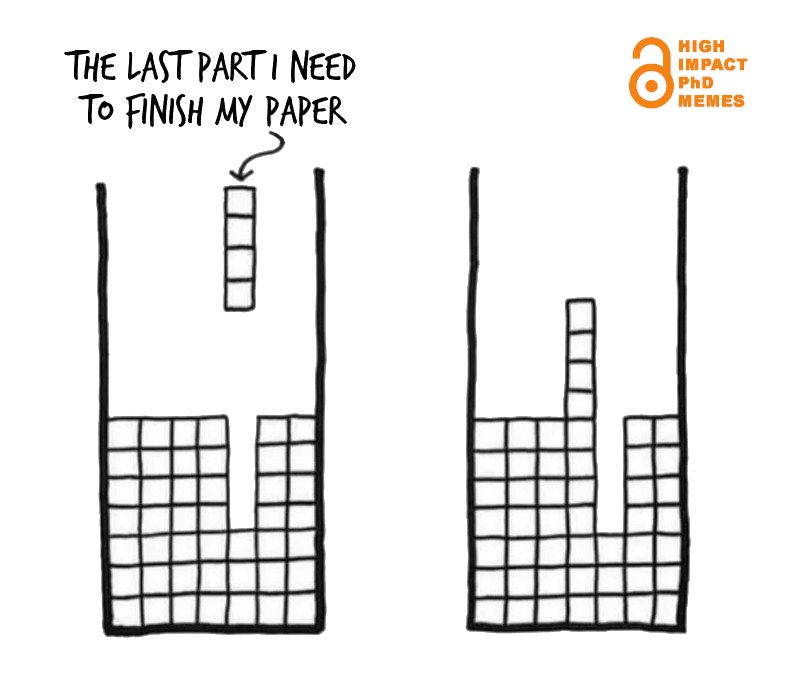
Tetris game depicting that many things in life don’t work out as you envision.
Sometimes the data from experiments don’t fit perfectly with your story.
That feeling when you do all this work for this ONE piece of data for your story and the results don’t exactly fit the way you want it to…🧪🧫
07.06.2025 21:42 — 👍 93 🔁 9 💬 6 📌 1

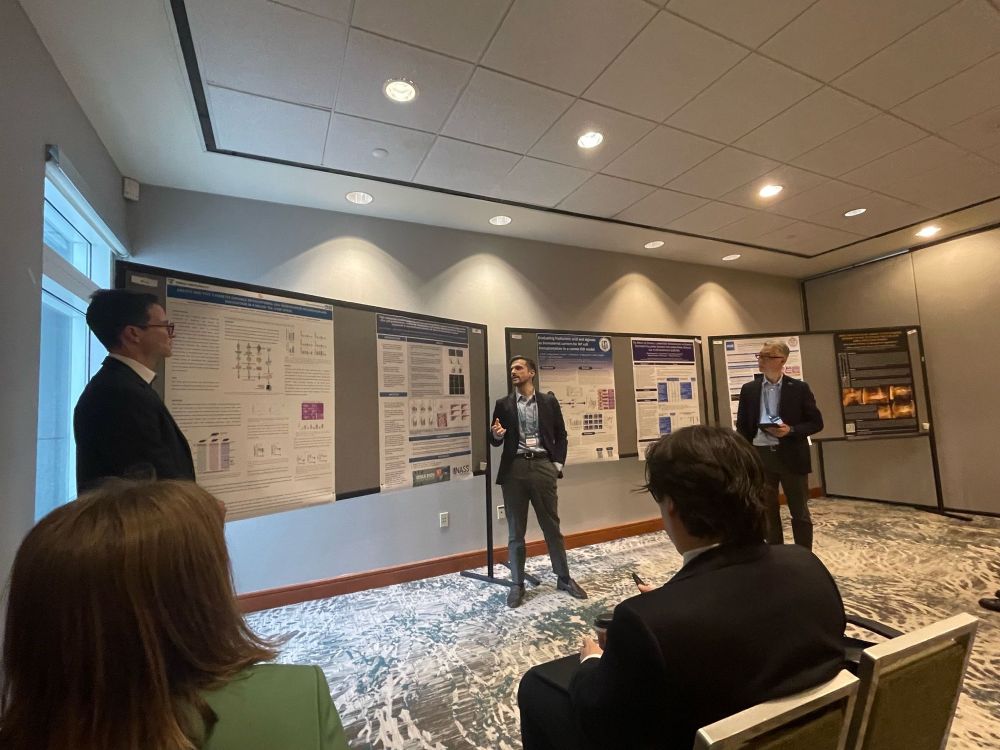
Great special poster session this morning #ISSLS2025 on #IVD degeneration chaired by Stefan Dudli and Kotaro Nishida
14.05.2025 13:28 — 👍 4 🔁 1 💬 0 📌 0

Strange being at a conference #ISSLS2025 without twitter/x and without bsky as an effective alternative. Would be great if the community could engage again here on bsky…
13.05.2025 18:33 — 👍 1 🔁 0 💬 0 📌 0


Presenters are getting robust and constructive questioning here very much in the spirit of #ISSLS2025! Halfway through a great session here including studies on #Modicchanges and deep learning spine variables extracted from UK biobank
13.05.2025 18:28 — 👍 5 🔁 1 💬 0 📌 0


#ISSLS2025 has officially kicked off here in Atlanta with the basic science session!
13.05.2025 12:05 — 👍 4 🔁 1 💬 0 📌 0
this is unsustainable. data centers in Ireland already consume over 20% of the total energy the country produces (the highest in Europe)
14.04.2025 21:53 — 👍 79 🔁 42 💬 5 📌 0
I thought spring would start for me at the Lahti 200k last weekend…
10.04.2025 18:13 — 👍 0 🔁 0 💬 0 📌 0
A comprehensive review of cell transplantation and platelet-rich plasma therapy for the treatment of disc degeneration-related back and neck pain. A really nice review @jordyschol.bsky.social 👏🏻
10.04.2025 06:54 — 👍 4 🔁 2 💬 1 📌 0

New AI in physio principles provide a ‘guideline for the future’
The CSP has published principles to guide the use of artificial intelligence in physiotherapy.
Delighted that the new AI in #physiotherapy principles from @thecsp.bsky.social have been launched. Proud to have played a small part in getting here.
01.04.2025 07:28 — 👍 3 🔁 4 💬 1 📌 1

Butterflies on a blue sky
THREAD
The numbers are in. @bsky.app research sharing volumes vs X Formerly Twitter
In March 2024, on most days, Bluesky hosts more posts linked to research published in 2025 than X.
By quite a lot.
Release the Kraken...
#AcademicSky #HigherEd #Altmetrics
1/11
27.03.2025 17:22 — 👍 1216 🔁 470 💬 18 📌 63
Similar in Irish, vocabulary is 'stór focal'. Stór means store, but also treasure, e.g. referring to a loved one as 'a stóirín', my little treasure.
14.03.2025 12:54 — 👍 2 🔁 0 💬 0 📌 0

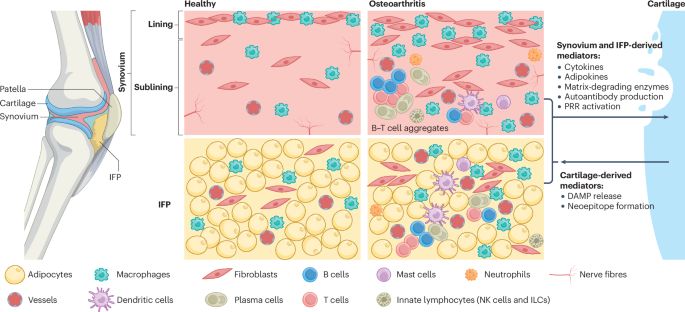
This figure shows the healthy joint (part a) and osteoarthritic joint (part b). Almost all tissue structures in osteoarthritis joint tissues show pathological changes, including articular cartilage degradation, fibrosis and inflammation of the synovium and infrapatellar fat pad, subchondral bone remodelling, meniscal damage and ligament damage.

This figure outlines the hierarchical relationship between individual-level (influenced by genetic, systemic and lifestyle factors) and joint-level (specific to joint anatomy and function) risk factors that contribute to the susceptibility, progression and burden of osteoarthritis. Modifiable risk factors (blue) and non-modifiable risk factors (red) are also displayed.

Knee osteoarthritis is one of the most common joint diseases, characterized by pathological changes that involve the degradation of articular cartilage, inflammation and fibrosis of the synovium and infrapatellar fat pad, and remodelling of the subchondral bone. Cartilage degradation is driven by the excessive activity of matrix metalloproteinases (MMPs) and ADAMTS enzymes, leading to the breakdown of collagen and proteoglycans, resulting in cartilage becoming thinner and cracked, compromising its cushioning function, and causing joint pain and stiffness. Meanwhile, synovial tissue shows chronic inflammation, including congestion, synovial cell hyperplasia and inflammatory cell infiltration, increasing inflammatory factors in the synovial fluid and further damaging the cartilage. The infrapatellar fat pad is also affected, with fibrosis potentially altering mechanical properties around the joint, affecting movement. The subchondral bone undergoes significant structural changes such as sclerosis and abnormal remodelling, which can lead to osteophyte formation, altering joint mechanics and increasing cartilage load. The sclerosis changes stress distribution within the joint, exacerbating cartilage damage. These pathological processes are interconnected, forming a complex network where inflammatory factors, such as IL-1β, IL-6 and TNF, further promote cartilage degradation and synovial inflammation. Mechanical stress signals activate chondrocytes and bone cells, accelerating lesion progression. Senescence-associated secretory phenotype (SASP) factors from chondrocytes or matrix-degrading enzymes secreted by osteoclasts and synovium/fat pad cells interact to exacerbate tissue damage, highlighting the importance of understanding these cellular and molecular interactions for effective osteoarthritis treatment. ARGS, aggrecanase generated aggrecan amino acids alanine, arginine, glycine, serine.

a, Overview of the peripheral pain pathway in joint pain. Noxious stimuli activate the peripheral terminals of nociceptors that innervate joint tissues. Depolarization of nerve terminals initiates the firing of action potentials that invade the dorsal root ganglia, where the cell bodies reside. This requires the activation of voltage-gated sodium channels NaV1.7, NaV1.8 and NaV1.9. Signals are transmitted to the dorsal horn of the spinal cord, where nociceptors synapse with second-order neurons — either interneurons (not shown) or projection neurons that cross to the contralateral side and carry the signal up the spinal cord. From there, the signals are propagated to higher regions of the central nervous system and different areas of the brain, where they are perceived as pain. b, Peripheral terminals of nociceptors express voltage-gated sodium channels and ion channels, such as TRPV1, or mechanosensitive ion channels such as Piezo2. They also express receptors for inflammatory mediators released by degrading and inflamed joint tissues, such as nerve growth factor (NGF), CCL2 or disease-associated molecular patterns (DAMPs). c, Anatomical neuroplasticity occurs as part of osteoarthritis pathology, including neo-innervation of the synovium and sprouting of nociceptors in the subchondral bone, which may breach the tidemark.
Cool overview of #osteoarthritis, which will be of interest to many in #neuroskyence & #PainResearch communities. Thanks to @tuhinaneogi.bsky.social, @jointsintheworld.bsky.social & others!
Some figures that will doubtless appear in many talks in years to come!
www.nature.com/articles/s41...
10.03.2025 08:21 — 👍 26 🔁 11 💬 0 📌 0
Professor of Epidemiology. Musculoskeletal pain and primary care researcher. Interested in research on pain in children, young people & over the lifecourse. #KeeleMSK Views are my own.
We build probabilistic #MachineLearning and #AI Tools for scientific discovery, especially in Neuroscience. Probably not posted by @jakhmack.bsky.social.
📍 @ml4science.bsky.social, Tübingen, Germany
Is mise Big Gaeilge na Gaeilge Bige
Academy Professor in computational Bayesian modeling at Aalto University, Finland. Bayesian Data Analysis 3rd ed, Regression and Other Stories, and Active Statistics co-author. #mcmc_stan and #arviz developer.
Web page https://users.aalto.fi/~ave/
Community advocacy for sustainable mobility in Galway
I had a marvellous time ruining everything.
Scientist. Ex-President of @Humanists_UK Lecturer in Genetics @UCL
Genetics, race, eugenics, books, cricket, +–=÷×
@kbjmanagement
adamrutherford.com
🔬Researcher, University of Newcastle & Hunter Medical Research Institute
🩺Doctor, NSW Health & Hunter New England Local Health District
✊🏽Wailwan, #MD, #PhD, #CatDad
https://guycameron.me
Irish Times writer & author of OK, Let's Do Your Stupid Idea & now, out in June, Experts in a Dying Field. You can preorder here: https://linktr.ee/expertsinadyingfield
Scientist & skeptic. Dad. Book addict. Pathologically curious. Origins and Evolution of Complexity, Synthetic Transitions, Liquid Brains, and Earth Terraformation. ICREA, SFI & CSH professor. Author. Secular humanist.
Virgin Media News Correspondent but these are my own views and not those of my employer.
Ireland.
physician-scientist, author, editor
https://www.scripps.edu/faculty/topol/
Ground Truths https://erictopol.substack.com
SUPER AGERS https://www.simonandschuster.com/books/Super-Agers/Eric-Topol/9781668067666
Blog: https://argmin.substack.com/
Webpage: https://people.eecs.berkeley.edu/~brecht/
Psychology & behavior genetics. Author of THE GENETIC LOTTERY (2021) and ORIGINAL SIN (coming 3.3.2026). Speaking as an individual
President of Signal, Chief Advisor to AI Now Institute
Professor, UW Biology / Santa Fe Institute
I study how information flows in biology, science, and society.
Book: *Calling Bullshit*, http://tinyurl.com/fdcuvd7b
LLM course: https://thebullshitmachines.com
Corvids: https://tinyurl.com/mr2n5ymk
he/him
Nature, land, food
On windy Achill island 🏝️