it was great to collaborate with @lmueller.bsky.social to help characterize the Medicago crn mutant!
18.12.2025 17:07 — 👍 11 🔁 6 💬 0 📌 0
Thank you @aribidopsis.bsky.social for this invitation and was a good open discussion. I really enjoyed it and hope to join more in future.
14.12.2025 05:20 — 👍 1 🔁 1 💬 0 📌 0
Congratulations 🎉
05.10.2025 21:48 — 👍 0 🔁 0 💬 0 📌 0

Grateful to be honored with the Alstroemeria Award from @ucsandiego.bsky.social
🌸. This recognition would not have been possible without the incredible support from so many people behind the scenes, thank you for lifting me up along the way. @salkinstitute.bsky.social
26.09.2025 16:47 — 👍 7 🔁 0 💬 0 📌 0
Thrilled to have our spatial single-cell atlas of the Arabidopsis lifecycle in @NaturePlants. Turns out that its easy to make nice images when spatial expression of 1,000 genes is available! 1/n
@natanellae.bsky.social @tatsuyanobori.bsky.social @joeecker.bsky.social
www.nature.com/articles/s41...
19.08.2025 09:17 — 👍 69 🔁 41 💬 7 📌 4
Congratulations Travis 😊 Nice work🎉
19.08.2025 14:55 — 👍 1 🔁 0 💬 1 📌 0
It’s one of the best feelings 🙃
04.08.2025 21:36 — 👍 1 🔁 0 💬 0 📌 0
Congratulations Natalia 🎉
02.08.2025 02:23 — 👍 0 🔁 0 💬 1 📌 0
I am thrilled to share the 2nd chapter of my PhD with @adsteinbrenner.bsky.social In collaboration with @tiszapatrick we demonstrated that the LRR-RLP INR is the missing molecular link between caterpillar recognition and predatory wasp recruitment in the field. A thread 1/6
01.08.2025 21:25 — 👍 32 🔁 17 💬 2 📌 1
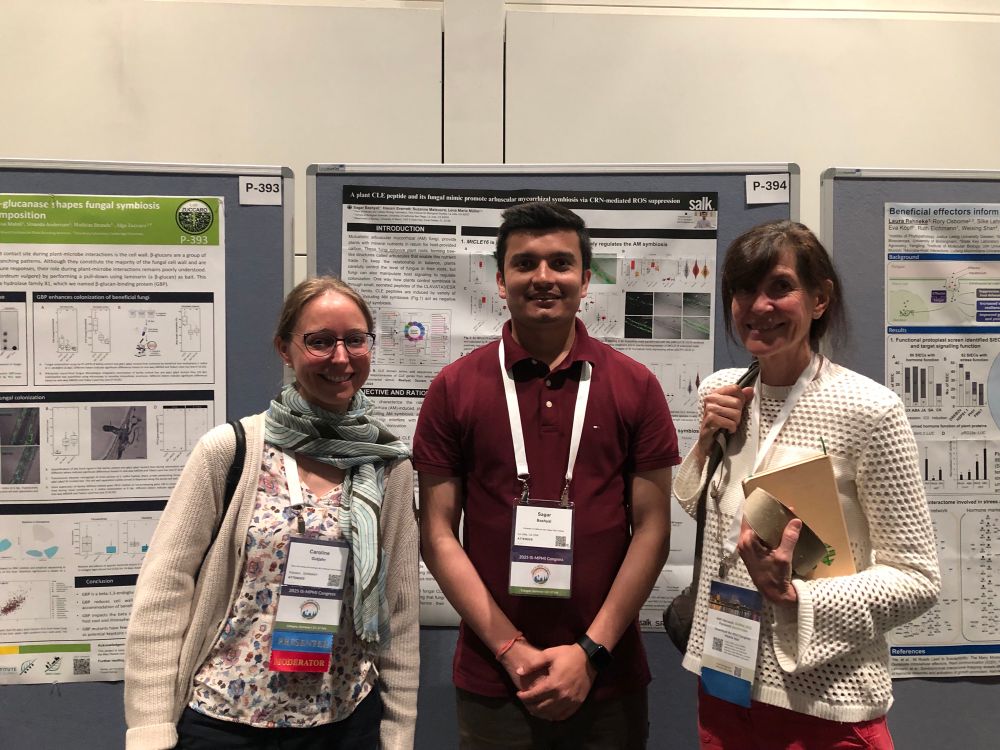
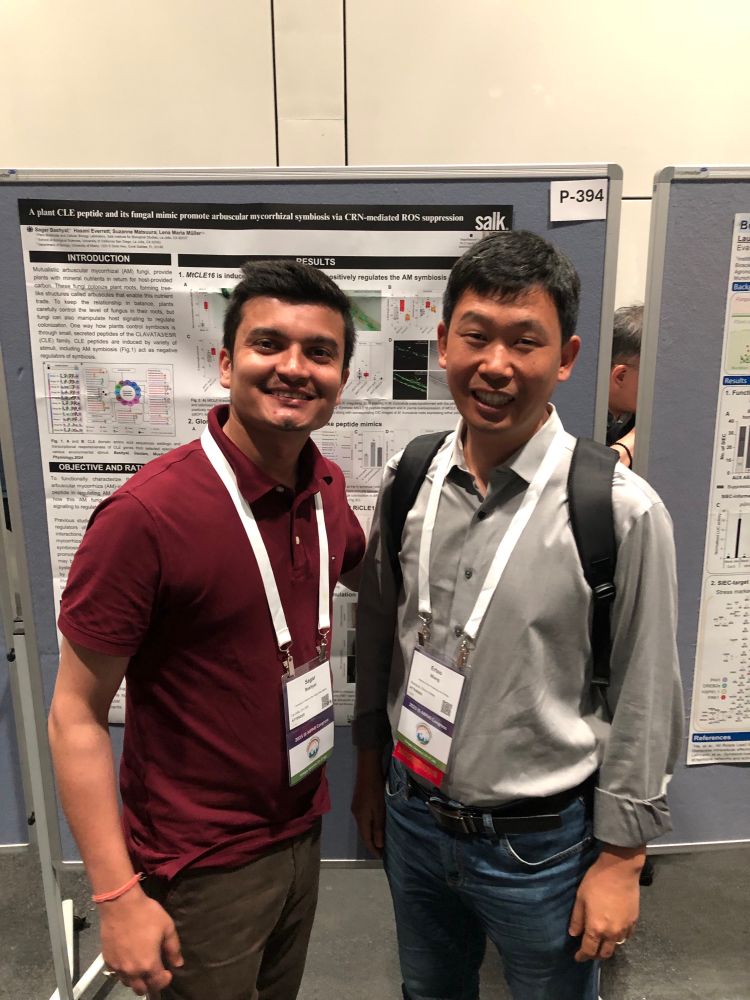
Grateful to be at #2025ISMPMI! Reconnected with my former mentor @carogutj.bsky.social and met Maria, my current PIs mentor-so many cool stories🌱
Loved the energy at the poster session and great chats, including with Ertao Wang whose AMF work continues to inspire. #AMF
15.07.2025 17:05 — 👍 5 🔁 2 💬 0 📌 0
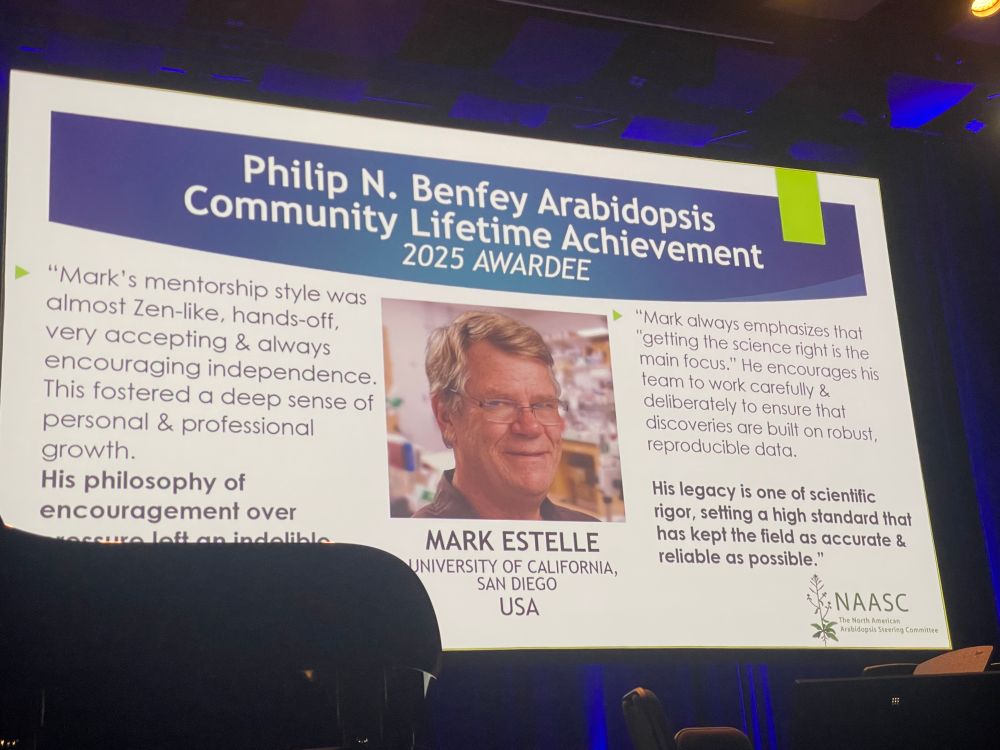
Mark Estelle- UC San Diego- honored for his lifetime of excellence in research, mentorship, and support of the Arabidopsis community #ICAR2025
16.06.2025 19:05 — 👍 31 🔁 7 💬 0 📌 0
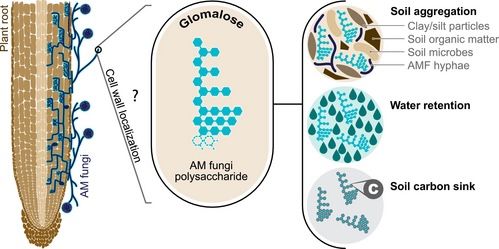
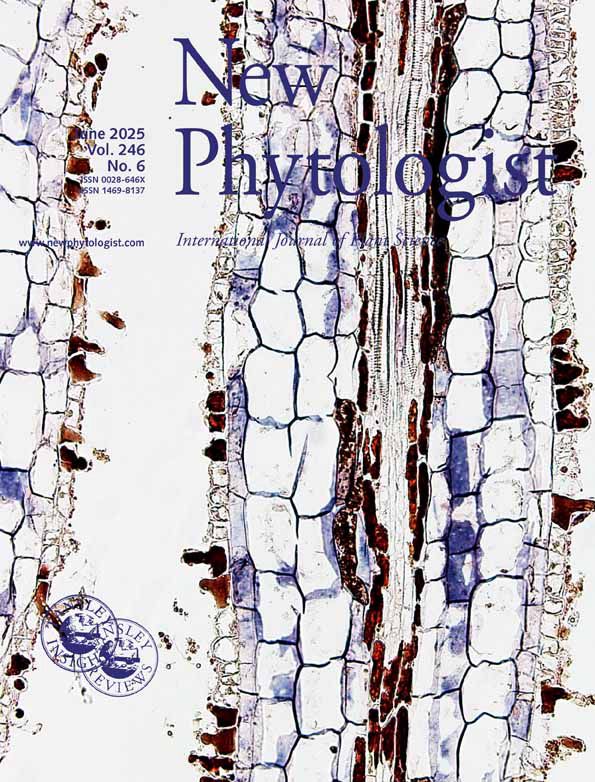
The latest publication from our lab!
The famous "glomalin" from arbuscular mycorrhizal (AM) fungi is not a protein but a polysaccharide from AM fungi, so we renamed it "glomalose". Glomalin-related proteins are bacterial proteins stuck in this glomalose.
nph.onlinelibrary.wiley.com/doi/10.1111/...
06.06.2025 13:54 — 👍 73 🔁 40 💬 3 📌 0

Plant Peptide Receptor Meeting 2025
Join us for the 🪴 🌵 Plant Peptide Receptor Meeting 2025 ☘️ 🪴 in 🏴 Edinburgh 🏴 8th-10th September
#plantsignaling #PlantScience #plantsci
pprm2025.events.kdmeventsportal.co.uk
@pprm2025.bsky.social
A thread 🧵
(1/n)
20.05.2025 14:43 — 👍 29 🔁 27 💬 1 📌 0
PNAS
Proceedings of the National Academy of Sciences (PNAS), a peer reviewed journal of the National Academy of Sciences (NAS) - an authoritative source of high-impact, original research that broadly spans...
Congratulations Michael and the entire team!👏Cool work from the @carogutj.bsky.social lab and a testament to all the long hard work behind it @pnas.org . Grateful to have contributed to this story✌️. Checkout the mechanisms by which the RAM1 functions.
www.pnas.org/doi/full/10....
19.05.2025 20:37 — 👍 4 🔁 1 💬 0 📌 0
Thank you☘️
14.05.2025 01:42 — 👍 2 🔁 0 💬 0 📌 0
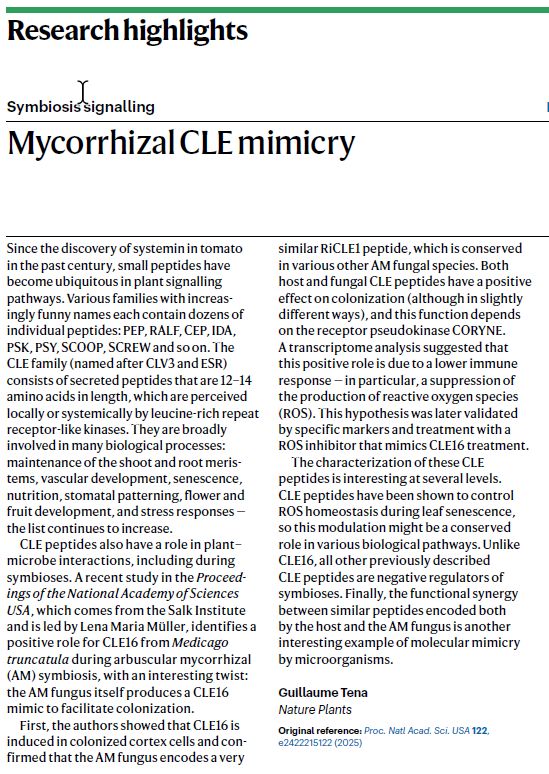
Our editors write:
- "Symbiosis signalling: Mycorrhizal CLE mimicry" rdcu.be/elQ6S
13.05.2025 12:53 — 👍 11 🔁 2 💬 2 📌 1
Mycorrhizal CLE mimicry - Nature Plants
Nature Plants - Mycorrhizal CLE mimicry
Great to see our work highlighted in
@natplants.nature.com !🍀☘️🍄
Check it out: nature.com/articles/s41...
@lmueller.bsky.social @salkinstitute.bsky.social @ucsandiego.bsky.social
14.05.2025 01:31 — 👍 4 🔁 0 💬 0 📌 0
🌍 International Molecular Mycorrhiza Meeting 2025!
#IMMM2025
🏨 Book your hotel at our discounted group rate: genetik.bio.lmu.de/immm-2025/lo...
⚠️ Discounted rate only available until May 16th – act fast!
13.05.2025 12:00 — 👍 4 🔁 3 💬 0 📌 0
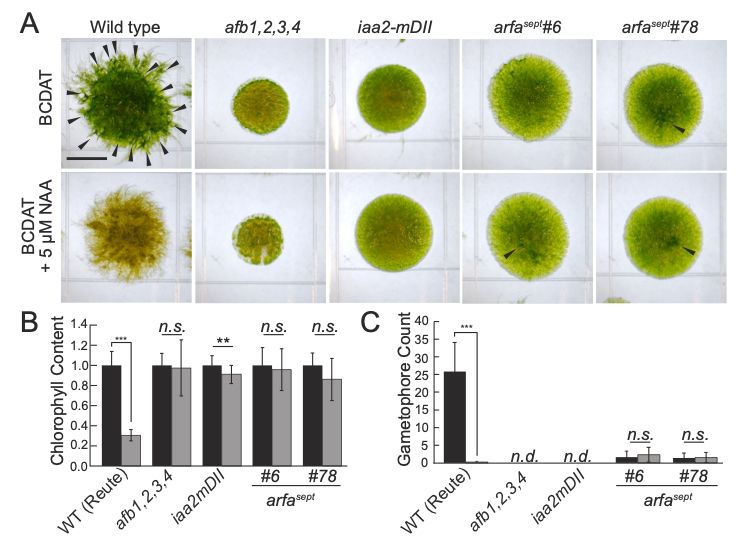
Figure 1 from Bascom et al JEXBOT comparing the arfa-septuple mutant's growth to that of WT, tir1/afb-quad, and iaa2-degron. The arfa mutant's phenotype is strong but less severe than those of the tir1/afb and iaa2 mutants.
The second new paper from the Estelle lab out this week describes the phenotype of moss lines lacking all seven Class-A ARFs (Activating ARFs) and was lead former postdoc Carlisle Bascom, Jr.
academic.oup.com/jxb/advance-...
05.05.2025 22:39 — 👍 33 🔁 12 💬 4 📌 0
this could be to make a ready to use inoculum and yes they hardly mention the time
29.04.2025 20:06 — 👍 2 🔁 0 💬 1 📌 0

Seems like they were 6 months old....
29.04.2025 20:04 — 👍 2 🔁 0 💬 1 📌 0
Postdoctoral Researcher- Brady Lab
University of California, Davis is hiring. Apply now!
We have a postdoc position that just opened up in the Brady lab on reprogramming tomato root system architecture in response to changes in nutrient availability - please consider applying! recruit.ucdavis.edu/JPF07095
19.04.2025 14:15 — 👍 96 🔁 108 💬 1 📌 2
The final version of our study on SERK-BIR module in Marchantia is out.
Congratulations Cate and many thanks to collaborators!
www.sciencedirect.com/science/arti...
17.04.2025 15:23 — 👍 52 🔁 27 💬 7 📌 1
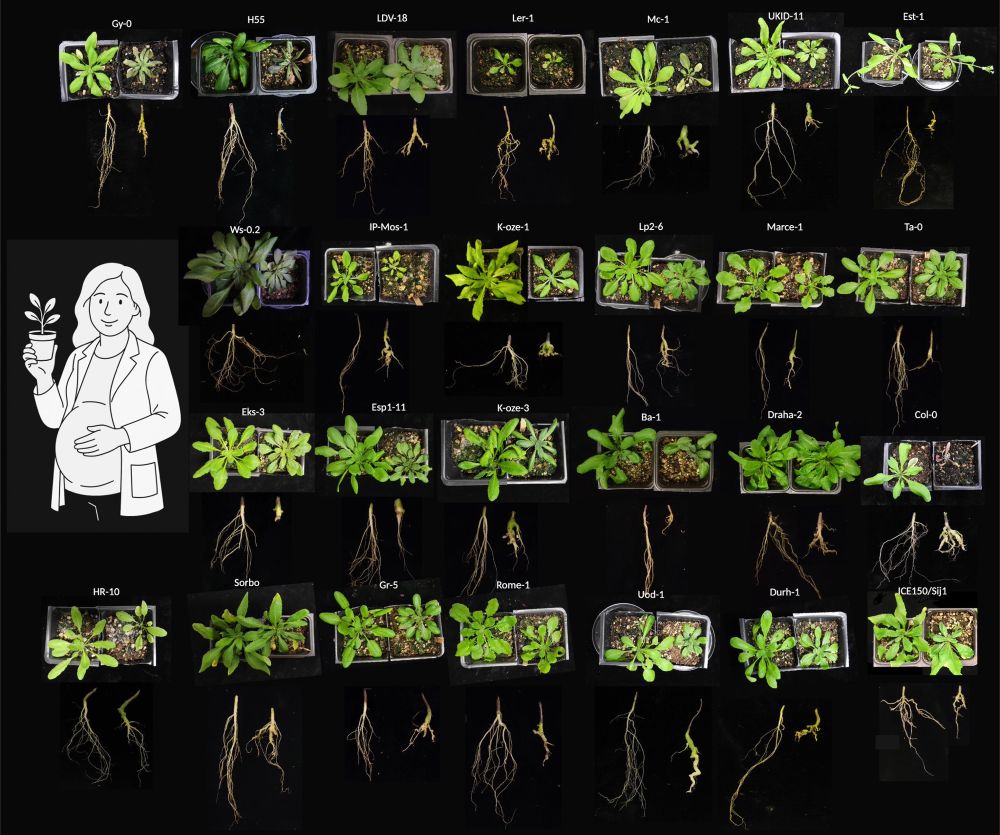
Graphic abstract
🚨Preprint Alert!
Scooped by two other groups due to our lack of infrastructure to grow Arabidopsis, this study started in 2021, is still a great addition to the body of work looking for clubroot resistance in Arabidopsis! 💛
Link: doi.org/10.1101/2025...
16.04.2025 16:33 — 👍 36 🔁 10 💬 1 📌 0
Interested in plants and rhizospheric events.
Founded in 1950, the Journal of Experimental Botany (JXB) is a top-ranking journal owned by the Society for Experimental Biology (SEB) and dedicated to publishing advances in plant science.
https://academic.oup.com/jxb
j.exp.bot@lancaster.ac.uk
Science writer and editor for Plant Editors (planteditors.com). Based in Chicago.
Schmidt AI in Science Postdoctoral Fellow at U. Chicago
theoretical & computational soft matter, biophysics, machine learning
jordanshivers.github.io
IZTECH-Chemistry, I like to be Polymath(learning different subjects), Polygot(interested in the learning different languages) comments and opinions are my own RT≠ is not endorsement (he/him)
Postdoc@slcuplants.bsky.social; Jones Group; Alumnus@Schaller Lab at Uni-Hohenheim; 🍅 Systemin🐛;Plant immunity; Phosphoproteomics; R coding; She/her; 🐶🐱lover adopt a 🦜
Data Scientist Generative AI @BayerCropScience. ML for Plant Biology. PhD @IowaStateUniversity https://www.linkedin.com/in/koushik-nagasubramanian/
The Earth BioGenome Project (EBP), a moonshot for biology, aims to sequence, catalog, and characterize the genomes of all of Earth's eukaryotic biodiversity over a period of ten years.
🌲Keep up with all EBP updates: https://linktr.ee/earthbiogenomeproject
Plant small RNA and epigenomes enthusiast; recently repotted from Arizona to University of Oxford; academic mom
SUSTech |🌿🦠 Plant-Microbe Interactions | Bioinformatics | R & Python | AI in Biology
Postdoctoral researcher @ University of Pittsburgh
Studying the role of receptor-like kinases (RLKs) in shaping plant microbiome 🌱
PhD @ Penn State
Chair of Biochemistry @wur, interested in the biochemical basis of multicellular development and auxin response, and science in general; Views are my own
https://shorturl.at/U80ZH
Plant Biologist at the Salk Institute
Proud member of the Symbiosis Signaling Group with Dr. Martina Ried-Lasi. #Symbiosis #Mycorrhiza #RootBiology
'Plant twitter' via stomatal pores. I'm a Scientist. Views my own. she/her
Shooting electrons, ions and photons (mainly) at plants to study cell-cell communication @mpibiochem.bsky.social & @hhu.de
Postdoc @salkinstitute. pattern recognition receptors, small peptides, proteases, and MPMI. Alumnus @UWbiology USDA-NIFA predoctoralfellow, @Uniandes @CienBiolAndes
Associate Professor UC Berkeley, puzzle-solver interested in comparative immunology 🌱🍄🟫🧬 and computational biology 💻