Signposting the upcoming Early Detection of Cancer Conference, October 21-23, 2025, Portland, Oregon.
www.earlydetectionresearch.com
Make sure you get your tickets now! ☺️
@serenanikzainal.bsky.social
Signposting the upcoming Early Detection of Cancer Conference, October 21-23, 2025, Portland, Oregon.
www.earlydetectionresearch.com
Make sure you get your tickets now! ☺️
And to reinforce, this superb effort was ably led by #DrGeneKoh who is a Sir Jeffrey Cheah Early Career Research Fellow
generously supported by the #JeffreyCheahFoundation
Thank you for your support 🙏!!
Finally, thank you to patients that share samples/data, colleagues, collaborators @GenomicsEngland @HartwigMedical
And our generous funders 🥹
@cancerresearchuk.org
@nihr.bsky.social
@bcrfcure.bsky.social
#JosefSteiner #GrayFoundation
🙏💕
that enable us to do our research!
/end
Conclusion: the classification matters!
This would could not be achieved without the leadership, grit and determination of Gene Koh
Supported by Scott Nanda, Xueqing Zou, Giuseppe Rinaldi
& many more
❤️❤️
12/n


BTW TMB which is used to identify MMRd cases for ICI, has poor specificity, often calling samples with other signatures as TMB high.
Consistent in several cohorts.
Using signatures gives much greater specificity for clinical classification.
11/n

We created a multinomial classifier PRRDetect that can call MMRD, poly dysfunction, combined, or neither.
Performance was better than any other classifier or similar ilk.
10/n
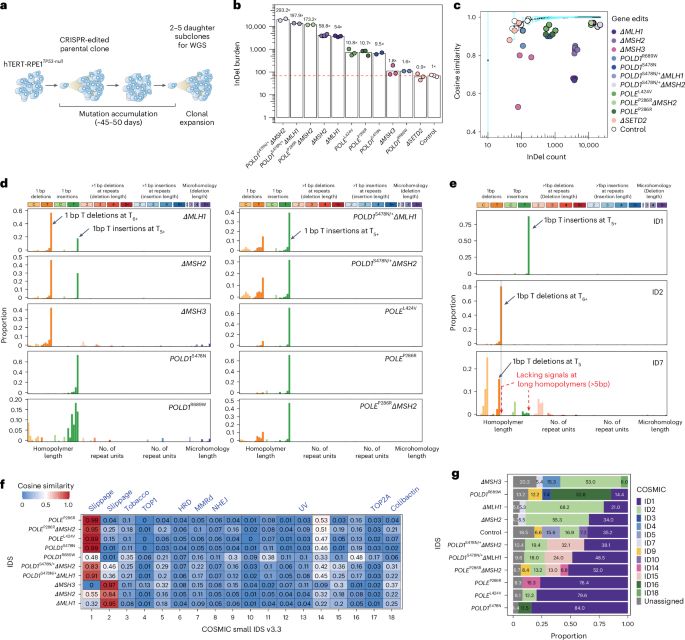
And we see a bucketload of MMRD and polymerase dysfunction signatures and combined ones too. Not just one signature (as in COSMIC ID7).
9/n


We do highlight an APOBEC indel signature!
Mechanism proposed therein.
8/n

We applied the new system on WGs cancers in 4,775 WGS Genomics England cases, in seven tumor types, identifying 37 signatures.
10 had features reported by COSMIC and we matched these and kept their nomenclature.
We found 27 new signatures. See paper for details.
7/n


Now you can see gene specific differences more easily and this we proved by contrasting the COSMIC system to our 89-channel system using lots of different signature extraction tools from the community 😀
6/n

Our system spreads signal from the two channels in COSMIC to more channels, becoming more informative for discerning biological differences between signatures
5/n

If all indels are aggregated,
all signal is focused on just two channels in COSMIC.
We propose an alternative classification using 5’ and 3’ flanking nucleotides (like subs!), remove cap of 5bp at repeats, amongst others..
resulting in an 89-channel classification system
4/n


But using the current indel classification (COSMIC), we have difficulties “seeing” them.
They get dumped into COSMIC sigs InD1/InD2 (normal sigs of replication slippage) becoz the COSMIC classification aggregates signal at polynucleotide >5bp into one channel
3/n

Mismatch repair deficiency (MMRD) & polymerase dysregulation, collectively referred to as post-replicative repair deficiency (PRRD),
ain’t just one entity.
We created isogenic CRISPR KO models of many PRR genes showing clear gene-specific differences (subs & indels)
2/n
PAPER OUT!! 🥳🎉💃🏻🕺🏻💃🏻🕺🏻
A redefined InDel taxonomy provides insights into mutational signatures @NatureGenet
Brainchild of the amazing #GeneKoh
(Sir Jeffrey Cheah ECR)
Tweetorial below!! 👇
1/n
www.nature.com/articles/s41...
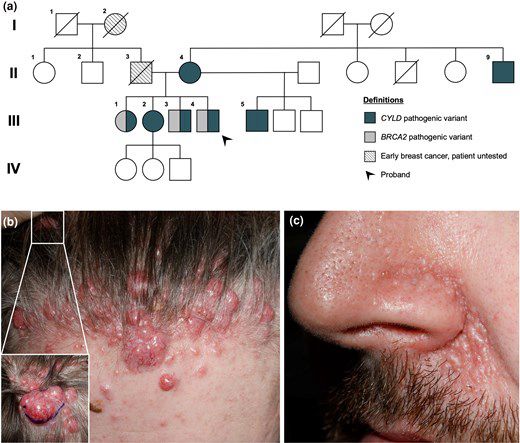
Credit to supervisors @derm-scientist.bsky.social and @serenanikzainal.bsky.social and co-authors Dr. Koh, Ms. Holt, Dr. Husain, Dr. Namini, Dr. Mathew, Dr. Memari, and Dr. Davies for their hard work on this project 👏🏼
academic.oup.com/ced/advance-...
There's a month left for you to submit an abstract or apply for a Travel Grant to attend the next edition of Defence is the Best Attack, taking place in Barcelona in May! ☀️
Join us for an overview of the most recent advances in the field of immunotherapy:
eacr.org/conference/d...
Half-term hols in UK.
Our house is FULL of 17 year old girls dancing and singing
#Galentines
ahead of Valentines…💖
Dear all,
Postdoc positions are available to work on (1) the role of DNA strand break repair proteins during DNA replication and (2) the molecular/structural biology of XRCC1 protein complexes, as part of our work on genetic diseases & cancer. Contact me if interested: k.w.caldecott@sussex.ac.uk

I’m all batty! 🦇
That’s 👇 quite an interesting read!
www.nature.com/articles/s41...
Trump suggesting that Canada should be another state in the US…. 😂🤣..
News right now is unhinged..