This:
15.01.2026 09:37 — 👍 2 🔁 1 💬 0 📌 0
@melross.bsky.social
Political scientist @unibremen.bsky.social CoLead @glocan.bsky.social CoChair @ecpr.bsky.social's Standing Group on Democratic Innovations 📍Berlin

🎯 Do citizen participation institutions really get stronger once they’re institutionalized—or do they become rigid, predictable, and easier to control?
📚Evidence from participatory budgeting, popular initiatives, and citizens’ assemblies in #Latam @melross.bsky.social
bit.ly/4qkXG6h

‘It has gone largely unnoticed that time spent on social media peaked in 2022 and has since gone into steady decline … There is one notable exception to this promising international trend: North America’
on.ft.com/46OmMm1

Meter una mujer más en al foto -- Dina Boluarte-- aunque no tenga aval popular, pesen sobre ella acusaciones serias de corrupción y no haya aportado nada ni a la democracia ni a la causa de las mujeres sencillamente no tiene ningún sentido. ONU mujerse, urge una rectificación, @unwomen.bsky.social
25.09.2025 14:06 — 👍 8 🔁 6 💬 0 📌 3

📸 Sharing some snapshots from the JDD’s participation at the ECPR #DemocraticInnovations Standing Group Reception!
Check out the key points from our editor @sbussu.bsky.social's speech at the event 👇
www.linkedin.com/feed/update/...

Radical right accommodation really does not work.
New paper out with this exceptionally talented team
@katharinalawall.bsky.social @robjohns75.bsky.social @drjennings.bsky.social @sarahobolt.bsky.social @zachdickson.bsky.social @danjdevine.bsky.social & @jack-bailey.co.uk
doi.org/10.31235/osf...


For the past four (!) years, @glocan.bsky.social and @iswe-foundation.bsky.social have been reflecting on learnings from the 2021 Global Assembly.
In this correspondence, we take stock of what citizen deliberation may still do for global climate governance.
📑 doi.org/10.1016/j.es...

📣 Hungry for democracy?
The Democracy R&D 2025 programme is live – and it’s a full-course menu.
Sessions are carefully tagged by purpose (inform, train, debate, solve, network) and spice level (mild to spicy).
New or seasoned, there’s a seat at the table.
🍽️ drive.google.com/file/d/1TEgK...

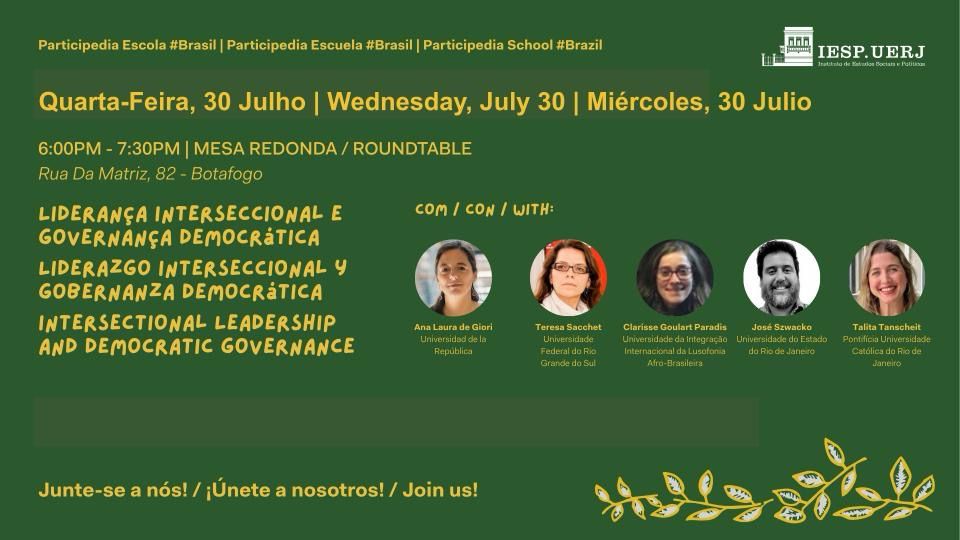
Landed in Rio some days ago for the @participedia.bsky.social School on Democratic Innovations with Traditional and Indigenous Communities.
We are hosting two public roundtables next week, on decolonising knowledge production, and on intersectional leadership.
Come by if you’re around!
So unfair — I’ve always used it a lot, now it’s got a bad rep 😑
05.07.2025 20:02 — 👍 1 🔁 0 💬 0 📌 0Looking for short, punchy texts? Search no more👇
01.07.2025 13:11 — 👍 1 🔁 0 💬 0 📌 0
We're ending our June launch series with the fourth Research x Practice Exchange dedicated to Docking Global Deliberation.
𝘏𝘰𝘸 𝘤𝘢𝘯 𝘨𝘭𝘰𝘣𝘢𝘭 𝘤𝘪𝘵𝘪𝘻𝘦𝘯𝘴’ 𝘢𝘴𝘴𝘦𝘮𝘣𝘭𝘪𝘦𝘴 𝘤𝘰𝘯𝘵𝘳𝘪𝘣𝘶𝘵𝘦 𝘮𝘦𝘢𝘯𝘪𝘯𝘨𝘧𝘶𝘭𝘭𝘺 𝘪𝘯 𝘨𝘭𝘰𝘣𝘢𝘭 𝘨𝘰𝘷𝘦𝘳𝘯𝘢𝘯𝘤𝘦?
@nicolecurato.bsky.social, Aish Machani, and Antoine Vergne reply➡️ glocan.org/wp-content/u...

New week, new Research x Practice Exchange out!
𝘊𝘢𝘯 𝘨𝘭𝘰𝘣𝘢𝘭 𝘤𝘪𝘵𝘪𝘻𝘦𝘯𝘴’ 𝘢𝘴𝘴𝘦𝘮𝘣𝘭𝘪𝘦𝘴 𝘧𝘰𝘴𝘵𝘦𝘳 𝘤𝘰𝘯𝘯𝘦𝘤𝘵𝘪𝘰𝘯𝘴 𝘣𝘦𝘵𝘸𝘦𝘦𝘯 𝘢𝘴𝘴𝘦𝘮𝘣𝘭𝘺 𝘮𝘦𝘮𝘣𝘦𝘳𝘴 𝘢𝘯𝘥 𝘵𝘩𝘦𝘪𝘳 𝘤𝘰𝘮𝘮𝘶𝘯𝘪𝘵𝘪𝘦𝘴?
@nigriveloso.bsky.social, Susan Lee and @andreafelicetti.bsky.social reflect on Grounding Global Deliberation.
Read here ➡️ glocan.org/wp-content/u...
En inglés para lxs colegas internacionales que no hablan nuestras lenguas, aunque nosotrxs si las suyas… 🤷♀️
13.06.2025 13:04 — 👍 1 🔁 0 💬 0 📌 0
Democratic backsliding is not just about electoral results and institutions, but also other forms of response and resistance (or their absence).
Overly focusing on elections, ideology, and institutions may result in partial images of how democratic disputes are taking place.
-@welpita.bsky.social

@welpita.bsky.social concludes with some overarching reflections:
Approaching participatory institutions as part of regimes of social control evidences that participation can be embedded in political systems in ways that aren't easily coopted or dismantled by incoming power-holders.

Are progressive movement parties 'too little, too late'?
Chile's Frente Amplio has faced shortcomings on all fronts: mistrust from social movements, inability to dismantle clientelistic parties, incompatibility between parliamentary and mobilisation work, and compromising when advancing agendas.

Sofia Donoso examines movement parties, in particular Chile's Frente Amplio.
One of their first challenges was to transform their 'elitist' origin into a stable organization that does not renounce their horizontal roots and values, but can build mobilisation capacity and develop broad alliances.

Where the state is used to advance restrictive political projects that constrain rights and enforce inequalities, feminist activists refuse to renounce space within the state while creating paralell 'safe' spaces to regroup and strategize.
The state is patriarchal, but also a strategic asset.

Gisela Zaremberg continues with a reflection on feminist governance within the state-patriarchy.
In the context of conservatist backlash, feminist bureaucratic activists operate simultaneously within and without the state. They work as translators, intermediators, and influencers of policy agendas.

The authors conclude that regimes of social control have structuring properties that have embedded participation as part of democratic transitions and the ensuing political system, but changes over time will necessarily influence what and how participatory institutions expand.
13.06.2025 09:54 — 👍 0 🔁 0 💬 1 📌 0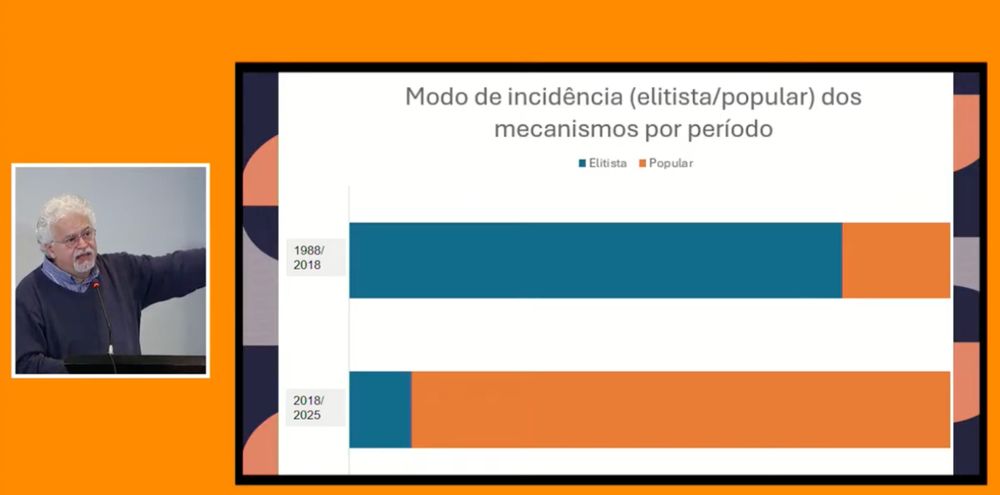
@ernestoisunza.bsky.social, in turn, shows that in Mexico participatory institutios did not recede under Morena, but the essential difference with pre-2018 participation is the nature of participation under each regime of social control.
13.06.2025 09:54 — 👍 0 🔁 0 💬 1 📌 0
Adrian Gurza Lavalle continues with results from Brazil - showing that, in fact, the most public policy councils were introduced well before PT came into office.
This challenges established knoweldge that participation expanded the most under Lula and Rousseff.

@ernestoisunza.bsky.social frames the discussion by going back to O'Donnell's idea of social participation as accountability.
They compare participatory institutions, from participatory budgeting to councils and policy conferences, not across cases, but as part of regimes of social control.

Catching up with #demoinno in Latin America with challenging findings by @welpita.bsky.social, @ernestoisunza.bsky.social, Adrian Gurza, Gisela Zaremberg, and Sofia Donoso.
The kickoff: “Democratizing the State”, now out: www.degruyterbrill.com/document/doi...
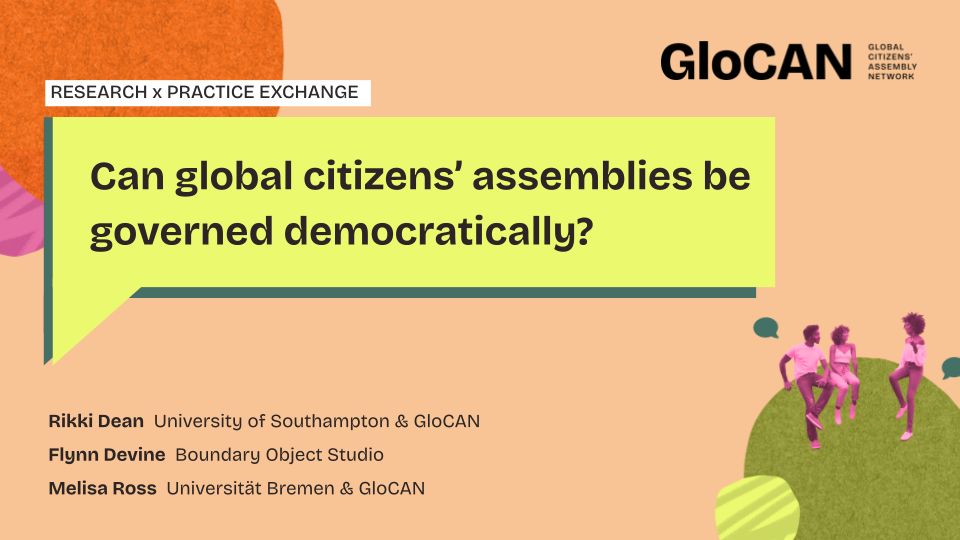
Can, and should, the principles of deliberative democracy be applied to how global citizens’ assemblies are organised?
This week, @rikkidean.bsky.social, @melross.bsky.social and Flynn Devine tackle questions of values and practice in Research x Practice Exchange #2
➡️ glocan.org/wp-content/u...
As usual, with ✨ co-authors @nigriveloso.bsky.social @nicolecurato.bsky.social and Azucena Moran, cc @glocan.bsky.social.
Drop us a line if you can’t break the paywall!

Who experiences disadvantage in deliberations?
Can socio-demographic categories help identify them in advance?
How can we also account for their agency and ownership of their experience?
Find out in our latest paper, out now in 𝘘𝘶𝘢𝘭𝘪𝘵𝘢𝘵𝘪𝘷𝘦 𝘙𝘦𝘴𝘦𝘢𝘳𝘤𝘩 ⬇️
doi.org/10.1177/1468...