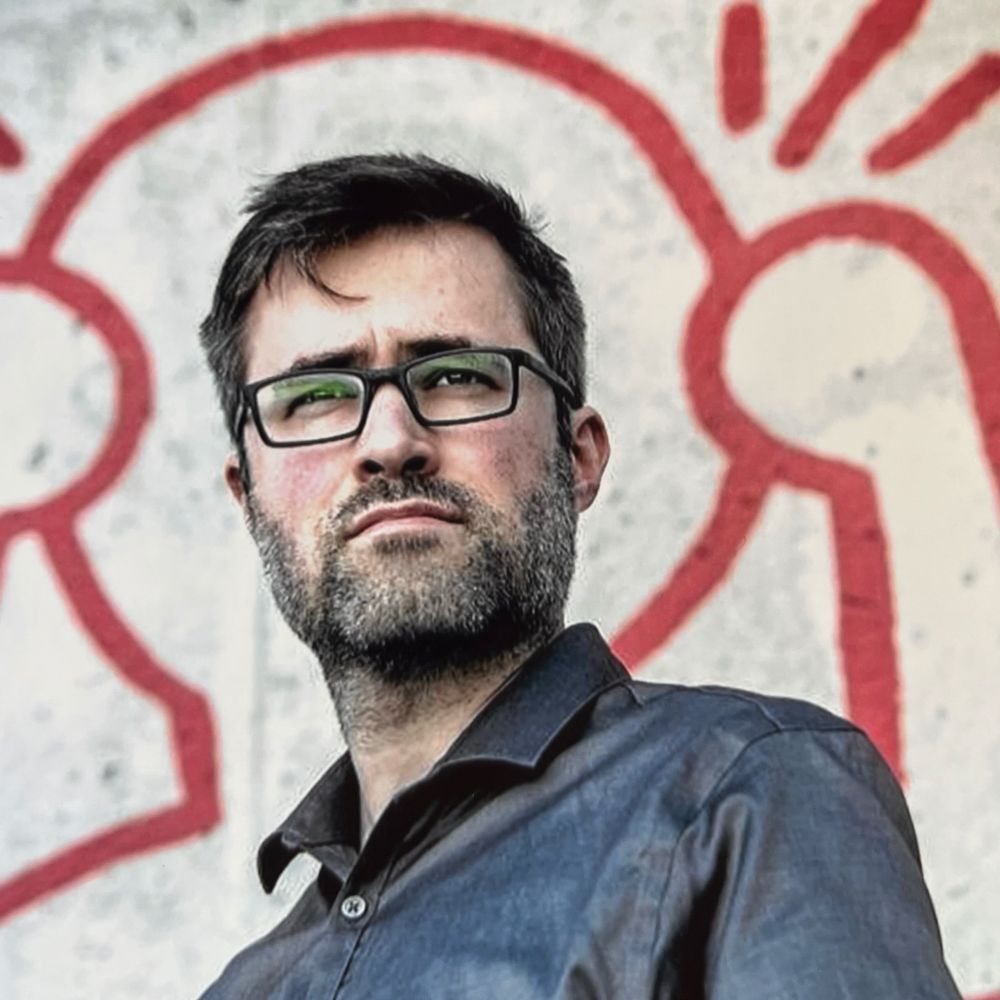
#EUIUpFront: @streinz.bsky.social and Anna Pisarkiewicz discuss what Europe's digital sovereignty means beyond laws.
@eui-law.bsky.social @eui-schuman.bsky.social
🎥 loom.ly/7qpznT4
06.02.2026 10:52 — 👍 6 🔁 2 💬 0 📌 0

EU readies tougher tech enforcement in 2026 as Trump warns of retaliation
Challenges to Google, Meta, Apple and X will test Brussels’ willingness to stick with digital rule book
The EU readies tougher tech enforcement in 2026 as Trump warns of retaliation, but how to reconcile this New Year’s resolution with EU digital omnibus dismantling digital rulebook? @teresaribera.ec.europa.eu @bmoens.bsky.social @digitalmario.bsky.social giftarticle.ft.com/giftarticle/...
04.01.2026 12:06 — 👍 27 🔁 11 💬 0 📌 2

Abstract: Under the banner of progress, products have been uncritically adopted or
even imposed on users — in past centuries with tobacco and combustion engines, and in
the 21st with social media. For these collective blunders, we now regret our involvement or
apathy as scientists, and society struggles to put the genie back in the bottle. Currently, we
are similarly entangled with artificial intelligence (AI) technology. For example, software updates are rolled out seamlessly and non-consensually, Microsoft Office is bundled with chatbots, and we, our students, and our employers have had no say, as it is not
considered a valid position to reject AI technologies in our teaching and research. This
is why in June 2025, we co-authored an Open Letter calling on our employers to reverse
and rethink their stance on uncritically adopting AI technologies. In this position piece,
we expound on why universities must take their role seriously toa) counter the technology
industry’s marketing, hype, and harm; and to b) safeguard higher education, critical
thinking, expertise, academic freedom, and scientific integrity. We include pointers to
relevant work to further inform our colleagues.

Figure 1. A cartoon set theoretic view on various terms (see Table 1) used when discussing the superset AI
(black outline, hatched background): LLMs are in orange; ANNs are in magenta; generative models are
in blue; and finally, chatbots are in green. Where these intersect, the colours reflect that, e.g. generative adversarial network (GAN) and Boltzmann machine (BM) models are in the purple subset because they are
both generative and ANNs. In the case of proprietary closed source models, e.g. OpenAI’s ChatGPT and
Apple’s Siri, we cannot verify their implementation and so academics can only make educated guesses (cf.
Dingemanse 2025). Undefined terms used above: BERT (Devlin et al. 2019); AlexNet (Krizhevsky et al.
2017); A.L.I.C.E. (Wallace 2009); ELIZA (Weizenbaum 1966); Jabberwacky (Twist 2003); linear discriminant analysis (LDA); quadratic discriminant analysis (QDA).

Table 1. Below some of the typical terminological disarray is untangled. Importantly, none of these terms
are orthogonal nor do they exclusively pick out the types of products we may wish to critique or proscribe.

Protecting the Ecosystem of Human Knowledge: Five Principles
Finally! 🤩 Our position piece: Against the Uncritical Adoption of 'AI' Technologies in Academia:
doi.org/10.5281/zeno...
We unpick the tech industry’s marketing, hype, & harm; and we argue for safeguarding higher education, critical
thinking, expertise, academic freedom, & scientific integrity.
1/n
06.09.2025 08:13 — 👍 3718 🔁 1870 💬 109 📌 381
Has anyone done good work on privacy-preserving social graph portability? So that you could, say, bring your Insta graph over to Bluesky without revealing info to either side about what your graph is?
09.09.2025 13:57 — 👍 11 🔁 2 💬 3 📌 0
Watch the EU's flagship speech on one of four US tech platforms, three of which are actively trying torch the EU's digital regulations.
Oh and EBS.
09.09.2025 19:22 — 👍 57 🔁 21 💬 2 📌 1

Inside the Lobbying Blitz Over Colorado's AI Law | TechPolicy.Press
Cristiano Lima-Strong spoke to the Colorado Sun's Jesse Paul and Taylor Dolven following a special session that saw wrangling over the future of the law.
Last year, Colorado signed a first-of-its-kind AI measure into law, but the state recently held a special session where lawmakers held frenzied negotiations over whether to expand or dilute its protections. Tech Policy Press spoke to two Colorado Sun reporters closely tracking the talks.
01.09.2025 18:15 — 👍 4 🔁 2 💬 0 📌 0

The Rise of the Economic Security State
A Conversation With Henry Farrell and Abraham Newman
1/Great conversation w/ Daniel Kurtz-Phelan @foreignaffairs.com on the weaponization of the world economy. As the economic weapon proliferations, is the US or the world ready? Not if you decapitate the expertise needed to navigate this new world.
www.foreignaffairs.com/podcasts/ris...
29.08.2025 12:42 — 👍 15 🔁 4 💬 1 📌 0
Remember: This is not about regulation. It is about the future of democracy and national security in Europe. Viewing it as a deal/regulatory tradeoff will not end well.
www.ft.com/content/5820...
26.08.2025 16:19 — 👍 11 🔁 9 💬 0 📌 1

Citizenship literature Archives - Globalcit
🌍 Looking for summer reading?
Explore our Citizenship Lit Database for the latest research ⚡
From non-resident citizens’ vote choice in plebiscites, to refugees paths to naturalisation in Germany, citizenship trials in India, postcolonial legacies in the Caribbean & more
📖: tinyurl.com/5n7pr623
25.08.2025 09:56 — 👍 2 🔁 1 💬 0 📌 0

abstract: Eventually, many scholarly approaches that mix a descriptive programme with a normative agenda face a delicate question: what if the thing written about for years does not (fully) transpire? Today, public law is a crucial discursive reference point in international politics and global constitutionalism a widely known scholarly approach thereof. However, despite prevalent talk about constitutional principles in global governance, aspirations of a liberal world order gave way to confrontation, tribalism, and cynicism. Simply put, the promise of global constitutionalism has not fully materialized. So, what can digital constitutionalism, a new scholarly approach that mixes description with desire, learn from global constitutionalism? Apart from several already learned fundamentals, this chapter focuses on what digital constitutionalism might learn from global constitutionalism’s current moment of introspection. Concretely, the chapter presents four lessons, all of which build on critiques of global constitutionalism, which may be, in the future, relevant for digital constitutionalism as well. These lessons are: a stronger empirical footing, a broader focus that includes administrative dimensions, less constitutional metaphors, and more disciplinary and scholarly diversity.
Digital Constitutionalism has become a widespread analytical framework and linguistic toolbox for studying digitization, particularly in Europe.
In the recently published Oxford Handbook on Digital Constitutionalism, I reflect on some of its discursive continuities with...
25.08.2025 09:59 — 👍 7 🔁 1 💬 2 📌 0

A paperback copy of the book Ways of being by James Bridle.
The most inspiring read of my summer. James Bridle’s Ways of Being is a beautiful and thought-provoking essay on the entanglement of humans, nature and technologies, and ideas about what intelligence is and how to build ”smart” machines.
#STS #AI
24.08.2025 07:04 — 👍 17 🔁 4 💬 1 📌 0

A photo of a night market text: Open House New York / Scavenger Hunts
Just want to give props to Open House New York, which has been organizing themed city-wide scavenger hunts — focusing on water infrastructure, public works, and libraries — for the past several years!
ohny.org/project/scav...
25.08.2025 01:48 — 👍 190 🔁 22 💬 1 📌 0

Questions to ask yourself
As GenAl poses to be a revolutionary tool that can change the academic space and beyond, it is important for you to understand why and how you intend to use these new, powerful tools. These are a few questions to consider and note that the answers to these questions will vary for each person.
• Is using a GenAl-based tool helping me learn more and think better?
• Is using a GenAl-based tool enabling or hindering my mastery of the stated course objectives?
• Is the content I generate accurate and verifiable? Is it free of biases that might harm other groups of society?
• How will I treat content that might have been generated using a GenAl-based tool?
• Is using a GenAl-based tool equitable to my peers in my course?
• How can my actions in using a GenAl-based tool lead to the greater good of society?
Understand that your usage of GenAl-based tools can give you the means to better not just yourself, but also society as a whole, and there is an ethical responsibility towards doing so.
The University of Michigan is now claiming that students have an ‘ethical responsibility’ to use AI.
20.08.2025 12:40 — 👍 547 🔁 173 💬 140 📌 431
Any EU media policy nerds flying this sky?
22.08.2025 08:57 — 👍 2 🔁 1 💬 0 📌 0
📱@eui-law.bsky.social researcher Michael Fitzgerald unpacks the gap between EU tech regulations and how platforms actually respond.
By analysing cases involving Facebook and YouTube, his research shows why regulating Big Tech is so complex & where solutions might lie.
⚖️ https://loom.ly/VXbI9X0
13.08.2025 07:31 — 👍 3 🔁 1 💬 0 📌 0
STS. You’re talking about STS. Small but mighty. Also, a lot of modern media studies.
19.08.2025 13:18 — 👍 5 🔁 1 💬 0 📌 0

Convenience AI
Sabina Leonelli & Alexander Martin Mussgnug12
Abstract: This paper considers the mundane ways in which AI is being incorporated into scientific
practice today, and particularly the extent to which AI is used to automate tasks perceived to be
boring, “mere routine” and inconvenient to researchers. We label such uses as instances of
“Convenience AI” — that is situations where AI is applied with the primary intention to increase
speed and minimize human effort. We outline how attributions of convenience to AI applications
involve three key characteristics: (i) an emphasis on speed and ease of action, (ii) a comparative
element, as well as (iii) a subject-dependent and subjective quality. Using examples from medical
science and development economics, we highlight epistemic benefits, complications, and drawbacks
of Convenience AI along these three dimensions. While the pursuit of convenience through AI can
save precious time and resources as well as give rise to novel forms of inquiry, our analysis
underscores how the uncritical adoption of Convenience AI for the sake of shortcutting human labour
may also weaken the evidential foundations of science and generate inertia in how research is
planned, set-up and conducted, with potentially damaging implications for the knowledge being
produced. Critically, we argue that the consistent association of Convenience AI with the goals of
productivity, efficiency, and ease, as often promoted also by companies targeting the research market
for AI applications, can lower critical scrutiny of research processes and shift focus away from
appreciating their broader epistemic and social implications.
5. Today I read a paper by @sabinaleonelli.bsky.social and Alexander Mussgnug that I think illustrates this point perfectly.
philsci-archive.pitt.edu/24891/1/Phil...
19.08.2025 05:11 — 👍 269 🔁 50 💬 9 📌 1
1. The philosophy of science sometimes gets an unearned reputation as a purely academic exercise that offers little by way of concrete tools for advancing research.
This is wrong.
And today, as we grapple with how AI is changing the nature of scientific activity, it's desperately wrong.
19.08.2025 04:59 — 👍 802 🔁 242 💬 19 📌 23
A thread on transcription and AI. One reason I don't use AI to transcribe (besides the fact that AI is hugely detrimental to the environment & is coming for our jobs) is that it can't tell the difference between original documents & new notes added by staff members to whom documents were sent. 🗃️ 1/?
18.08.2025 01:45 — 👍 191 🔁 62 💬 7 📌 7

Should Europe wean itself off US tech?
Just three US firms provide 70% of Europe's cloud-computing, leading to fears of overreliance.
"Critical data would become inaccessible, websites would go dark, and essential state services like hospital IT systems would be thrown into chaos," says Robin Berjon, a digital governance specialist who advises EU policymakers.
www.bbc.com/news/article...
18.08.2025 07:39 — 👍 68 🔁 28 💬 5 📌 4

After Alaska Summit, Europeans Worry Trump Will Pressure Ukraine
1/Just back from Europe and exactly this is the problem -- no strategy. Europe keeps letting the US set the terms on Ukraine/Trade. Without a clear alternative and changing facts on the ground Europe will keep getting rolled.
www.nytimes.com/2025/08/16/w...
16.08.2025 12:00 — 👍 66 🔁 24 💬 2 📌 1

Text "United States Department of Agriculture. Transporting Watermelons in Bulk and Bin by Truck." Illustration of a semi truck with a watermelon as its trailer.
All reports in this thread are from the collections of Northwestern University's Transportation Library. Materials we've digitized can generally be found in HathiTrust. Learn more and search our catalog here: www.library.northwestern.edu/libraries-co...
29.01.2024 16:12 — 👍 1003 🔁 265 💬 30 📌 111
UlrichE studied Physics and received a PhD at the Max Planck Institute for Intelligent Systems. Since 2003, he has worked in the automotive industry, managing projects on advanced technologies from electric and hydrogen propulsion to automated driving.
Political economist @ LSE | Finance, central banking & more | benjaminbraun.org
Reader at Kent Law School • UKRI Future Leaders Fellow • norms • AI • participatory deliberation • decisions • design • technosocial ecologies
Building an #economicdemocracy for creating a #wellbeingeconomy!
International Lawyer| Lecturer| Researcher
@UvA_Amsterdam
Formerly: Visiting Fellow @Lauterpacht_Ctr
Public International Law | Investment Arbitration | SOEs
Recht und mehr
📍 https://www.researchgate.net/profile/Fabian-Endemann
📖 https://www.prothese-magazin.de/blog
PhD IHL (UvA) | Ahora Derecho Administrativo.
Soy casado
Nací con CO2 327 ppm, ahora 428 ppm
Lanús, Argentina 🇦🇷
"fas versum atque nefas: tot bella per orbem,
tam multae scelerum facies, non ullus aratro
dignus honos"
Trade, public policy, economics, , formerly research fellow at the Centre for European Reform, Norwegian and EFTA civil servant
PhD Researcher at EUI. Interested in the intersection of Social Media and Politics.
Virologist. PI working at but not speaking for USask. Co-EiC of Vaccine. 🇺🇸 in 🇨🇦. Emerging viruses, pathogenesis, zoonosis, host responses, dogs, football, off-color language, transcriptomic chaos. Opinions my own.
Historian @ruhistorydept.bsky.social
Politik- und Klimajournalistin.
Newsletter: https://steadyhq.com/de/der-uuberblick
tech & political economy & EU regulation | PhD King's College London | GPEP Fellow at Georgetown University | previously at Scuola Superiore Sant'Anna
https://matteonebbiai.site/
https://matteonebbiai.substack.com/
Journalist at Mother Jones and elsewhere, author, writer of social media posts on micro-blogging sites. Tips to Amerlan@motherjones.com or on Signal, username annamerlan.30
Max Weber Fellow at EUI | Researcher & Lecturer at LMU Munich | PhD LMU & Uni Oxford | 👉 Leadership | 🇺🇸 Withdrawal from multilateralism | 🇪🇺 Blame games | http://tim.heinkelmann-wild.eu
PhD in Political Science (EUI) | Lecturer, University of Latvia | Researching representation, party politics & electoral behavior | #FirstGen
Political Scientist. Postdoctoral Researcher @ University of Oxford DPIR. I study environmental politics + climate change + Latin America. He/him
Coloradan in England.
🏳️🌈 www.anthonycalacino.com
Senior Policy Analyst for Cyber and Digital Issues @euiss.bsky.social
Dr in Political Geography @sorbonneparis1.bsky.social
Member of the European Parliament and coördinator of the Environment Committee, in love with Ghent❤️ proud mom - culturo - biker🚴🏻♀️