
That's so kind, thank you so much! I always appreciate your thoughts and would love to connect sometime about the joys and challenges of working at this intersection!
26.11.2025 13:28 — 👍 1 🔁 0 💬 0 📌 0That's so kind, thank you so much! I always appreciate your thoughts and would love to connect sometime about the joys and challenges of working at this intersection!
26.11.2025 13:28 — 👍 1 🔁 0 💬 0 📌 0This paper originated in a class taught by Wright Kennedy, now my co-network chair, and I gratefully recognize his generative feedback and encouragement!
24.11.2025 14:31 — 👍 2 🔁 0 💬 0 📌 0I find that while disease was indeed high in alley communities, this was explained mostly by higher disease burden among Black residents overall, not by alley conditions themselves. Reformers’ paternalistic racism led to the discursive production of Black space as pathological.
24.11.2025 14:31 — 👍 1 🔁 1 💬 1 📌 0In the article, I examine how Progressive reformers in DC weaponized health disparities to urge clearance of Black inhabited alley communities, promoting a shift from micro- to neighborhood-level segregation.
24.11.2025 14:31 — 👍 0 🔁 0 💬 1 📌 0I'm deeply honored to have received the Founder's Prize for the best article of the year in Social Science History. It's especially meaningful because SSHA has been such a generative and welcoming community for me as the co-chair of the Historical Geography and HGIS network.
24.11.2025 14:31 — 👍 21 🔁 6 💬 2 📌 0The US is the purple line bottoming out. Our economy may still roar, but we’re killing ourselves. Hoarding wealth, refusing to even ensure our kids have enough to eat. That line is an indictment. It reflects our warped values.
01.11.2025 03:08 — 👍 564 🔁 227 💬 17 📌 3Part of a special Journal of Urban Affairs issue edited by @lkb-pdx.bsky.social on “Stopping a Tsunami: learning from and beyond emergency tenant protections during the Covid-19 pandemic” - looking forward to the dialogue!
04.09.2025 17:51 — 👍 1 🔁 0 💬 0 📌 0We look instead toward the transformative potential within tenants’ collective capacity and mobilization to challenge the exploitative rent relationship
04.09.2025 17:51 — 👍 1 🔁 0 💬 1 📌 0Stories we heard from many tenants reflected the bounce back to the same conditions of housing insecurity once ERA funds dried up, even among tenants with the most positive ERA experiences
04.09.2025 17:51 — 👍 0 🔁 0 💬 1 📌 0We build on @davidjmadden.bsky.social's argument on the urban process under “Covid capitalism": state policy responses prioritize protecting interests of property owners, with more tepid and temporary protections for renters
04.09.2025 17:51 — 👍 1 🔁 0 💬 1 📌 0A profit-seeking, exploitative capitalist housing system, which produced crisis before Covid-19 and continues to do so after ERA has largely wound down.
04.09.2025 17:51 — 👍 0 🔁 0 💬 1 📌 0We argue that ERA programs (although they did provide important short-term relief to many tenants!) ultimately lacked transformative potential. They failed to disrupt—or even meaningfully challenge—the root cause of the housing crisis:
04.09.2025 17:51 — 👍 0 🔁 0 💬 1 📌 0...and that reform to address this crisis was possible within the structure of the current housing system
04.09.2025 17:51 — 👍 0 🔁 0 💬 1 📌 0We interrogate how the framing of Covid-19 as an aberrant emergency moment of housing “crisis,” and the creation of solutions narrowly targeted toward addressing it, imply that the housing status quo before Covid-19 was not a crisis...
04.09.2025 17:51 — 👍 0 🔁 0 💬 1 📌 0Most work on ERA to date focuses on evaluation and identifying opportunities for improvement (necessary and important questions!). But we wanted to ask: Was ERA the right kind of program in the first place?
04.09.2025 17:51 — 👍 0 🔁 0 💬 1 📌 0514 state and local ERA programs helped low-income tenants pay rent during the Covid-19 pandemic. We explore how 3 Connecticut programs were designed, how they were rolled out, and how they were experienced by housing-insecure tenants
04.09.2025 17:51 — 👍 0 🔁 0 💬 1 📌 0What better way to start a new semester and return from maternity leave than to share a new paper with my brilliant co-authors! We examine Emergency Rental Assistance (ERA) through a critical urban theory lens
04.09.2025 17:51 — 👍 4 🔁 1 💬 1 📌 0
During the 1970s, an arson wave ravaged poor communities across the US. Some lost 80% of their housing. Residents were blamed.
In reality, landlords—paid by insurers and enabled by the state—drove this arson-for-profit epidemic.
I reviewed @benchansfield.bsky.social's revelatory BORN IN FLAMES:
New from me on scholarship by @cbswope.bsky.social et al.
"As the Trump Administration attempts to eviscerate fair housing...regulations...we need to recognize the persistence and resilience of racial-capitalist exploitation and dispossession, and not view it only as some relic of an earlier era."
Glad to see this piece out!
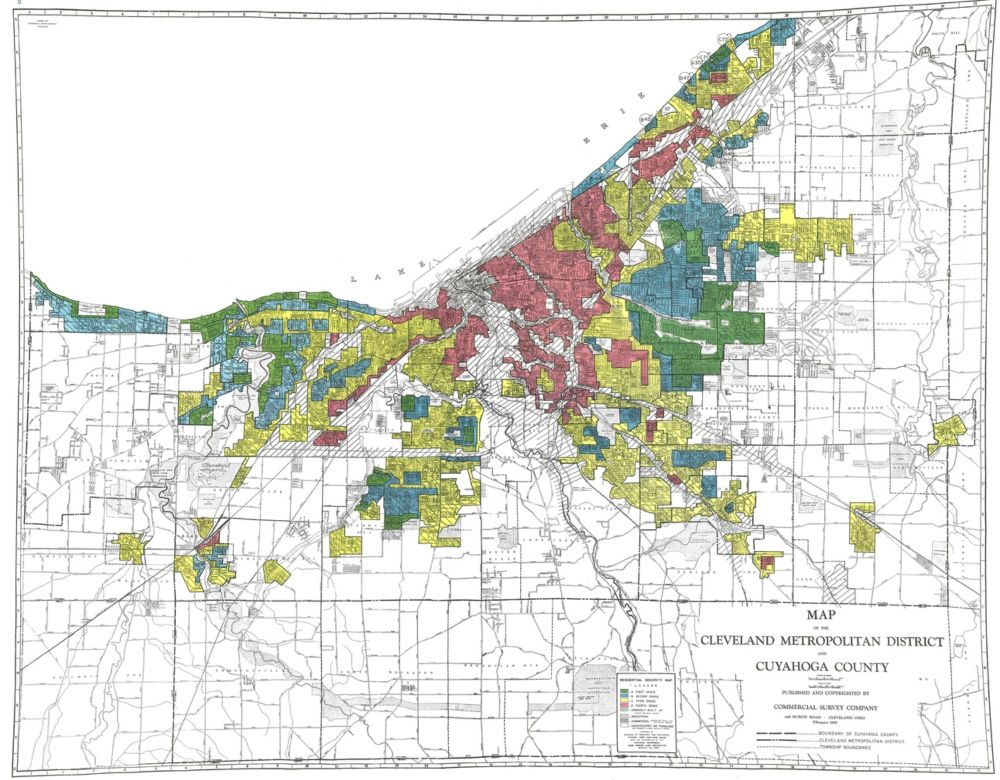
In it, we trace the explosion of HOLC redlining studies in public health research over recent years and propose that scholars widen their focus to include some of the myriad other discriminatory processes that have generated racial health inequities.
🧵A much-needed corrective to the “HOLC redlining was the primary/root cause of everything bad” literature that has exploded since the HOLC maps were digitized. A more complicated, but still heavily racialized story. Lots of other private and public discriminatory policies & practices involved.
15.05.2025 12:49 — 👍 12 🔁 9 💬 0 📌 0Also check out this response by @lwinling.bsky.social on the importance of recognizing intervening processes and mechanisms leading to the present day - ajph.aphapublications.org/doi/10.2105/... 10/10
14.05.2025 21:19 — 👍 1 🔁 0 💬 0 📌 0But it means that racial differentiation and exploitation structures housing markets and policies in fundamental ways that go beyond any one process or actor. 9/
14.05.2025 21:19 — 👍 1 🔁 0 💬 1 📌 0All this does not mean that HOLC redlining wasn’t racist, that the federal govt wasn’t complicit in racism, or that the maps aren’t significant sources of information about disinvestment and discrimination! 8/
14.05.2025 21:19 — 👍 2 🔁 0 💬 1 📌 0We offer suggestions for how researchers can align conceptual frameworks, research questions, and study design, including use of alternative data sources beyond HOLC grades 7/
14.05.2025 21:19 — 👍 1 🔁 0 💬 1 📌 0…3) redlining interacted with many other forms of racialized housing dispossession (urban renewal, gentrification, zoning…) to shape present-day riskscapes 6/
14.05.2025 21:19 — 👍 2 🔁 0 💬 1 📌 0We argue: 1) the HOLC maps represent symptoms, not causes, of systematic disinvestment in Black communities; 2) redlining was not produced by the federal government in isolation but was shaped by public‒private collaboration and infused with capitalist logics… 5/
14.05.2025 21:19 — 👍 4 🔁 1 💬 1 📌 0…but are continuously being reproduced by a political‒economic system that devalues Black property and personhood 4/
14.05.2025 21:19 — 👍 4 🔁 0 💬 1 📌 0Rather than understand the maps as strictly causal (evidence suggests otherwise), we use a racial capitalism framework to argue that persistent racial health inequities are not the outcome of one discriminatory program from the 1930s… 3/
14.05.2025 21:19 — 👍 2 🔁 0 💬 1 📌 0